

3D Printing’s Transformative Impact: Advancements Across Aerospace, Space, Construction, and High Fashion
This week marks a pivotal moment for additive manufacturing (AM), showcasing its profound impact across diverse industries. From groundbreaking aerospace innovations that promise enhanced efficiency and sustainability, to the burgeoning possibilities of manufacturing beyond Earth, and even to the artistic frontiers of high fashion and large-scale construction, 3D printing is undeniably reshaping our world. We delve into the latest developments, starting with a significant certification from the FAA that underscores the reliability of AM in critical applications, followed by the U.S. military’s strategic embrace of the technology. Our journey then takes us beyond the planet, examining the first metal part 3D printed in space returning for crucial analysis, before exploring how AM is pushing boundaries in architecture and haute couture. Join us as we explore the cutting-edge of additive manufacturing innovation.
FAA Certifies GE Aerospace’s Catalyst Engine: A Leap in Fuel Efficiency and Additive Manufacturing
The Federal Aviation Administration (FAA) has officially certified GE Aerospace’s “Catalyst” engine, a monumental achievement that heralds a new era of efficiency in aviation, largely thanks to the strategic integration of advanced additive manufacturing techniques. This turboprop engine is not just an incremental improvement; it represents a significant leap forward, boasting an impressive 18% reduction in fuel consumption compared to its conventional counterparts, alongside a 10% increase in cruising speed. These remarkable performance gains are directly attributable to the intelligent application of 3D printing in its design and production.
The innovative use of additive manufacturing allowed GE Aerospace engineers to consolidate 855 individual components into a mere twelve complex, 3D-printed parts. This drastic reduction in part count not only slashes the overall weight of the engine but also simplifies the supply chain, assembly processes, and maintenance. Roughly one-third of the engine’s total components are now produced through 3D printing, enabling intricate geometries and optimized internal structures that would be impossible or prohibitively expensive to create with traditional manufacturing methods. Such design freedom facilitates enhanced airflow, improved thermal management, and a more robust, lightweight engine architecture.
Riccardo Procacci, President and CEO of Propulsion and Additive Technologies at GE Aerospace, rightfully emphasizes the monumental nature of this milestone. “The certification of the Catalyst engine is a significant milestone for our company and a proud moment for all our team members who have dedicated their efforts to the design, development, and testing of this brand-new European turboprop engine,” he stated. “We are now fully committed to supporting the production ramp-up of the engine towards the entry into service in support of our customers.” This certification not only validates GE’s substantial investment in additive manufacturing but also sets a new benchmark for how AM can drive tangible, impactful benefits in the highly regulated and demanding aerospace sector, promising a more sustainable future for air travel.

Photo Credits: General Electric Company/NORKIN
US Air Force Seeks Qualified 3D Printing Vendors for Flight-Critical Components
The United States defense sector continues its robust investment in additive manufacturing, recognizing its potential to revolutionize military readiness, overcome persistent supply chain vulnerabilities, and enable rapid innovation. As a clear indication of this strategic imperative, specialists within the U.S. Air Force have issued a public call for 3D printing vendors capable of producing flight-critical aircraft components using advanced AM processes. This initiative underscores the military’s growing confidence in additive manufacturing not just for prototyping or tooling, but for essential parts that directly impact aircraft safety and performance.
The Request for Information (RFI) – designated FA8684-QAMVAP for the “Qualification of Additive Manufacturing Vendors for Airworthiness Parts” project – originates from the Air Force Life Cycle Management Center at Wright-Patterson Air Force Base in Ohio. This qualification process is a non-negotiable step to integrate 3D-printed parts into active aircraft, especially when those parts are critical for flight. The stringent requirements for flight-critical components demand absolute reliability, structural integrity, and consistent performance under extreme conditions.
To ensure these exacting standards are met, the Air Force is soliciting white papers from interested vendors. These papers must provide comprehensive information across several key areas: robust quality management systems, detailed material characterization, rigorous process validation, adherence to design for additive manufacturing (DfAM) principles, advanced non-destructive inspection (NDI) techniques, meticulous documentation and traceability protocols, and compliance with industry-specific standards such as AS9100 or ISO 9001. The emphasis on these qualifications highlights the Air Force’s commitment to mitigating risks and ensuring that any AM-produced parts meet or exceed the performance of traditionally manufactured components. This proactive approach to vendor qualification is crucial for building a reliable ecosystem for on-demand manufacturing, ensuring that critical spares can be produced quickly and efficiently, reducing aircraft downtime, and enhancing the overall operational readiness of the U.S. Air Force. Interested parties have until April 22, 2025, to submit their white papers, marking a significant opportunity for AM companies to contribute to national defense.
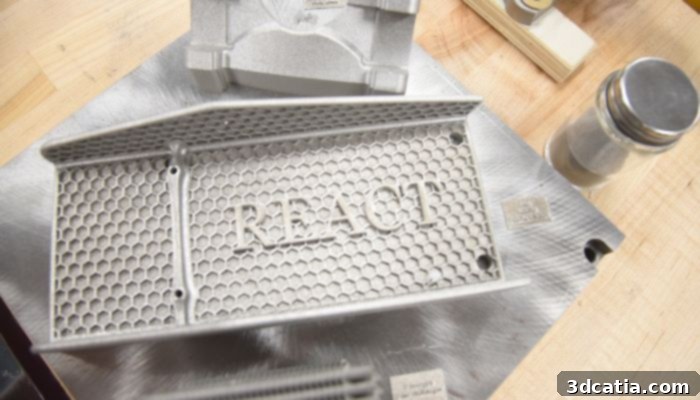
A metal part printed by Air Force Material Command in an earlier project (photo credits: U.S. Air Force photo/Kelly White)
The European Space Agency Retrieves First Metal Part 3D Printed in Space for Analysis
Last year, the scientific community celebrated a monumental achievement: the successful 3D printing of the first metal part in orbit, specifically aboard the International Space Station (ISS). This pioneering endeavor by the European Space Agency (ESA) marked a critical step towards establishing autonomous manufacturing capabilities beyond Earth. Now, this historic sample has completed its arduous journey back to Earth, paving the way for crucial scientific analysis and furthering our understanding of in-space additive manufacturing.
The first sample, produced during the summer, is now slated for intensive testing at the Materials and Electrical Components Laboratory at ESTEC, the ESA’s technical heart in the Netherlands. A second sample, fabricated in December, will be transferred to the Technical University of Denmark for parallel analysis. The primary objective of these comprehensive tests is to meticulously compare the physical and mechanical properties of these space-printed parts with those manufactured on Earth. Researchers will be scrutinizing various aspects, including microstructure, tensile strength, fatigue resistance, porosity, and dimensional accuracy. This comparison will provide invaluable insights into how the unique microgravity environment of space affects the metal 3D printing process, potentially revealing subtle differences in material consolidation, heat dissipation, and grain structure formation.
The results of this analysis are deemed critical by the ESA for advancing the feasibility of in-space manufacturing. Understanding these microgravity effects is paramount to developing robust and reliable processes for producing essential parts, repairing equipment, and fabricating tools on demand during long-duration space missions. Such capabilities would dramatically reduce mission costs and risks by decreasing reliance on Earth-based resupply, enabling astronauts to be more self-sufficient on remote expeditions, and ultimately facilitating the establishment of permanent lunar or Martian bases. This pioneering effort with metal 3D printing in space is not just about a single part; it’s about laying the foundation for a future where humanity can truly live and work independently beyond our home planet.
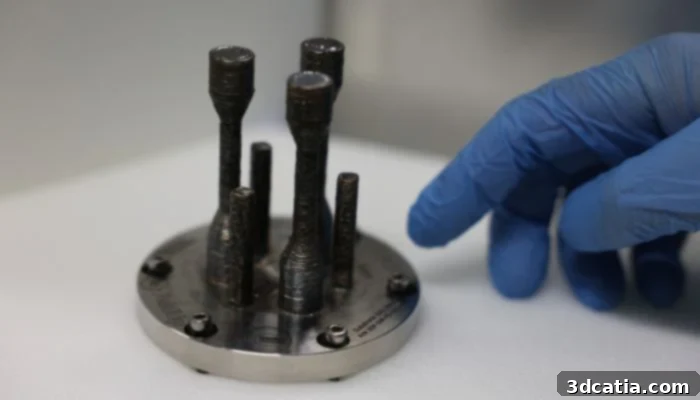
Photo Credits: ESA-R. Moorkens O’Reilly
Dubai’s MYATA Restaurant Features the World’s Largest 3D-Printed Structure by Volume
Dubai, a city renowned for its architectural ambition and innovation, has once again captured global attention with the opening of MYATA Platinum restaurant. This establishment has officially set a Guinness World Record for integrating the world’s largest 3D-printed structure in terms of volume. This monumental achievement was realized through a strategic collaboration with Proto21 3D Printing, a leading company specializing in large-scale additive manufacturing solutions. The project brilliantly showcases the capabilities of 3D printing beyond mere prototyping, demonstrating its viability for complex, functional, and aesthetically striking commercial applications.
The scope of the project was immense, encompassing 23 distinct 3D-printed structures that seamlessly define both the interior and exterior facades of the restaurant. Beyond the impressive building envelopes, additive manufacturing was also leveraged to create bespoke counters, intricately designed planters, and various decorative elements that contribute to the restaurant’s unique ambiance. In total, the project involved the printing of over 10,500 unique parts, covering an expansive area of 1,190 square meters and consuming a staggering 10.2 tons of material. This scale of production highlights the burgeoning potential of large-format additive manufacturing in the construction and architectural design sectors.
Manufacturing such a colossal structure presented significant technical challenges. The continuous 3D printing process spanned three intensive months, requiring the deployment of a diverse array of additive technologies and materials. These materials were carefully selected to be suitable for both indoor and outdoor environments, ensuring durability, weather resistance, and compliance with safety standards. According to Proto21, this groundbreaking project serves as compelling evidence that 3D printing has evolved far beyond its experimental origins. It is now a scalable, reliable solution for demanding commercial applications, cementing Dubai’s position as a global leader and benchmark for architectural innovation that embraces future-forward construction methodologies.
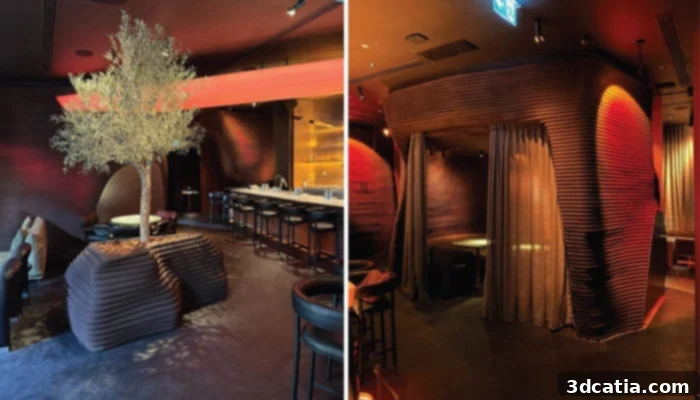
Photo Credits: Proto21 3D Printing
3D Printing Takes Center Stage in Versace’s Fall/Winter 2025 Fashion Show
The intersection of cutting-edge technology and high fashion continues to push creative boundaries, and the recent Versace Womenswear Fall/Winter 2025 Fashion Show is a prime example. Held on February 28, the runway showcased an exquisite fusion of traditional haute couture and innovative additive manufacturing, thanks to the expertise of LA FERME 3D ©. This French specialist, renowned for its extensive 3D printer farm and comprehensive training programs, is a prominent name in mass production via 3D printing across Europe, serving a diverse clientele from Michelin-starred chefs to esteemed fashion houses like DIOR.
For Versace, LA FERME 3D © lent its specialized skills to design and produce select pieces that graced the prestigious fashion show. While the exact details of this exciting new collaboration remain under wraps, the visual impact of the creations was undeniably stunning and generated significant buzz within the industry. The centerpiece, which captivated audiences and critics alike, was a striking red 3D-printed skirt. This garment was not only a testament to the intricate geometries and structural possibilities afforded by additive manufacturing but was also exquisitely encrusted with dazzling Swarovski rhinestones, blending technological innovation with traditional luxury craftsmanship.
The use of 3D printing in high fashion offers unprecedented creative freedom, allowing designers to realize complex, avant-garde silhouettes and textures that are often unachievable through conventional textile and garment construction methods. From intricate latticework to rigid, sculptural forms, 3D printing provides a versatile tool for fashion houses looking to innovate and differentiate. This collaboration with Versace further solidifies the role of additive manufacturing as a critical design and production tool in the luxury fashion segment, demonstrating its capacity to deliver bespoke, high-impact pieces that redefine runway aesthetics and inspire future collections. It’s clear that 3D printing is no longer just a trend in fashion, but a transformative technology empowering designers to craft the future of style.

A skirt made using 3D printing at Versace’s fashion show (photo credits: Versace)
The remarkable advancements in additive manufacturing highlighted this week truly underscore its transformative power across a multitude of industries. From pioneering fuel-efficient aerospace engines and bolstering military defense capabilities to enabling in-space manufacturing and revolutionizing architectural design and high fashion, 3D printing continues to prove its versatility and essential role in future innovation. What are your thoughts on GE Aerospace’s FAA-certified engine and the broader implications of these developments? We invite you to share your insights in a comment below or join the conversation on our LinkedIn, Facebook, and Twitter pages! Don’t miss out on the latest 3D printing news – sign up for our free weekly Newsletter here, delivered straight to your inbox. You can also explore all our engaging video content on our YouTube channel.