
Unlocking the Future of Additive Manufacturing: How Exponential Technologies Uses AI to Optimize 3D Printing Parameters
The field of additive manufacturing (AM) is currently undergoing a significant transformation, driven by a surge of innovation focused on optimizing printer parameters. For companies aiming to scale their production capabilities and integrate more 3D printers into their operations, the efficiency and cost-effectiveness of developing new printer parameters are paramount. Even for identical printer models, specific parameters can vary due to minor details like serial numbers, presenting a complex challenge. This is precisely the problem that Exponential Technologies (xT), an innovative startup, has been successfully addressing. xT offers an advanced artificial intelligence (AI) platform and a comprehensive research management system designed to empower companies in optimizing their manufacturing processes, machine parameters, and even material compositions.
Founded in 2019 by Pavel Cacivkin, Matthias Kaiser, and Girts Smelters, Exponential Technologies was established with the primary goal of developing and commercializing sophisticated AI/ML algorithms originally conceived by Pavel Cacivkin. Since its inception, xT has rapidly gained recognition within the industry. Notably, the startup was named a winner of the prestigious 2019 Formnext Startup Challenge, a testament to its groundbreaking approach. Furthermore, xT secured crucial pre-seed investment from APX, a reputable Berlin-based venture capital fund. This investment is set to fuel the startup’s expansion plans, particularly strengthening its presence within Germany and beyond. To delve deeper into xT’s innovative strategies, we recently had the opportunity to speak with Matthias Kaiser, the CEO of Exponential Technologies, about how their unique application of AI and machine learning is revolutionizing production processes for their additive manufacturing clients.
Driving Mass Adoption of Additive Manufacturing with AI
At Exponential Technologies, our core mission is to accelerate the widespread adoption of additive manufacturing as a mainstream industrial production method. The current reality is that integrating AM into existing production workflows is an incredibly resource-intensive endeavor, often consuming years of development and significant financial investment. Existing AM machines and software solutions demand a very high level of specialized expertise to consistently achieve optimal results and high-quality end products. This inherent complexity means that AM largely remains confined to the realm of innovators and early adopters within various industries. To truly penetrate the mass market, the processes involved in using AM must become far more accessible, intuitive, and user-friendly. Our vision is that even users with limited prior AM experience should be able to produce excellent results for their printed components.
One of the most significant and persistent challenges within additive manufacturing, and one that remains largely unsolved, pertains to printer parameters. The standard printer parameters typically provided by machine manufacturers are frequently insufficient or not perfectly suited for the specific processes and materials an end-user intends to employ. This necessitates extensive customization and optimization. However, the development and fine-tuning of these crucial printer parameters is notoriously a costly, time-consuming, and often iterative process, creating a significant barrier to entry and scalability for many businesses. Our work at xT directly addresses this bottleneck, aiming to streamline and automate this critical aspect of AM.
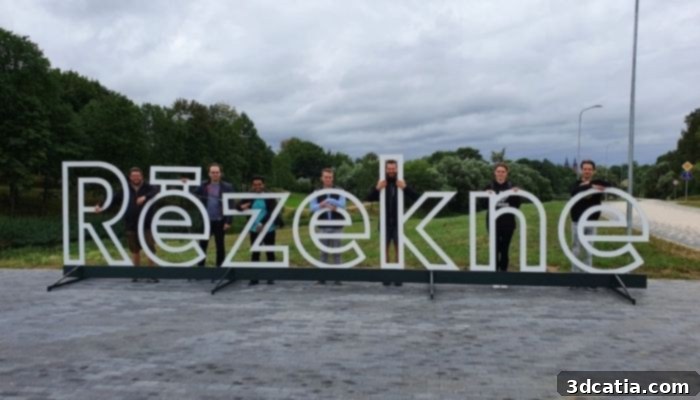
Exponential Technologies (xT) team celebrating the company’s 2-year anniversary (Photo Credit: xT)
The Power of AI and Machine Learning in Additive Manufacturing: Advantages and Overcoming Challenges
Our flagship product, the xT AMi platform, represents a significant leap forward in additive manufacturing. It enables the rapid and straightforward development and optimization of printer parameters, alongside the efficient aggregation of invaluable information concerning various applications, machines, processes, and materials. To achieve this, we meticulously integrate diverse AI and machine learning algorithms with both existing datasets and cutting-edge material science knowledge. Initially, this powerful combination allows users to develop and refine printer parameters with significantly fewer real-world, physical experiments. This drastically reduces the time, material waste, and cost typically associated with parameter development.
However, our ultimate and more ambitious goal is to achieve “first time right” manufacturing. This aspiration means reaching a point where no real-world experimentation is required whatsoever, and perfect prints are achieved on the very first attempt. While this goal is immensely challenging, it promises unprecedented efficiency and cost savings for the industry. Realizing “first time right” will, however, necessitate access to vastly larger quantities of data than are currently available across the AM ecosystem. Recognizing this critical need, we have developed strategic plans to organize and incentivize robust data sharing among multiple stakeholders. This includes collaboration between end-users, machine manufacturers, material suppliers, research organizations, and many other entities, fostering a collaborative environment essential for data-driven innovation.
Versatility Across 3D Printing Processes: From Powder Bed Fusion to Broader Applications
Given our CTO Pavel Cacivkin’s extensive background in laser processing technologies, our initial foray into additive manufacturing naturally focused on laser powder bed fusion (LPBF). This process involves using a laser to selectively melt and fuse metallic powders, layer by layer, to build a 3D object. However, over the past three years, our team has successfully undertaken numerous projects across a diverse range of other AM technologies. These include Fused Filament Fabrication (FFF), a widely used process for plastics; Stereolithography (SLA), known for its high-resolution resin prints; Wire Arc Additive Manufacturing (WAAM), an innovative method for large-scale metal parts; and several other advanced techniques.
While our experience spans various AM processes, we made a strategic decision to initially concentrate our product development efforts on solutions for powder bed fusion processes. This focused approach allows us to build a robust and highly specialized solution, as the parameter development workflows and associated datasets can vary significantly between different additive manufacturing technologies. By mastering one domain first, we ensure a higher quality and more effective initial offering. Crucially, it’s important to emphasize that the underlying algorithms, digital workflows, and data management systems we employ are designed to be general and inherently not specific to LPBF. This architectural flexibility means that at a later stage, we can seamlessly integrate data from other AM processes into our platform, leveraging the same foundational structure to expand our capabilities and support a wider array of 3D printing technologies.
Exponential Technologies’ (xT) partnership with high-performance materials company Aubert & Duval will reduce barriers to deploying AM technologies at scale (Photo Credit: xT)
Revolutionizing Machine-Material Interaction with Active Learning Algorithms
Our approach to managing the intricate interaction between machines and materials in additive manufacturing processes sets us apart from many other solutions currently available in the market. Unlike traditional methods that often rely on physics-based interaction models, which frequently make assumptions about ideal conditions, our solution employs sophisticated active learning algorithms. These algorithms are designed to leverage existing data and knowledge as a foundational starting point. From there, they dynamically explore and discover the complex rules and relationships that govern machine-material interactions within real-world manufacturing environments. This adaptive learning process allows our system to continuously improve its understanding and predictive capabilities.
The primary advantage of our solution lies in its ability to operate effectively without assuming ideal interactions and pristine conditions, which are virtually non-existent in any practical production setting. Real manufacturing environments are characterized by inherent variability, including environmental influences, minor fluctuations within the machines themselves, potential measurement errors, and a multitude of other unpredictable factors. The xT AMi platform is specifically engineered to be robust and resilient against these very influences. This resilience enables us to construct highly accurate “digital twins” of physical machines. These digital replicas are not static models but dynamic, learning entities that mirror the behavior of their real-world counterparts. Consequently, this capability allows us to perform advanced functions such as the seamless translation of machine parameters between different printers, even those from different manufacturers or with slightly different specifications, significantly streamlining multi-printer operations and consistency across a production fleet.
Exponential Technologies: Future Projects and Vision for Scalable AM
Exponential Technologies is currently in an exciting phase of rapid growth, experiencing an “exponential growth” curve in both our headcount and the number of projects we are undertaking. Our dedicated team presently comprises 12 talented individuals, and we have ambitious plans to double this number within the next year to meet the increasing demand for our solutions. This significant expansion will naturally require substantial investment to fuel our growth and extend our market reach. Therefore, we are actively planning a Seed investment round slated for Q1 of 2022. We are encouraged to have a strong group of potential investors who have already expressed keen interest in joining our early investor, APX, in this Seed round. While this initial interest is promising, there remains ample room for additional strategic investors who share our vision for transforming additive manufacturing.
From a technological standpoint, we anticipate and are proactively working on solving several complex challenges over the coming months and years. To realize our overarching goal of “first time right” manufacturing, access to truly vast amounts of high-quality data is indispensable. We fully understand, however, that printer parameter data is exceptionally valuable, proprietary, and not easily shared by companies. Recognizing this sensitivity, we are diligently working to establish collaborative partnerships with various key players across the additive manufacturing market. These partnerships are crucial for structuring and organizing the ethical and secure usage and sharing of vital printer parameter data. Looking ahead, we plan to further automate and secure this data management process by implementing Distributed Ledger Technologies (DLTs) directly into our platform. This integration would provide our users with unparalleled transparency and control, allowing them to generate, share, and utilize data while unequivocally guaranteeing both the ownership and the security of their valuable information. Beyond this, we are also continuously focused on enhancing the performance, intuitive design, and overall user-friendliness of our software. Achieving these advancements will require not only the continued dedication of our internal xT team but also ongoing collaboration with industry partners to refine and validate our innovations.
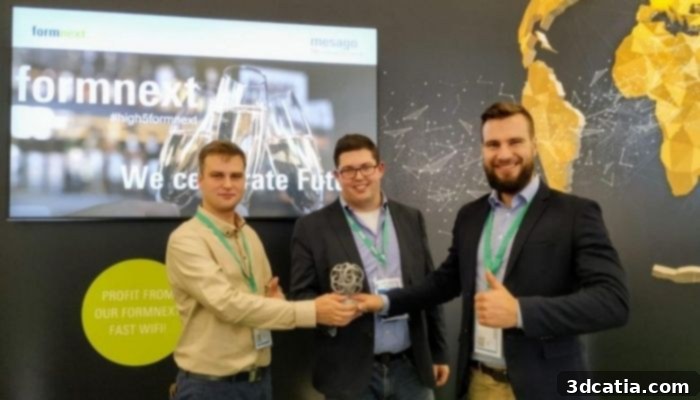
Exponential Technologies (xT) Formnext Startup Challenge Winners 2019.
Join the Exponential Technologies Partner Network
As highlighted earlier, the success and continued development of our innovative solution are deeply reliant on strong partnerships and invaluable feedback from beta-testers. We are thrilled to announce that we have already formalized a strategic partnership with Aubert & Duval, a renowned high-performance materials company, marking a significant step towards reducing barriers to deploying AM technologies at scale. Furthermore, we are in advanced discussions with a number of leading machine manufacturers, test-device producers, and material suppliers, all of whom are expected to sign partnership agreements with us in the coming weeks. We are actively expanding our partner network, so if your organization is interested in collaborating and contributing to the future of additive manufacturing, we warmly invite you to get in touch with us.
In addition to seeking partners, we are also on the lookout for motivated beta-testers for our cutting-edge solution. We currently have a small but engaged group of test users who provide critical feedback that helps us refine and improve our platform. We still have several available spots for new beta users, and we encourage anyone interested in experiencing and shaping the future of the xT AMi platform firsthand to contact us. Your insights can play a pivotal role in making additive manufacturing more efficient and accessible for everyone.
What are your thoughts on Exponential Technologies’ innovative approach to additive manufacturing? We’d love to hear your perspective! Share your comments below or engage with us on our Linkedin, Facebook, and Twitter pages. Don’t miss out on the latest 3D printing news – remember to sign up for our free weekly Newsletter here, delivered straight to your inbox! You can also explore all our videos and engaging content on our dedicated YouTube channel.