
Navigating 3D Printing Technologies: Expert Insights for Your Project Success
Choosing the right 3D printing technology can be a daunting task, whether you’re taking your first steps into additive manufacturing or you’re a seasoned professional. With a diverse array of options available, from Fused Deposition Modeling (FDM) to Stereolithography (SLA), Selective Laser Sintering (SLS), and advanced metal deposition techniques, the selection process requires careful consideration. Each technology operates with distinct materials and, consequently, yields different results in terms of part properties, surface finish, and cost. So, how do you make an informed decision when embarking on a 3D printing venture? If you’re grappling with the question of which 3D technology best suits your needs, continue reading. We’ve gathered valuable insights from three leading experts in additive manufacturing to guide you through this crucial choice.
Meet Our Additive Manufacturing Experts
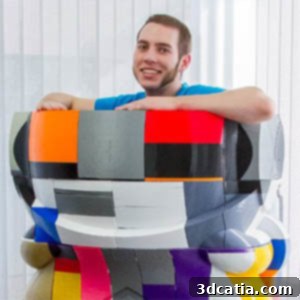
To provide you with comprehensive guidance, we consulted with three prominent figures in the 3D printing industry. Our first expert is Artem Arno, CEO at Treatstock, an e-commerce platform established in 2016. Treatstock specializes in connecting small to medium-sized businesses (SMBs) with global 3D printing services, offering new sales leads and expanding market reach. His experience covers a vast spectrum of user needs and project types.
Next, we spoke with Ken Burns, Technical Sales Director at Forecast 3D. Forecast 3D is a distinguished provider of custom manufacturing and 3D printing services, catering to a wide range of sectors including healthcare, automotive, aerospace, consumer goods, and design. Ken’s role involves partnering with clients from diverse industries, transforming their 2D concepts into tangible 3D products, giving him a unique perspective on industrial applications and material capabilities.
Finally, we interviewed Alec Richter, a Marketing Associate at MatterHackers, one of the largest 3D printing retailers in the United States. Alec’s daily responsibilities are hands-on, encompassing the printing of various assets using nearly every 3D printer MatterHackers carries. He is proficient in troubleshooting print settings and printer hardware, and frequently provides technical support for complex 3D printing challenges. His insights are particularly valuable for understanding practical aspects and user experiences.
-

- Artem Arno, CEO at Treatstock

-
- Ken Burns, Technical Sales Director at Forecast 3D

-
- Alec Richter, Marketing Associate at MatterHackers
Matching 3D Printing Technologies to Specific Applications
The fundamental step in selecting your 3D printing technology is clearly defining your project’s objectives. What exactly are you trying to achieve with your 3D print? As Artem Arno explains, the landscape of 3D printing technologies has seen rapid evolution and fluctuating popularity, with new innovations regularly entering the market. This dynamic environment can make the choice seem overwhelming. “All 3D printing technologies, even the most innovative ones, have their own limitations. That’s why there is no such thing as a one-for-all 3D printing process that can be used for any application. Every project has its own requirements for the end part, such as accuracy, strength, surface finish, or specific functional characteristics.” This highlights the critical need to align the technology with the desired outcome rather than seeking a universal solution.
Each 3D printing technology is optimized for specific use cases and excels within particular industries. Ken Burns offers an example: “HP’s Multi Jet Fusion (MJF) technology, for instance, truly shines in demanding sectors like automotive, healthcare, and industrial product manufacturing, offering excellent speed and mechanical properties for functional parts.” On the Treatstock platform, this application-centric approach is directly integrated into their service catalog. Artem Arno elaborated, “If a user selects ‘Prototype’ as their application, they will predominantly see services offering Fused Deposition Modeling (FDM), known for its affordability and versatility in early-stage design verification. Conversely, if ‘Jewelry’ is chosen, the results will mostly feature services providing photopolymer 3D printing with castable resins, ideal for intricate designs and direct investment casting.” This demonstrates how the intended application naturally dictates the most suitable technology.
While some 3D technologies are engineered for highly specialized purposes, others offer broader utility. Alec Richter provides several illuminating contrasts. “Mcor 3D printers, which utilize paper and inkjet ink, are excellent for creating full-color 3D prints. However, because they are made of paper and glue, they are best suited for low-cost demo models and conceptual visualization, rather than durable, full-functionality parts.” He continues, “Selective Laser Sintering (SLS) printers are very effective for producing strong, usable, and complex parts with excellent mechanical properties, making them suitable for end-use components and batch production. However, the machines themselves involve a significant investment, so you wouldn’t typically use an SLS machine for massive, non-critical parts if other options are available.” In contrast, he notes the remarkable adaptability of Fused Deposition Modeling (FDM): “FDM 3D printers are relatively multi-purpose. You can print something completely whimsical like a desk toy or a critical jig used daily on an assembly line, with material costs ranging from a few cents to a few dollars. This versatility makes FDM a popular choice for both hobbyists and industrial users.”
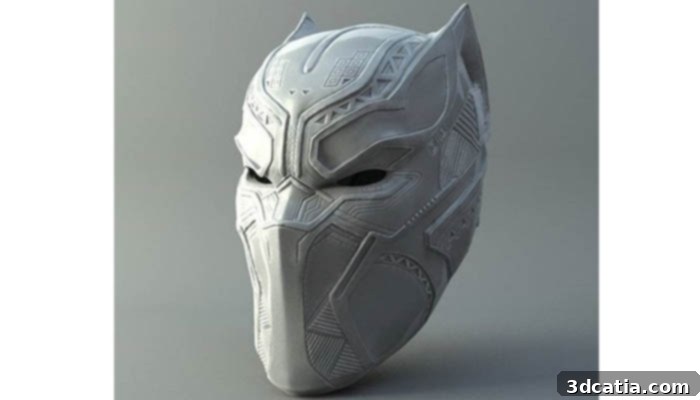
3D printed mask of the Black Panther character from the Captain America: Civil War movie | Credits: Treatstock
The Crucial Role of Materials in 3D Printing Technology Selection
The choice of 3D printing technology is inextricably linked to the materials it can process. Generally, each technology is engineered to work with a specific type or group of materials, defining its capabilities and limitations. Artem Arno emphasizes this connection: “If you already know what material properties you require for your final product, it becomes significantly easier to identify the appropriate 3D printing process. Otherwise, my primary suggestion would be to make your decision based on the intended application of the final product, as the application often dictates the necessary material characteristics.”
However, Ken Burns points out that while technologies often have preferred materials, the landscape is not entirely rigid. “While certain hardware components can inherently limit material capabilities, it doesn’t mean that a technology cannot eventually access a broader range of materials. Many 3D printing technologies are developed as open systems, or they offer developer kits that allow material scientists and developers to tune and optimize new materials to work effectively with existing hardware. This openness fosters innovation and expands the material palette over time.”
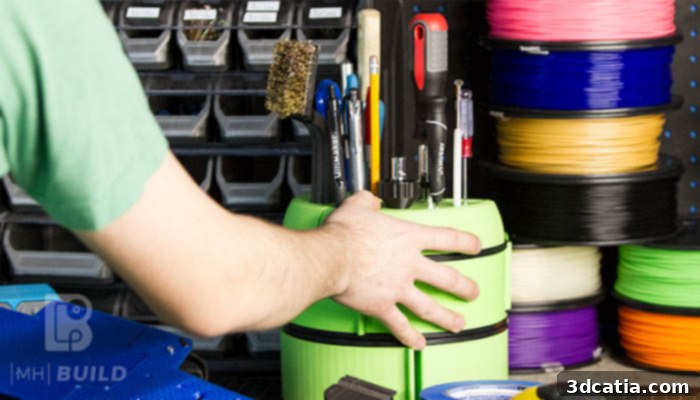
Image illustrating the diverse range of materials used in 3D printing. Credits: MatterHackers
It often seems more intuitive and practical to develop a 3D printing system with a specific material in mind, rather than trying to adapt a technology to a material it wasn’t designed for. Alec Richter elaborates on this principle using metal 3D printing as a prime example: “The material itself typically sets the specifications, and the 3D printer is then built around those requirements. Consider metal, which, from the feedback I’ve gathered, is often seen as the ‘Holy Grail’ for 3D printing. The ability to affordably prototype and produce functional parts using metal can drastically cut down significant portions of the traditional manufacturing and prototyping process.”
He continues, highlighting the inherent challenges: “However, metal is notoriously difficult to work with due to the extremely high temperatures required to melt it for processes like Direct Metal Laser Sintering (DMLS) or even sinter it for other methods. The very limitations of metal as a material mean it cannot be simply extruded like the plastics used in an FDM printer. It necessitates a powerful laser, similar to an SLS printer, but often even stronger to achieve full fusion. This is precisely why DMLS printers are so incredibly expensive; the technology is highly specialized and robust to handle the extreme conditions required for metal processing, making the initial investment and operational costs substantially higher. Understanding these material-driven constraints is key to appreciating the cost and performance differences between various 3D printing technologies.”
Expert Choices and the Impact of Price on 3D Printing Projects
When it comes to personal project choices and the role of price, our experts offer varied but insightful perspectives, reflecting their distinct operational environments and objectives. Alec Richter, working in an office setting, reveals his primary preference: “I’m in an office environment, so I almost exclusively use FDM 3D printers, with the occasional (I’m talking once a quarter) use of an SLA 3D printer.” He underlines the broad applicability and cost-effectiveness of FDM for most users: “For most people, FDM 3D printers can handle plenty of different use cases, and the price is one of the biggest factors influencing adoption. Across almost every type of 3D printing, the material cost for FDM plastics is remarkably low and readily available from a wide variety of sources. Of course, the affordability makes it easy to use, but having an FDM printer right next to my desk makes it significantly easier to design, iterate, and reprint rapidly than if I had to send files to a machine shop in another building. The accessibility and immediacy truly drive efficiency.”
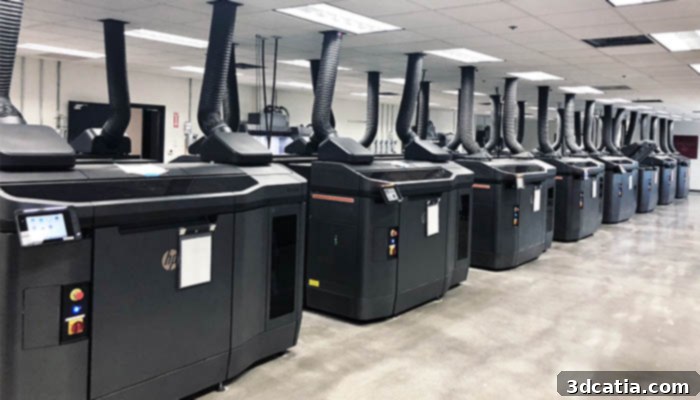
Examples of 3D printed parts. Credits: Forecast 3D
For Artem Arno at Treatstock, the selection process is a comprehensive, systematic inquiry tailored to each unique request. He emphasizes that there’s no default choice, only an optimized one: “If I need to 3D print something, I would ask myself a whole series of questions to thoroughly define the project’s parameters. These include: What is the primary application of this 3D print? Is it intended as a fully functional prototype requiring specific mechanical properties, or merely a demonstrative model for visual representation? How accurate must it be, considering tolerances and surface finish? In what environmental conditions will it be used – does it need to withstand high temperatures, chemicals, or stress? And so on and so forth. Each answer narrows down the suitable technologies and materials significantly.”
Ken Burns, representing Forecast 3D which serves diverse industrial clients, acknowledges the role of cost but emphasizes other critical factors. “Yes, price is certainly a consideration in our decision-making process, but the quality of the final part and the speed of production are typically competing for equal importance. For our industrial clients, lead times and performance specifications are paramount. It is really more about the overall machine capabilities and what specific industries or applications we want to focus on with those capabilities. A higher initial investment might be justified if it delivers superior part quality, faster turnaround times, or enables production for high-value applications where performance is non-negotiable. The total cost of ownership, including material usage, post-processing, and maintenance, also plays a significant role beyond just the purchase price of the printer.”
Recommendations for the Complete 3D Printing Beginner
For individuals new to the world of additive manufacturing, the abundance of choices can be overwhelming. Our experts offer invaluable advice to help complete beginners navigate their initial steps. Artem Arno suggests focusing on two primary parameters to simplify the decision-making process: “If you are a total beginner in the world of 3D printing, you should first determine at least two main parameters: 1) the budget allocated for your project and 2) the primary application of the 3D print. These two factors alone will significantly narrow down your options.” He also recommends specific technologies for their relative ease of entry: “While every 3D printing process can have its tricky aspects for a total beginner, FDM (Fused Deposition Modeling), SLA (Stereolithography), and DLP (Digital Light Processing) technologies, and similar resin-based methods, generally offer the best options for the inexperienced user due to their lower entry cost and more accessible learning curves.”
Ken Burns agrees that the market now presents many excellent beginner-friendly options. “We have seen a lot of new printers enter the marketplace that have really positioned themselves around simplicity and user-friendliness. Even many of the larger 3D OEMs (Original Equipment Manufacturers) have developed equipment designed for faster adoption by new users, integrating features that streamline the printing process.” However, he advises a nuanced approach to choosing: “Before making a blanket recommendation, it is always better to understand what a beginner might truly need and their comfort level with technology. For example, there are many great beginner printers available, but some of them are very limited by their proprietary software solutions, which can restrict flexibility or require a steeper learning curve. If you are already software-savvy and enjoy tinkering, such a printer might be an excellent starting point. If not, a system with more intuitive and guided software could prove to be far less challenging and more rewarding initially.”
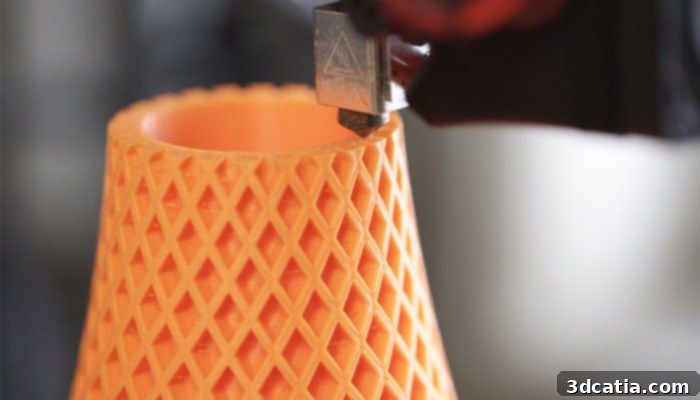
FDM technology is widely recommended for complete beginners due to its accessibility and large user community.
For Alec Richter, FDM stands out as the unequivocal choice for a complete beginner. “It’s the most accessible technology, boasts the largest community of other users for support and shared knowledge, and offers the lowest barrier to entry in terms of cost.” He humorously simplifies its operation: “FDM 3D printers are, when you get down to it, really quite simple; they’re essentially a precise hot glue gun strapped to a couple of motors that move it around.” This analogy highlights the straightforward mechanics that make it easier for newcomers to grasp.
Alec also offers a crucial piece of financial advice: “For me, the most important thing to consider when choosing a 3D technology for the first time is to be realistic with your budget and truly understand when what you want doesn’t fit within your price range. If you have a budget of $500, you cannot realistically expect the printer to perform all the same complex functions or offer the same advanced features as a $2,500 printer.” He elaborates on common feature disparities: “For instance, you shouldn’t expect features like a sensor to detect when your filament has run out and automatically pause the print until you reload material, or dual extrusion capabilities for printing with multiple materials or colors, on any sort of small-budget FDM printer. These advanced functionalities are typically reserved for higher-end machines. Setting realistic expectations based on your investment is paramount for a positive first 3D printing experience.”
For more in-depth information about each 3D printing technology, you can explore our detailed guides HERE. Further information from our experts can be found on their respective websites: Treatstock, Forecast 3D, and MatterHackers.
Did you find the advice from our experts useful in your journey to choose the right 3D printing technology? Let us know what you think in a comment below or join the conversation on our Facebook and Twitter pages! Don’t forget to sign up for our free weekly Newsletter, delivering all the latest news and insights in 3D printing straight to your inbox!