
The Ultimate Guide to 3D Printing Post-Processing: Techniques, Optimization, and Expert Insights
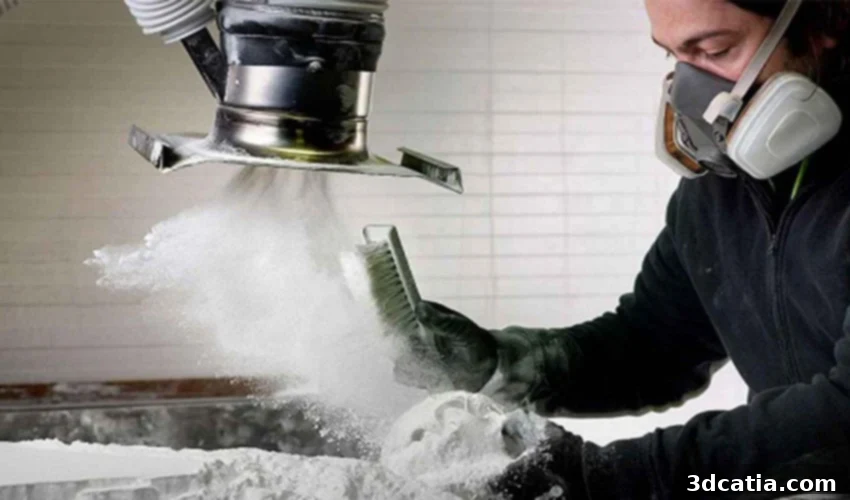
The journey of 3D printing a part involves numerous critical stages, beginning with meticulous 3D modeling, followed by slicing the digital model, and finally sending it to the 3D printer for fabrication. Each step holds significant importance in ensuring the quality and integrity of the final product. However, the process doesn’t truly conclude until the often-overlooked, yet immensely crucial, phase of post-processing. This final stage is pivotal for refining the printed part, addressing issues like its laminated appearance, adding color, enhancing its surface finish, or reinforcing its structural properties.
Far from being a mere afterthought, post-processing is a definitive step that can transform a raw 3D print into a functional, aesthetically pleasing, and durable component. Its critical nature is underscored by the fact that many advanced manufacturers, such as the creators of the Velox 3D printer, and specialized companies like DyeMansion, have developed sophisticated machines and integrated solutions specifically for this phase. To delve deeper into the significance of post-processing in additive manufacturing and explore the diverse techniques available, we’ve gathered exclusive insights from three leading experts in the field.
Our esteemed panel of experts includes: Andy Kottage, Lead Technical Trainer at PostProcess, a company renowned for its innovative, automated, and intelligent approach to the post-printing workflow in additive manufacturing. PostProcess distinguishes itself through its software-driven solutions, complemented by bespoke hardware and chemistry, designed to tackle complex post-printing challenges specific to various materials and industry demands. Their comprehensive offerings span soluble support removal, resin removal, powder removal, and advanced surface finishing across virtually all 3D printing technologies.
Next, we have Vincent Icart, Program Leader for MOVINGLight at Prodways. MOVINGLight DLP technology represents a patented photopolymerization process engineered for producing high-resolution prototypes and functional parts with exceptional speed. Vincent brings invaluable perspectives on post-processing techniques particularly relevant to resin-based additive manufacturing.
Rounding out our expert panel is Fabien Pettelot, Application Engineer at Protolabs, one of the industry’s largest and most respected providers of 3D printing services for custom prototypes and production-grade components. Fabien’s extensive experience with a wide array of 3D printing technologies offers a broad understanding of the practicalities and challenges of post-processing in a high-volume production environment.
-

- Andy Kottage

-
- Fabien Pettelot

-
- Vincent Icart

Why Post-Processing is Essential for 3D Printed Parts
The importance of post-processing extends far beyond mere aesthetics; it is fundamental to achieving the desired functional properties, dimensional accuracy, and overall quality of 3D printed parts. Without proper post-processing, many parts would be unsuitable for their intended applications, whether as end-use components, high-fidelity prototypes, or intricate tooling. This stage allows for the removal of support structures, excess materials, and uncured resins, which are often inherent to the additive manufacturing process. Beyond cleaning, post-processing enables surface smoothing, coloring, coating, and even heat treatments, all of which contribute to improving a part’s mechanical strength, chemical resistance, UV stability, and tactile feel. It is the bridge between a raw print and a finished product that meets rigorous performance and appearance standards.
Exploring Diverse Post-Processing Techniques for 3D Printing
Given the expansive range of additive manufacturing technologies and the multitude of compatible materials, it is no surprise that there exists a wide array of post-processing methods. The treatment of conventional plastics like PLA or ABS, for instance, differs significantly from that of high-performance metals such as aluminum and titanium. Understanding these distinctions is crucial for selecting the most effective and efficient post-processing approach for any given application.
General Approaches and the Evolution Towards Automation
Andy Kottage highlights a common industry trend: “Looking at most of the industry at the moment, you will find post-printing techniques that heavily rely on a combination of manual labor and retrofitted traditional manufacturing equipment.” This often includes basic methods for support removal and surface finishing, such as dunk tanks for dissolving supports, high-pressure water jets, rock tumblers, and vibratory bowls for smoothing. While effective to some extent, these methods can be labor-intensive, inconsistent, and often inefficient for scaling production. Andy further emphasizes that software is increasingly becoming a critical component in overcoming contemporary post-printing challenges, enabling greater automation and precision.
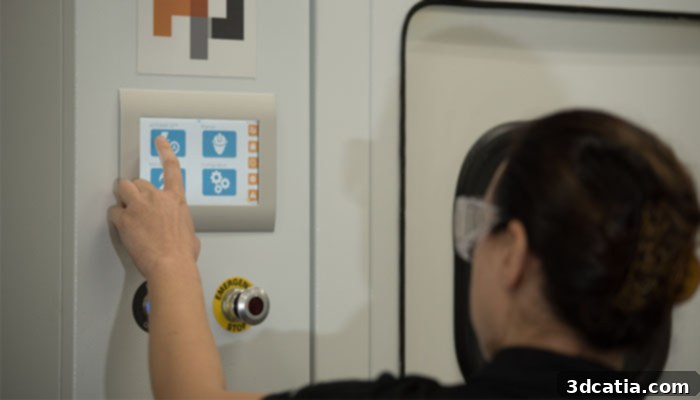
The AUTOMAT3D software from PostProcess continuously monitors and reacts to key process factors to optimize part finish | Credits: PostProcess
Post-Processing for Resin-Based 3D Prints
For resin-based printers, commonly utilizing technologies like SLA, DLP, or LCD, the post-processing phase primarily involves two essential procedures, as explained by Vincent Icart: “Rinsing the part in a solvent bath, then placing it in a UV oven. Rinsing removes all uncured resin residues and unclogs internal cavities. As for the UV furnace treatment, it gives the parts their final mechanical properties and ensures a perfect curing of the part.” The solvent rinse, often using isopropyl alcohol (IPA), is crucial for removing any sticky, unpolymerized liquid resin that adheres to the surface or within intricate internal channels. This step is vital not only for cleanliness but also for preventing skin irritation and achieving a smooth, non-tacky finish. The subsequent UV curing in a specialized oven completes the polymerization process, significantly enhancing the mechanical strength, hardness, and dimensional stability of the part. Vincent adds, “After these two steps, the parts can be handled without gloves without any problem and will no longer have a sticky appearance,” underscoring the transformation from a fragile, raw print to a robust, usable component.
Post-Processing for Plastic Filament 3D Prints
For 3D printers that employ plastic filaments, such as FDM (Fused Deposition Modeling) technology, the primary post-processing challenge often lies in eliminating visible layer lines and improving surface smoothness. The approach varies depending on the plastic’s rigidity and chemical properties. For rigid plastics like PET, PC (Polycarbonate), or PLA, surface smoothing can be achieved by applying a one-component or two-component spray, such as an epoxy-based coating, which fills in the layer lines and provides a more uniform finish. Conversely, softer materials like ABS, PS (Polystyrene), or ASA are more amenable to manual sanding or chemical vapor smoothing. Solvents like acetone (for ABS) can be used to gently dissolve the outermost layer of the plastic, creating a glossy or matte, streak-free effect, which significantly improves the part’s aesthetic appeal and tactile quality.
Post-Processing for Polymer Powder 3D Prints
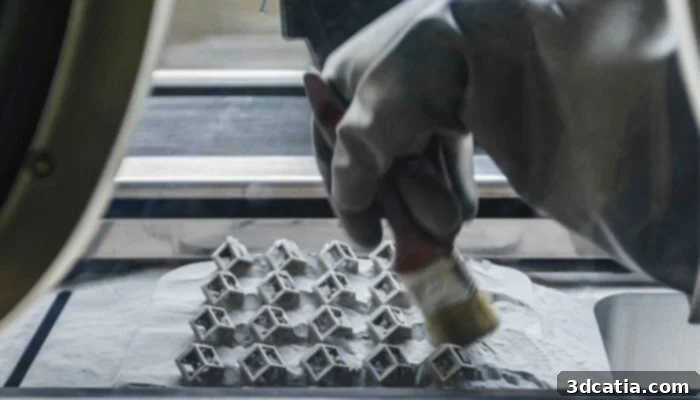
When working with polymer powders, particularly in Selective Laser Sintering (SLS) technology, our experts agree on a distinct advantage: the powder itself acts as a self-supporting medium, eliminating the need for separate printing supports. This greatly simplifies the initial post-treatment work. However, as Fabien Pettelot explains, “For plastic powder sintering (SLS) or mineral powder printing, the powder itself serves as a support. But at the end of printing, it will be necessary to remove all the unused powder.” The extensive powder bed surrounding the printed part must be meticulously removed. This typically involves methods such as suction, blowing with compressed air, sweeping, or blasting with non-abrasive media to clean out all cavities and surfaces. A crucial aspect of this process is the potential for recycling the unused powder, which contributes to cost-efficiency and sustainability in additive manufacturing.
Post-Processing for Metal 3D Prints
For parts fabricated using metal 3D printing technologies like Direct Metal Laser Sintering (DMLS), post-processing is highly specialized and critical for achieving the desired mechanical properties. These parts often require thermal treatment, such as heat treatment or hot isostatic pressing (HIP), to relieve internal stresses, improve density, and enhance the overall strength and fatigue resistance of the metal. Following these essential treatments, various finishing operations can be performed, including precision machining to achieve tight tolerances, polishing for a smooth or reflective surface finish, or anodizing to enhance corrosion resistance and alter surface appearance. It’s also vital to acknowledge that DMLS technology, due to the nature of metal powders, demands stringent safety protocols to mitigate risks such as explosion or fire, making post-processing in this domain a highly controlled environment.
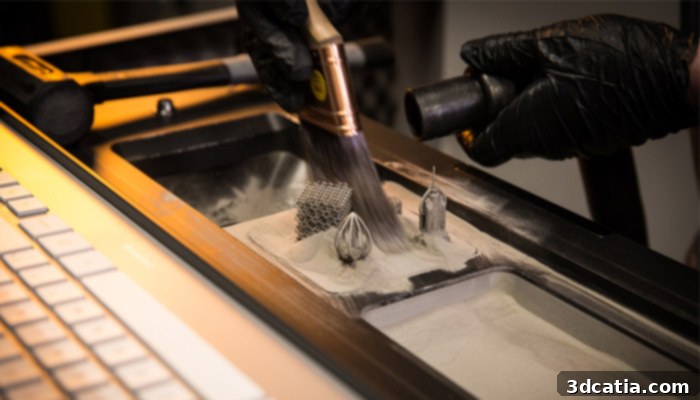
Credits: Protolabs
Which 3D Printing Techniques Require the Least Amount of Post-Treatment?
Determining which 3D printing technology demands the least post-processing is a nuanced question, as multiple factors influence the amount of finishing required for any given application. While the core technology plays a role, it is certainly not the sole determinant. Other crucial considerations include the type of support and build material used, the overall print volume, the specific geometry of the part, and the precise finishing requirements for the end-use application.
The Overriding Influence of Geometric Complexity
Fabien Pettelot strongly emphasizes the latter point, stating, “For example, it will certainly be a little easier to treat an aluminum part than a titanium part, but for a given technology, more than the material, it is the geometric complexity of the part that will determine the complexity of the finishing.” This highlights that even with a ‘simple’ material, an intricate design with many overhangs, internal channels, or fine details will inevitably require more intensive support removal and surface treatment than a simpler, block-like structure.
Material Jetting (PolyJet) for Minimal Post-Processing
When asked to pinpoint a technology that typically results in parts needing minimal post-treatment, Fabien Pettelot suggests Material Jetting (PolyJet). He elaborates, “I would say that PolyJet is the technology that requires the least post-processing. The building support is quickly dissolved in a bath; simply rinse and dry the part after. There is no polishing or other finishing required.” PolyJet technology often utilizes a soluble support material that can be easily washed away, making the cleaning process straightforward and efficient. This contrasts sharply with technologies like DMLS, which Fabien notes typically requires the most post-processing due to the need for stress relief, support removal (often machined off), and extensive surface finishing for demanding metal applications. He wisely concludes that “These two technologies obviously have nothing to do with each other and offer completely different parts for very different uses,” underscoring that the choice of technology should always align with the part’s intended function and required properties.
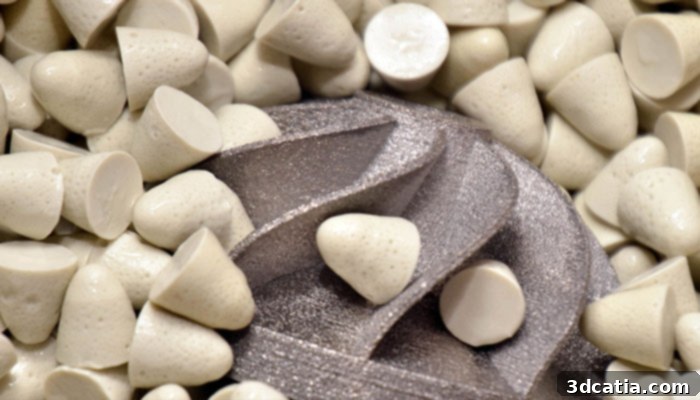
Parts can be polished in media tumblers or vibro machines that contain small ceramic chips | Credits: PostProcess
The Role of Automated Solutions in Reducing Post-Processing Effort
Andy Kottage offers an alternative perspective, focusing on the impact of automation: “With a range of products that offer automated post-printing, for both surface finish and support removal, that may require less than 1 minute of operator attended time per batch, the 3D print technology that requires the least amount of post-processing will be any technology that is a PostProcess proven application.” He highlights that specialized, automated solutions can drastically reduce the manual labor and time associated with post-processing across various platforms. This includes efficient soluble support removal for FDM parts, rapid support removal for PolyJet, and streamlined resin removal processes, effectively minimizing the ‘human’ effort required regardless of the initial printing technology.
Optimizing Your 3D Printing Post-Processing Workflow
Achieving efficiency and quality in post-processing is paramount for any additive manufacturing operation. Our experts unanimously agree that proactive measures and a systematic approach are key to optimizing this crucial stage.
Design for Post-Processing from the Outset
A fundamental optimization strategy involves thoughtful design. Experts emphasize the importance of optimizing printing supports during the initial design phase. By strategically placing and minimizing support structures, designers can significantly reduce the amount of material to be removed and the effort required during post-processing. This early consideration can save substantial time and labor down the line, streamlining the entire workflow.
Proper Equipment Sizing and Manufacturer Recommendations
Vincent Icart of Prodways stresses the importance of selecting the right tools and following expert advice: “Sizing your equipment properly according to the volume to be processed, and following the recommendations of the application teams of your 3D printer supplier” is a must. Investing in post-processing equipment that matches your production volume and specific material requirements can prevent bottlenecks and ensure consistent, high-quality results. Leveraging the expertise of your 3D printer supplier’s application teams can also provide invaluable guidance on best practices for your specific setup.
Credits: Protolabs
Understand Your Process and Identify Pain Points
Andy Kottage advises a critical self-assessment: “Understand your current process. It sounds simple but most users have put their attention on the design and print phases, overlooking what is required to bring those parts to the finish line.” Many users focus heavily on design and printing, neglecting the realities of post-processing until it becomes a problem. He continues, “From there, you need to determine your biggest pain point: Throughput? Consistency? Labor productivity?” By pinpointing specific challenges—whether it’s slow processing times, inconsistent part quality, or excessive manual labor—companies can then seek targeted solutions, such as automation or improved tooling, to address these inefficiencies effectively.
The Unavoidable Impact of Part Complexity
Ultimately, a consensus among our three experts is that the intrinsic complexity of the 3D printed part will always be a major determinant of the difficulty and duration of post-processing. Fabien Pettelot of Protolabs concludes: “The more shapes and geometric details the part has, the more difficult it will be to eliminate (depending on the technology) any supports or unused powder.” This underscores the necessity of adapting the part’s design as much as possible to the specific characteristics of the chosen additive manufacturing technology and meticulously defining the most appropriate build orientation to minimize post-processing challenges.
Conclusion: Mastering the Final Frontier of 3D Printing
Post-processing stands as a critical and transformative stage in the additive manufacturing workflow, essential for translating raw 3D prints into functional, aesthetic, and durable end-use parts. As our experts Andy Kottage, Vincent Icart, and Fabien Pettelot have highlighted, the choice of post-processing technique is heavily influenced by the material, printing technology, and crucially, the geometric complexity of the part. While technologies like PolyJet may offer simpler finishing, automated solutions are continually evolving to streamline post-processing across various platforms. Optimizing this stage involves thoughtful design, strategic equipment selection, and a deep understanding of current workflows to identify and address bottlenecks. By integrating post-processing considerations from design to final production, manufacturers can unlock the full potential of 3D printing, ensuring high-quality results and efficient operations.
You can find more information on PostProcess, Prodways and Protolabs.
Was this expert advice helpful? Let us know in a comment below or on our Facebook and Twitter pages if the listing above was useful! Don’t forget to sign up for our free weekly Newsletter, with all the latest news in 3D printing delivered straight to your inbox!