
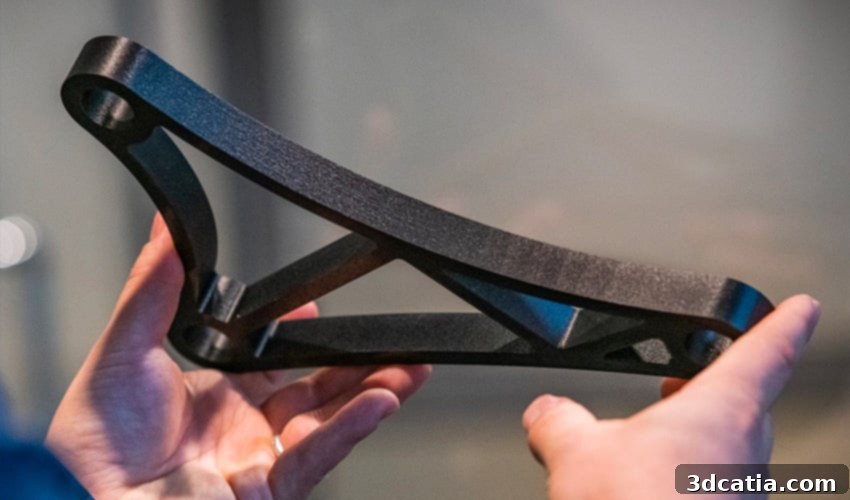
Mastering Polymer Selection: An Expert Guide to 3D Printing Materials for Diverse Applications
Additive manufacturing, commonly known as 3D printing, has revolutionized various industries by offering unparalleled design freedom and rapid prototyping capabilities. A crucial aspect of this technology’s widespread adoption is the ever-expanding range of compatible materials. From robust metals and resilient ceramics to versatile thermoplastics and intricate photosensitive resins, the material landscape is diverse. Among these, polymers constitute the largest and most widely used family of materials in 3D printing. These versatile substances can be found in various forms, such as filaments, powders, or liquid resins, each tailored to specific 3D printing methods. However, navigating the vast array of available polymers and selecting the optimal one for a particular application or industry can be a complex challenge. A deep understanding of each material’s unique properties and characteristics is essential to guarantee the desired performance and longevity of the final printed parts. To demystify this critical selection process and provide practical insights into choosing the appropriate polymer for any additive manufacturing endeavor, we’ve engaged with three prominent industry experts. This article will delve into key questions such as: What are the prevalent types of polymers in the market? For which applications are they most suited? And, what crucial factors must be considered during the material selection phase? Our experts will share their invaluable perspectives to guide you through these intricate decisions.
Our journey into polymer selection begins with insights from Krzysztof Kardach, Chief of Technology – FFF 3D Printing at OMNI3D. With nearly a decade of experience, Krzysztof has dedicated his expertise to advancing 3D printing technology and filament development. His practical, application-oriented approach has been instrumental in assisting both emerging and established companies in successfully integrating polymer 3D printing into their operations. Next, we hear from Fernanda Kronjäger, Sales Manager in Technical Consulting 3D at the renowned chemical company BASF. As a specialist in selective laser sintering (SLS), Fernanda plays a pivotal role in guiding users to identify the perfect polymer solution for their specific application needs. Finally, we feature Martin Opustil, Marketing Specialist at Fillamentum, whose responses were developed in close collaboration with their R&D department. At Fillamentum, dedicated teams continuously innovate to create cutting-edge 3D printing materials that address evolving market demands. Martin’s direct involvement with these teams provides him with unparalleled insights into the latest material advancements and techniques in the dynamic field of 3D printing.
- Krysztof Kardach
- Fernanda Kronjäger
- Martin Opustil
Exploring the Diverse Range of Polymers on Today’s Market
The current market for 3D printing polymers is remarkably broad and continues to expand rapidly. This expansive family of materials offers options in various forms, catering to different additive manufacturing technologies. You’ll find them as liquid photosensitive resins, solid filaments for extrusion-based processes, or fine powders for sintering methods. The most commonly encountered types include rigid thermoplastics like PLA (Polylactic Acid) and ABS (Acrylonitrile Butadiene Styrene), which are staples in many consumer and professional applications due to their ease of use and mechanical properties. Flexible elastomers such as TPA (Thermoplastic Amide) and TPU (Thermoplastic Polyurethane) are available in both filament and powder forms, prized for their elasticity and impact resistance. Beyond these, specialized photosensitive polymers, primarily used in vat polymerization techniques like SLA or DLP, offer high resolution and intricate detail. Soluble polymers are also crucial, serving as indispensable support structures that can be easily removed after printing, particularly in complex geometries. Furthermore, polyamides, often referred to as nylon, are highly valued for their strength and durability. PA11 and PA12, typically found in powder form, are extensively used in selective laser sintering (SLS) applications, while PA6 is a popular filament choice compatible with extrusion-based 3D printing methods.
Martin Opustil provides an overview of the evolving 3D printing materials market: “There are a tremendous number of materials available nowadays. This spectrum ranges from conventional polymers like PLA and ABS, through advanced composites incorporating carbon or aramide fibers, to technically sophisticated options such as CPE (Co-polyester), ASA (Acrylonitrile Styrene Acrylate), and various polyamides (PA). We also see a growing category of industrial-grade materials specifically engineered for demanding environments, characterized by exceptional resistance to chemicals, inherent flame retardancy, superior weather resistance, and other highly specialized values.” Fernanda Kronjäger further elaborates on this dynamic landscape, stating, “The sheer number of these materials is consistently increasing year after year, directly driven by the diverse and evolving needs of various customer applications.” These observations from our experts underscore a critical point: as 3D printing technology penetrates an ever-wider array of applications, there is an escalating and urgent need for new materials tailored to meet the precise requirements of each specific sector. This demand fuels continuous innovation in polymer development, offering users more specialized solutions than ever before.
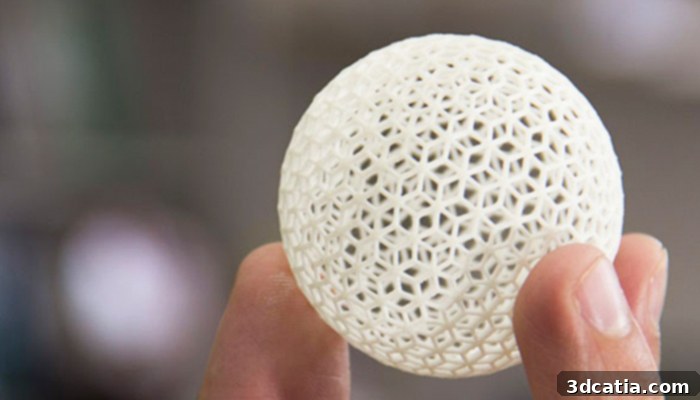
Key Considerations When Choosing 3D Printing Polymers
Before committing to a specific polymer for your 3D printing project, it is paramount to thoroughly evaluate all determining factors that influence the entire process. A critical initial consideration is the design of the part itself, which will be significantly impacted by the chosen 3D printing technology. For instance, when designing a 3D model for extrusion-based methods (like FFF/FDM), support structures are almost always required. This necessity can inherently limit the complexity of the part’s geometry and introduce post-processing steps. Conversely, powder bed fusion processes, such as Selective Laser Sintering (SLS), generally offer far greater design freedom. Since the unfused powder acts as its own support, complex internal geometries and intricate details can be reproduced without the need for additional support structures, simplifying post-processing and expanding design possibilities.
Krzysztof Kardach specifically highlights crucial considerations for FFF 3D printing: “In FFF 3D printing, it is essential to account for both the material and printer limitations. For example, some filaments are compatible with dissolvable or break-away support materials, which greatly simplifies post-processing. However, other materials may not currently have a compatible support filament, necessitating that supports be printed using the same material. Printing supports with the same material means they must be mechanically removed, which consequently limits where supports can be placed – they cannot be inside the part or in otherwise unreachable areas. Another significant factor is material shrinkage. Parts that exhibit rapid changes in cross-sectional area across consecutive layers are particularly prone to deformation issues when printed with high-performance technical or ultra polymers due to their higher shrinkage rates.” These factors directly influence the printability and final quality of the part, making material and printer compatibility a critical assessment.
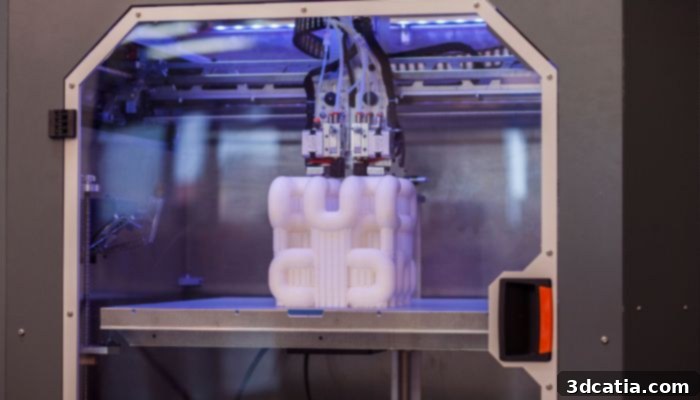
FFF 3D printing often uses polymers. When choosing the right material, consider the design first, as supports may be necessary (photo credits: OMNI3D)
Beyond design and printer limitations, the desired mechanical and aesthetic properties of the final part are immensely important when selecting 3D printing polymers. Martin Opustil emphasizes this, noting, “The design of the part profoundly influences the optimal material choice. For components demanding high strength and an excellent surface finish, engineering thermoplastics like ABS, ASA, or specific polycarbonates are frequently the superior choice. Conversely, for parts that require significant flexibility, resilience, and shock absorption, elastomers such as TPU offer a far better solution. Furthermore, post-treatment requirements represent another crucial factor; certain materials necessitate specific post-processing steps to achieve the desired surface quality, dimensional accuracy, or enhanced mechanical strength.”
Indeed, while it might seem counterintuitive to consider the final steps of a process during initial material selection, post-processing is an absolutely critical component to account for. Effective post-processing can dramatically enhance the part’s durability, aesthetic appeal, and functional performance. It’s not merely about what options are available for a given material, but how these finishing steps can elevate the end product. Fernanda Kronjäger explains, “Post-processing offers a wealth of options to significantly improve the durability, refine the surface roughness, and elevate the overall quality of your 3D printed part. These crucial steps include, but are not limited to, thorough cleaning, various forms of surface treatment, and precise finishing techniques. The ideal solution is highly dependent on both the specific material used and the desired final surface characteristics. You can even apply coatings to the parts in a wide range of colors to meet specific aesthetic or functional requirements.” Understanding and planning for post-processing from the outset ensures that the chosen polymer can achieve its full potential in the final application.
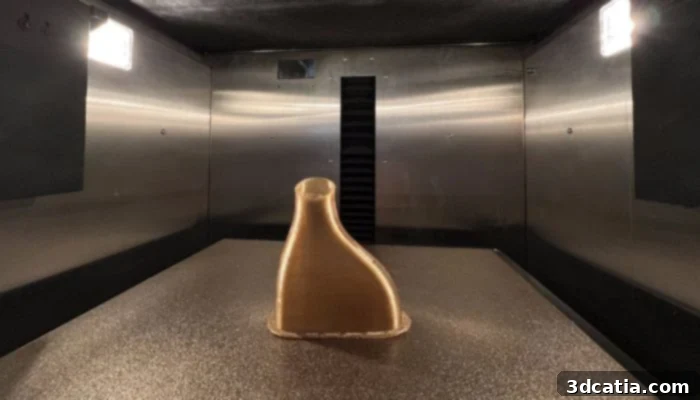
High-performance polymers, like this ULTEM 1010 part from OMNI3D and made on their newest 3D printer (soon to be launched!), are ideal for advanced and demanding applications (photo credits: OMNI3D)
Determining the Right 3D Printing Polymer For Specific Applications
Once the diverse types of available materials and the essential factors for their selection have been thoroughly considered, the next crucial step is to align these choices with the intended applications. As previously highlighted, an increasing number of industries and sectors are embracing Industry 4.0 technologies, including 3D printing, to enhance their production capabilities. Consequently, the applications for 3D printed parts are incredibly varied and demand specific material properties. Generally, basic polymers like PLA or standard ABS are suitable for applications where parts are not exposed to extreme temperatures, harsh chemical environments, or significant mechanical stress. These are often ideal for prototyping, visual models, or functional parts in benign conditions. In contrast, high-performance polymers, such as ULTEM (PEI) or PEEK (Polyether Ether Ketone), are meticulously engineered for industrial environments that impose rigorous demands. These advanced materials offer exceptional thermal stability, chemical resistance, and superior mechanical strength, making them indispensable for aerospace, automotive, and medical applications. Krzysztof Kardach succinctly summarizes how the inherent characteristics of polymers dictate their suitability for various uses: “There truly are an unlimited number of application and material pairings. However, the most commonly considered factors and recommended material types are: for robust chemical resistance, materials like PPS (Polyphenylene Sulfide) or PET-G (Polyethylene Terephthalate Glycol) are excellent choices; for high thermal resistance, PA12-CF (Carbon Fiber reinforced Polyamide 12), PEI (Polyetherimide), or PPSU (Polyphenylsulfone) are typically recommended; for superior toughness and impact absorption, PP (Polypropylene), TPU (Thermoplastic Polyurethane), or PC (Polycarbonate) are preferred; for resistance to UV degradation, ASA (Acrylonitrile Styrene Acrylate) or PC are often chosen; and for applications requiring watertight parts, it is crucial to avoid any fiber-filled polymer as fibers can create microscopic pathways for moisture.”
Fernanda Kronjäger also provided valuable examples of more specific application scenarios: “If a user is aiming to produce ductile functional parts that require high elongation at break and excellent impact resistance, PA11 (Polyamide 11) is an exceptionally good option due to its flexibility and toughness. On the other hand, PP (Polypropylene) is highly valued for its distinctive properties, including very low density and superior chemical resistance. This means that whenever a component needs to be lightweight, resistant to chemical exposure, and possess a certain degree of flexibility without immediate brittle failure, polypropylene should be given strong consideration.” It is also important to remember that to obtain professionally manufactured final parts with consistent quality and traceability, partnering with an experienced 3D printing service provider can be a highly viable and beneficial option, offering access to specialized equipment and expertise.
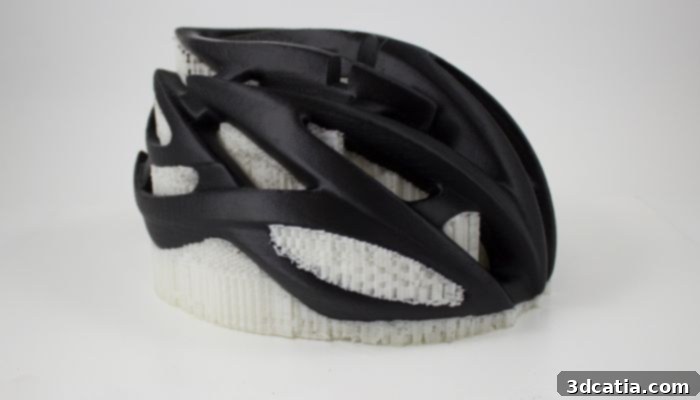
It is important to keep the intended application in mind when choosing a polymer, as different polymers will have different properties (photo credits: OMNI3D)
To conclude the discussion on application-driven material selection, Martin Opustil reiterates the fundamental distinction in polymer types: “We consistently recommend thermoplastics for applications that demand significant structural strength and an excellent surface finish, making them ideal for precision mechanical parts or high-quality medical supplies. Conversely, elastomers are best suited for applications where flexibility and resilience are paramount, such as shock absorbers, seals, and gaskets. Furthermore, when considering post-treatment, the type of material chosen should always be directly correlated with the desired final properties and aesthetic outcome.” These insights collectively emphasize that the array of polymer choices is extensive, making a detailed understanding of the intended application’s demands a vital prerequisite before committing to any specific material. The right material ensures not only functional success but also cost-effectiveness and efficiency in the 3D printing workflow.
Essential Advice for Adopting Polymer 3D Printing
To consolidate the wisdom shared throughout this guide, our experts offer their final, crucial pieces of advice for anyone looking to navigate the world of polymer 3D printing:
“When making the critical decision on which polymer to utilize for a 3D printing application, always begin by thoroughly outlining your specific requirements in terms of the demanded quality, the precise dimensions, and the required quantity of the parts. Only after this initial assessment should you then seek out a suitable additive manufacturing technology. I strongly recommend engaging with an application specialist to discuss your particular use case. Furthermore, if you are considering investing in a 3D printer, ordering a test part is frequently an excellent proof-of-concept, providing invaluable data before acquiring an expensive piece of equipment.” – Krzysztof Kardach
“I could provide numerous tips for readers to understand why and how they should implement 3D printing. However, I’ll summarize it into these core benefits: embrace design freedom, realize significant cost savings, create truly functional parts, and look beyond mere prototyping – don’t overthink it, just do it and explore the possibilities!” – Fernanda Kronjäger
“Our primary advice for someone looking to adopt polymer 3D printing would be to conduct comprehensive research to identify the material that most precisely aligns with their specific needs and application requirements. It is also crucially important to meticulously consider any post-treatment processes that may be required to achieve the desired final properties, as well as to evaluate the environmental impact associated with the chosen material. Finally, establishing a relationship with a reliable supplier that can consistently provide high-quality material is paramount for successful and sustainable 3D printing.” – Martin Opustil
What are your thoughts on these various criteria for selecting the ideal polymer for diverse 3D printing applications? We encourage you to share your insights in a comment below or join the discussion on our LinkedIn, Facebook, and Twitter pages! Don’t forget to sign up for our free weekly Newsletter here to receive the latest 3D printing news directly in your inbox. You can also explore all our informative videos on our YouTube channel.
*Cover Photo Credits: MiniFactory