
Advanced DLP 3D Printing: ETEC’s Innovations Revolutionizing Industrial Manufacturing and Rubber Parts
Digital Light Processing (DLP) stands as a cornerstone technology within the rapidly evolving landscape of additive manufacturing. As a prominent form of photopolymerization, DLP 3D printing harnesses the power of digital light projection to precisely cure photosensitive resins, building three-dimensional objects layer by layer. Esteemed for its exceptional speed, high accuracy, and capability to produce intricate geometries, this versatile technology finds widespread application across numerous industries. Its continuous evolution promises even greater efficiency and broader applicability, driving innovation in diverse sectors from medical devices to aerospace components and beyond.
Pioneering the commercialization of DLP technology was EnvisionTEC, a company that consistently pushed the boundaries of resin-based 3D printing over many years. Following its significant acquisition by Desktop Metal, EnvisionTEC was strategically reorganized into two distinct brands: Desktop Health, focusing on advanced healthcare applications, and ETEC, dedicated to industrial production. This restructuring has ushered in a new era of innovation, with ETEC introducing groundbreaking advancements such as top-down DLP systems and developing a suite of novel materials, including highly specialized rubber-like resins. To fully appreciate the impact of these developments, it’s essential to understand the fundamental mechanics of DLP, explore the specific innovations introduced by ETEC, and examine the transformative applications that these technologies enable for modern manufacturing.

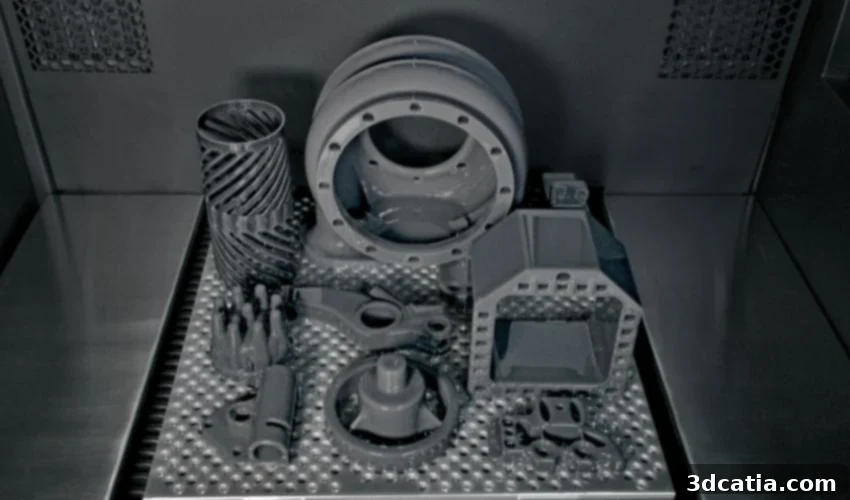
The build plate of the ETEC Extreme 8K DLP 3D printer, showcasing its large capacity (photo credits: ETEC)
Understanding Digital Light Processing (DLP) Technology
The foundational principle of DLP 3D printing lies within photopolymerization, a process that involves solidifying liquid photosensitive resins through exposure to ultraviolet (UV) light. This concept is the bedrock of resin-based additive manufacturing, with its origins tracing back to the 1980s with the invention of stereolithography (SLA). While SLA demonstrated the immense potential of resin 3D printing, it also presented certain limitations, primarily related to print speed and scalability. Recognizing these challenges, researchers and engineers sought alternative methods, leading to the emergence of Digital Light Processing in 1999 as a powerful complementary technology.
What sets DLP apart from early SLA systems is its use of a specialized Digital Micromirror Device (DMD) chip, often found in video projectors. This chip contains millions of tiny, individually controllable micromirrors. Instead of a single laser tracing out each layer point by point, as in traditional SLA, a DLP projector cures an entire layer of resin simultaneously. The digital light projector projects a complete image of the current layer onto the resin vat, rapidly solidifying the entire cross-section in one go. This area-wide curing method dramatically accelerates the printing process while maintaining exceptional surface finish quality and sharply defined edges, positioning DLP as a benchmark in vat polymerization technologies.
Historically, the most common configuration for DLP 3D printers has been the bottom-up approach, a process pioneered and commercialized by EnvisionTEC with its iconic Perfactory machine. In this setup, the projector is situated beneath a transparent resin vat. Light is projected upwards through the clear bottom of the tray into the photosensitive resin, curing a thin layer that adheres to the build plate. The build plate then incrementally moves upwards along the z-axis, allowing fresh resin to flow beneath for the next layer. This method offers precise control over layer height and allows for relatively small, detailed prints. However, it also introduces peel forces as each cured layer is separated from the bottom of the vat, which can necessitate careful calibration, robust support structures, and can sometimes limit the size and complexity of parts.
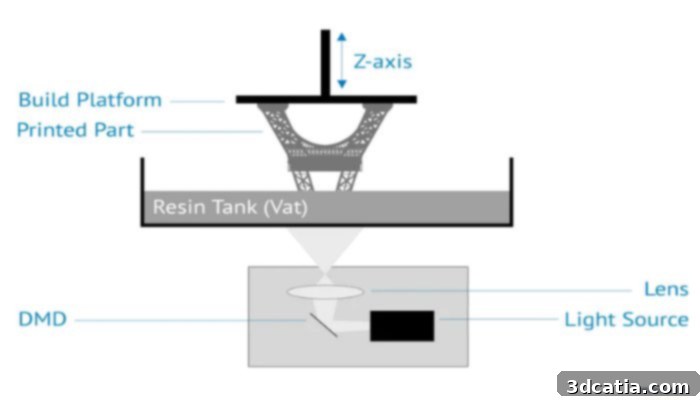
A visual representation of the traditional bottom-up DLP printing process, originally commercialized by EnvisionTEC (photo credits: Wevolver)
Over the years, significant advancements have been made to enhance DLP technology. In 2015, the Continuous Liquid Interface Production (CLIP) process revolutionized resin 3D printing by introducing an oxygen-permeable film at the bottom of the resin vat. This film creates a “dead zone” where oxygen inhibits polymerization, preventing the cured layer from fully adhering to the vat. This innovation eliminated the need for the tedious separation step between each layer, drastically increasing print speed and enabling continuous printing. EnvisionTEC integrated this concept into its Continuous Digital Light Manufacturing (CDLM) process, launched in 2016, marking a major leap forward in production efficiency.
Further enhancing print speed and material versatility, ETEC, under Desktop Metal, introduced Hyperprint technology in 2021. This innovative system moves beyond the oxygen-inhibited dead zone, utilizing controlled heat to reduce the viscosity of resins during the printing process. Lower viscosity allows for faster resin flow and quicker layer formation, significantly accelerating print times. Hyperprint also incorporates Closed Loop Printing (CLP) with integrated sensors that accurately detect when a part layer has fully separated from the resin vat’s film. This intelligent feedback system ensures consistent layer adhesion and detachment, enhancing print reliability and overall success rates. These incremental yet profound developments have continuously pushed the boundaries of DLP speed and efficiency.
The latest and arguably most transformative advancement from ETEC is the development of top-down DLP. While bottom-up DLP has been the industry standard for over two decades, ETEC recognized its inherent limitations and introduced the Xtreme 8K top-down DLP printer to address these challenges head-on. This innovative machine fundamentally alters the printing orientation, offering a host of advantages for industrial users. Top-down DLP significantly expands the range of printable materials, particularly higher viscosity resins, and facilitates the creation of larger, heavier, and more complex parts without the previous constraints of peel forces and support structures. The Xtreme 8K represents the pinnacle of current DLP technology, opening new avenues for industrial 3D printing applications.
Key Benefits of the ETEC Xtreme 8K Top-Down DLP Printer
The ETEC Xtreme 8K DLP 3D printer offers a multitude of advantages that go beyond the inherent benefits of DLP technology, such as impressive speed and the ability to produce highly complex geometries. Traditional bottom-up DLP systems often imposed several restrictions on users. For instance, there was a practical limit on the number of parts or the overall weight that could be sustained vertically from the build plate due to the peel forces exerted when detaching each cured layer from the vat’s film. This often necessitated extensive support structures to ensure part adhesion and prevent print failures. Furthermore, bottom-up DLP printers were primarily limited to resins with low viscosity, as the rapid recoating process required the liquid resin to flow quickly beneath the build plate. These constraints ultimately limited throughput and restricted the achievable final material properties, pushing manufacturers to seek more robust solutions.
The Xtreme 8K DLP printer effectively overcomes these long-standing obstacles through its innovative top-down design. By projecting light downwards onto the surface of the resin in an open vat, it eliminates the problematic peel forces associated with bottom-up printing. This fundamental change allows the Xtreme 8K to boast the largest DLP build area among commercial, production-grade DLP printers, measuring an impressive 450 x 371 x 399 mm, translating to a substantial 166,950 mm². This expansive build volume enables users to print significantly larger parts or achieve high-volume production of smaller components in a single batch. Crucially, the top-down approach also broadens the material compatibility, allowing the use of higher viscosity resins and a wider range of advanced materials that Desktop Metal claims can directly compete with traditional thermosets used in plastic injection molding for properties like strength and durability.
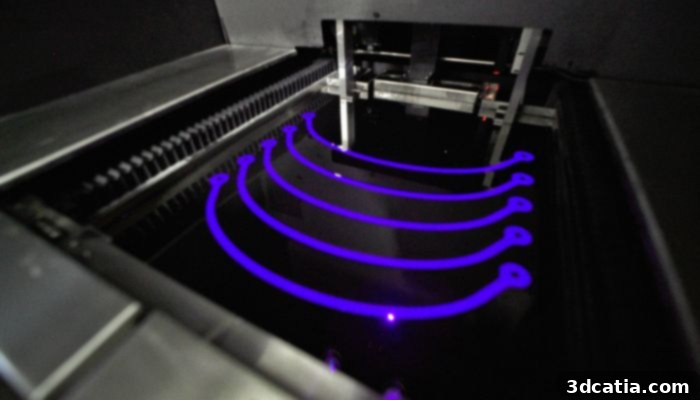
A detailed view of the ETEC Xtreme 8K top-down DLP printer during operation, highlighting its precision and capabilities (photo credits: ETEC)
These significant material advancements are a direct result of Desktop Metal’s extensive research and development efforts, particularly through their subsidiary, Adaptive 3D. This innovative company has successfully created a groundbreaking new family of materials known as DuraChain Photopolymers. These unique materials are distinguished as one-part, one-pot photopolymers that leverage a sophisticated mechanism called Photo Polymerization-Induced Phase Separation (Photo PIPS). In essence, Photo PIPS allows for the creation of complex microstructures within the material during polymerization, enabling the formulation of novel properties from a single resin. Examples include highly resilient foams and, critically, robust rubber-like materials with varying durometers. This breakthrough in material science, combined with the capabilities of top-down DLP, has dramatically expanded the application potential of DLP 3D printing across numerous industries, moving beyond prototyping into true end-use part production.
DLP 3D Printing Revolutionizes the Production of Rubber Parts
Among the most compelling and impactful applications enabled by ETEC’s top-down DLP technology is the advanced manufacturing of rubber parts. Aerosport Additive, a distinguished Ohio-based service bureau specializing in producing high-quality prototypes and functional models for clients in demanding sectors such as automotive, aerospace, and electronics, discovered that ETEC’s advanced DLP technology, particularly the Xtreme 8K top-down DLP printer, was the definitive solution for creating superior rubber components. This partnership highlights how leading-edge additive manufacturing can address long-standing challenges in traditional manufacturing.
Before adopting ETEC’s DLP solutions, Aerosport Additive faced significant hurdles in producing rubber parts. They relied heavily on labor-intensive and costly traditional methods: urethane casting for prototyping and low-volume production, and hard tooling-dependent injection molding for mass production. The creation of parts with the genuine look, feel, and performance of real rubber has historically been one of the toughest challenges in additive manufacturing. Traditional 3D printing often struggled to replicate the specific mechanical properties of rubber, such as elasticity, resilience, tear strength, and specific Shore hardness. This meant that high-fidelity rubber components were often inaccessible or prohibitively expensive for designers and engineers, limiting innovation and iterative design processes. With ETEC’s advancements, these limitations are now being systematically overcome.
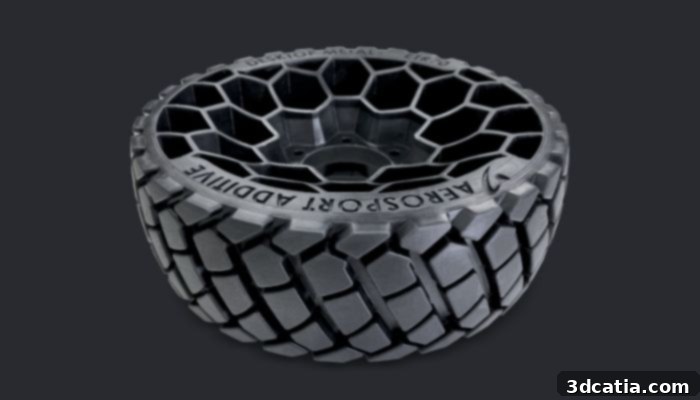
High-quality rubber parts, including complex components, produced by Aerosport Additive using the Xtreme 8K top-down DLP 3D printer and new advanced materials (photo credits: ETEC)
By integrating the Xtreme 8K printer with Adaptive3D’s groundbreaking Elastic ToughRubber resin, Aerosport Additive has achieved unprecedented success. They are now capable of producing high-performance rubber parts with a Shore A70 hardness that perfectly mimic the properties of conventionally manufactured rubber. This capability allows for rapid and cost-effective production, transforming what was once a bottleneck into a streamlined process. A prime example of this success is the manufacturing of intricate four-way switches. These critical components are integral to the control sticks on airplanes, enabling pilots to make precise and fine adjustments to the aircraft’s trim controls. Such parts demand high reliability, specific tactile feedback, and precise dimensions.
Given the specialized nature and moderate volumes required for aerospace applications like these four-way switches, traditional urethane casting proved to be a slow, cumbersome, and expensive process. It often involved significant lead times and considerable post-processing. However, with the ETEC Xtreme 8K, Aerosport Additive can now efficiently produce up to 150 of these complex switches in a single build, completed in just 2.5 hours. This represents a monumental saving in both time and manufacturing costs. Furthermore, the inherent flexibility of additive manufacturing empowers Aerosport Additive to easily iterate on designs, make rapid changes, or fine-tune components to meet the unique specifications of different aircraft models or customer requirements without incurring prohibitive retooling costs. This powerful combination of speed, material innovation, and design freedom underscores how ETEC’s advanced DLP processes are poised to continue making a profound impact across an ever-widening array of industries, solidifying DLP’s position as a transformative force in modern industrial production. To explore ETEC’s comprehensive range of DLP solutions and their applications, you can learn more HERE.
What are your thoughts on ETEC’s groundbreaking innovations in DLP technology, especially their applications for manufacturing high-quality rubber parts? We’d love to hear your perspective. Share your comments below or engage with us on our LinkedIn, Facebook, and Twitter pages! Don’t forget to subscribe to our free weekly Newsletter here for the latest 3D printing news delivered straight to your inbox! You can also find all our videos and exclusive content on our YouTube channel.