
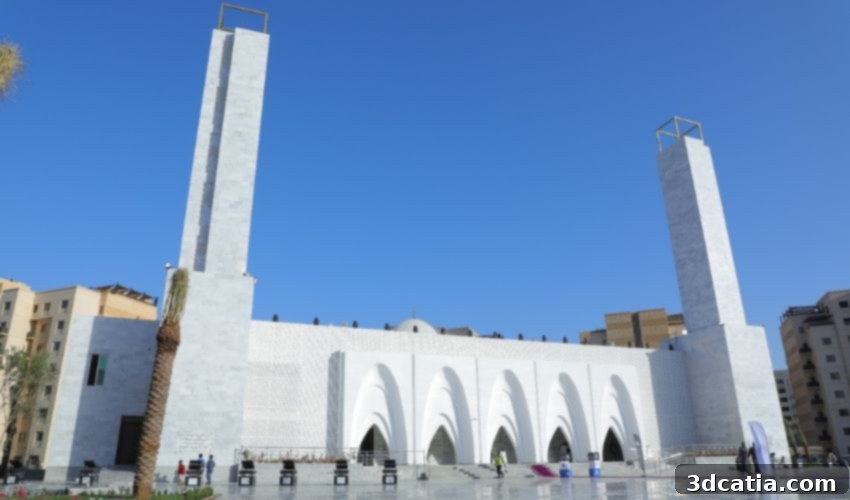
Saudi Arabia Unveils World’s First Completed 3D Printed Mosque: A New Era of Architectural Innovation
The holy month of Ramadan has begun, a period of profound spiritual reflection and community for Muslims worldwide. This year, the spirit of innovation beautifully converges with tradition in Saudi Arabia, where a landmark achievement has been unveiled: the world’s first completed 3D printed mosque. This groundbreaking edifice, a testament to modern engineering and visionary leadership, was brought to fruition by Saudi businesswoman Wajnat Abdulwahed, marking a significant moment not only for Islamic architecture but also for the global construction industry.
While discussions about a 3D printed mosque in Dubai have circulated for some time, with plans set for 2025, Saudi Arabia has officially claimed the distinction of housing the inaugural completed structure of its kind. This pioneering mosque is strategically located in Jeddah, a bustling port city on the Red Sea and a vital gateway for pilgrims journeying to Mecca. The mosque carries a deeply personal significance for Abdulwahed, as it was constructed as a heartfelt tribute to her late husband, Abdulaziz Abdullah Sharbatly, bearing his esteemed name. This fusion of personal dedication with national ambition underscores the unique narrative behind this architectural marvel.
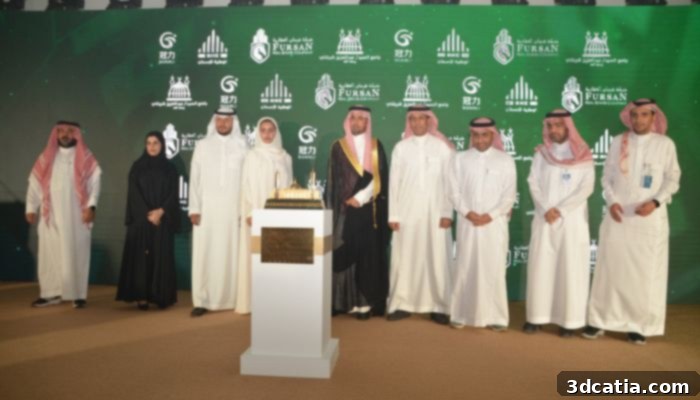
Saudi officials and Mrs. Wajnat Abdulwahed were present at the unveiling of the 3D printed mosque (photo credits: Fursan Real Estate)
Pioneering Religious Architecture Through Construction 3D Printing
Spanning an impressive 5,600 square meters (approximately 60,277 square feet), this magnificent mosque represents a significant leap forward in construction 3D printing. The ambitious project was the result of a powerful collaboration between Fursan Real Estate Company, a prominent developer, and Guanli, a leading Chinese company renowned for its expertise in large-scale additive manufacturing for construction. Integrated into the National Housing Co’s expansive portfolio, the mosque’s conception transcends its role as a memorial. It is also a deliberate alignment with Saudi Vision 2030, a transformative national blueprint aimed at modernizing the kingdom. By leveraging 3D printing technology, the project achieved a substantial reduction in construction-related waste generation, showcasing a tangible commitment to sustainable building practices.
Construction 3D printing, or additive manufacturing for construction, offers a revolutionary approach to building by constructing structures layer by layer from digital models. This method significantly enhances efficiency, reduces material waste, and can dramatically shorten construction timelines compared to traditional techniques. For a project of this scale and architectural complexity, 3D printing provided unparalleled design freedom, allowing for intricate details and organic shapes that might be prohibitively expensive or time-consuming with conventional methods. The use of robotic arms extruding specialized concrete mixtures enables rapid, precise construction, opening new possibilities for future infrastructure and housing projects across the kingdom.
Similar in spirit to the Dubai 3D Printing Strategy, Saudi Vision 2030 is an ambitious government program launched in 2016. Its core objective is to usher innovative technologies into the kingdom, driving a profound transformation across various sectors. The ultimate goal is to diversify Saudi Arabia’s economy, society, and culture, with a central focus on reducing the nation’s historical dependence on oil. Currently, oil constitutes approximately 40% of Saudi Arabia’s real GDP. For years, the government has actively pursued strategies to lessen this reliance, striving to reposition the country as a global investment powerhouse and a hub of advanced technology and innovation. This vision underpins numerous initiatives, from smart cities like NEOM to the embrace of cutting-edge manufacturing processes.
The Abdulaziz Abdullah Sharbatly Mosque unequivocally embodies the principles of Saudi Vision 2030. Its unveiling has been lauded by high-ranking officials, including representatives from the Ministry of Municipal, Rural Affairs and Housing, as a beacon signaling a new epoch of innovation in the nation’s construction and architectural landscape. Beyond its technological prowess, the mosque’s distinctive design is already generating considerable buzz. Architects and observers alike have highlighted its remarkable aesthetic features, particularly the masterful integration of natural light streaming through elegantly designed windows and its strikingly towering minarets. These elements combine to create a visually captivating and spiritually uplifting space, cementing its status as an instant landmark within the region.
The architectural design of the mosque showcases the unique capabilities of 3D printing. The ability to create complex geometries and intricate patterns without the constraints of traditional formwork allowed for the realization of its distinctive features. The towering minarets, for instance, are not merely functional but artistic statements, their seamless curves and precise construction made possible by the additive manufacturing process. Inside, the design maximizes the ingress of natural light, creating an airy and serene atmosphere conducive to prayer and contemplation. This thoughtful integration of light and space, combined with the structural integrity and speed afforded by 3D printing, sets a new benchmark for modern religious architecture globally.
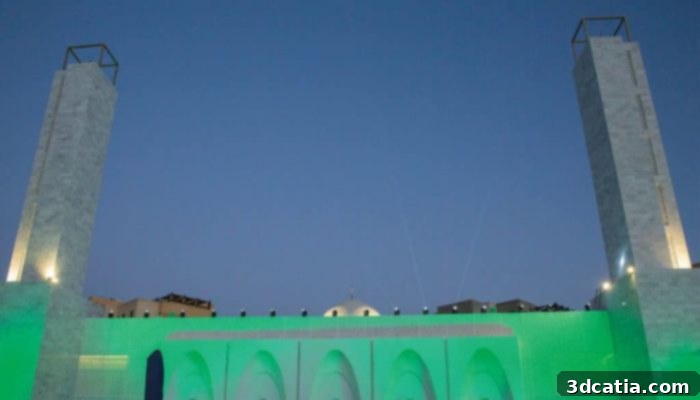
The towering minarets have been noted as distinctive by Saudi netizens (photo credits: HTC)
Wajnat Abdulwahed, the driving force behind this monumental project, articulates her vision with profound clarity: “As a Saudi businesswoman, I wanted to contribute to introducing this modern technology to the Kingdom, positioning it among the first countries to utilize it. This marks a significant milestone in the fields of technology and contemporary construction, signaling a move towards architectural innovation and global sustainable building practices. This development is supported by the private sector stimulation plan. It champions the shift from traditional construction methods to modern techniques, fostering the adoption of advanced technologies and supporting the pace of industrial evolution.” Her words highlight not only a personal commitment to her country’s progress but also a recognition of the broader implications of such advancements on a global scale. The mosque stands as a beacon of what can be achieved when private sector initiative aligns with national strategic goals, propelling Saudi Arabia to the forefront of technological adoption in construction.
This landmark project in Jeddah is more than just a mosque; it is a powerful symbol of progress, sustainability, and a forward-looking vision for an entire nation. It demonstrates that advanced manufacturing technologies like 3D printing are not merely for industrial applications but can be beautifully integrated into sacred architecture, preserving cultural heritage while embracing the future. The successful completion of this mosque sets a precedent, likely inspiring further exploration and adoption of construction 3D printing for various projects across the Middle East and beyond, from affordable housing initiatives to complex infrastructure. It underscores Saudi Arabia’s dedication to becoming a leader in technological innovation and sustainable development, paving the way for a more efficient and environmentally conscious future in the building sector.
What are your thoughts on this pioneering 3D printed mosque in Saudi Arabia? Let us know in a comment below or on our LinkedIn, Facebook, and Twitter pages! Don’t forget to sign up for our free weekly newsletter here, the latest 3D printing news straight to your inbox! You can also find all our videos on our YouTube channel.
*Cover Photo Credits: Fursan Real Estate