

Securing the Future of Additive Manufacturing in Defense: An Interview with DEFEND3D
Additive manufacturing (AM), commonly known as 3D printing, has emerged as a transformative technology across numerous industries, with its impact on the defense sector being particularly profound. The rapid adoption of AM within military operations, supported by explicit strategies in nations like the UK and the US, underscores its potential. From facilitating specialized training exercises to producing critical components in active warfare zones, 3D printing is lauded for its inherent adaptability, speed, and ability to significantly enhance field readiness. However, this revolutionary potential is tempered by a critical challenge: cybersecurity. The vulnerability of digital files and intellectual property (IP) poses a substantial obstacle to the widespread and secure integration of AM into global military supply chains. This is precisely where DEFEND3D intervenes, spearheading a new era of security for additive manufacturing in defense. By fundamentally redefining how digital files are utilized and protected, DEFEND3D aims to make on-demand manufacturing more secure and resilient than ever before. We recently had the opportunity to speak with Barrett Veldsman, the visionary founder of DEFEND3D, to delve deeper into the company’s innovative solutions and its mission to fortify the digital thread of defense manufacturing.
3DN: Could you introduce yourself and your connection to additive manufacturing?
“Hello, my name is Barrett Veldsman, and I am the founder of DEFEND3D,” he began. “My professional journey initially took me through the dynamic world of creative direction, where I had the privilege of working with some of the planet’s most iconic automotive, fashion, and sports brands.” It was during an immersive additive manufacturing project with the prestigious automotive manufacturer Bugatti that Veldsman experienced a pivotal moment. “I distinctly recognized a critical, often overlooked, need for robust intellectual property protection within the digital design space,” he explained. This realization was not merely an observation but a powerful catalyst that ultimately led to the inception of DEFEND3D. What started as a dedicated commercial platform designed to safeguard the valuable IP of leading brands and designers quickly broadened its scope. “It rapidly evolved into a comprehensive solution addressing a much larger, more pervasive market need: secure, on-demand manufacturing, particularly crucial for sectors like defense.” This evolution marked DEFEND3D’s commitment to solving complex security challenges in the burgeoning landscape of digital production.

Barrett Veldsman, founder of DEFEND3D (left). Veldsman receiving recognition from the Office of the Assistant Secretary of Defense for Sustainment (right)
3DN: How did DEFEND3D come about? What is its mission?
DEFEND3D was founded on a very clear and urgent premise: to resolve the fundamental challenge of enabling distributed manufacturing effectively while simultaneously guaranteeing the ironclad security of designs and proprietary data. In an era witnessing the accelerated adoption of additive manufacturing across the defense ecosystem, the specter of cyber threats and intellectual property theft looms larger than ever before. “Our mission is unequivocally clear,” Veldsman stated. “We aim to deliver a real-time transmission service that operates efficiently even at ultra-low bandwidths, empowering manufacturers to produce parts literally anywhere in the world – including the most extreme and austere operational environments – without ever having to physically transfer sensitive design files.” This core capability is what sets DEFEND3D apart.
At its heart, DEFEND3D is dedicated to fortifying the entire defense ecosystem and continuously supporting the advancements of additive manufacturing through its patented secure streaming technology. This innovative approach facilitates a secure digital resupply of critical part data to remote locations without the inherent risks associated with traditional file transfers. By eliminating the necessity of transmitting a complete 2D or 3D asset, DEFEND3D nullifies the security vulnerabilities typically linked to such transfers. This remarkable feat is achieved by leveraging a continuous, dynamic data stream delivered directly to a wide array of manufacturing devices, capable of operating effectively with bandwidths as incredibly low as 3kbps. This low bandwidth requirement makes it ideal for highly constrained or contested environments.
3DN: What problems is the defense sector still facing when it comes to the adoption of AM? How can DEFEND3D help?
The defense sector, despite its enthusiasm for additive manufacturing, continues to grapple with persistent and complex challenges, primarily centered around cybersecurity, intellectual property (IP) protection, and the practical difficulties of handling large file sizes in bandwidth-limited environments. The traditional workflow in AM necessitates transferring the entire digital file to the fabrication machine. This process leaves valuable digital IP highly vulnerable to a spectrum of threats, including sophisticated cyberattacks, unauthorized manipulation, and outright theft. Numerous proposed solutions, such as blockchain technology, complex licensing models, and hardware decryption “black-boxes,” have attempted to address the critical issue of accessing parts on demand securely. However, Veldsman points out a fundamental flaw: “All these solutions still inherently require the full digital file to be transferred at some point, which remains the Achilles’ heel of the entire process.”
Original Equipment Manufacturers (OEMs) are particularly hesitant to license their spare parts for 3D printing for precisely this reason. Doing so would effectively mean relinquishing their entire IP portfolio, a collection of assets representing billions of dollars in research and development investment and future revenue. DEFEND3D’s solution fundamentally alters this paradigm. It proactively prevents files from ever residing “at rest” on any device, while simultaneously providing robust authentication mechanisms. This ensures that the IP is protected throughout the entire manufacturing process. When discussing the multifaceted challenges faced by the defense industry in distributed manufacturing, Veldsman often distills them into what he calls the “3 Ds: Disrupt, Data, Destroy.” These three pillars vividly illustrate the pervasive cybersecurity risks embedded within modern additive manufacturing and underscore the urgent, imperative need for an entirely new approach to securing digital manufacturing workflows.
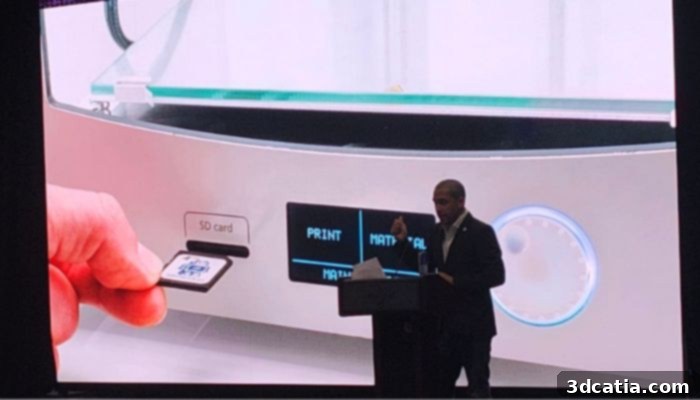
Veldsman showing the difficulties related to security in 3D printers
The real-world consequences of these vulnerabilities are stark. The 2017 WannaCry ransomware attack on the UK’s National Health Service (NHS) serves as a chilling example of how legacy systems and unsecured digital infrastructure can be utterly crippled by a well-orchestrated cyberattack, bringing essential services to a halt. Another significant incident involved the US Office of Personnel Management, responsible for managing the benefits and pensions of millions of active and retired civil servants, which suffered a massive data breach on April 15, 2015. By exploiting outdated infrastructure, an entire network was compromised, leading to chaos and significant national security implications. Furthermore, a Department of Defense Inspector General’s report explicitly warned that unsecured digital AM data presents a direct and serious national security risk. These incidents highlight that the “Disrupt” aspect of the 3 Ds is not theoretical but a constant, evolving threat.
The threat landscape has evolved beyond mere data theft. Foreign adversaries are now actively targeting defense contractors, not just to steal classified information, but to subtly embed vulnerabilities directly into the digital thread of manufacturing. This insidious tactic can lead to the production of compromised or functionally defective parts. The Defense Industry Security Association (DISA) has, on multiple occasions, highlighted that the digital thread within logistics is widely recognized by malicious actors as the “soft underbelly” of the defense industrial base. This underscores the profound “Data” and “Destroy” risks, where data integrity is compromised, and the potential for manufacturing critical components with built-in flaws becomes a reality. DEFEND3D directly addresses these vulnerabilities, as demonstrated through successful collaborations with the UK Ministry of Defence (MOD) and US Special Forces. These partnerships showcase DEFEND3D’s immense potential to significantly enhance supply chain resilience and fundamentally revolutionize the methodology of digital manufacturing within defense. The DEFEND3D solution has also undergone rigorous testing in extremely austere environments and under severe operational conditions, guaranteeing both part integrity and secure data management, as notably highlighted in its collaboration aboard the RRS Sir David Attenborough.
3DN: Could you tell us more about your software and your secure transmission service? How does it set you apart?
Veldsman critically observes that “the manufacturing industry, particularly regarding digital file management, is still operating with a ‘Blockbuster Video’ mindset.” This analogy powerfully illustrates the prevailing, outdated model where full digital files are transmitted and stored on networked machines, inadvertently creating massive security vulnerabilities. In stark contrast, our personal lives have transitioned almost entirely to streaming – from our music and movies to our games – precisely because downloading entire files is recognized as both inefficient and inherently risky. “Imagine standing in a packed stadium on match day,” Veldsman elaborated. “If your friend emails you a 4K video file, will it download reliably? Probably not. But if you stream the very same video on YouTube, it plays instantly. So, why do we continue to expect high-value AM machines, often costing $100K or more, to download entire manufacturing files in hostile, bandwidth-limited environments, when even consumer technology has long moved past that archaic model?”
These are not hypothetical scenarios but daily frustrations Veldsman hears directly from engineers in the field who simply cannot reliably access crucial files. “But with our technology, operating at an incredibly low bandwidth of just 3KBPS, we are able to securely stream the necessary data directly to these machines,” he affirmed. This capability is a game-changer for the defense sector, which “must embrace streaming for AM files—eliminating downloads, securing sensitive data, and ensuring real-time access without ever exposing intellectual property.”
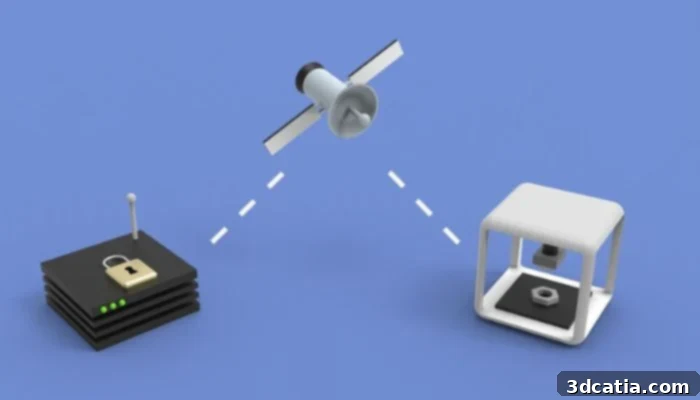
DEFEND3D’s secure process
Beyond mere file size, the underlying security problem runs much deeper. With the increasing adoption of 3D printers into defense operations, the entry point for malicious actors has become dramatically easier. Why? Veldsman explains, “Many AM users initially considered AM systems merely as ‘tools,’ akin to welding machines, primarily for generating supply parts, rather than as sophisticated information technology systems that mandate rigorous cybersecurity controls.” This misconception creates critical vulnerabilities. “Like the infamous Stuxnet worm,” he cautioned, “a significant compromise can start with something as seemingly innocuous as a compromised SD card or a networked printer that lacks proper IT security protocols.”
The DEFEND3D whitepaper meticulously outlines the severe risks of file manipulation and theft that are inherent within the digital thread of additive manufacturing, particularly when applied in critical defense applications. Traditional AM workflows, which rely on the full digital design file transfers, are inherently vulnerable to cyberattacks, unauthorized modifications, and intellectual property theft. Such compromises can have catastrophic consequences, leading to the production of defective or maliciously altered parts, directly impacting operational security and potentially endangering personnel. DEFEND3D’s innovative solution introduces a secure transmission method that ensures the complete file is never fully exposed or stored anywhere. This method not only safeguards the integrity of the digital thread but also provides unparalleled security for sensitive manufacturing processes.
Crucially, DEFEND3D guarantees complete ownership retention of intellectual property and digital assets by never transmitting the full, vulnerable file. Instead, it meticulously live-streams only the necessary data segments directly to the 3D printer in real-time. This sophisticated approach ensures that no sensitive data ever resides “at rest” on the manufacturing device itself, thereby eliminating a major attack vector. The proprietary algorithm incorporates multiple advanced security mechanisms specifically designed to detect any sniffing attempts or imminent cyberattacks. If a threat is identified or suspected, DEFEND3D immediately alerts the system administrators and automatically shuts down the streaming process, proactively preventing any potential compromise. This layered security approach is what truly distinguishes DEFEND3D in the market.
3DN: Could you give us some examples of current or future projects?
DEFEND3D’s capabilities have been rigorously tested and validated in high-stakes operational environments. In a simulated exercise, the US Special Forces 7th Group (Airborne) replicated an established forward support element operating with extremely limited or no bandwidth at the tactical edge. The results were highly encouraging, with feedback confirming “that the system did everything we needed it to do, and 7th SFG (A) was satisfied with the system performance and endorsed the capability for further development and implementation.” This successful deployment underscores the solution’s ability to operate under challenging conditions, crucially removing the need for IP transfer and eliminating bandwidth congestion caused by downloading large, entire files.
Furthermore, DEFEND3D has undergone extensive testing by UK Strategic Command, a pivotal division within the UK Ministry of Defence (MOD). Here, DEFEND3D delivered a highly secure platform for digital manufacturing, specifically engineered with a “one-click-print” functionality to significantly minimize the training burden on deployed personnel. This innovative platform seamlessly links a central, secure design hub with multiple deployed locations that may not have engineering specialists present. A key security feature is that absolutely no trace of the 3D file is left on either the 3D printer or the associated computer after the printing process is complete, ensuring maximum data integrity and protection.
The growing importance of additive manufacturing within the defense sector is undeniable, with governments worldwide increasingly integrating this technology into their core operations, maintenance, and logistics frameworks. There is a clear and unanimous consensus among defense leaders that the very real threat of cybersecurity vulnerability is both significant and ever-present. This makes solutions like DEFEND3D indispensable for future defense readiness.
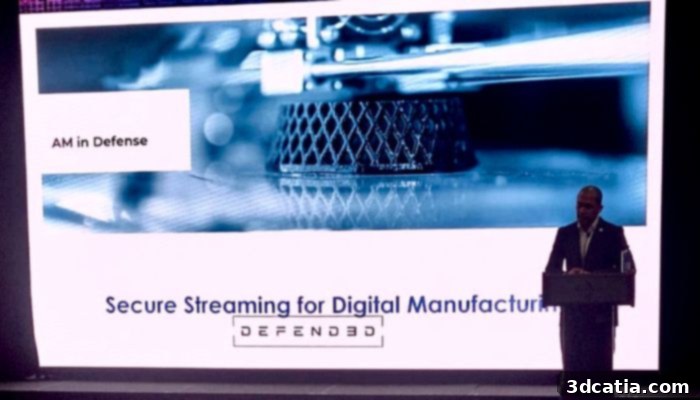
DEFEND3D uses secure streaming to improve security for AM in defense
Beyond terrestrial defense, additive manufacturing plays a crucial role in space exploration. The International Space Station (ISS) has been leveraging AM since 2014, empowering astronauts to produce essential tools, spare parts, and specialized products on demand. As of 2024, astronauts have successfully printed over 200 parts using their Additive Manufacturing Facility (AMF), significantly enhancing their self-sufficiency. More recent groundbreaking developments in space-based additive manufacturing aboard the ISS include the launch and successful operation of the first metal 3D printer designed for space applications, which triumphantly printed a stainless-steel bracket. Space manufacturing holds immense promise, offering the ability to exploit microgravity and vacuum conditions to create novel materials and components that are either impossible or highly inefficient to produce on Earth, thereby unlocking innovative possibilities for critical industries such as aerospace, medicine, and energy.
With this increasing reliance on space-based manufacturing, the demand for robust cybersecurity solutions becomes paramount. Such solutions are crucial not only for securing data transfer and ensuring design integrity but also for safeguarding invaluable intellectual property and preventing unauthorized access in an increasingly interconnected and vulnerable space environment. DEFEND3D’s innovative technology significantly enhances collaboration between Earth-based research facilities and burgeoning space-based manufacturing hubs. A secure virtual inventory of pre-approved designs, facilitated by DEFEND3D, could allow astronauts to 3D print mission-critical parts instantaneously and on demand. This capability would revolutionize in-space repair and manufacturing. Furthermore, universities and OEM partners can securely transmit design updates and dynamically adjust manufacturing parameters remotely, accelerating innovation cycles while maintaining an impenetrable shield around sensitive data. This advanced capability perfectly aligns with the strategic goals discussed at the 5th G20 Space Economy Leaders Meeting, which emphasized the critical importance of sustainability and resilience in future space exploration endeavors.
3DN: Any last words for our readers?
“As space exploration continues its rapid expansion towards commercial space stations, the establishment of lunar bases, and ambitious interplanetary missions, the fundamental need for secure, remote manufacturing will only intensify,” Veldsman concluded. “DEFEND3D’s secure streaming technology is absolutely critical for enabling advanced robotic additive manufacturing in space, providing essential support for vital infrastructure assembly, on-demand component fabrication, and immediate on-site repairs.” Institutions like Imperial College London have already underscored the indispensable role of remote manufacturing in significantly reducing the inherent risks associated with space exploration, consistently highlighting the absolute necessity of secure data transmission for all future off-world construction and operational projects.
“As humanity moves closer to realizing low Earth orbit and eventual interplanetary manufacturing capabilities, it becomes imperative that security is not an afterthought, but a central, foundational element in both additive and subtractive manufacturing processes,” Veldsman urged. “We must proactively build the robust infrastructure that will truly enable the democratisation of innovation within the burgeoning space sector.” Readers interested in learning more about DEFEND3D’s pioneering work can find additional information HERE.
What do you think of DEFEND3D’s vision and technology? Let us know your thoughts in a comment below or join the conversation on our LinkedIn, Facebook, and Twitter pages! Don’t forget to sign up for our free weekly Newsletter here to get the latest 3D printing news delivered straight to your inbox! You can also find all our engaging videos on our YouTube channel. For more specialized 3D printing news in the aerospace and defense sectors, be sure to check out our dedicated page HERE.