
The Thriving 3D Printing Job Market: Navigating Trends and Unlocking Career Opportunities in Additive Manufacturing
While many industries faced unprecedented challenges and significant disruptions during the global health crisis of 2020, the field of additive manufacturing (AM) demonstrated remarkable resilience and continued its upward trajectory of growth. This period solidified the confidence of numerous companies in 3D printing technology, leading to sustained and increased investment for further development. Beyond existing players, an exciting phenomenon emerged: companies from diverse traditional industries recognized the transformative potential of 3D printing and swiftly integrated it into their operations, becoming significant new contributors to the additive manufacturing world. This expansion, particularly the influx of new entrants and applications, has naturally spurred the creation of novel job roles and a corresponding surge in recruitment needs. Understanding the evolving landscape of the 3D printing job market is therefore crucial for professionals, educators, and businesses alike.
To provide a comprehensive overview of the current state of the job market within the 3D printing sector and to draw a meaningful comparison with pre-pandemic trends from 2019, we have meticulously analyzed data from the 3Dnatives Job Board. This robust platform featured over 350 job offers published internationally throughout 2020, offering valuable insights into the industry’s employment patterns. Our study delves into a variety of critical aspects, including the prevalence of different contract types, the most active sectors and companies in terms of hiring, and crucially, the specific job roles most sought after by companies specializing in additive manufacturing. This analysis also serves as an opportunity to review the broader market trends, which are in a constant state of flux due to the dynamic and innovative nature of the AM sector itself.
Companies Embrace a Long-Term Vision for Additive Manufacturing
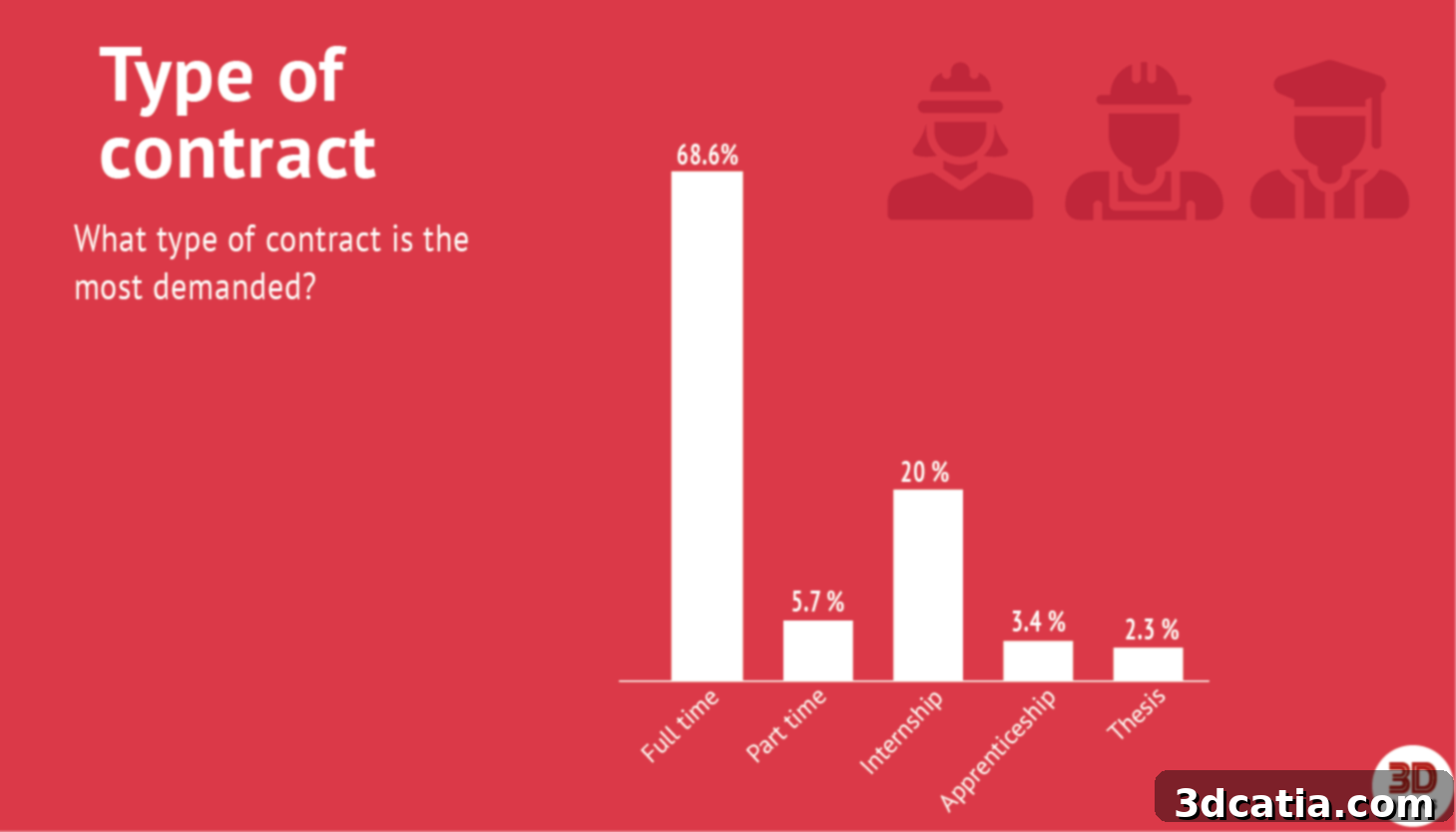
When it comes to recruitment strategies, companies in the additive manufacturing space have decisively opted for long-term engagement. The data reveals a clear preference for permanent contracts over fixed-term agreements, signaling a profound confidence in the sustained growth and stability of the 3D printing market. Out of all job offers published, a significant nearly 70% were for permanent positions. This figure underscores a fundamental shift in perception, indicating that businesses are no longer viewing additive manufacturing as a temporary or experimental venture but as a core component of their future operations. While this fact seems self-evident today, it stands in stark contrast to the sentiment just a few years ago. In early 2020, experts like Audrey Chikhaoui, founder of the recruitment firm Rosa Parks Consulting, highlighted that many companies harbored doubts about the long-term viability of the 3D printing market, which consequently made them hesitant to invest in permanent hires. However, the health crisis acted as a powerful catalyst, showcasing additive manufacturing’s unparalleled potential for agility, rapid prototyping, and localized production – particularly in the critical supply of medical devices and personal protective equipment. This demonstration of resilience and adaptability alleviated previous market uncertainties, prompting companies to recruit more confidently and strategically for the long haul. Furthermore, the commitment to fostering new talent is evident in the increased proportion of jobs dedicated to students. Internships and work-study programs accounted for 23.4% of published offers, a notable increase compared to previous years (which hovered around 15%), indicating a growing investment in developing the next generation of AM professionals.
Technical Expertise Remains Paramount, While Business Roles Flourish
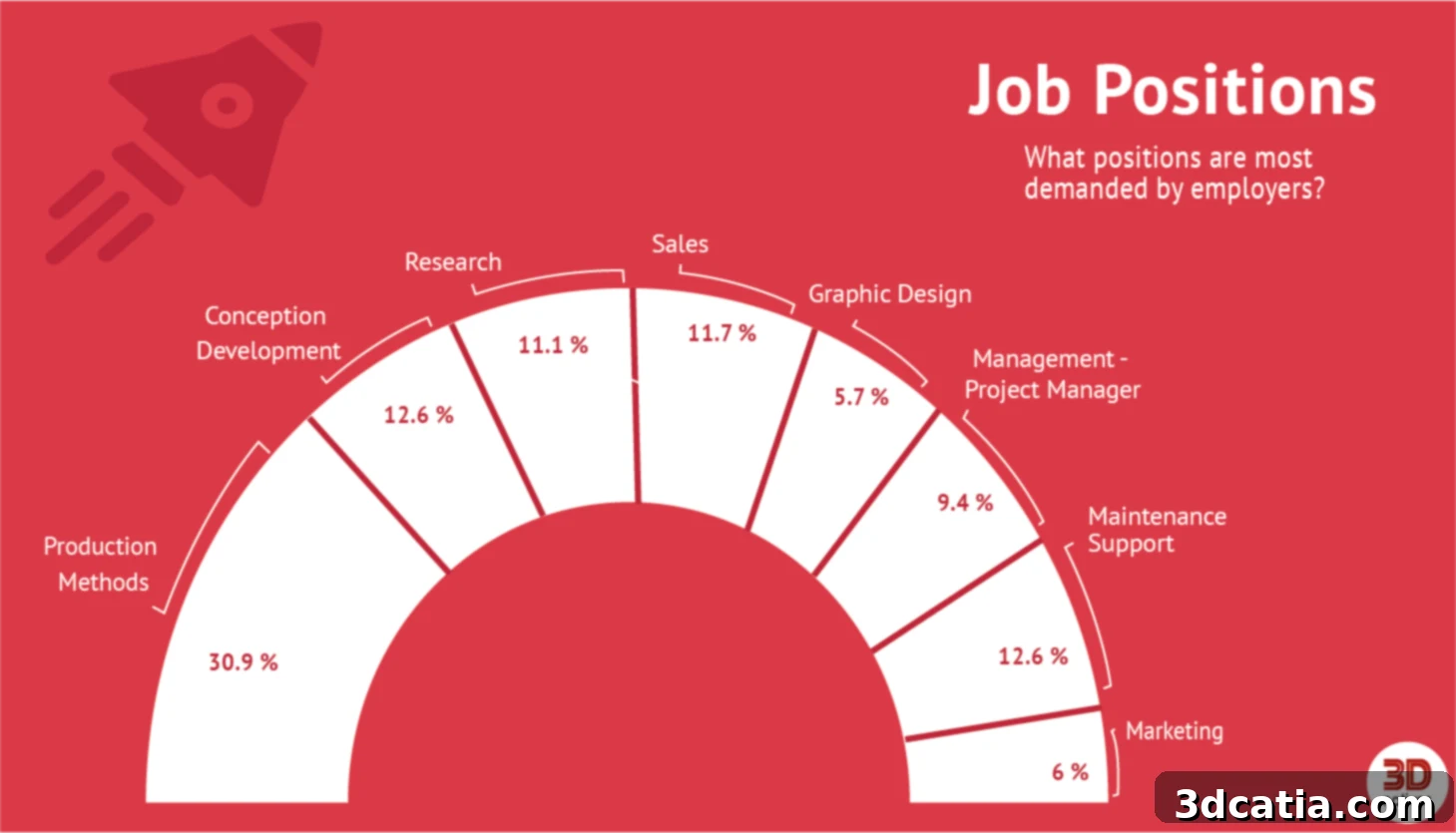
Although the range of positions available in additive manufacturing is diversifying, the market continues to exhibit a strong demand for technical profiles possessing in-depth knowledge and hands-on experience within the 3D printing ecosystem. Indeed, over 40% of all job offers published were concentrated within the production and design sectors. This statistic firmly reiterates that despite the technology’s increasing accessibility and democratization, additive manufacturing fundamentally remains a technical domain that requires specialized skills and expertise. Roles such as machine operator, dedicated 3D technician (encompassing machine installation, maintenance, and after-sales service), and additive manufacturing engineer are consistently among the most sought-after. These positions often require proficiency in specific AM processes (e.g., FDM, SLA, SLS, DMLS), material science knowledge, and the ability to troubleshoot complex systems. However, an equally significant trend is the burgeoning growth in other critical areas. Fields such as sales, marketing, and management have experienced a substantial boom, collectively accounting for 27.1% of job offers – a remarkable increase from just 11.9% in 2018. This surge indicates the maturing market’s need for skilled professionals who can articulate the value proposition of AM, develop new business opportunities, manage complex projects, and strategically position companies within an increasingly competitive landscape. The growth of these non-technical roles is vital for the widespread adoption and commercial success of additive manufacturing solutions.
The Broadening Horizon: Democratization of 3D Printing Across Industries
The increasing diversity of professional profiles in the AM sector is a direct reflection of the expanding number of industries that are now actively integrating 3D printing technologies into their operations. Over time, 3D printing has transitioned from a niche prototyping tool to an indispensable manufacturing method, significantly enhancing productivity, design freedom, and operational efficiency across various applications. Unsurprisingly, 3D printer manufacturers remain a primary source of job postings, accounting for 27.1% of offers, a substantial increase from 16% in 2019. This leadership position highlights the ongoing innovation in hardware, software, and integrated solutions, as manufacturers strive to meet diverse industrial demands. However, other fields are rapidly embracing and expanding their use of the technology. The chemical sector, for example, now represents 7.7% of job postings, demonstrating a strong focus on material development. Raw material manufacturers are increasingly forming strategic partnerships with printer manufacturers to develop specialized filaments, resins, and powders that unlock new capabilities and applications for AM. A prime example is BASF’s collaboration with HP in 2020 to develop a polypropylene powder, signaling a commitment to creating an integrated and sustainable additive manufacturing ecosystem.
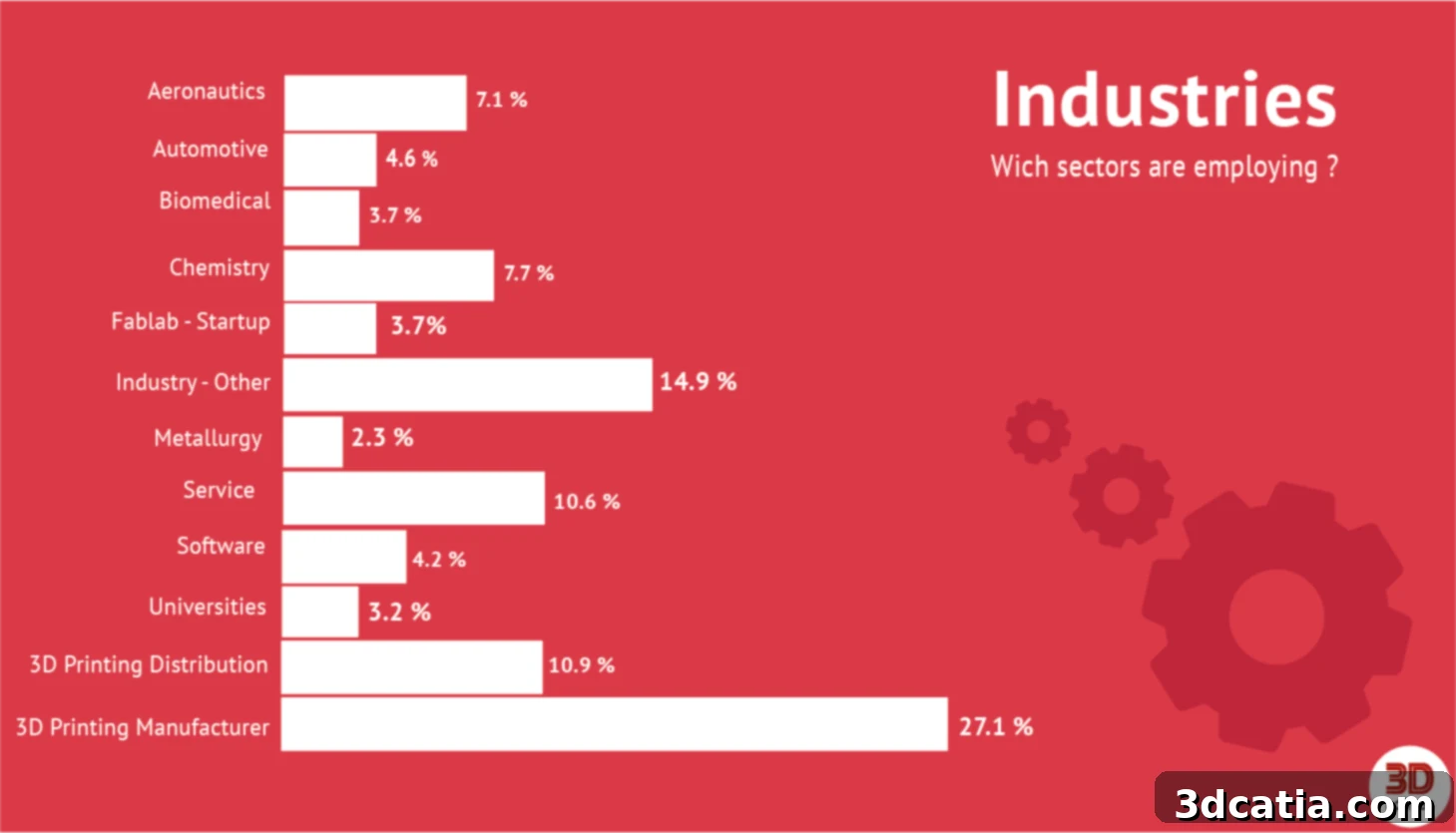
The automotive industry, while having a long history with 3D printing, has significantly deepened its engagement. Representing 4.6% of job offers, this sector has witnessed several major manufacturers establish their own dedicated additive manufacturing centers in recent years. BMW, for instance, has set up a state-of-the-art 3D printing campus employing no fewer than 80 specialists, focusing on serial production, prototyping, and customized parts. Similarly, General Motors and Seat have also invested heavily in AM capabilities, creating numerous new job opportunities for engineers, technicians, and designers. The aeronautics sector also stands out, contributing 7.1% of job offers. French aerospace giant Safran, for example, is inaugurating its Additive Manufacturing Campus factory, designed to leverage AM for lighter, more complex, and more efficient aircraft components. This expansion across high-value industries like automotive and aerospace underscores the technology’s move beyond mere prototyping into critical end-use part production. The emergence of this new, interconnected ecosystem around additive manufacturing, spanning from material science to end-part production in diverse industries, has naturally led to significant and ever-growing recruitment needs, shaping the future of industrial employment.
Growing Recruitment Across the Board
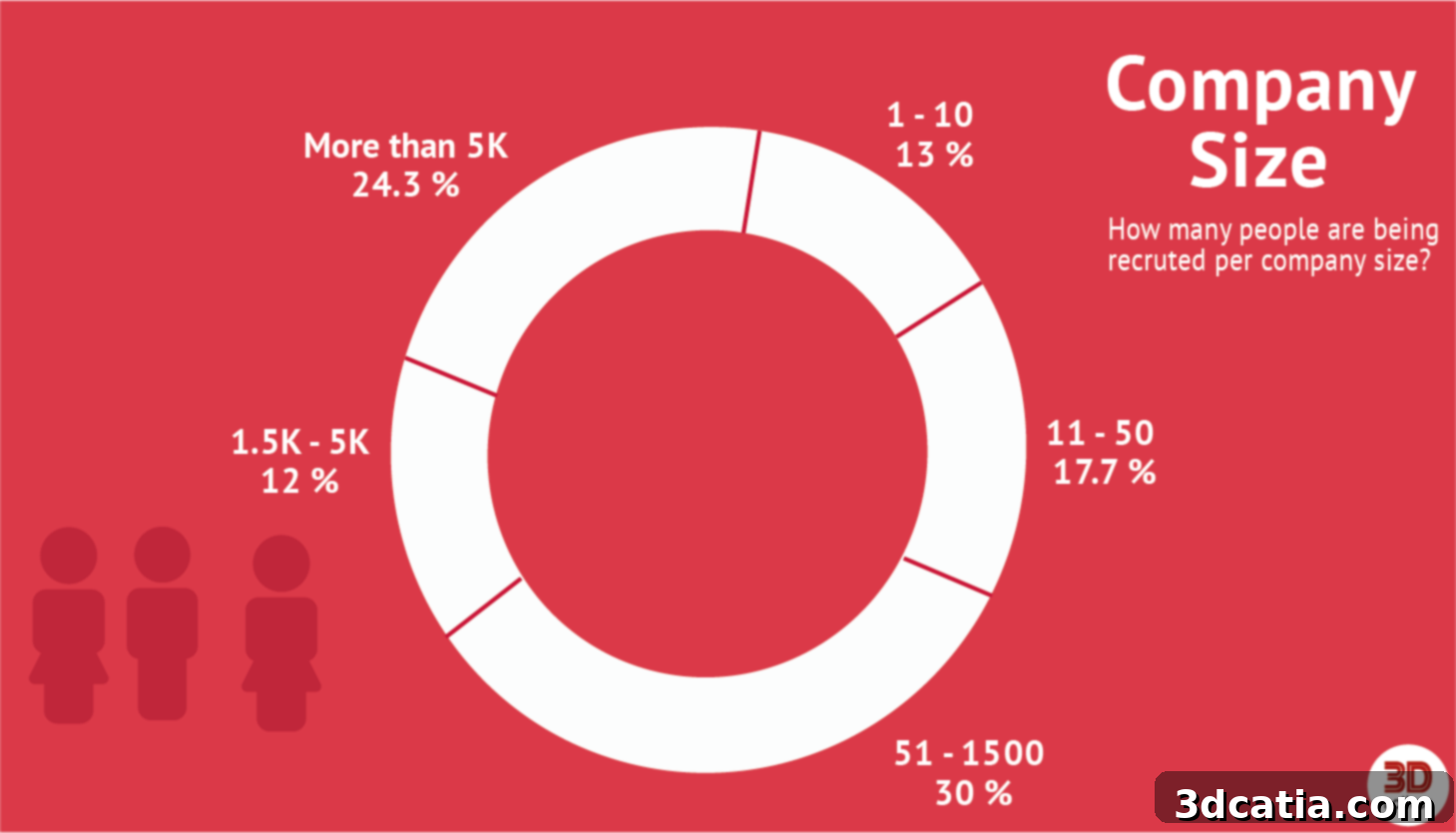
Irrespective of their size or specific sector, the vast majority of companies within the additive manufacturing landscape are actively seeking to recruit new talent. From innovative startups driving disruptive technologies to established large corporations integrating AM into their global supply chains, and dynamic Small and Medium-sized Enterprises (SMEs) finding niche applications, the entire spectrum of additive manufacturing is on a quest for skilled professionals. While large companies consistently post a substantial number of new job offers, accounting for 36.3% of the total, Very Small Enterprises (VSEs), SMEs, and Intermediate-Sized Enterprises (ETIs) are equally active, contributing an impressive 30.7% of all published opportunities. These compelling figures can be attributed to several key factors. Firstly, the additive manufacturing market is characterized by a vibrant ecosystem of startups constantly pushing the boundaries of innovation, requiring diverse expertise to develop new products and services. Secondly, the increasing adoption of AM technology by large groups, not just as developers but as sophisticated end-users, has created a demand for in-house specialists who can manage, operate, and optimize additive manufacturing processes within established corporate structures. This widespread demand across company sizes highlights a robust and expanding job market, offering a variety of career paths for individuals looking to make an impact in this cutting-edge industry.
The trends observed in 2020 clearly indicate that the additive manufacturing job market is not just growing but evolving dynamically, reflecting the technology’s maturity and its integration into mainstream industrial practices. With a strong emphasis on long-term employment, a persistent need for technical specialists, and a burgeoning demand for professionals in business development, sales, and marketing, the sector presents a multitude of exciting career prospects. The democratization of 3D printing across diverse industries, from automotive and aerospace to chemicals and beyond, further solidifies its position as a key driver of future manufacturing and economic growth. For those looking to enter or advance within this innovative field, developing a blend of technical proficiency and business acumen will be increasingly valuable. Staying informed about new material developments, process innovations, and industry-specific applications will be crucial for navigating this exciting landscape.
What are your thoughts on the significant evolution of the 3D printing job market over the past year? We encourage you to share your insights in a comment below or connect with us on our Linkedin, Facebook, and Twitter pages! Don’t miss out on the latest additive manufacturing news; sign up for our free weekly Newsletter here, delivered straight to your inbox! You can also explore all our engaging videos on our YouTube channel.
For a visual summary of these findings, you can find the 3D Printing Job Market 2020 infographic HERE.