
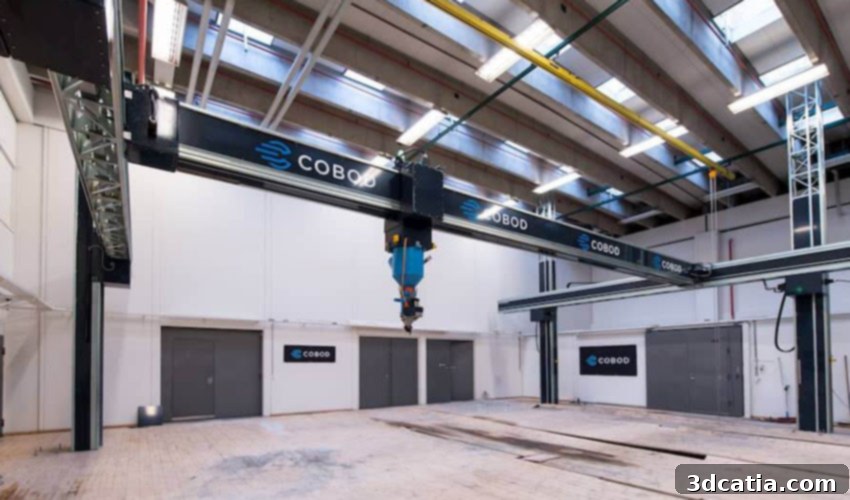
Debunking Myths: COBOD’s Candid Look at the True State of Construction 3D Printing
The burgeoning field of construction 3D printing has captured the imagination of many, promising revolutionary changes to how we build. However, amidst the excitement and often sensationalized headlines, a clear distinction between aspiration and current reality is crucial. Recently, leading industry player COBOD stepped forward to address several prevalent misconceptions surrounding 3D printed buildings, aiming to provide a more accurate and grounded perspective on the industry’s actual stage of development. Their insights challenge some widely held beliefs, particularly regarding the speed and scope of current 3D printing capabilities in construction.
One of the most persistent and widely believed myths COBOD aims to dispel is the idea that a building can be fully 3D printed in a mere 24 hours. This extraordinary claim has circulated for some time, with many associating this purported milestone with companies like Apis Cor. According to COBOD, a company with extensive hands-on experience in the sector, officially, no building has truly been 3D printed from start to finish within a single day. This assertion underscores the often-overlooked difference between the actual print time of structural elements and the comprehensive timeline required for a complete, habitable building.
COBOD’s journey in construction 3D printing began in 2017 with the successful printing of their first building, aptly named BOD (Building on Demand). Since that foundational project, the company has relentlessly pursued advancements in its construction 3D printer technology, making significant improvements to push the boundaries of what’s possible. This deep, practical experience has provided them with a unique vantage point from which to assess the industry’s landscape. Today, COBOD believes it is more important than ever to critically evaluate and contextualize the claims made by various players within the market, ensuring that potential customers and the public receive accurate, unvarnished information.
Henrik Lund-Nielsen, CEO of COBOD, articulated the company’s motivation behind this push for transparency: “During our research we found that many companies had at best ‘put a gross marketing angle’ on their PR, deliberately aimed at creating the wrong impressions by the readers. We hope to be able to set the record straight and create more clarity. We want to assure that potential customers have the correct information and understand the very early maturity stage of this industry. We all believe in the fantastic potential of this industry, but we need to be realistic about what really can be done with the technology for the time being. Otherwise we risk disappointing potential customers and that people distrust our industry and the information about our products and technology, which we really want to avoid.” This statement highlights a profound concern for the long-term health and credibility of the construction 3D printing sector, emphasizing that realistic expectations are paramount for sustainable growth and genuine innovation.
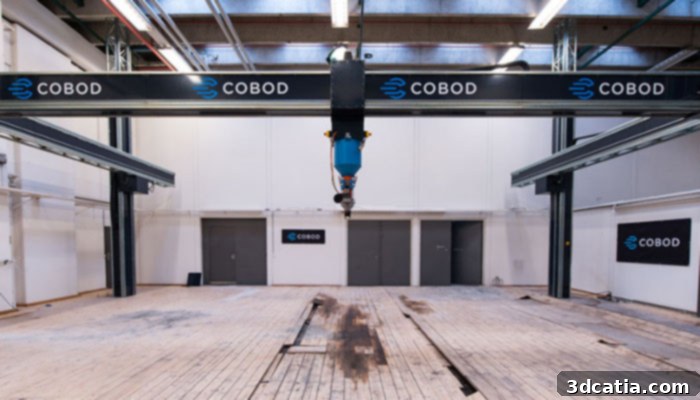
COBOD’s 3D printer in operation
From the perspective of market readiness and integration, the construction 3D printing industry is still in a very early stage of adoption. Over the last few years, the concept of 3D printing in construction has indeed generated considerable excitement. This enthusiasm is entirely understandable, given the alluring promise of rapidly constructed, custom-designed, and potentially more affordable fully 3D printed houses. However, a significant portion of the projects completed to date have primarily served as demonstration purposes. While valuable for showcasing capabilities and inspiring future development, these projects represent a relatively modest investment, tallying a few hundred million dollars. This figure, though substantial on its own, remains a mere drop in the ocean when juxtaposed with the global construction industry’s colossal annual revenue, which hovers around $10 trillion. This disparity underscores the vast chasm between current niche applications and widespread commercial integration.
Delving deeper into specific industry examples, Henrik Lund-Nielsen unequivocally asserts that the process of 3D printing entire buildings is definitively not as swift as many might perceive. For the time being, it undeniably remains a protracted and intricate process. He emphasized this point by stating, “We want to avoid situations where press stories like the ones about Apis Cor and ICON create completely unrealistic expectations from potential customers.” COBOD’s rigorous research indicates that, contrary to popular belief, no house has been 3D printed in the US by either Apis Cor or ICON within the much-hyped 24-hour timeframe, if any fully completed houses at all. Lund-Nielsen further elaborated on this crucial point: “The reality is that although almost 3 years have passed since then, Apis Cor has not printed a single house in the US and the same is the case for ICON. ICON has made no houses in the US since their announcement and no single printer has been sold to anybody.” This direct challenge to widely publicized narratives calls for a sober assessment of actual progress versus promotional claims, highlighting the critical need for verifiable achievements in a nascent industry.
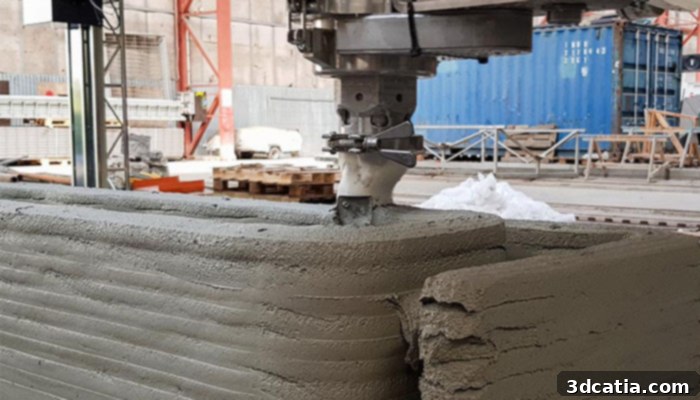
COBOD’s 3D printing technology in action
A second significant misconception that COBOD’s research seeks to correct is the widespread belief that entire buildings are 3D printed. In stark contrast, their comprehensive study revealed that in more than 95% of all projects examined, the 3D printer had been utilized exclusively for printing the walls. The vast majority of a building’s other essential components – including floors, roofs, insulation, electrical wiring, plumbing systems, and interior finishes – were all constructed using conventional, labor-intensive methods. This distinction is vital for understanding the true scope and impact of current 3D printing technology in construction. While wall printing offers unique advantages in terms of speed for that specific component and design flexibility, it represents only a fraction of the overall construction process. Integrating these conventionally built elements with 3D printed walls adds layers of complexity, cost, and time, which are often overlooked in promotional materials.
The financial implications of this limited scope are also profound. As COBOD points out, “When the printing technology, so far, has only been able to address a relatively minor part of the total building cost, say 25%, there is a limit to how much the application of the technology will mean for the entire cost of the building.” For instance, in developed nations, obtaining necessary permits and constructing a durable roof alone can easily exceed 4,000 USD, often reaching upwards of 10,000 USD. When these critical and costly elements are still being handled through traditional construction methods, regardless of the efficiency or excellence of the 3D printed walls, these substantial costs are not eliminated. This reality challenges the notion that 3D printing automatically leads to dramatically cheaper houses. While it can optimize specific aspects like material usage for walls or reduce labor for that particular phase, the holistic cost-benefit analysis must include all conventional components and processes to provide an accurate picture.
COBOD’s candid assessment serves as a crucial call for transparency and realism within the construction 3D printing industry. By addressing prevalent myths head-on, the company aims to foster an environment where innovation is grounded in verifiable facts and responsible marketing. The potential of 3D printing to revolutionize construction is undeniable – offering prospects for rapid prototyping, complex geometries, reduced waste, and localized production. However, reaching this potential requires overcoming significant challenges related to material science, multi-material printing capabilities, regulatory frameworks, and seamless integration with existing building practices. Acknowledging the current “early maturity stage” of the industry is not a sign of pessimism but rather a pragmatic approach that can prevent disillusionment and build genuine trust among customers, investors, and regulatory bodies. The future of construction 3D printing is bright, but it will be built on a foundation of honesty and sustained, incremental progress, rather than unrealistic promises.
What are your thoughts on COBOD’s insightful comments regarding the current state of 3D printing in the construction sector? Do you agree with their assessment of industry maturity and the common misconceptions? We invite you to share your perspective in a comment below or join the conversation on our Facebook and Twitter pages! To stay informed with the very latest news and developments in the world of 3D printing, remember to sign up for our free weekly Newsletter here, delivered straight to your inbox!