
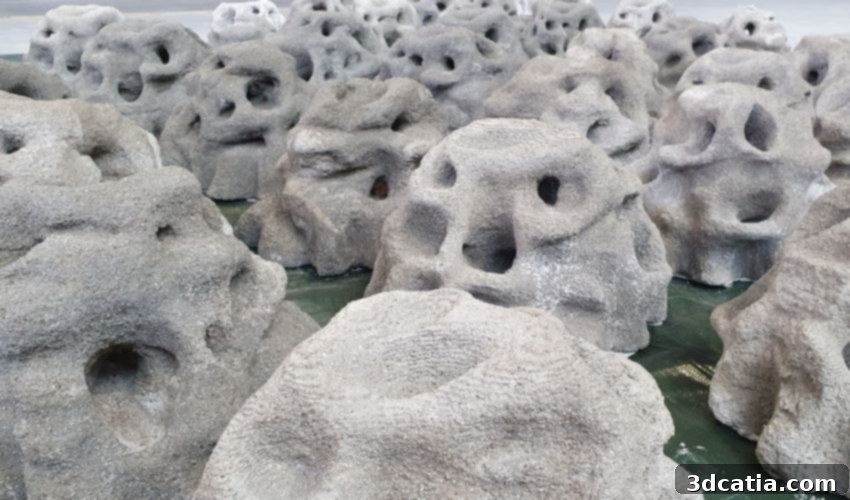
Innovating Ocean Conservation: How 3D Printing Revitalizes Marine Ecosystems and Coastal Resilience
Oceans are not merely vast bodies of water; they are the lifeblood of our planet, intricately linked to climate regulation, biodiversity, and human well-being. Protecting these vital ecosystems is an imperative, and in recent years, 3D printing technology has emerged as a powerful and innovative tool in the global effort toward ocean conservation. From creating sustainable seafood alternatives to constructing robust seawalls and restoring delicate coral reefs, additive manufacturing is transforming how we approach marine protection and restoration. A standout example of this innovative application is the work of Coastruction, a Dutch company leading the charge in 3D printed reef restoration.
Coral reefs, often called the “rainforests of the sea,” are incredibly diverse and productive ecosystems. The United States National Oceanic and Atmospheric Administration (NOAA) highlights their critical role, noting that approximately 25% of the ocean’s fish species depend on coral reefs for shelter, food, and reproduction. Beyond their immense ecological value, supporting countless marine organisms from invertebrates to apex predators, coral reefs also offer substantial benefits to human communities. They act as natural barriers, protecting coastlines from the destructive forces of storms and erosion, thereby safeguarding coastal infrastructure and communities. Furthermore, they are significant economic drivers, supporting thriving tourism industries, generating livelihoods through fishing, and providing potential sources for new medicines. Despite their critical importance, these magnificent systems are facing unprecedented threats. Overfishing, rampant pollution, and the accelerating impacts of climate change – particularly rising ocean temperatures leading to coral bleaching, and increasing ocean acidity impairing coral growth – are driving a dramatic and alarming decline in global coral reef health.
It is against this backdrop of urgent ecological crisis that companies like Coastruction are dedicating their efforts to restoring local coral reefs. In an insightful interview with 3Dnatives, Nadia Fani, the visionary founder of Coastruction, shared her profound passion, innovative approach, and the unique strategies that define Coastruction’s pioneering work in marine restoration.
3DN: Could you introduce yourself and your connection to 3D printing?
I’m Nadia Fani, the founder of Coastruction, and my connection to 3D printing is deeply rooted in both professional experience and personal passion. My journey with additive manufacturing began in 2015, sparked by a profound fascination with how this technology could fundamentally revolutionize traditional manufacturing processes. I initially started experimenting with extrusion-based printers, even assembling my own custom solutions to explore their capabilities. However, a significant turning point came with the discovery of powder bed 3D printing. I was immediately captivated by the immense possibilities it offered, particularly its potential with natural materials. Over time, this initial interest evolved into a specific focus on how 3D printing could be leveraged to create truly meaningful and sustainable solutions, especially for environmental challenges. This convergence of my technological passion with my deep love for the ocean and nature ultimately led me to establish Coastruction, where I am now able to purposefully merge these two core interests to make a tangible positive impact on marine ecosystems.
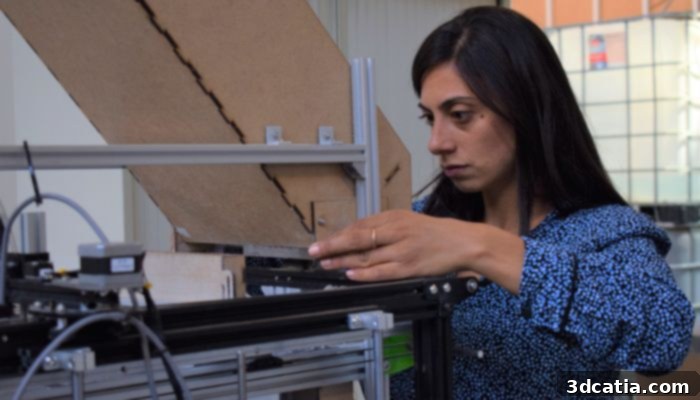
The founder of Coastruction, Nadia Fani
3DN: What is the mission of Coastruction and how did it come about?
Coastruction’s core mission is to actively restore and protect vital underwater ecosystems through the innovative application of 3D printing technology, making these powerful solutions accessible to a wider audience. We are dedicated to combating the severe degradation of marine environments by designing and building custom, sustainable artificial reefs that meticulously mimic natural habitats. The inspiration for Coastruction arose from a critical recognition of the environmental harm and limited effectiveness often associated with traditional methods of reef creation. These conventional approaches frequently rely on non-biodegradable or even toxic materials, and they typically lack a holistic understanding of the complex ecological requirements necessary to truly support and foster biodiversity.
For instance, traditional methods might involve using materials like discarded car tires, which can leach harmful toxins into the surrounding water over time, or metal rebar that rusts and further contaminates the marine environment. Simple cast concrete shapes, while offering some structure, often fail to integrate seamlessly with the natural marine environment because they lack the intricate textures, porous surfaces, and varied geometries essential for diverse species to settle and thrive. Such materials and simplistic designs can inadvertently disrupt local ecosystems and contribute to ongoing environmental degradation rather than true restoration. My vision was to develop a solution that would not only revive marine life but do so in a manner that is inherently respectful of the environment, using materials and designs that are biologically compatible and promote ecological resilience. Starting a pioneering company like Coastruction comes with its own set of unique challenges, from technical hurdles to securing funding and navigating regulatory landscapes, but the profound satisfaction of knowing we are making a significant, positive impact on our planet’s oceans makes every effort profoundly worthwhile.
3DN: Could you explain how the process works for your projects?
At Coastruction, we have developed a unique, in-house 3D printing system specifically tailored for large-scale marine restoration. Our innovative approach utilizes a form of powder bed 3D printing, but with key distinctions: it’s engineered to print structures that are big, rough, and fast, significantly boosting efficiency and scalability. Crucially, our printhead uses only water as a binder, making the process environmentally benign. This allows us to create highly complex and intricate reef structures that are not only structurally sound but also remarkably close in form and function to natural geological formations. Our ‘Purpose Built Reefs’ are manufactured using sustainable and locally sourced materials, ensuring they are perfectly adapted to the specific needs and chemical composition of each target ecosystem. This bespoke approach minimizes environmental impact and maximizes integration.
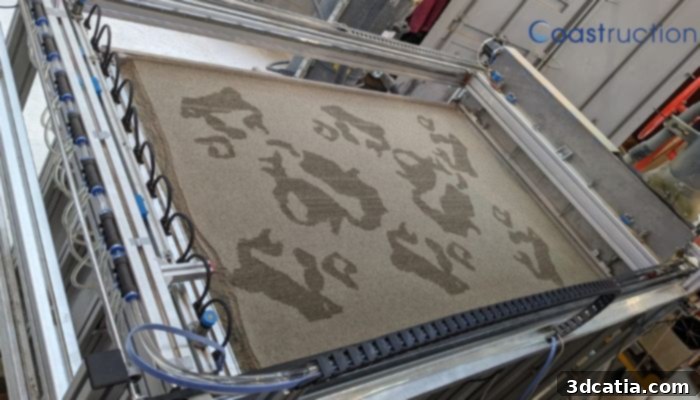
Part of the 3D printing process
Once printed and cured, these meticulously designed reefs are carefully deployed in various aquatic environments, including oceans, rivers, and lakes. There, they immediately begin to provide the ideal foundational environment for diverse marine life to colonize and thrive. Our commitment extends beyond deployment; we conduct extensive pre- and post-installation research and monitoring to ensure that the structures are ecologically beneficial, demonstrate optimal adaptability to local hydrological and biological conditions, and are engineered for long-lasting durability. This includes detailed studies on water flow, sediment dynamics, species colonization rates, and material integrity, all to guarantee maximum environmental benefit and resilience.
3DN: Why do you use 3D printing to create artificial reefs instead of traditional manufacturing?
Our decision to exclusively use 3D printing for creating artificial reefs stems from its unparalleled ability to address the complex requirements of underwater ecosystems, a feat that traditional manufacturing methods simply cannot achieve. These ecosystems are fundamental to life on Earth, and any intervention, particularly one aiming for restoration, must meticulously consider the delicate and intricate balance required for them to flourish. Traditional methods often produce standard, geometrically simple, and often flat structures, which fundamentally fail to meet the diverse and dynamic needs of marine environments. These monolithic designs lack the intricate micro-habitats, varied textures, and complex geometries that characterize natural reefs, essential for supporting a wide range of species from microbes to fish.
In contrast, 3D printing allows us to design and fabricate highly complex, intricate structures that precisely mimic the natural architecture of living reefs. This biomimicry is critical, as it enables us to incorporate features that support multiple ecological needs within a single design. For instance, we can create varied porosities and surface textures that provide ideal attachment points for corals and algae, shelter for small invertebrates, and hunting grounds for fish. Our designs can simultaneously meet specific structural demands, such as resisting strong currents, while also fulfilling diverse environmental requirements, like promoting specific water flow patterns conducive to nutrient delivery. Furthermore, 3D printing offers a significantly more sustainable and waste-efficient manufacturing process. We can utilize recycled and natural materials, which integrate more harmoniously with the marine environment and reduce the carbon footprint of production. Our reefs are not just designed to enhance biodiversity; their robust and complex structures also act as effective coastal protection barriers, helping to attenuate wave energy, reduce erosion, and mitigate the adverse effects of climate change on shorelines. This multi-functional approach ensures our interventions provide comprehensive, long-term benefits to both marine life and human communities.
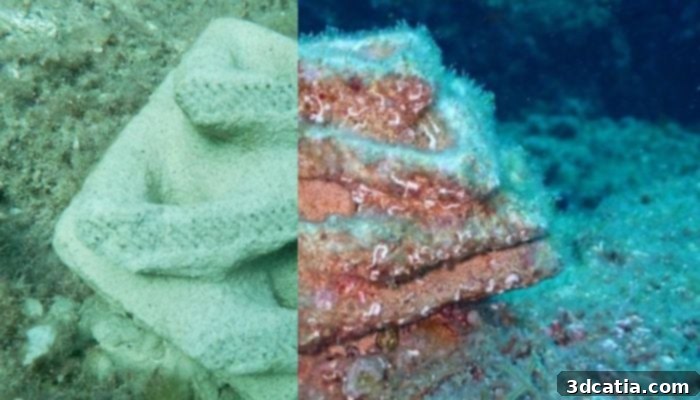
An image of the 3D printed coral reef soon after it was deposited (left) versus an image of the reef after marine life inhabited it (right)
3DN: How are local communities involved in what you do?
Local communities are absolutely integral to the success and sustainability of our projects; their involvement is a cornerstone of Coastruction’s philosophy. We firmly believe in engaging them from the earliest stages of each installation, commencing with the initial design phase and extending through the implementation and monitoring processes. This early engagement is crucial because local communities possess invaluable, often generations-deep, knowledge about their specific marine ecosystems, prevailing environmental challenges, and the cultural significance of these natural resources. We work in close collaboration with these communities, conducting workshops and engaging in direct dialogue to ensure that our reef designs are not only ecologically sound but also meet their specific needs, respecting local traditions and priorities. This collaborative approach also plays a pivotal role in raising critical awareness about the paramount importance of ocean conservation and the role that healthy reefs play in their daily lives.
Beyond design, involving communities in deployment, ongoing monitoring, and maintenance fosters a profound sense of ownership and stewardship. When community members are actively involved in protecting and caring for these artificial reefs, it significantly enhances the long-term viability and success of the projects. This engagement benefits both the marine environment, by ensuring sustained care and vigilance, and local livelihoods, by potentially creating new opportunities in ecotourism, sustainable fishing, or scientific monitoring roles. It’s a symbiotic relationship where local knowledge guides our scientific approach, and our technology empowers local communities to become active agents in their own environmental future.
3DN: Could you tell us about any projects you have in the works?
We are currently engaged in several incredibly exciting and diverse projects that highlight the versatility and impact of our 3D printing technology in marine restoration. We’re forging strong collaborations with leading research institutes and maritime contractors to push the boundaries of what’s possible. For example, we’ve partnered with prestigious institutions like TUDelft, Deltares, Boskalis, and Van Oord on a range of research initiatives. These collaborations involve deploying our purpose-built reefs in various marine environments to rigorously assess their impact on biodiversity, hydrodynamics, and ecosystem resilience. This research is vital for continually refining our designs and understanding the long-term ecological benefits.
One of our most ambitious upcoming projects is a large-scale coral restoration installation planned for the Red Sea, set to commence early next year. This marks a significant milestone for Coastruction, representing our first major scale-up in terms of both area covered and ecological impact, targeting a region particularly vulnerable to climate change. We are also actively expanding our scope into other critical coastal ecosystems, such as mangroves. In collaboration with the University of Miami, we are exploring how our structures can aid in mangrove restoration, contributing to both enhanced marine life habitats and strengthened coastal protection against erosion and storm surges. Mangroves and reefs often form synergistic systems, and restoring both simultaneously offers compounded environmental benefits.
Additionally, we’re partnering with Weco for an innovative installation in the North Sea, where our 3D printed structures will serve a dual purpose: functioning as eco-anchors for their devices that harvest energy from waves. This project builds upon our successful previous work in creating specialized eco-anchors, as demonstrated with TouchWind. These eco-friendly anchoring solutions minimize disturbance to the seabed and provide new micro-habitats for marine organisms around offshore energy infrastructure. We are continually researching new environmental challenges and identifying unique opportunities where our purpose-built reefs can make a profound and meaningful impact in restoring degraded marine ecosystems and providing sustainable solutions to pressing environmental problems worldwide.
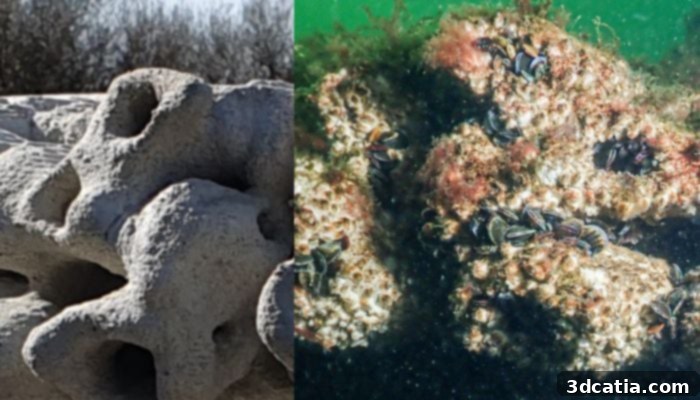
Another before and after of a 3D printed reef
3DN: Any last words for our readers?
The ocean is an indispensable treasure, absolutely vital to the health and stability of our entire planet, and as such, every single one of us has a critical role to play in its protection and restoration. Whether through leveraging cutting-edge, innovative technologies like 3D printing, or by making simple, conscious choices in our everyday lives, there are countless impactful ways we can contribute to marine conservation efforts. At Coastruction, we are unwavering in our belief that the strategic combination of advanced technology and a deep understanding of nature can forge incredibly powerful, truly sustainable solutions. These solutions have the potential to deliver profound benefits for both human societies and the fragile marine environment.
If you share a passion for the ocean and its intricate wonders, I strongly encourage you to stay informed about the latest conservation challenges and breakthroughs, actively seek out opportunities to get involved, and lend your support to initiatives that are diligently working to preserve our precious underwater world for current and, more importantly, future generations. Every action, no matter how small, contributes to the larger goal. To delve deeper into Coastruction’s pioneering work and learn how our 3D printed reefs are making a difference, please visit our website here. Together, we can make a significant wave of positive change for our oceans.
What are your thoughts on Coastruction’s innovative 3D printed reefs and their potential for ocean conservation? We’d love to hear from you! Share your insights in a comment below or join the conversation on our LinkedIn, Facebook, and Twitter pages. Don’t forget to sign up for our free weekly Newsletter here to get the latest 3D printing news delivered straight to your inbox! You can also find all our compelling videos on our YouTube channel.
*All Photo Credits: Coastruction