
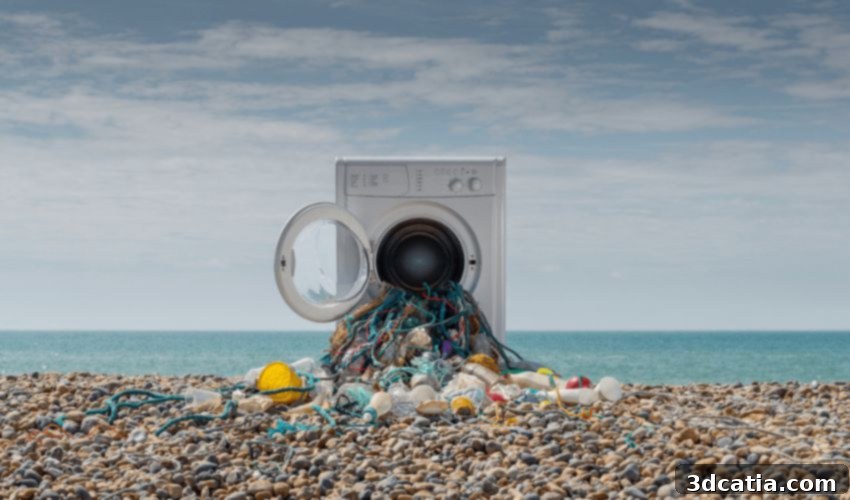
CLEANR & 3D Printing: Innovating Solutions to Combat Global Microplastic Pollution
The world is currently grappling with an array of profound environmental challenges, from accelerating global warming and the irreversible loss of biodiversity to critical water shortages and concerns over food security. Among these pressing issues, microplastic pollution stands out as one of the most pervasive, challenging, and insidious threats to our planet’s delicate ecosystems. These tiny, ubiquitous plastic fragments have permeated every corner of the Earth, demanding urgent and innovative solutions. Fortunately, a pioneering company named CLEANR is stepping up to address a significant contributor to this widespread problem: microplastic release from household washing machines. By leveraging the transformative power of 3D printing, CLEANR is meticulously designing and developing advanced microplastic-filtering systems intended for seamless integration into washing machines, offering a beacon of hope in the fight against plastic contamination.
To truly grasp the magnitude of this crisis, it’s essential to understand what microplastics are. Defined by the National Oceanic and Atmospheric Administration (NOAA) as plastic debris measuring less than five millimeters in length, these minuscule particles are rapidly accumulating in lakes, rivers, and oceans, posing an existential threat to aquatic life and potentially human health. The statistics are staggering: research indicates that microplastics now contaminate up to 88% of the ocean’s surface. Their presence is truly global, documented everywhere from the pristine, icy beaches of the Arctic and Antarctic to the towering summit of Mount Everest and the abyssal depths of the Mariana Trench. This alarming ubiquity is projected to worsen dramatically, with forecasts suggesting a doubling of microplastic pollution by 2050. This dire outlook underscores the critical and escalating importance of discovering and implementing effective solutions.
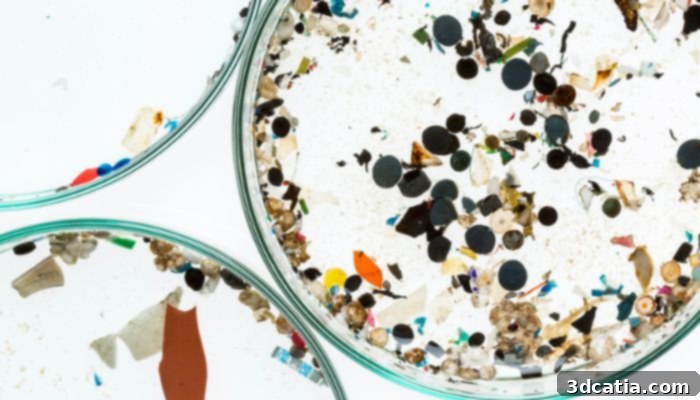
Microplastics frequently originate from synthetic clothing fibers, as highlighted by these samples discovered in German rivers by Greenpeace (photo credits: Fred Dott / Greenpeace)
This is where CLEANR, a dynamic young startup based in Cleveland, Ohio, enters the fray. They are at the forefront of developing groundbreaking filtration systems specifically engineered for washing machines, which have been identified as a major source of environmental microplastic pollution. It’s a sobering fact that synthetic clothing, designed for durability and performance, is one of the largest contributors to microplastics, shedding countless fibers with every wash. Consequently, washing machines alone are responsible for an estimated 35% of the microplastic particles that ultimately make their way into our environment. The severity of this problem has become so undeniable that governments worldwide are beginning to enact legislation mandating the inclusion of microplastic-filtration solutions in new appliances. For instance, France has pioneered this movement, requiring all new washing machines sold from January 2025 to incorporate such a filter. Following suit, state legislators in California and Oregon are actively developing similar proposals, signaling a growing global recognition of the urgent need for action. Thankfully, CLEANR’s innovative filter promises to be a game-changer, capable of capturing an astonishing 99% of microplastics before they can escape into the environment, effectively filtering particles down to an incredibly fine level of 10 microns, thereby setting a new standard for environmental protection.
A critical component in CLEANR’s rapid and effective development of these pioneering filtration solutions is the strategic integration of additive manufacturing. Chip Miller, co-founder and chief operating officer of CLEANR, eloquently explains the pivotal role of this technology: “3D printing technology plays a pivotal role in how we’re helping washing machine manufacturers address complex microplastic-filtering specifications, testing standards, space constraints, and cost challenges as they move quickly to address new regulations.” This statement highlights how 3D printing provides the agility and precision necessary to meet evolving industry demands and regulatory pressures.
Utilizing 3D Printing for Accelerated Innovation and Custom Solutions
The question then arises: how exactly is CLEANR leveraging additive manufacturing in their development process? The company has primarily embraced 3D printing for its unparalleled rapid prototyping capabilities. This allows CLEANR to swiftly iterate through design concepts, test various filter geometries, and refine their solutions with unprecedented speed. The ability to quickly produce physical prototypes from digital designs significantly accelerates their product development lifecycle, dramatically reducing the time it takes to bring their microplastic-filtering innovations to market. Furthermore, a recent press release from CLEANR sheds light on another crucial application: customization. 3D printing enables the company to tailor each filtration solution to the specific requirements and spatial constraints of individual washing machine manufacturers. This bespoke approach ensures optimal integration and performance, accommodating the diverse designs and technical specifications prevalent across the appliance industry.
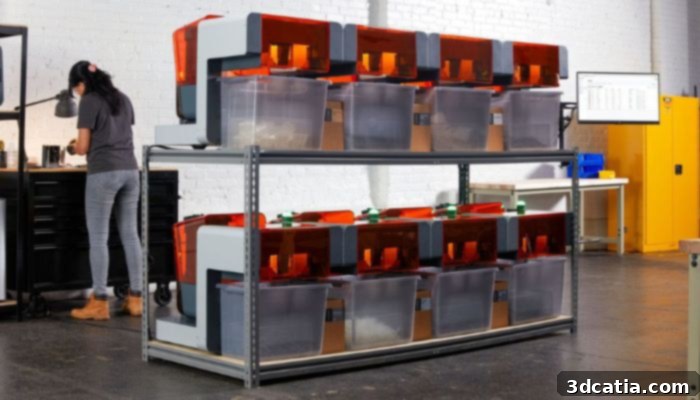
CLEANR utilized Formlabs’ Automation Ecosystem to facilitate the creation of their advanced filters (photo credits: Formlabs)
While CLEANR has generally maintained discretion regarding the specific 3D printing technologies they employ, they recently made a significant announcement: their selection as early adopters for Formlabs’ groundbreaking Automation Ecosystem. This advanced ecosystem, unveiled just last January, is meticulously designed to enable the automation and scaling of large 3D printer fleets. It specifically supports and enhances the capabilities of Formlabs’ highly regarded Form 3+, Form 3B+, Form 3L, and Form 3BL printers. A key characteristic linking all these models is their reliance on SLA (Stereolithography) technology. SLA is renowned for its exceptional precision, high resolution, and ability to produce parts with extremely smooth surface finishes, which are crucial attributes for intricate filtration systems. Given this information, it is highly probable that SLA 3D printing is the primary technology CLEANR is utilizing, allowing them to create the fine-tuned and robust components necessary for effective microplastic capture.
The broader implications of CLEANR’s work and the power of technological innovation are eloquently summarized by co-founder and chief technology officer, David Dillman: “Technology innovation is crucial in the race to eliminate microplastics from our oceans, food supplies and drinking water. Having early access to Formlabs’ advanced 3D printing capabilities will help us maintain the lead position in microplastics filtration and accelerate our expansion into in-home water filters, dishwashers, dryers, industrial laundry, and beyond.” This vision underscores a commitment not just to washing machine filters, but to a holistic approach to microplastic remediation across various household and industrial applications. CLEANR’s journey exemplifies how targeted technological advancements, supported by strategic partnerships, can offer tangible hope in addressing some of the most daunting environmental challenges of our time. Further details about their remarkable progress can be found in their official press release HERE.
What are your thoughts on this innovative application of SLA 3D printing to develop crucial filtration systems for combating microplastic pollution? We invite you to share your insights and comments below, or engage with us on our Facebook, Twitter, and LinkedIn pages! For the latest updates and news in the world of 3D printing, remember to sign up for our free weekly Newsletter here, delivered directly to your inbox!
*Cover Photo Credits: Plastic Soup Foundation