
CES 2018: Unveiling the Future of 3D Printing and Additive Manufacturing Innovations
From January 9th to 12th, 2018, the Consumer Electronics Show (CES) in Las Vegas once again served as the global epicenter for technological innovation. This annual event brings together the world’s most inventive companies, eager to showcase their latest breakthroughs. Among the myriad of future-shaping technologies on display, 3D printing, or additive manufacturing, prominently stood out. A diverse array of companies, from established industry giants making their debut to nimble startups pushing the boundaries, descended upon Vegas to demonstrate why their 3D printers and related solutions were poised to become the next big thing. The announcements from CES 2018 painted a vivid picture of a rapidly evolving additive manufacturing landscape, marked by increased accessibility, groundbreaking speed, advanced software, and expanded material capabilities. This recap summarizes the most pivotal revelations from the show, highlighting the innovations that promised to redefine how we design, prototype, and produce.
Kodak’s Grand Entrance into the 3D Printing World
After hinting at its official entry into the additive manufacturing market, Kodak used CES 2018 as the perfect platform to unveil its inaugural 3D printer. The “Kodak 3D Printing Ecosystem” was presented as a comprehensive solution designed to offer users a seamless and efficient experience. At its core is the Kodak Portrait, a robust 3D printer complemented by dedicated software and specialized 3D printing materials. The Portrait boasts an impressive build volume of 200 x 200 x 250 mm, providing ample space for a wide range of projects. Key features include a reliable filament detector, ensuring uninterrupted printing, and a dual extruder system. The inclusion of a dual extruder is particularly noteworthy, enabling multi-material or multi-color printing, as well as the use of soluble support structures for intricate designs – a significant advantage for professionals and educators alike. This strategic move by Kodak, a brand synonymous with imaging and precision, signaled a serious commitment to the 3D printing sector, aiming to leverage its legacy of quality and user-friendliness. Furthermore, Kodak announced a significant partnership with Twindom, a leader in 3D scanning technology, to release the Kodak full-body 3D scanner. This collaboration underscores Kodak’s vision for a holistic 3D ecosystem, connecting capture with creation, and opening doors for applications in custom apparel, personalized figurines, and even medical modeling. Kodak’s entry into 3D printing at CES 2018 was a clear statement that the technology was maturing and attracting mainstream attention from established brands.
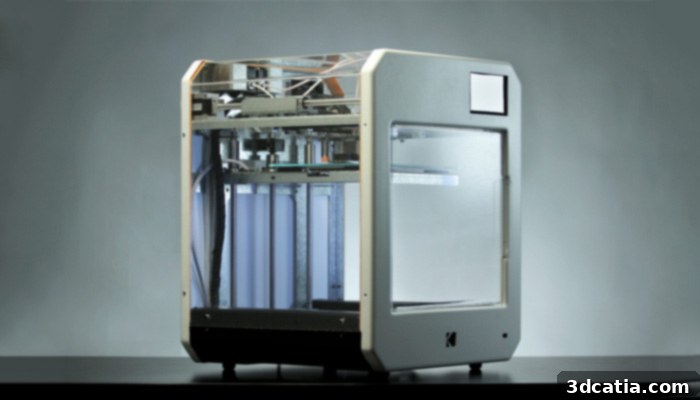
Kodak’s first 3D printer, the Portrait, utilizes FDM technologies.
CogniCAD 3D Software: Redefining Design Optimization
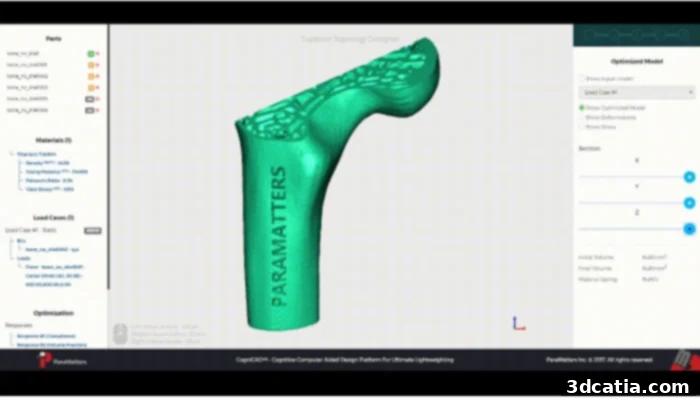
The future of 3D printing isn’t just about hardware; it’s also profoundly shaped by the software that drives design and optimization. Californian company Paramatters unveiled CogniCAD, a revolutionary 3D software solution primarily focused on design and topological optimization, with a keen eye on future industries. Topological optimization is a computational design method that optimizes material distribution within a given design space, for a given set of loads and boundary conditions, to maximize performance. Essentially, it helps engineers and designers create lighter yet stronger parts by intelligently removing unnecessary material. CogniCAD is engineered to streamline this complex process, allowing designers to create and manage highly optimized models and designs in a hands-on, cost-effective manner. Users can upload a standard CAD file, and CogniCAD will intelligently process it, topologically optimizing the model to significantly reduce weight while maintaining or even enhancing structural integrity. This capability is particularly crucial for industries like aerospace, automotive, and medical, where every gram saved can translate into substantial performance improvements and cost efficiencies. The software’s ability to automate and accelerate the optimization process empowers designers to explore innovative geometries previously deemed too complex or time-consuming, unlocking new possibilities for additive manufacturing.
Nexa3D’s Super-Fast NXV SLA 3D Printer: Speeding Up Production
One of the most exciting revelations at CES 2018 for industrial additive manufacturing was the unveiling of the highly-anticipated NXV 3D printer by American company Nexa3D. Fronted by Avi Reichental, the former CEO of 3D Systems – a figure with immense credibility in the 3D printing industry – the NXV immediately captured attention for its astonishing speed. This stereolithography (SLA) 3D printer shattered previous benchmarks by achieving print speeds of up to 1 centimeter per minute. Traditional SLA printers cure liquid resin layer by layer using a UV laser or projector, a process that can be time-consuming, especially for larger or more complex parts. Nexa3D’s breakthrough is attributed to its proprietary Lubricant Sublayer Photo-curing (LSPc) technology. This innovative process significantly reduces the “peeling forces” associated with traditional SLA, allowing for continuous, high-speed printing without compromising accuracy or surface finish. The NXV’s unprecedented speed has profound implications for rapid prototyping, short-run manufacturing, and even mass customization, making 3D printing a more viable option for production applications where speed is paramount. This development promises to accelerate product development cycles across various industries, from automotive and aerospace to consumer electronics and medical devices. You can view the full article here for more in-depth details.
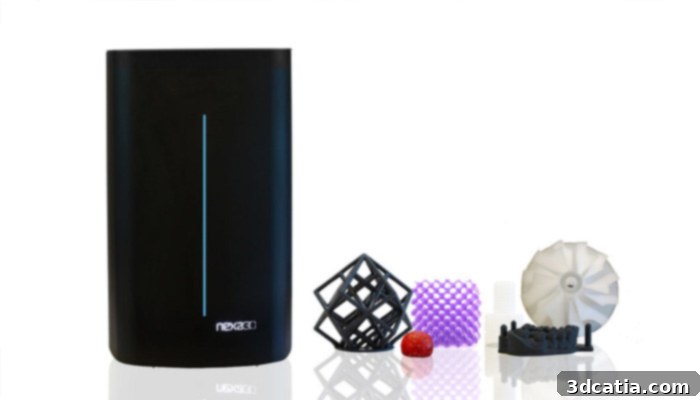
The NXV SLA 3D printer by Nexa3D, known for its rapid printing capabilities.
Airwolf and EVO: An Advanced Additive Manufacturing Center
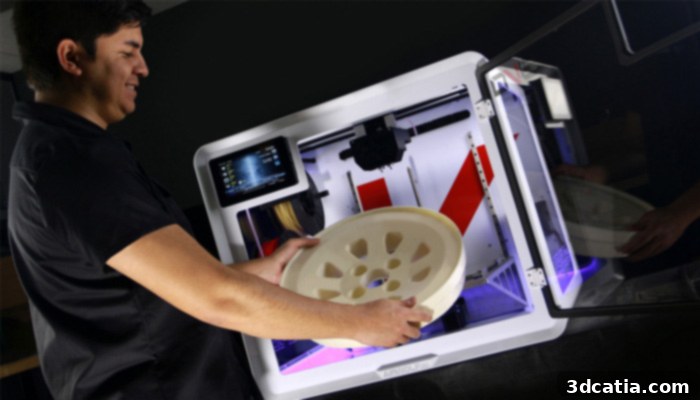
Airwolf 3D, a well-known manufacturer of professional desktop 3D printers, unveiled its ambitious EVO additive manufacturing center at CES 2018. Recognizing the rapid progress and increasing demand for robust desktop additive manufacturing solutions, the Californian company designed EVO to serve as more than just a printer – it’s a comprehensive workstation built for reliability and efficiency. EVO is poised to significantly assist companies in the rapid prototyping sector, offering features that enhance productivity and prevent common pitfalls. A standout innovation is the “PartSave” mode, an intelligent system designed to prevent the loss of work due to unexpected electrical failures or power outages. This feature is particularly valuable for long, intricate prints where interruptions can mean hours of wasted material and time. Beyond its reliability, EVO also provides a generous print volume of 305 x 305 x 280 mm, accommodating larger parts or batch production. This combination of advanced features, including precise control, robust construction, and a focus on minimizing downtime, positions EVO as a powerful tool for engineers, designers, and manufacturers looking to integrate high-performance desktop additive manufacturing into their workflows. It represents Airwolf 3D’s commitment to pushing desktop machines beyond mere hobbyist tools into professional, industrial-grade solutions.
Polaroid and its User-Friendly 3D Printers: Democratizing Additive Manufacturing
Leveraging its legacy of making photography accessible to the masses, Polaroid entered the 3D printing arena at CES 2018 with a clear mission: to democratize additive manufacturing technologies. The company introduced a range of user-friendly 3D printers, meticulously designed to make 3D creation accessible to beginners, educators, and creative enthusiasts alike. Polaroid launched four distinct, cleanly designed machines, each tailored to different user needs and budgets. These included the Polaroid Nano Duo, an advanced model featuring a dual extruder and WiFi connectivity, priced at $1,849, offering versatility for multi-material projects. For those new to 3D printing, the Polaroid Nano Mini was presented as the perfect entry point, incredibly user-friendly and affordable at just $349. The Polaroid Nano Glide, priced at $479, provided a higher print volume, allowing for larger creations. Completing the lineup was the Polaroid Nano, available for $549, offering a balanced set of features. These printers emphasized simplicity, reliability, and plug-and-play functionality, removing many of the complexities often associated with 3D printing. By offering a spectrum of machines at various price points, Polaroid aimed to lower the barrier to entry, fostering creativity and innovation among a broader audience and truly making additive manufacturing a technology for everyone.
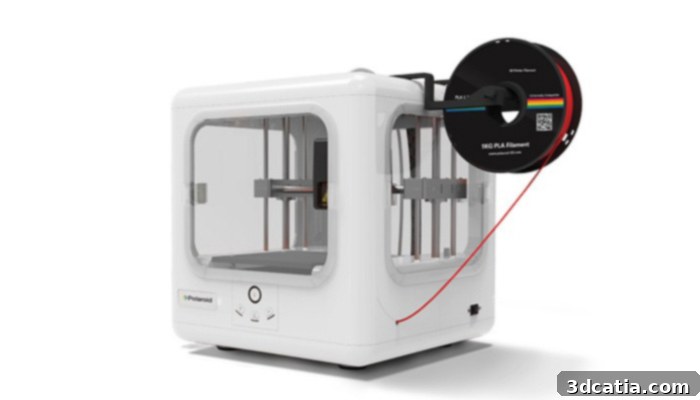
The user-friendly Polaroid Nano 3D printer.
Dobot: The Multi-Functional 3D Printing Robotic Arm
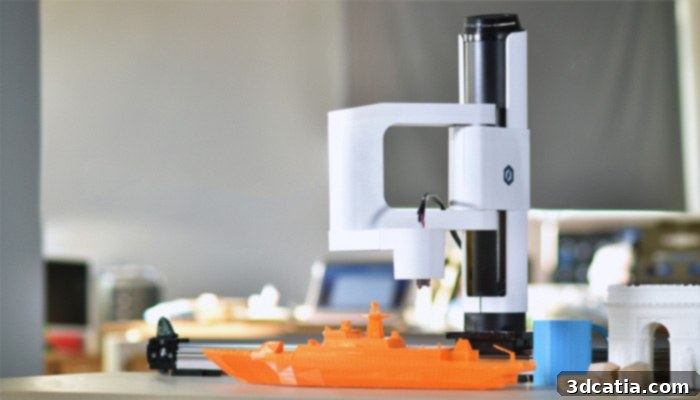
Shenzhen Yuejiang Technology Co. Ltd, a Chinese company, brought a fascinating convergence of robotics and additive manufacturing to CES 2018 with their Dobot Developments project. The core of their presentation was a highly versatile robotic arm that goes far beyond traditional 3D printing. The Dobot robotic arm is not only capable of intricate 3D printing tasks but also boasts multi-functional capabilities, including laser cutting, painting, and even writing. This adaptability makes Dobot an incredibly valuable tool for a wide range of applications, from small-scale manufacturing and rapid prototyping to artistic creation and educational instruction. The company introduced two primary models: the Dobot M1, a more robust and precise robotic arm aimed at industrial and professional users, capable of handling heavier payloads and more demanding tasks; and the Dobot Magician, specifically designed with an educational focus. The Magician serves as an excellent platform for STEM learning, allowing students to explore robotics, programming, and various fabrication techniques in an engaging and interactive manner. Dobot’s innovative approach demonstrated the increasing trend of integrating robotics into additive manufacturing workflows, enhancing automation, versatility, and precision across diverse applications.
Dot: The Armored Speaker – Where Design Meets Sustainability and 3D Printing
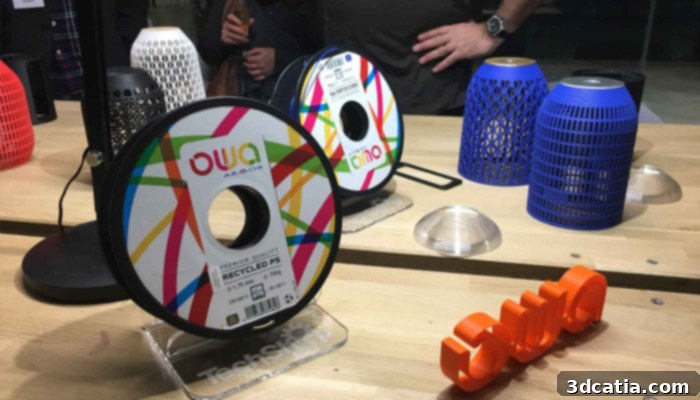
Among the many innovative products showcased at CES Las Vegas, the French company Armor 3D presented its unique “DOT” project: an armored speaker that brilliantly integrates cutting-edge design, ecological principles, and the versatility of 3D printing. This collaborative effort brought together expertise from various companies, including Techshop, the creative vision of Bold design studio, and the technical prowess of 3D printer developers Dood Studio. The DOT speaker is not just a technological marvel but also an aesthetic statement. By utilizing 3D printing, Armor 3D was able to achieve complex geometries and customized designs that would be difficult or impossible with conventional manufacturing methods. The “armored” aspect likely refers to its robust, durable construction, possibly hinting at the use of advanced polymers or composites. Furthermore, the emphasis on “ecology” suggests a commitment to sustainable practices, potentially through the use of recycled materials, bio-based filaments, or designs optimized for minimal material waste. The DOT project exemplifies how additive manufacturing is moving beyond purely functional applications, enabling the creation of high-quality, personalized consumer electronics that align with modern values of sustainability and bespoke design. It highlights 3D printing’s potential to transform product aesthetics and environmental impact.
Other Noteworthy 3D Printing Innovations from CES 2018
CES 2018 was a treasure trove of additive manufacturing advancements, with several other companies making significant strides. Chinese giant XYZprinting continued to solidify its position as a leader in FDM (Fused Deposition Modeling) technology, showcasing a trio of impressive machines. Their Da Vinci Color was a particular highlight, introducing full-color FDM printing that promised to revolutionize prototyping, educational tools, and artistic applications by allowing users to print objects with vibrant, multi-color details directly. Alongside this innovation, they also presented the compact and accessible Da Vinci Nano, catering to beginners and educational institutions, and a new 3D pen, further expanding creative possibilities. These offerings demonstrated XYZprinting’s commitment to both professional and consumer markets, making advanced 3D printing more affordable and versatile.
Adding to the material diversity, CES 2018 also saw the emergence of Kwambio, a company specializing in ceramic 3D printing. This niche but critical area of additive manufacturing opens doors for applications requiring high-temperature resistance, intricate ceramic components for industrial use, as well as unique artistic and design pieces. Kwambio’s presence signaled the expanding frontier of printable materials beyond plastics and metals, broadening the scope of what 3D printing can achieve.
Another significant trend observed at CES 2018 was the increasing emphasis on complete 3D printing ecosystems. While hints of these have appeared rarely in the past, American company Lulzbot prominently displayed its comprehensive approach this week. A 3D printing ecosystem typically encompasses not just the hardware, but also integrated software, a wide range of compatible materials, strong community support, and robust customer service. Lulzbot, known for its open-source philosophy, showcased how its printers are part of a larger, cohesive system that empowers users with flexibility, reliability, and ease of use. This focus on a holistic ecosystem is crucial for widespread adoption and ensures that users have all the necessary tools and support to maximize their 3D printing success, from design to finished product.
The innovations showcased at CES 2018 underscore a pivotal moment for 3D printing. The industry was clearly moving towards greater accessibility for consumers, unprecedented speed for industrial applications, more intelligent design software, multi-functional robotics, and an expanding array of printable materials. These developments collectively highlighted 3D printing’s growing impact on design, manufacturing, and our daily lives, proving that additive manufacturing was no longer just a niche technology but a rapidly maturing force reshaping the future.
For more information about the event, you can visit the official website of CES Las Vegas 2018 here.
Did CES 2018 live up to your expectations for additive manufacturing? Let us know your thoughts in a comment below or connect with us on our Facebook and Twitter pages! Don’t miss out on the latest news in 3D printing – sign up for our free weekly Newsletter to get all the updates straight to your inbox!