
Unleashing Advanced 3D Printing: Cerberus, the Open-Source, Self-Replicating Machine for High-Performance Polymers
In a significant leap forward for accessible additive manufacturing, a visionary team at Michigan Technological University has unveiled plans for an innovative open-source 3D printer named Cerberus. This groundbreaking solution is poised to democratize the fabrication of high-performance parts by offering robust capabilities at an unprecedentedly low cost. With the potential to be built for less than $1,000, Cerberus challenges the established market, which has long been dominated by professional-grade machines costing tens or even hundreds of thousands of dollars. This development marks a pivotal moment, making industrial-grade material processing accessible to a much broader audience, from individual makers and small businesses to research institutions with limited budgets.
The Cerberus printer boasts compatibility with demanding engineering polymers such as PEKK (Polyetherketoneketone) and PEI (Polyetherimide), often recognized by its trademark name ULTEM. These materials are renowned for their exceptional mechanical strength, chemical resistance, and high-temperature performance, properties traditionally reserved for high-end industrial 3D printers. What truly sets Cerberus apart, beyond its material capabilities and affordability, is its self-replicating nature. Following in the footsteps of its predecessors, it is designed to print many of its own components, embodying the spirit of accessible, sustainable technology where users can build, maintain, and even upgrade their machines with relative ease, fostering a deeper understanding and control over their manufacturing tools.
The concept of a self-replicating machine gained considerable traction in 2004 with the introduction of the RepRap project. Adrian Bowyer, the pioneering inventor behind RepRap, envisioned and created the first 3D printer capable of manufacturing most of its own parts. This revolutionary idea aimed to accelerate the spread of additive manufacturing technology by making it open-source and easily buildable from readily available, off-the-shelf components. For years, RepRap-style machines primarily focused on printing with standard, more manageable materials like PLA (Polylactic Acid) and ABS (Acrylonitrile Butadiene Styrene). While incredibly impactful for hobbyists and educational purposes, the inability to process high-temperature, high-performance polymers limited their application in demanding industrial and medical fields. This is where Joshua Pearce, a leading figure from Michigan Technological University, enters the scene, fundamentally transforming the open-source 3D printing landscape. Pearce’s team has engineered an open-source model that bridges this critical gap, empowering users to process advanced engineering-grade materials at exceptionally high temperatures, all while maintaining the RepRap ethos of affordability and accessibility, thus pushing the boundaries of what open-source hardware can achieve.
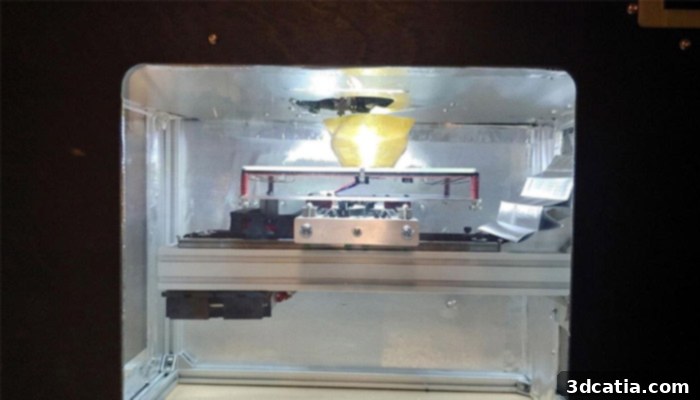
The machine in process of 3D printing. (Image credits: OSF)
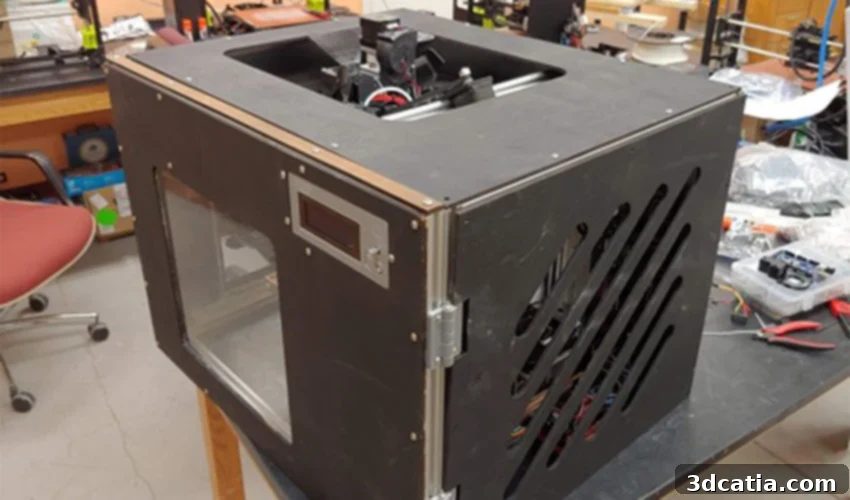
The Cerberus 3D printer lives up to its mythological namesake, featuring three print heads – a nod to the legendary three-headed dog guarding the Underworld in Greek mythology. This multi-extruder configuration offers significant advantages, enabling complex multi-material prints or faster printing through parallel operation, allowing for intricate designs with dissolvable supports or varying material properties within a single object. One of these print heads is engineered to achieve a blistering 500°C, thanks to its robust V6 all-metal nozzle. Such extreme temperatures are essential for melting and extruding high-performance polymers like PEKK and PEI, which have significantly higher melting points than conventional plastics and often require these elevated temperatures to ensure proper flow and layer adhesion. Complementing this, the E3D heating plate can reach a substantial 200°C, providing the necessary thermal environment for optimal print adhesion and reducing warpage, especially crucial for large prints. The Cerberus also incorporates a fully enclosed printing chamber, critical for maintaining a stable, elevated ambient temperature around the print. This chamber is equipped with a powerful 1kW heating core, capable of rapid heat-up, ensuring that the entire print volume remains at a consistent temperature, which is paramount for successfully printing large parts with high-temperature materials and preventing internal stresses or layer delamination that can lead to part failure.
A particularly ingenious aspect of the Cerberus design lies in its chassis architecture. The system is cleverly designed so that most of the sensitive electronic and mechanical components are strategically placed outside the intensely heated printing chamber. This innovative layout allows for the precise maintenance of a uniform, high temperature within the build volume without subjecting delicate electronics to excessive heat, thereby enhancing component longevity and reliability and reducing potential points of failure. Furthermore, by isolating the heat, the design inherently minimizes the need for extensive cooling fans within the active print zone, contributing to a more stable thermal environment and reducing potential print defects caused by inconsistent cooling. To further enhance its versatility and economic efficiency, Cerberus offers an optional pellet extruder. This addition allows users to print directly from plastic pellets, which are typically much cheaper per kilogram than filament, thus significantly expanding the range of compatible plastics and reducing material costs for high-volume or experimental applications. This feature alone drastically lowers the barrier to entry for utilizing a wider array of engineering-grade materials, further solidifying its position as a cost-effective, high-performance solution for diverse industrial, research, and educational needs.
Why Build an Open-Source 3D Printer for Advanced Materials?
The decision by Joshua Pearce to openly share the design files for the Cerberus 3D printer is deeply rooted in a desire to provide effective, adaptable solutions, particularly in the face of unforeseen global challenges. The recent global health crisis, exemplified by the COVID-19 pandemic, underscored significant vulnerabilities in traditional supply chains and highlighted the urgent need for decentralized, agile manufacturing capabilities. While many industries struggled, the additive manufacturing sector demonstrated remarkable resilience and innovation, swiftly adapting to produce critical items such as protective equipment and medical components, often using readily available materials. The Cerberus 3D printer, with its ability to process high-performance, sterilizable materials at a low cost, represents a powerful tool in this new paradigm. It offers an inexpensive, localized solution for manufacturing crucial medical devices, laboratory equipment, or specialized tooling that requires excellent mechanical properties and the ability to withstand stringent sterilization protocols, making it invaluable for hospitals, clinics, and research facilities.
Beyond the immediate crisis response, the open-source philosophy behind Cerberus champions transparency, collaboration, and rapid iteration. By making the designs freely available, Pearce encourages a global community of engineers, researchers, and hobbyists to contribute to its development, identify improvements, and adapt the technology for novel applications, leading to accelerated progress that proprietary systems often cannot match. This collaborative model accelerates innovation far beyond what a closed-source, proprietary system could achieve alone, fostering a dynamic ecosystem of shared knowledge and collective problem-solving. While the assembly of the machine’s parts does present a certain level of complexity, requiring some technical aptitude and commitment from the builder, the wealth of online resources, detailed documentation, and vibrant community support typical of open-source projects helps mitigate this challenge. The long-term vision is to foster a self-sustaining ecosystem where advanced manufacturing capabilities are not just owned by a few large corporations but are distributed and empowered at the grassroots level, enabling local communities to address their unique challenges with bespoke, high-quality 3D printed solutions, driving innovation from the ground up.
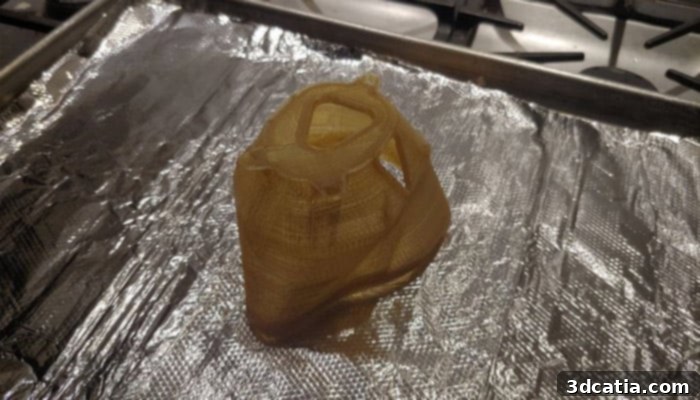
The 3D printed mask after sterilization. (Image credits: OSF)
To validate the capabilities of the Cerberus machine, Joshua Pearce and his team conducted rigorous testing, focusing on real-world applications that demand both high performance and reliability. A notable demonstration involved the successful creation of a PEKK face mask, showcasing the printer’s ability to produce functional, high-strength parts from advanced polymers that could be vital in healthcare or industrial safety contexts. The mechanical integrity of these prints was quantifiably impressive: tests revealed an average tensile strength of 77.5 MPa for PEKK printed at an extrusion temperature of 390°C, and an even higher 80.5 MPa for ULTEM (PEI) printed at 380°C. Tensile strength, a critical metric in material science, indicates a material’s resistance to breaking under tension, underscoring the robust nature of Cerberus’s output. These values are highly competitive, matching or even exceeding the performance often seen from industrial-grade machines, particularly remarkable given the Cerberus’s build cost and open-source nature.
Crucially for medical and other sensitive applications, the team also performed stringent sterilization tests to ensure the integrity and safety of printed components. They reported resounding success, with no observed deformation or degradation of the PEKK printed part even after being sterilized at a high temperature of 150°C. The piece maintained its perfect functionality and structural integrity, a testament to the inherent thermal stability of the chosen materials and the precise control offered by the Cerberus printer’s advanced thermal management system. Furthermore, the potential to anneal these high-performance materials – a post-processing heat treatment that further enhances their mechanical properties and thermal resistance by altering their crystalline structure – could push the maximum operational temperature of the parts to an impressive 260°C. This level of heat resistance is far more than sufficient for virtually any standard sterilization protocol, including autoclaving, making Cerberus an invaluable asset for creating custom, sterilizable components for healthcare, scientific research, and demanding industrial environments where hygiene and material integrity are paramount. The ability to produce such high-quality, durable, and sterilizable parts at an accessible price point promises to unlock new possibilities for innovation and localized manufacturing across numerous sectors, from medical devices to aerospace components and beyond.
For those eager to delve deeper into the specifics and explore the intricate details of this pioneering project, comprehensive information and detailed project sketches are readily available HERE. The Cerberus 3D printer represents more than just a piece of hardware; it embodies a philosophy of open innovation and accessible advanced manufacturing, empowering individuals and organizations worldwide. What are your thoughts on the potential of the Cerberus 3D printer and the profound implications of open-source high-performance additive manufacturing for future industries and communities? We invite you to share your insights and engage with the community in a comment down below or by reaching out to us on our Facebook and Twitter pages! Don’t miss out on the latest advancements and breaking news in the exciting world of 3D printing; sign up for our free weekly Newsletter, delivered straight to your inbox, and stay at the forefront of this rapidly evolving technology!