
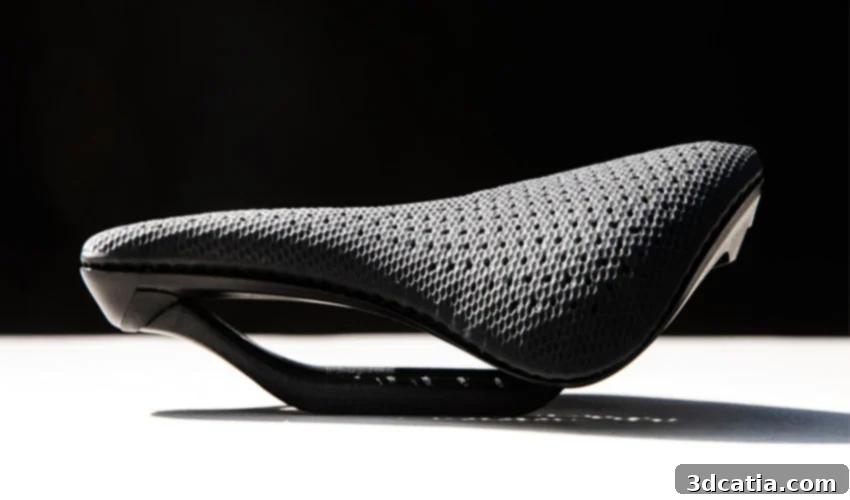
Revolutionizing Cycling Comfort and Performance with the 3D Printed Specialized S-Works Power Saddle
The world of cycling is constantly pushing the boundaries of innovation, perpetually seeking to enhance every facet of the rider experience. In a groundbreaking announcement that exemplifies this relentless pursuit, American bike manufacturing giant Specialized has forged a strategic partnership with the pioneering 3D printing company, Carbon. Together, they are set to redefine what’s truly possible in cycling ergonomics and performance with their revolutionary product: the 3D printed S-Works Power saddle. This state-of-the-art bike seat is not merely engineered to offer unparalleled comfort; it is meticulously designed to maximize a rider’s performance, stability, and overall well-being, promising a transformative impact on how cyclists interact with their machines.
Since its establishment in 1974, Specialized has maintained an unwavering commitment to delivering cutting-edge innovations aimed at elevating the rider’s journey. By joining forces with Carbon, the company is boldly embracing advanced 3D printing technologies to fundamentally reinvent one of the most critical contact points on a bicycle – the saddle. This collaboration marks a significant leap forward, moving beyond the inherent limitations of traditional manufacturing methods to unlock new levels of customization, functional design, and material optimization. Joseph DeSimone, CEO of Carbon, eloquently articulates the shared vision underpinning this powerful alliance: “Carbon and Specialized share a mission to challenge the acceptable, create the extraordinary, and ultimately create products that enable people to push the limits of what’s possible.” This statement perfectly encapsulates the ambition to not just incrementally improve, but to truly innovate and disrupt the status quo in cycling equipment.
A Strategic Alliance Forged in Innovation: Carbon’s Expertise Meets Specialized’s Cycling Legacy
Carbon’s ascent in the additive manufacturing landscape has been nothing short of meteoric, primarily driven by its unique Digital Light Synthesis (DLS) technology and a shrewd eye for strategic, high-impact partnerships. Not long ago, Carbon successfully secured an impressive $260 million in funding, propelling its valuation to nearly $2.4 billion. This substantial financial backing unequivocally underscores the market’s profound confidence in Carbon’s transformative potential and its ability to deliver on ambitious projects. Throughout its journey, establishing key collaborations has been central to the company’s sustained success, with renowned global brands such as Adidas and Riddell playing pivotal roles in solidifying Carbon’s image as an innovator capable of delivering high-performance products across diverse and demanding sectors. From pioneering footwear with Adidas’ Futurecraft 4D project to advanced helmet linings for Riddell, Carbon has consistently demonstrated its ability to translate sophisticated 3D printing capabilities into tangible, superior products that meet and exceed consumer expectations.
Now, extending its innovative reach beyond athletic trainers and protective helmets, Carbon is making a significant and highly anticipated foray into the competitive and performance-driven world of professional cycling. This new venture with Specialized represents a natural progression for a company committed to advancing human performance and comfort. Joseph DeSimone further emphasized the profound implications and shared philosophy behind this new partnership: “Our partnership with Specialized represents not only a breakthrough in bike saddle technology, but also our companies’ shared commitment to drive meaningful change by making products that improve human health and well-being.” This profound commitment speaks volumes about the holistic approach both companies are taking, focusing not just on pure speed and efficiency, but critically, on the overall health, comfort, and long-term well-being of the rider. The collaboration is poised to introduce a new paradigm in cycling, where advanced materials and cutting-edge manufacturing techniques converge to create components that are inherently more ergonomic, more efficient, and ultimately, healthier for the human body over extended periods of riding.
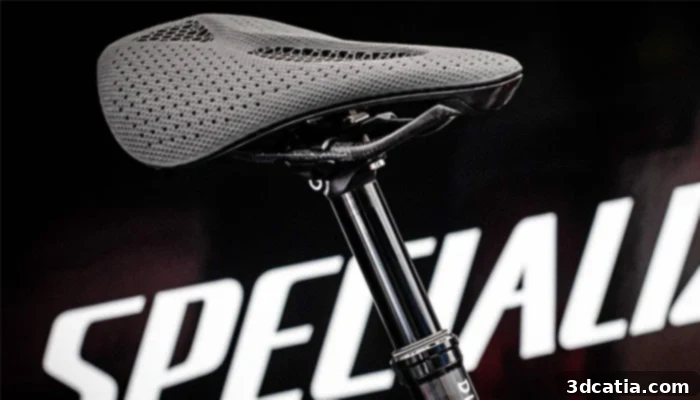
The Core Innovation: Why Carbon’s Digital Light Synthesis (DLS) Technology is Superior for Bike Seats
3D Printed Bike Seat: Understanding the Transformative Power of Carbon’s DLS Technology
Specialized’s strategic decision to leverage Carbon’s cutting-edge technology for its 3D printed bike seats stems directly from the profound and multifaceted advantages offered by additive manufacturing over conventional methods. For decades, bike saddles have predominantly relied on foam padding, a material that, while widely used, comes with inherent and significant limitations in terms of durability, precise pressure distribution, breathability, and customization potential. Traditional foam padding tends to compress and degrade over time, losing its supportive properties and offering little in the way of zonal tuning for specific rider needs, often leading to discomfort, numbness, and even pain on longer rides.
Carbon’s patented Digital Light Synthesis (DLS) technology provides a revolutionary and fundamentally superior alternative. This sophisticated additive manufacturing process utilizes a unique, precisely engineered lattice-structured Elastomeric Polyurethane. This advanced material has been rigorously proven successful in other demanding, high-performance applications, such as the intricate midsoles of Adidas’ innovative Futurecraft 4D shoes and the protective linings of Riddell’s state-of-the-art helmets. By expertly adapting this advanced material and complex structural design for the bicycle saddle, Specialized and Carbon have been able to decisively overcome the inherent deficiencies of traditional foam. The DLS technology enables the creation of highly complex, non-uniform, and customizable lattice structures that are simply impossible to achieve with conventional manufacturing techniques. These intricate structures can be precisely engineered to vary in stiffness, cushioning, and responsiveness across different zones of the saddle, allowing for unprecedented levels of pressure mapping and support that can be finely tailored to a rider’s unique anatomy, biomechanics, and specific riding style.
As eloquently explained by the developers, “The DLS technology made it possible to develop a lattice design that enables the saddle to rebound quickly, giving riders the experience of having a ‘suspension’ for their sit bones. The saddle not only disperses pressure, but also significantly improves breathability. Ultimately, our innovation is designed to result in less pain and fewer injuries for riders, leading to better health and performance.” This ‘suspension’ effect is absolutely crucial for rider comfort and endurance, as it effectively absorbs road vibrations and impacts, significantly reducing rider fatigue and enhancing comfort, especially during long-distance rides or over rough terrain. Furthermore, the innovative open lattice structure dramatically improves airflow and ventilation throughout the saddle, preventing uncomfortable heat buildup and ensuring superior breathability – a common and persistent issue with conventional saddles that often leads to discomfort, chafing, and skin irritation. The targeted, intelligent pressure dispersion minimizes painful hot spots and numbness, directly translating to a healthier, more comfortable, and ultimately, a higher-performing ride for cyclists of all levels, from casual enthusiasts to elite professionals.
Accelerating Innovation and Streamlining Product Development Cycles with 3D Printing
The profound advantages of adopting Carbon’s DLS technology, and more broadly the principles of additive manufacturing, extend far beyond the intrinsic benefits and superior performance of the final product. The strategic integration of 3D printing into the development process has fundamentally transformed Specialized’s product lifecycle, demonstrating its significant impact on efficiency, speed, and agility. Specialized was able to drastically reduce the overall development time for the S-Works Power saddle, bringing it down from an extensive 24 months to a remarkably efficient 10 months. This represents a staggering reduction of more than 50%, allowing for much quicker iteration, optimization, and ultimately, a faster time-to-market.
One of the most impressive and impactful benefits has been the dramatic acceleration of the prototyping phase. Traditionally, producing a physical prototype of a complex bike saddle design could take up to two weeks, a significant bottleneck in the development pipeline. With Carbon’s DLS technology, prototypes of the S-Works Power saddle are now produced in a single day. This rapid prototyping capability is an absolute game-changer, providing developers with unprecedented agility and flexibility. They can test multiple design iterations, make immediate adjustments based on real-world feedback, and re-print a new, refined prototype within hours, rather than waiting for weeks. This highly iterative design process allows for a far more thorough and exhaustive optimization of the complex lattice structure, ensuring that every curve, every zone of stiffness, and every pressure point is meticulously perfected before the product moves to mass production. The ability to quickly visualize, physically test, and refine design changes eliminates critical bottlenecks and significantly reduces the risk of costly late-stage modifications or design flaws.
Furthermore, the entire design process itself witnessed a substantial improvement in efficiency, shrinking from an average of 6 months to just 2 months. This remarkable acceleration across all stages of development – from initial concept generation to final prototype validation – means that groundbreaking innovations can reach consumers much faster than ever before. The combined effect of these profound efficiencies ensured that the S-Works Power saddle was projected to be available as early as 2020, bringing cutting-edge technology and enhanced rider experiences to cyclists in record time. While the specific price range of this innovative bicycle saddle had not yet been formally announced at the time of its initial reveal, the immense value proposition lies not just in the superior characteristics of the product itself, but also in the streamlined, responsive, and highly efficient development methodology it represents.
Beyond the Saddle: The Transformative Future of 3D Printing in Cycling
The introduction of the Specialized S-Works Power saddle, meticulously crafted using Carbon’s innovative DLS technology, is more than just the launch of a new product; it is a profound testament to the transformative power and immense potential of additive manufacturing within the demanding cycling industry. This landmark partnership fundamentally highlights a growing and irreversible trend where 3D printing is no longer merely a tool for rapid prototyping, but has evolved into a viable and, in many cases, superior method for producing end-use components that offer performance characteristics and design freedoms unachievable with conventional manufacturing techniques. The resounding success and positive reception of this revolutionary saddle undoubtedly pave the way for a broader and deeper integration of 3D printing across various other critical cycling components.
Imagine a future where handlebars are precisely tailored to a rider’s unique hand geometry for optimal grip, comfort, and control, or where crank arms are meticulously optimized for maximum power transfer based on an individual’s specific biomechanics and pedaling style. With the advanced capabilities of 3D printing, the long-held dream of truly personalized, high-performance cycling equipment is rapidly becoming a tangible reality. This cutting-edge technology allows for unprecedented design freedom, empowering engineers to create incredibly complex geometries, intricate internal lattice structures, and highly customized material properties that can be varied micro-region by micro-region within a single component. This unparalleled level of customization and granular control can precisely address specific rider needs, significantly enhance performance, actively prevent common cycling-related injuries, and ultimately foster a more integrated, harmonious, and efficient connection between the rider and their machine. The S-Works Power saddle serves as an exceptionally powerful and compelling demonstration that comfort and performance do not have to be mutually exclusive; instead, they can be meticulously engineered together, through advanced technology, to achieve truly superior results.
As both Carbon and Specialized continue to innovate and push the boundaries of what’s possible, we can confidently anticipate a future where 3D printing becomes an indispensable and ubiquitous tool for developing incredibly lightweight, exceptionally strong, and ergonomically optimized components across the entire spectrum of bicycle design and manufacturing. From bespoke grips and custom-fit shoe insoles to highly aerodynamic frame elements and unique, performance-tuned suspension parts, the potential applications for additive manufacturing in cycling are vast, exciting, and ever-expanding. This unwavering commitment to pushing technological boundaries, as so vividly encapsulated by Joseph DeSimone’s forward-thinking vision, is set to inspire other manufacturers across the industry and accelerate the widespread adoption of advanced manufacturing techniques, promising a thrilling new era of truly personalized and supremely high-performance cycling experiences for enthusiasts, amateur riders, and professional athletes alike.
What are your thoughts on this revolutionary 3D printed bike seat? Do you envision a future where all cycling components are personalized through additive manufacturing? Let us know your opinions and experiences in a comment below, or join the vibrant conversation on our Facebook and Twitter pages! For all the latest news, breaking developments, and insightful advancements in 3D printing technology, don’t forget to sign up for our free weekly Newsletter, delivered straight to your inbox!