
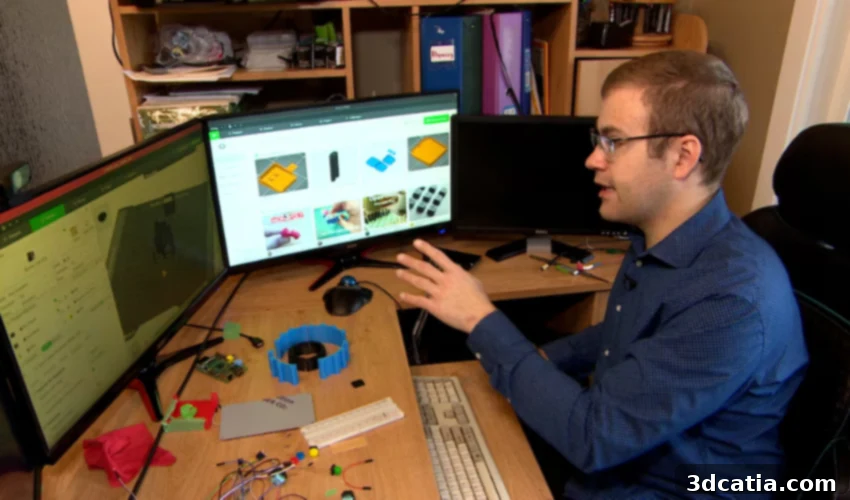
Empowering Lives: How 3D Printing Revolutionizes Accessibility and Assistive Technology
In the heart of Warman, Saskatchewan, a vibrant city nestled in Western Canada, an inspiring innovator is harnessing the power of 3D printing technology to forge practical solutions that significantly enhance accessibility and foster greater independence for individuals with disabilities. This profound journey began for Nicolas Vaagen following a life-altering car accident in 2020. Faced with personal challenges, Vaagen channeled his experience into a dedicated project, meticulously designing and producing assistive tools aimed at helping others navigate their daily routines with unprecedented ease and confidence. His story is a testament to resilience, illustrating how personal adversity can ignite a passion for creating widespread positive impact.
Vaagen’s initial personal challenge, driven by a direct understanding of the obstacles faced by people with reduced mobility or dexterity, rapidly blossomed into a far-reaching community initiative. This movement is firmly rooted in the principles of innovation, inclusion, and the democratizing potential of modern manufacturing. By strategically utilizing readily available and affordable 3D printers alongside powerful open-source design tools, Vaagen has developed an impressive array of customized devices. These creations span a wide spectrum, from thoughtfully modified nail clipper stands, which eliminate the struggle of traditional grooming, to sophisticated adaptive gaming controller attachments, enabling individuals to fully engage in recreational activities previously inaccessible. Each and every design is meticulously crafted and rigorously tested to precisely meet the unique physical requirements of its intended user. This bespoke approach vividly demonstrates how digital fabrication is not merely a manufacturing technique but a transformative force in the realms of personal healthcare and assistive technology, offering tailored solutions that traditional methods often cannot.
The impact of such personalized solutions cannot be overstated. For many, these devices represent a critical bridge over everyday hurdles, restoring a sense of agency and autonomy. The ability to customize every aspect – from ergonomic grips to specific angles and dimensions – ensures that each tool is an extension of the user, maximizing comfort and functionality. This level of individual attention fosters not just physical support but also a significant boost in self-reliance and mental well-being, proving that technology, when applied thoughtfully, can truly empower.
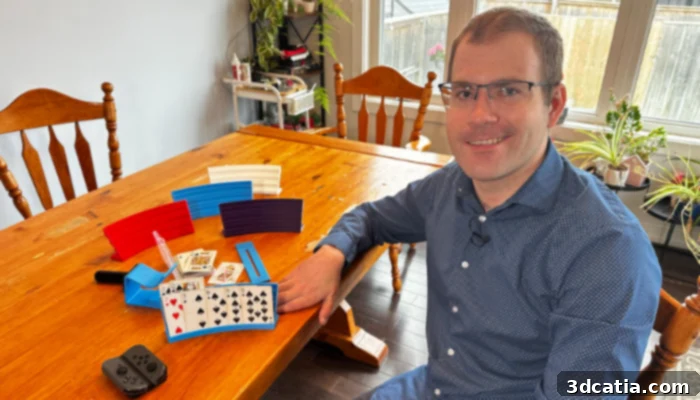
Nicolas Vaagen poses with some of the devices he created using a Bambu Lab 3D printer. (Photo Credit: CBC Canada)
A cornerstone of Vaagen’s expanding influence lies in his strategic collaboration with Makers Making Change, an exemplary program spearheaded by the Neil Squire Society. This pioneering initiative serves as a vital conduit, effectively connecting a network of passionate volunteer makers, like Vaagen, with individuals who are in dire need of adaptive tools. Through this partnership, Vaagen has been able to significantly broaden his outreach, delivering not only low-cost but also locally produced and highly effective accessibility solutions to a wider audience across Canada. This model is revolutionary, circumventing the often-prohibitive costs and logistical complexities associated with mass-produced medical devices. The inherent flexibility of additive manufacturing, commonly known as 3D printing, is central to this success. It grants Vaagen the unparalleled ability to swiftly adjust and refine critical parameters such as size, shape, and grip for each individual user. This is achieved without the exorbitant costs and lengthy lead times traditionally associated with creating expensive molds or engaging in large-scale mass production. Consequently, this innovative approach not only drastically reduces the financial burden on recipients but, more importantly, dramatically accelerates the delivery of essential customized aids to those who require them most urgently, fostering a sense of immediate relief and greater independence.
The benefits of this localized, additive manufacturing approach extend beyond mere cost and speed. It promotes a more sustainable and responsive ecosystem for assistive technology. Traditional manufacturing often involves global supply chains, leading to higher carbon footprints and delays. By contrast, local 3D printing reduces transportation needs and empowers communities to address their specific challenges with agile, on-demand production. Furthermore, the iterative design process inherent to 3D printing allows for continuous improvement and user feedback integration, ensuring that devices are not just functional but truly optimal for the individual’s unique situation. This responsive capability means that as users’ needs evolve, so too can their assistive devices, offering a dynamic and personalized solution over time.
Nicolas Vaagen’s workshop, though modest in size, has emerged as a profoundly powerful illustration of how emerging manufacturing technologies can decisively make accessibility not just a concept, but a tangible and attainable reality for countless individuals. His dedication to innovation is evident in his diverse portfolio of recent projects. These include an ingeniously designed door handle adapter, meticulously crafted to aid individuals grappling with the debilitating effects of arthritis, allowing them to open doors with significantly less pain and greater ease. Another notable creation involves lightweight, ergonomic stands that empower users with limited dexterity to comfortably hold and efficiently organize playing cards, transforming a simple leisure activity into an accessible and enjoyable experience. Vaagen’s work is characterized by a relentless pursuit of improvement; he continuously experiments with an array of different materials, exploring their unique properties and potential applications, and diligently refines his designs through an iterative process of prototyping and user feedback. This ongoing exploration into how 3D printing can be leveraged is consistently focused on bringing greater comfort, enhanced function, and ultimately, a renewed sense of independence to the everyday activities that many take for granted. His efforts underscore a critical paradigm shift: from generic, one-size-fits-all solutions to personalized, user-centric tools that truly make a difference in quality of life.
The iterative design process is a cornerstone of Vaagen’s success. Each device begins as an idea, often born from a specific user’s challenge. This is then translated into a digital model, printed, tested by the user, and refined based on their feedback. This cycle of design, print, test, and revise ensures that the final product is not only functional but also perfectly suited to the individual’s unique physical needs and preferences. This level of personalized attention is virtually impossible with traditional manufacturing methods, which are geared towards mass production and standardized products. By embracing 3D printing, Vaagen provides solutions that are truly “made for one,” maximizing their effectiveness and user satisfaction.
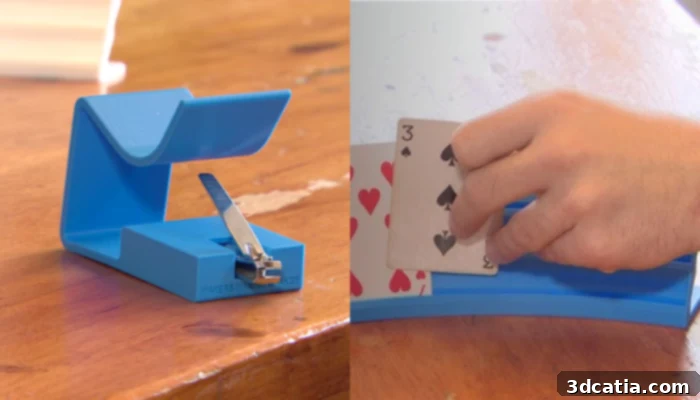
Some of the assistive devices produced include an adaptive fingernail clipper and card holders. (Photo Credit: CBC Canada)
The statistics paint a stark picture: nearly one-third of Canadians with disabilities frequently report unmet needs for essential assistive devices. This significant gap highlights a pervasive challenge within healthcare systems and product availability, leaving many individuals struggling with basic daily tasks and limiting their participation in society. However, trailblazing initiatives such as Nicolas Vaagen’s work vividly demonstrate how the potent synergy of advanced technology and profound community engagement can effectively bridge this critical disparity. By consciously and creatively leveraging the transformative capabilities of 3D printing for tangible social impact, Vaagen’s relentless dedication and innovative designs serve as a powerful exemplar. His efforts showcase how grassroots innovation, originating at the local level, possesses the immense potential to fundamentally redefine our understanding of accessibility, ultimately empowering countless individuals to regain control over their personal environments and lead more independent, fulfilling lives. This movement is more than just about creating tools; it’s about fostering a more inclusive society where every individual has the opportunity to thrive.
The ripple effect of such local innovation extends far beyond the immediate recipients. It inspires other makers, encourages technological adoption in new fields, and raises public awareness about the challenges faced by people with disabilities and the creative solutions available. It’s a powerful narrative of how distributed manufacturing, combined with compassionate community action, can create a resilient and responsive support system for those who need it most, fostering a future where accessibility is not an afterthought but an integral part of design and societal planning.
How do you see 3D printing helping create assistive tech? Let us know in a comment below or on our LinkedIn or Facebook pages! Plus, don’t forget to sign up for our free weekly Newsletter to get the latest 3D printing news straight to your inbox. You can also find all our videos on our YouTube channel.
*Cover Photo Credit: CTV Canada