

BRL-CAD: Mastering Open-Source 3D Modeling for Precision Engineering and Defense Simulations
In today’s dynamic landscape of digital design, the sheer volume of 3D design and modeling tools available can make selecting the right software an overwhelming task. However, for those seeking unparalleled accuracy, robust simulation capabilities, and the flexibility of open-source development, **BRL-CAD** emerges as a standout solution. This powerful, cross-platform software is meticulously built on the principles of Constructive Solid Geometry (CSG)—a method renowned for delivering highly accurate, precise, and optimized renderings. While perfectly capable of handling general CAD work, BRL-CAD truly distinguishes itself through its critical role in the defense sector. Here, its advanced capabilities enable the sophisticated simulation of complex physical phenomena, such as ballistic penetration analysis, thermal transport, and radiation shielding. Naturally, the highly detailed and accurate designs generated within BRL-CAD can be seamlessly exported for advanced manufacturing processes, including high-precision 3D printing, making it an indispensable tool for engineers, researchers, and military strategists alike.
The Genesis of BRL-CAD: A Legacy of Innovation in Defense
The story of BRL-CAD begins with a specific and pressing need within the United States Army Research Laboratory (ARL). In 1979, the ARL embarked on an ambitious internal project, driven by the critical requirement for advanced tools to digitally simulate combat vehicles and rigorously analyze their intricate systems. Existing commercial software at the time simply could not meet the stringent demands for accuracy and the specialized simulation capabilities required for military applications. Recognizing this significant gap, researchers at the ARL transformed their search for a solution into an intensive development initiative. After several years of dedicated effort and groundbreaking work, the initial BRL-CAD package was officially launched in 1984. This foundational version marked a pivotal moment, providing an interface capable of viewing, editing, and interrogating complex geometric models – a monumental achievement for its era.
The team spearheading this innovative project was led by the visionary scientist Mike Muss. Their initial work laid the groundwork for what would become a cornerstone in military engineering and simulation. Fast forward two decades, and a transformative decision was made: in 2004, BRL-CAD transitioned from an internal government project to an open-source initiative. This strategic move was instrumental in expanding its reach and fostering a vibrant global community of developers and users. By making its source code publicly available, BRL-CAD embraced the collaborative spirit of open-source development, allowing for continuous innovation, peer review, and a broader application base beyond its original military focus, while still maintaining its core strengths in precision and simulation.
Key Features and Unrivaled Capabilities of BRL-CAD
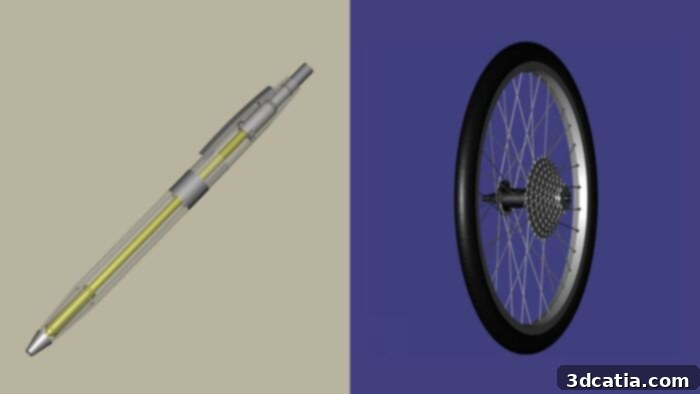
BRL-CAD was conceived with a clear, ambitious purpose: to provide highly accurate and reliable geometric modeling for complex scientific and engineering problems. Decades of active development and refinement, spanning over 30 years, have transformed it into an exceptionally powerful and versatile design and analysis tool. Its capabilities extend far beyond mere visual representation; BRL-CAD empowers users to not only preserve their designs but also to conduct comprehensive performance analyses of the systems they create. This means that an engineer can do more than just visualize a model; they can integrate functional components, such as a vehicle’s engine, suspension systems, or even individual bike wheels, to meticulously simulate how these components interact under various conditions. This deep level of functional integration and performance analysis makes BRL-CAD particularly well-suited for the most complex, high-precision 3D printing projects, where design integrity and performance validation are paramount.
The Power of Constructive Solid Geometry (CSG)
At the heart of BRL-CAD’s exceptional precision lies its reliance on Constructive Solid Geometry (CSG). Unlike boundary representation (B-rep) methods that define objects by their surfaces, CSG defines objects as combinations of simpler primitives (like cubes, cylinders, cones, and spheres) using Boolean operations (union, intersection, difference). This approach offers several profound advantages. Firstly, CSG models are inherently solid and topologically sound, eliminating common geometric errors found in other modeling techniques. This ensures that simulations are conducted on physically realistic representations. Secondly, the parametric nature of CSG allows for precise control and easy modification of designs, making it ideal for iterative engineering. For defense applications, where material properties and structural integrity are critical, CSG’s ability to create watertight, precise models is invaluable for accurate simulations of ballistic impacts, fluid dynamics, and stress analysis.
Interactive Geometry Editor and Ray Tracing Excellence
BRL-CAD further boasts an advanced interactive geometry editor that goes beyond basic manipulation. This editor meticulously verifies, validates, and measures the performance and characteristics of complex shapes, ensuring an exceptional level of precision that is crucial for high-stakes engineering and defense applications. Engineers can rely on its robust tools to ensure design integrity from conception to analysis. Complementing this, BRL-CAD incorporates high-performance ray tracing capabilities, which are fundamental for delivering impressively realistic rendering quality, as beautifully illustrated in the images throughout this article. Ray tracing simulates the physical behavior of light, producing highly accurate visual representations that are vital for visualizing complex geometries, material interactions, and environmental effects in simulations, allowing for a deeper understanding of proposed designs. This realism is not just aesthetic; it provides crucial insights for analysis and decision-making.
Expansive Libraries and Cross-Platform Accessibility
To streamline the design process, BRL-CAD offers users access to a vast and comprehensive library containing both simple and complex geometric shapes. This extensive collection allows designers to easily incorporate standard components or intricate forms into their models, significantly accelerating development cycles. Furthermore, since its transition to an open-source project, BRL-CAD has experienced exponential growth, now encompassing over 400 specialized tools. These tools cover a wide spectrum of functionalities, including advanced modeling, geometric analysis, data conversion, image processing, and rendering utilities, making it a comprehensive suite for diverse engineering challenges. A significant advantage of BRL-CAD is its broad cross-platform compatibility. The software is readily available for download and use across an impressive range of operating systems, including Linux, macOS, Windows, BSD, and Solaris. This widespread accessibility ensures that engineers and researchers, regardless of their preferred computing environment, can leverage BRL-CAD’s powerful capabilities, fostering collaboration and maximizing its utility across various organizations and academic institutions.
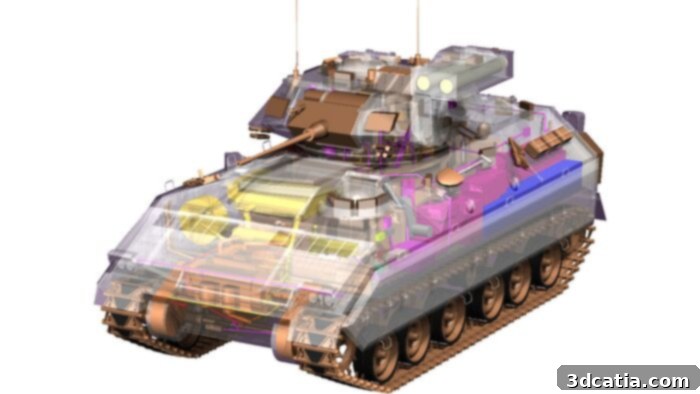
The BRL-CAD rendering is very detailed, showcasing its ray tracing capabilities.
Applications in Defense and Beyond: Where Precision Matters Most
BRL-CAD’s origins in military research have imbued it with capabilities uniquely suited for defense applications. Its ability to accurately model and simulate physical phenomena like ballistic penetration allows engineers to design and test armor effectiveness, analyze projectile trajectories, and optimize vehicle protection. Similarly, its thermal transport simulation features are critical for designing cooling systems for sensitive electronics, understanding heat dissipation in high-energy weapons systems, and predicting thermal signatures of military assets. Beyond the defense sector, BRL-CAD’s robust and highly accurate software makes it an ideal choice for a wide array of complex modeling tasks in various engineering disciplines. In aerospace, it can be used for structural analysis of aircraft components or simulation of aerodynamic forces. In automotive design, it supports precise modeling of engine parts and chassis components. Any field requiring rigorous geometric analysis, high-fidelity simulations, and precise data for additive manufacturing will find BRL-CAD an indispensable asset. Its accuracy translates directly into reliable simulations, reducing the need for costly physical prototypes and accelerating design cycles.
Moreover, its open-source nature means that researchers and developers can rigorously examine its underlying algorithms, ensuring transparency and trustworthiness in critical applications. The continuous development by a global community further enhances its capabilities, adding new features and ensuring its adaptability to evolving technological demands. For anyone venturing into fields where design integrity, precise simulation, and open-source flexibility are non-negotiable, BRL-CAD offers a compelling and proven solution.
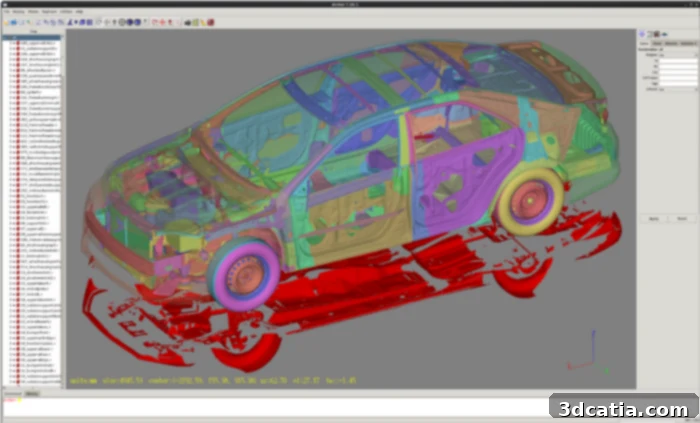
The intuitive yet powerful BRL-CAD program interface.
Embarking on Your BRL-CAD Journey: Resources and Community
In summary, BRL-CAD stands as a testament to robust engineering and highly accurate software development, making it an exceptional choice for the most intricate and demanding modeling tasks. If you believe this powerful solution aligns with your needs and you’re eager to embark on your design and simulation journey, comprehensive resources are readily available. You can find detailed beginner’s guides to get you started, alongside more advanced tutorials for experienced users, all accessible on the official BRL-CAD website. These resources are designed to facilitate a smooth learning curve, helping users quickly harness the full potential of the software.
A key aspect of BRL-CAD’s enduring strength and appeal is its open-source philosophy. This means that if you possess programming experience or an interest in software development, you are encouraged to delve into its source code. The ability to examine, understand, and modify the underlying code offers unparalleled transparency and customization. Furthermore, as an open-source project, BRL-CAD thrives on community contributions, allowing users to propose improvements, fix bugs, or even develop new tools. This collaborative environment ensures that the software remains cutting-edge, continuously evolving to meet the demands of its diverse user base. The freedom to distribute modified versions also fosters innovation and specialized applications, cementing BRL-CAD’s position as a truly adaptable and future-proof CAD solution.
What are your thoughts on BRL-CAD software and its unique capabilities? We invite you to share your insights and experiences in a comment below or engage with our community on our LinkedIn or Facebook pages! Don’t miss out on the latest advancements in additive manufacturing by signing up for our free weekly Newsletter, delivering the most important 3D printing news directly to your inbox. You can also explore all our insightful videos and tutorials on our YouTube channel. For more specialized 3D printing news focused on the aerospace and defense sectors, be sure to check out our dedicated page HERE.
*All Photo Credits: BRL-CAD