
Braskem Unveils Groundbreaking Sustainable 3D Printing Filaments for a Greener Future in Additive Manufacturing
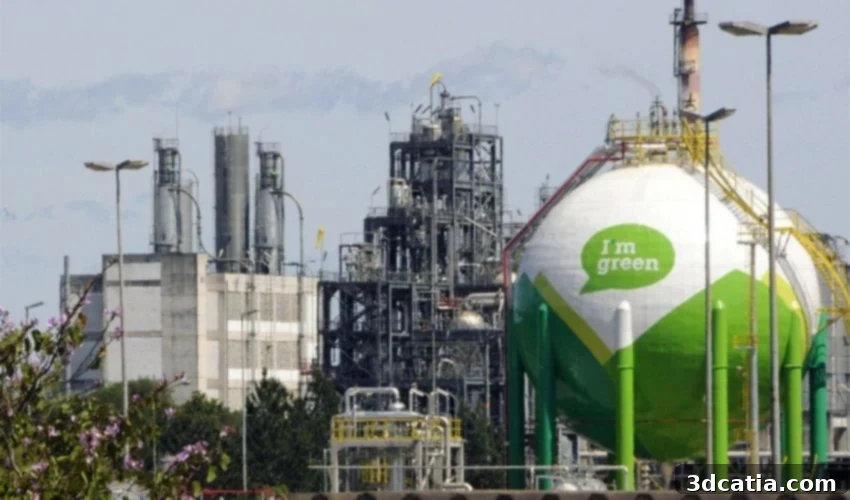
In a significant stride towards a more sustainable future for additive manufacturing, Braskem, the renowned Brazilian petrochemical firm, has proudly announced the launch of its pioneering line of sustainable 3D printing filaments. Based in São Paulo, Braskem holds the esteemed position of being the largest polyolefin producer in the Americas and is a recognized market leader and industrial-scale pioneer in biopolymer production. This latest collection represents a monumental step, marking the introduction of the first-ever materials of their kind to the market. The innovative portfolio features three distinct sustainable materials: Bio-Based EVA (Ethylene-Vinyl Acetate), a Recycled PE/PP (Polyethylene/Polypropylene) Blend, and a Recycled PE/PP Blend with Carbon Fiber reinforcement, each engineered to address the growing demand for environmentally responsible manufacturing solutions.
The contemporary global landscape is increasingly dominated by urgent environmental concerns, making the pursuit of sustainability an undeniable imperative across all industries. In response to this pressing reality, numerous 3D printing companies are channeling substantial research and development efforts into discovering and implementing more sustainable alternatives to conventional production methodologies. Braskem, aligning itself with this critical objective, has diligently dedicated its resources to formulating this new generation of filaments with an unwavering commitment to environmental stewardship. The culmination of these intensive efforts is the company’s proudly presented collection of advanced, eco-friendly filaments. Jason Vagnozzi, Braskem’s Global Commercial Director of Additive Manufacturing, articulated the company’s vision: “Braskem boasts a long-standing tradition of innovating and producing increasingly sustainable bio-based polymers. Today’s announcement regarding our green EVA and recycled polymer 3D printing filaments not only reinforces our deep-seated commitment to fostering a more circular and carbon-neutral future but also sets a new benchmark in the industry. We are incredibly enthusiastic to unveil these newest additions to our 3D printing product portfolio at the prestigious RAPID + TCT 2022 conference, especially as our clients actively seek out more impactful sustainability solutions for their forward-looking applications.” This statement underscores Braskem’s dedication to leading the charge in sustainable material innovation for additive manufacturing, offering tangible solutions that resonate with evolving market demands and global environmental goals.
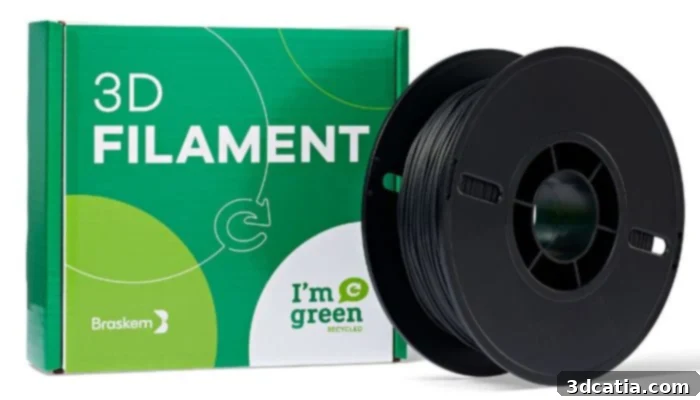
Photo Credits: Braskem
Braskem’s Revolutionary Sustainable 3D Printing Filaments: A Deep Dive
Braskem’s newly introduced trio of filaments represents a significant leap forward in materials science for additive manufacturing, each offering unique origins, distinct benefits, and diverse application possibilities across various industrial sectors. The first of these groundbreaking materials is the Bio-Based EVA, designated FL600EVA-BIO. This innovative filament is ingeniously derived from renewable sugarcane, giving it an inherently low carbon footprint—a critical advantage in the battle against climate change. By utilizing a plant-based feedstock, FL600EVA-BIO provides a far more sustainable and environmentally conscious alternative to traditional, fossil fuel-derived flexible materials, aligning perfectly with circular economy principles. Its most notable advantages include its remarkably light weight, exceptional flexibility, impressive ductility, and inherent resistance to moisture. These combined features make it an invaluable asset for creating end-use products in demanding consumer, advanced packaging, and industrial markets. Imagine custom shoe insoles, flexible electronic components, durable protective cases, or seals and gaskets that not only perform exceptionally but also reduce environmental impact. Furthermore, a key processing benefit of FL600EVA-BIO is that it does not necessitate any pre-drying or post-processing within a heated chamber, streamlining the 3D printing workflow and significantly reducing energy consumption. It also boasts excellent bed adhesion, ensuring reliable and consistent print outcomes, further enhancing its appeal for industrial-scale adoption.
Building on its commitment to circularity, Braskem introduces its second innovative filament, the FL600R, a high-performance Recycled PE/PP Blend. What makes this material truly remarkable is its primary sourcing from recycled bottle caps, a common and abundant post-consumer waste stream. Comprising over 90% sustainably sourced material, the FL600R exemplifies how waste can be transformed into valuable resources without compromising on quality or printability. This filament maintains the same desirable characteristics found in similar traditional, yet less eco-friendly, virgin polyethylene and polypropylene-based materials. Users can expect the same low density, robust water resistance, chemical inertness, and impressive impact resistance that are crucial for demanding applications. The ability to retain these critical properties while utilizing a recycled feedstock represents a significant technological achievement, addressing one of the major challenges in developing recycled polymers for advanced manufacturing. The FL600R filament has been meticulously developed and optimized for a wide array of applications, particularly excelling in the automotive sector for interior components and non-critical parts, various packaging solutions requiring durability, a multitude of consumer goods, and diverse industrial applications where performance and sustainability are both paramount. Its introduction contributes significantly to reducing reliance on virgin plastics, thereby diminishing overall environmental impact.
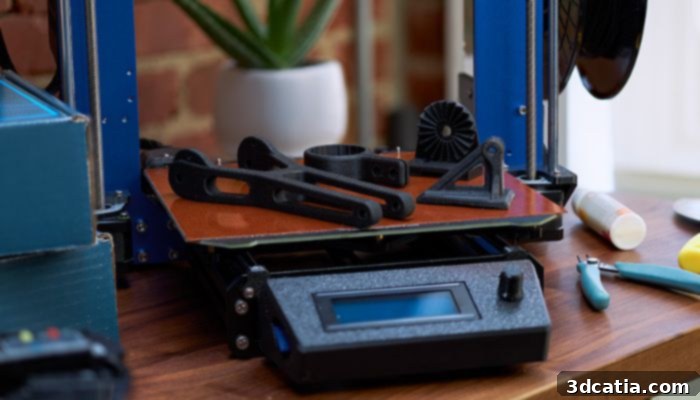
Photo Credits: Braskem
Completing this innovative trio is the third filament unveiled by Braskem, the FL605R-CF. This advanced material takes the sustainable foundation of the FL600R a step further by incorporating Carbon Fiber. Like its counterpart, the FL605R-CF is a Recycled Polyolefin Filament, benefiting from the same commitment to utilizing recycled content. However, the addition of carbon fiber significantly enhances its mechanical properties, making it suitable for even more rigorous and high-performance applications. The FL605R-CF inherits all the excellent characteristics and processing advantages of the FL600R, including its ease of printing and excellent bed adhesion, without the need for drying or post-processing in a heated chamber. Crucially, the carbon fiber reinforcement imbues the FL605R-CF with demonstrably higher strength and stiffness. This elevated performance profile allows it to meet the stringent demands of industries such as aerospace, where lightweight yet incredibly strong components are essential for fuel efficiency and structural integrity. Beyond aerospace, its superior mechanical properties open doors for applications in advanced industrial tooling, high-performance automotive parts, and specialized consumer products where robust durability is a key requirement. This filament perfectly encapsulates the synergy between sustainability and high-performance engineering, offering a responsible choice without compromising on critical mechanical attributes. To delve deeper into the technical specifications and broader applications of these cutting-edge filaments, interested parties are encouraged to visit Braskem’s official website HERE.
The Broader Impact of Braskem’s Sustainable Filament Innovation
Braskem’s launch of these sustainable 3D printing filaments is more than just a product release; it represents a pivotal moment in the evolution of additive manufacturing. By introducing bio-based and high-content recycled materials, the company is not only offering alternatives but actively shaping the future direction of material science in 3D printing. The emphasis on materials derived from renewable sources, like sugarcane, reduces the dependency on finite fossil resources and contributes to a lower overall carbon footprint throughout the product lifecycle. Similarly, the ingenious use of post-consumer waste, such as bottle caps, for the recycled PE/PP blends, tackles the global plastic waste crisis head-on. This initiative not only diverts waste from landfills and oceans but also transforms it into valuable, high-performance materials, demonstrating a true commitment to circular economic principles.
The distinct advantages in processing, such as the elimination of pre-drying and post-processing in heated chambers, are significant for widespread adoption. These features translate directly into reduced energy consumption, lower operational costs, and faster production cycles for companies utilizing 3D printing. This efficiency makes sustainable choices not only environmentally responsible but also economically attractive, fostering a faster transition towards greener manufacturing practices. Furthermore, the ability to maintain or even enhance mechanical properties, as seen with the carbon fiber-reinforced recycled blend, ensures that sustainable materials do not equate to a compromise in performance. This is particularly vital for industries like aerospace and automotive, where material integrity is non-negotiable.
Braskem’s commitment, as highlighted by Jason Vagnozzi, to a “circular, carbon-neutral future” serves as an inspiration for the entire industry. Their presence and announcements at key industry events like RAPID + TCT underscore the growing mainstream acceptance and demand for sustainable solutions within additive manufacturing. As companies worldwide grapple with environmental regulations and consumer demand for eco-friendly products, Braskem’s new filament line provides tangible, high-quality options that empower manufacturers to innovate responsibly. This proactive approach by a major petrochemical producer like Braskem signals a broader industry shift, encouraging other material developers to follow suit and accelerate the development of a truly sustainable 3D printing ecosystem. These materials are poised to enable the creation of next-generation products that are not only performant and cost-effective but also fundamentally better for our planet.
What are your thoughts on Braskem’s innovative line of sustainable 3D printing filaments and their potential impact on the industry? We invite you to share your insights in a comment below or join the conversation on our LinkedIn, Facebook, and Twitter pages! Don’t miss out on the latest advancements and news in additive manufacturing—remember to sign up for our free weekly Newsletter here to receive the freshest 3D printing news directly in your inbox! You can also explore all our engaging videos and content on our dedicated YouTube channel.
*Cover Photo Credits: Braskem