
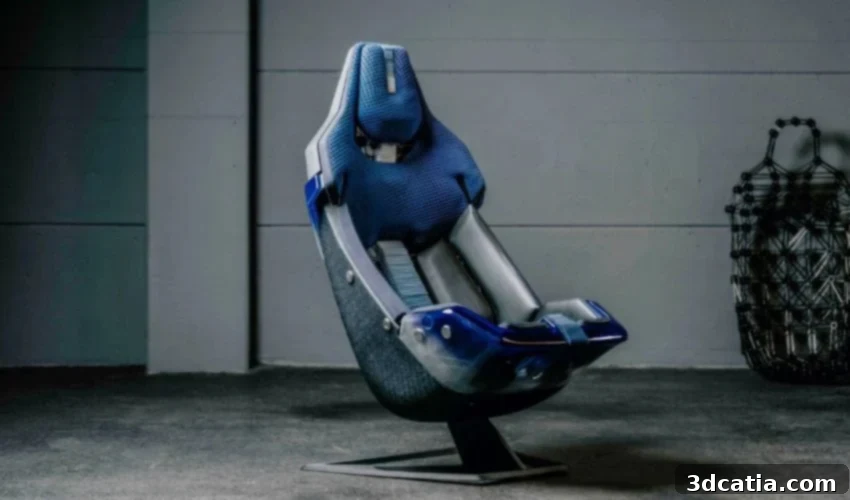
Revolutionizing Automotive Sustainability: BMW M Visionary Materials Seat and the Power of 3D Printing
The global automotive industry is undergoing a profound transformation, steering steadily towards an era of greater sustainability and environmental responsibility. In this critical transition, additive manufacturing, commonly known as 3D printing, is emerging as an indispensable technology. Its unique capabilities enable automotive companies to conceptualize, design, and produce components that are not only more environmentally friendly but also significantly lighter and more efficient. This innovative approach directly contributes to a substantial reduction in the ecological footprint of vehicles, actively paving the way for a greener, more sustainable future for transportation.
A groundbreaking testament to this paradigm shift is the BMW M Visionary Materials Seat, developed by the esteemed BMW Group. This innovative seat has recently garnered significant recognition, earning the prestigious Altair Enlighten Award in the “Sustainable Processes” category. The award ceremony took place at the Center for Automotive Research Seminar in Michigan, highlighting BMW’s commitment to pioneering sustainable solutions. The Altair Enlighten Award is an annual accolade that celebrates groundbreaking lightweight and sustainable innovations within the automotive sector. Its core mission is to acknowledge solutions that effectively minimize carbon emissions, water consumption, and energy usage throughout the product lifecycle, while simultaneously promoting the widespread recycling of materials. The environmentally conscious production of the BMW M Visionary Materials Seat would have been an insurmountable challenge without the integration of additive manufacturing. Crucially, 3D printing allowed BMW to eliminate the need for traditional support structures during the manufacturing process and bypass chemical post-processing steps, significantly enhancing the seat’s eco-credentials.
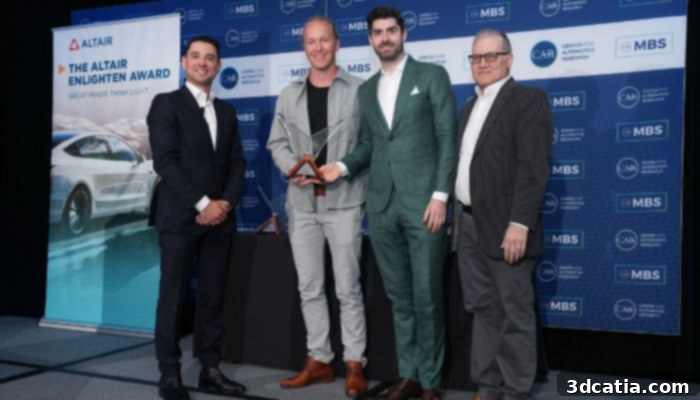
The Altair Enlighten Award recognized the BMW Group’s exceptional progress in innovation and sustainability (photo credits: BMW Group)
The development of the Visionary Materials Seat was a profound collaborative effort, demonstrating the power of interdisciplinary teamwork. BMW’s dedicated design team, specializing in color and material concepts, worked in close synergy with a diverse group of external partners. These included Management Consulting GmbH, Bcomp Ltd, Gradel Light Weight Sàrl, and Lasso Ingenieurgesellschaft. This strategic partnership brought together a wealth of expertise, driving the project from concept to award-winning reality. Falco Hollmann, Innovation Manager for Lightweight Design and Sustainability at BMW M GmbH, accepted the esteemed award on behalf of the team. In his acceptance speech, Hollmann articulated the profound vision behind the project: “We are showing today what will be possible tomorrow with existing technologies and materials in order to take our efforts to reduce emissions and conserve resources to the next level. This is about more than just substituting materials; it is above all about designing for circularity.” This statement underscores a pivotal shift in manufacturing philosophy – moving beyond simple material replacements to a holistic approach centered on circular economy principles, ensuring materials remain in use for as long as possible.
The collaborative team meticulously focused on several key aspects during the seat’s design and manufacturing process. A paramount objective was the extensive use of plant-based materials, emphasizing renewable resources and reducing reliance on fossil fuels. Furthermore, significant effort was dedicated to improving the recyclability of the entire seat, ensuring that its components could be efficiently recovered and repurposed at the end of its life cycle. Beyond functionality and sustainability, the team also prioritized creating an aesthetically appealing design that seamlessly combined high quality craftsmanship with advanced lightweight construction techniques and superior functionality. The BMW M Visionary Materials Seat is not merely a product; it is envisioned as a foundational starting point for pioneering future process developments within the automotive industry, particularly in the realm of sustainable seat design. Its development focused on a holistic approach, considering the entire production life cycle – from raw material sourcing and manufacturing to usage and end-of-life disposal or recycling – thereby setting a new benchmark for environmentally conscious engineering.
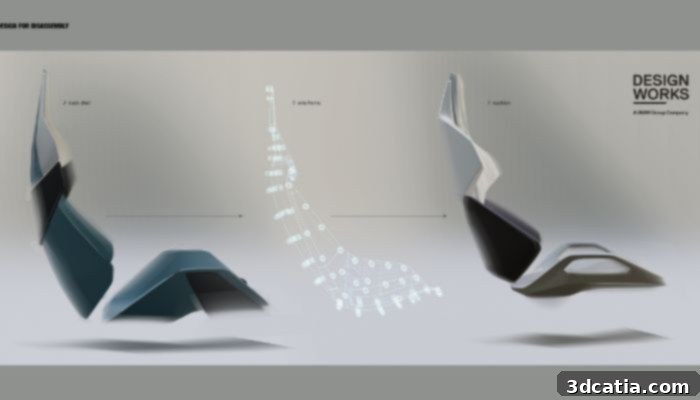
The innovative design of the seat supports easy disassembly and material removal, enhancing its recyclability (photo credits: BMW Group)
The environmental benefits achieved through this project are truly remarkable. Thanks to the sophisticated application of additive manufacturing and the ingenious use of robot-wound support structures meticulously crafted from fiber composites and materials of natural origin, the CO2 footprint of the seat has been reduced by an astonishing 90%. This significant reduction highlights the transformative potential of combining advanced manufacturing techniques with innovative material science. The precision and efficiency of 3D printing, especially when paired with natural composites, drastically minimize material waste and energy consumption during production. Furthermore, the design inherently features low module complexity, meaning fewer individual parts, and the exclusive use of unmixed materials. These design choices are crucial as they significantly simplify and enhance the efficiency of the recycling process, preventing contamination and ensuring that valuable resources can be re-integrated into the production chain with minimal effort, aligning perfectly with circular economy principles.
A cornerstone of the project’s resounding success was the continuous optimization of the entire process chain. This iterative approach, involving constant evaluation and refinement, was instrumental in achieving such ambitious sustainability goals. Roberto Rossetti, Head of Development for the Complete Vehicle Life Cycle at the BMW Group, emphasized this point, stating: “One of our biggest lessons was the balancing, in other words, how to model our process chain to generate missing primary data. The data obtained provides new insights, both in terms of today’s negative contributing factors and the design of tomorrow’s processes. This experience provides a solid foundation for continuously improving sustainability and developing innovative solutions for forward-thinking mobility.” This profound insight reveals that true sustainability goes beyond material selection; it requires a deep understanding and data-driven optimization of every single step in the product’s journey. By meticulously modeling the process chain, BMW was able to identify inefficiencies, gather crucial data, and use these insights to design not only a more sustainable seat but also to establish a blueprint for future manufacturing processes across its portfolio. This commitment to data-driven decision-making and continuous improvement is essential for addressing the complex challenges of modern, sustainable automotive manufacturing and propelling the industry towards truly innovative and environmentally responsible mobility solutions.
The BMW M Visionary Materials Seat stands as a beacon of innovation, demonstrating how cutting-edge technologies like 3D printing can be harmoniously integrated with sustainable design principles to create tangible environmental benefits. This project is far more than just a single component; it represents a scalable model for the entire automotive industry, offering invaluable lessons on material selection, process optimization, and the profound impact of design for circularity. By reducing weight, minimizing waste, cutting CO2 emissions, and promoting material recyclability, BMW is not only leading by example but also inspiring a broader shift towards more responsible manufacturing practices. The implications extend beyond seats to various other vehicle components, suggesting a future where every part is conceived with sustainability at its core. This forward-looking approach promises to reshape how cars are designed, produced, and ultimately, recycled, contributing significantly to a global effort to combat climate change and conserve precious natural resources. Learn more about the BMW Group’s M Visionary Materials Seat and its award-winning journey HERE.
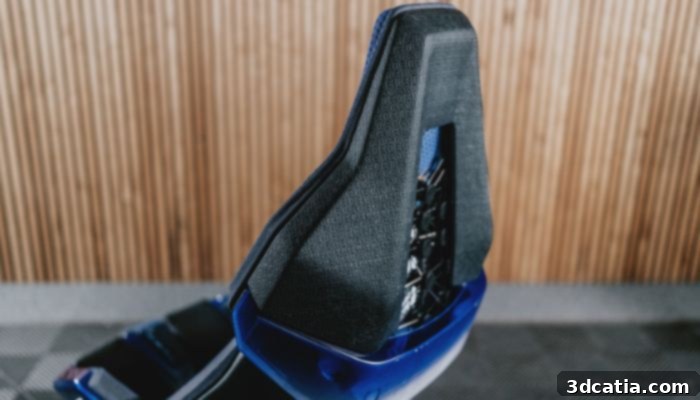
Photo Credits: BMW Group
We’d love to hear your thoughts on this pioneering sustainable seat and the increasingly vital role of 3D printing in modern automotive production. How do you envision these innovations shaping the future of vehicles? Share your insights in a comment below or engage with us on our social media platforms! You can find us on LinkedIn, Facebook, and Twitter. Don’t miss out on the latest advancements and news in the world of additive manufacturing – be sure to sign up for our free weekly newsletter here to receive all the crucial 3D printing updates directly in your inbox! For an even deeper dive into this exciting technology, explore all our informative videos available on our YouTube channel.
*Cover Photo Credits: BMW Group