
3D Printing Fresh Vegetables: A Culinary Revolution for Enhanced Nutrition and Dysphagia Care
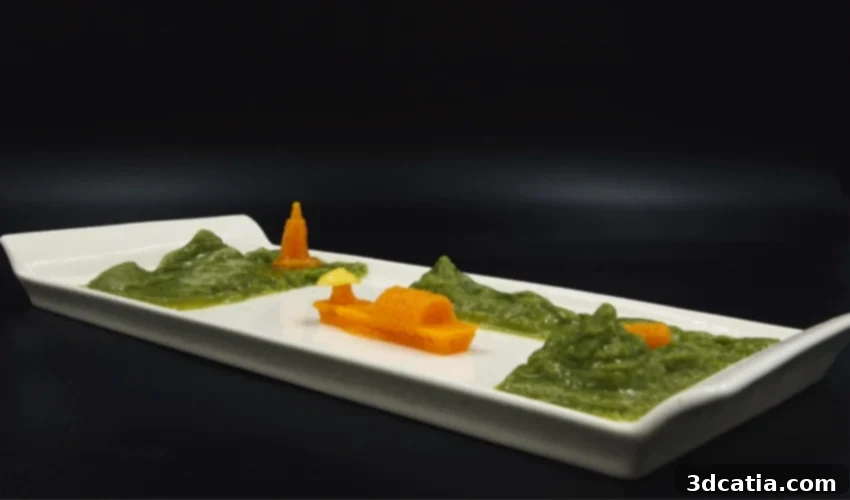
In a significant leap forward for food technology and personalized nutrition, researchers in Singapore have unveiled a groundbreaking method for 3D printing vegetables. This innovative approach harnesses the power of food hydrocolloids to transform fresh and frozen produce into “food inks” suitable for advanced 3D printers. Unlike previous three-dimensional food printing (3DFP) techniques that largely depended on freeze-dried vegetable powders, this novel method prioritizes the use of whole, unprocessed ingredients. The distinct advantage lies in its ability to better preserve the inherent nutrition and vibrant flavour profiles of vegetables. Furthermore, this innovative food printing process is notably more cost-effective compared to many existing 3DFP methodologies, marking a pivotal moment in the quest for more accessible and healthier customized food solutions.
This pioneering discovery is the culmination of a collaborative effort between Nanyang Technological University, Singapore (NTU Singapore), the Singapore University of Technology and Design (SUTD), and Khoo Teck Puat Hospital (KTPH). The primary focus of this interdisciplinary research was to address the critical needs of individuals suffering from dysphagia. Dysphagia, characterized by difficulty swallowing, is a prevalent issue affecting a wide demographic, including the elderly, stroke survivors, and patients grappling with debilitating illnesses or undergoing specific medical treatments such as radiotherapy for head and neck cancers. For these individuals, dining often becomes a source of anxiety rather than enjoyment, as they are typically restricted to diets consisting of soft, pureed, or texture-modified foods that are safe to swallow. While such diets are medically necessary, they frequently lead to a monotonous culinary experience, lacking visual appeal and often compromising taste. This can result in reduced food intake, leading to severe nutritional deficiencies and, in many cases, malnutrition. The research team recognized the profound impact of visually appealing and palatable food on encouraging consumption, thereby aiming to improve both the physical and psychological well-being of dysphagia patients.
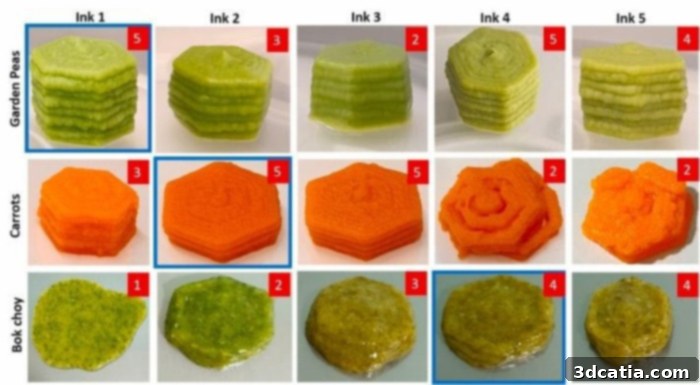
Researchers experimented with different levels of hydrocolloids to optimise the taste, texture and printability of the vegetable food inks.*
Central to this innovation is the refined understanding and application of hydrocolloids. A hydrocolloid is essentially a particle, or colloid, that becomes highly viscous or gels when dispersed in water, or hydrated. These natural or synthetic compounds play a crucial role in providing numerous common foods with their desired viscosity, texture, or structural integrity. From thick sauces to creamy desserts, hydrocolloids are indispensable in the food industry. In the context of 3D food printing, hydrocolloids are traditionally incorporated into food inks to provide the necessary rheological properties for extrusion – ensuring the ink flows smoothly through the printer nozzle and retains its shape after deposition. However, conventional 3DFP methods, particularly those utilizing vegetable powders, often rely on high concentrations of food additives, including hydrocolloids, to achieve printability and stability. While these agents are undeniably useful for stabilizing the ink and facilitating a consistent printing process, an excessively high concentration of hydrocolloids can dramatically alter several key aspects of the food. These alterations frequently manifest as changes in the food’s natural smell, a muted or artificial taste, and an unappealing, often rubbery or overly gelatinous texture. This significant sensory degradation typically renders the food considerably less appetising, which, for dysphagia patients, can act as a major deterrent. The reluctance to consume unappetizing meals can lead to a substantial reduction in food intake, exacerbating the risk of malnutrition and negatively impacting their overall quality of life. Understanding this critical challenge, the Singaporean research team embarked on a mission to find a way to mitigate these detrimental effects. Their extensive experimentation focused on meticulously testing different levels of hydrocolloids, with the ultimate goal of identifying the absolute minimum amount required to maintain the printability of the food inks without compromising the natural sensory qualities of the vegetables.
The success of this novel method for 3D printing vegetables represents a profound breakthrough in dietary management for vulnerable populations. By rigorously limiting the amount of hydrocolloids in the food ink and, more importantly, by leveraging the nutritional richness and natural flavours of fresh and frozen vegetables over their powdered counterparts, the research team successfully printed vegetables that are both significantly more appetising and highly nutritional. This achievement directly addresses the core challenges faced by dysphagia patients, offering them meals that not only meet their safety requirements but also stimulate their appetite and provide essential nutrients. Yi Zhang, the chief investigator of the NTU team, articulated the profound impact of their work: “Our technology helps to provide dysphagic patients with adequate nutrient-rich and safe diets. Their feeding is more dignified, enabling them to socialize and consume meals that look, feel and taste like regular food.” This sentiment underscores the transformative potential of the innovation. Beyond mere sustenance, it restores a sense of normalcy and dignity to mealtimes, allowing patients to enjoy food that closely resembles what their families and friends are eating, fostering social inclusion and improving their psychological well-being.
The implications of this research extend far beyond the immediate benefits for dysphagia patients. This advanced 3D food printing technology paves the way for a future where personalized nutrition can be tailored with unprecedented precision. Imagine a world where individuals can receive meals specifically designed to meet their unique dietary needs, whether due to allergies, specific health conditions, or performance goals. Athletes could receive protein-rich, calorie-controlled meals in aesthetically pleasing forms, while patients with specific vitamin deficiencies could consume precisely fortified foods. This technology also holds immense promise for reducing food waste by allowing for the use of irregularly shaped or “ugly” produce that might otherwise be discarded. Furthermore, the ability to print complex food structures could revolutionize culinary artistry, enabling chefs to create innovative dishes with novel textures and forms. In the long term, this research could even contribute to sustainable food systems, potentially supporting localized food production and minimizing the carbon footprint associated with food transportation and processing. The adaptability of this fresh-vegetable-based food ink system positions it as a versatile tool for addressing diverse dietary requirements across various segments of the population, from clinical settings to everyday gourmet dining experiences. The core principle of preserving natural taste and nutritional integrity while ensuring safety and appeal remains at the heart of its potential for broad application, marking a pivotal moment in the evolution of how we approach food and nutrition.
In conclusion, the Singaporean research team’s breakthrough in 3D printing fresh and frozen vegetables with optimized hydrocolloid levels represents a monumental step in food innovation. It offers a tangible solution to the complex dietary challenges faced by dysphagia patients, promising them not just safe meals, but visually appealing, nutrient-rich, and dignified dining experiences that restore enjoyment and encourage vital food intake. This method sets a new standard for 3D food printing, emphasizing natural ingredients, enhanced nutrition, and improved sensory qualities. As we look to the future, this technology holds the potential to transform personalized nutrition, reduce food waste, and open new avenues for culinary creativity and sustainable food production globally.
*All pictures credited to Nanyang Technological University, Singapore (NTU Singapore), Singapore University of Technology and Design (SUTD) and Khoo Teck Puat Hospital (KTPH).
If you would like to delve deeper into the full findings of this pioneering research, you can access the comprehensive paper HERE. We invite your thoughts on this innovative method of 3D printing vegetables and its potential impact. Share your comments below or engage with us on our Facebook, Twitter and LinkedIn pages! To stay updated with the very latest in 3D printing news and breakthroughs, be sure to sign up for our free weekly Newsletter here, delivered straight to your inbox!