
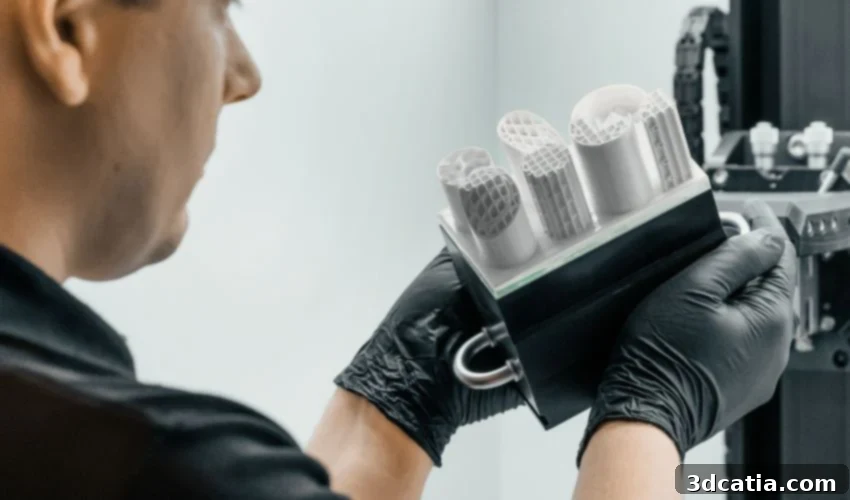
Revolutionizing Manufacturing: Bosch Advanced Ceramics Drives Industrial Ceramic Additive Manufacturing to Scale
The landscape of industrial additive manufacturing (AM) is experiencing unprecedented growth and evolution, with ceramic additive manufacturing emerging as a truly groundbreaking revelation in recent years. Technical ceramics boast an unparalleled suite of properties, ranging from exceptional resistance to extreme heat to superior protection against corrosion. When these inherent material advantages are combined with the design freedom and precision offered by advanced additive technologies, ceramic AM transforms into a pivotal force, reshaping industries across the spectrum—from medical and aerospace to semiconductors and beyond. This powerful synergy is unlocking new possibilities, enabling the creation of components with functionalities and performance characteristics previously deemed unattainable.
To delve deeper into this transformative field, we had the privilege of speaking with Malte Hartmann, a distinguished Development Engineer at Bosch Advanced Ceramics (BAC), a key entity within the renowned Bosch Group. BAC operates as a specialized contract manufacturer, dedicated exclusively to industrial ceramic AM. Their mission is crystal clear: to establish ceramic additive manufacturing as the gold standard for scalable, reliable series production and demanding high-performance applications. During our comprehensive interview, we explored BAC’s current projects, the complex challenges their diverse clientele encounters, and how ceramic AM consistently provides innovative, effective solutions. Join us as we uncover the full insights from this enlightening discussion!
3DN: Can you introduce yourself and elaborate on your journey within 3D printing?
Malte Hartmann
My name is Malte Hartmann, and my professional journey in the dynamic field of ceramic 3D printing spans approximately ten years. My academic foundation is rooted in chemistry and materials technology, disciplines that naturally led me to the fascinating world of additive manufacturing. My initial encounter with AM took place at the distinguished research group of Professor Jürgen Stampfl at the Vienna University of Technology, who later became my esteemed doctoral supervisor. My dissertation was specifically focused on the intricate chemical and technological optimization of lithography-based additive manufacturing processes, particularly for dental ceramics. This foundational research provided me with deep insights into the nuances of ceramic material science and advanced manufacturing techniques.
Following a brief but impactful post-doctoral period at the Friedrich-Alexander University Erlangen-Nuremberg, I made a deliberate and strategic transition from academia to industry. This move was driven by a strong personal commitment and a clear professional goal: to actively contribute to the scaling and industrialization of ceramic additive manufacturing, bringing this revolutionary technology to the forefront of large-scale production. This transition allowed me to apply my extensive research knowledge to real-world industrial challenges, further solidifying my dedication to advancing the capabilities of ceramic 3D printing for practical, high-performance applications.
3DN: What is the core mission of Bosch Advanced Ceramics, and what specific role do you play within the company?
While many within the industry often perceive 3D printing primarily as a valuable tool for rapid prototyping, Bosch Advanced Ceramics holds a far more ambitious vision: to propel ceramic additive manufacturing into the realm of large-scale, industrial series production. In line with this forward-thinking objective, BAC operates as a dedicated contract manufacturer, concentrating exclusively on the advanced capabilities of ceramic AM. Our facility is strategically located within a long-established Bosch production plant in the south of Bavaria, a region with a rich history of ceramic production through traditional injection molding techniques. This unique positioning allows us to leverage profound, accumulated knowledge in ceramic materials and processes, effectively bridging the gap between cutting-edge additive manufacturing research and robust industrial-scale production.
My specific role at BAC is intrinsically linked to realizing this vision, focusing intensively on the scalability of ceramic additive manufacturing processes. Anyone with experience in this technology understands that it is far from a simple “plug and play” operation. The entire value chain encompasses numerous critical steps both preceding and succeeding the actual printing process. These include meticulous print job preparation, efficient removal of excess material, and, crucially, precise thermal processing such as sintering. My primary responsibilities involve systematically streamlining this complex value chain, implementing automation wherever feasible, and diligently seeking out and developing scalable solutions for every stage. The ultimate goal is to transform ceramic AM from a specialized technique into a highly efficient, reliable, and cost-effective method for high-volume manufacturing, ensuring that quality and performance are consistently maintained across all produced parts.
3DN: What specific additive manufacturing technologies and ceramic materials are currently utilized at Bosch Advanced Ceramics?
From our inception, Bosch Advanced Ceramics has made a strategic choice to work exclusively with vat photopolymerization (VPP)-based processes for our ceramic additive manufacturing operations. This decision was made after extensive evaluation, and we continuously monitor the market for emerging alternative technologies. However, to date, VPP methods consistently best align with our stringent requirements across several critical performance indicators. These include achieving superior surface roughness, ensuring high material density, delivering exceptional feature resolution for intricate geometries, and guaranteeing robust mechanical strength in the final ceramic components.
Building upon the extensive historical expertise in ceramic production at the Bosch Plant Blaichach, which was traditionally focused on dense oxide ceramics, we have rapidly established a robust portfolio of materials within this group. Our current material offerings include high-performance ceramics such as alumina (aluminum oxide), zirconia (zirconium dioxide), as well as advanced composites like zirconia toughened alumina (ZTA) and alumina toughened zirconia (ATZ). These materials are selected for their outstanding properties, making them suitable for a wide range of demanding industrial applications. Furthermore, Bosch Advanced Ceramics remains agile and responsive to market needs. Given the presence of a compelling business case and a clear application requirement, we are always open to strategically expanding our material portfolio to meet the evolving demands of our clients and the broader industry.
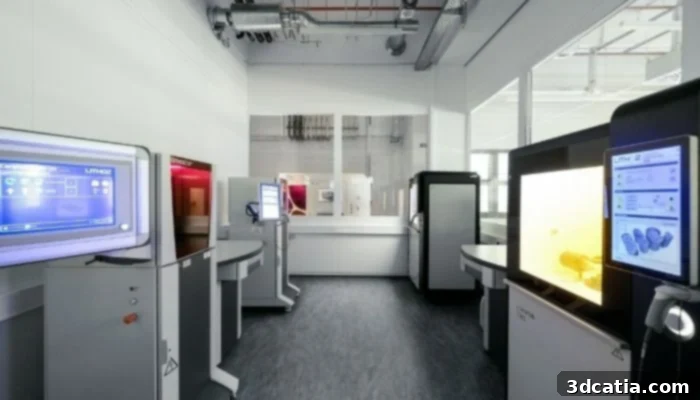
3DN: Are your clients primarily seeking solutions for serial production, or is prototyping still the dominant demand? How is this demand evolving over time?
At Bosch Advanced Ceramics, we are observing a consistent and significant increase in demand for ceramic additive manufacturing, a trend directly influenced by our strategic emphasis on enabling series production for our diverse customer base. While it is true that every new project naturally commences with a crucial prototyping phase to validate designs and material performance, our ultimate objective is always to facilitate the seamless transition of these successful prototypes into qualified serial production. This encompasses a broad spectrum of production volumes, from smaller, highly specialized batches to larger, high-volume manufacturing runs.
We have consciously and deliberately shifted our focus from merely utilizing AM as an internal tool for ceramic injection molding prototyping to directly addressing our clients’ explicit needs for ceramic AM serial production. This strategic pivot allows us to fully capitalize on AM’s inherent flexibility as a tool-free production method. This characteristic is particularly advantageous because it enables us to seamlessly scale and adapt production capacities and parameters once all the specific requirements and process variables for a particular component have been meticulously established and validated. This approach not only streamlines the manufacturing process but also significantly reduces lead times and costs associated with traditional tooling, offering unparalleled agility in response to market demands.
3DN: What are the primary challenges that your clients typically encounter when they approach Bosch Advanced Ceramics for solutions?
The challenges presented by our clients are remarkably diverse, reflecting the broad array of applications and industries we serve. However, the majority of customers who seek our expertise typically come to us wrestling with two distinct, yet interconnected, primary technical challenges. Firstly, a significant number of clients face critical limitations in the material performance of their existing components within their intended applications. This often manifests as an urgent need for enhanced properties, such as a requirement for significantly higher temperature resistance to operate in extreme thermal environments, superior wear resistance to withstand abrasive conditions, or exceptional chemical inertness to endure corrosive chemical exposures. Conventional materials often simply cannot meet these demanding specifications, leading them to explore advanced ceramic solutions.
Secondly, clients frequently require the realization of highly complex geometries or the integration of sophisticated functionalities that are simply unachievable through traditional manufacturing methods like machining or injection molding. This could involve the design and production of components with incredibly intricate internal structures, which are vital for optimized fluid flow or heat exchange. Alternatively, they might be seeking ultra-lightweight designs to reduce mass in critical applications, or the consolidation of multiple discrete components into a single, unified part to simplify assembly, reduce failure points, and improve overall system performance. In these scenarios, the design freedom offered by ceramic additive manufacturing becomes an indispensable solution, providing capabilities that push the boundaries of what is conventionally possible.
3DN: How does Bosch Advanced Ceramics effectively help solve these complex problems for your clients?
Our problem-solving approach at Bosch Advanced Ceramics is holistic and deeply collaborative, commencing with an in-depth technical consultation designed to precisely identify and understand the client’s specific pain points, functional requirements, and overall objectives. We strongly advocate for early engagement in the client’s design and thought process. Experience has consistently shown that the earlier we are integrated into the initial conceptualization and design phases, the more efficient the collaboration becomes, ultimately leading to a superior and more optimized final result. This early involvement allows us to proactively identify potential challenges and implement additive manufacturing best practices from the outset.
This crucial initial phase is pivotal, as it enables us to collaboratively refine and iterate on designs, optimizing them not only for peak performance in their intended application but also for inherent manufacturability using our advanced AM processes. Subsequently, we leverage our cutting-edge VPP (Vat Photopolymerization) technology. This sophisticated additive manufacturing technique is exceptionally adept at producing ceramic parts with unparalleled detail, remarkable accuracy, and an excellent surface finish, all crafted from our curated range of high-performance ceramic materials. VPP’s precision allows us to translate complex digital designs into physical components with fidelity, ensuring that the final part meets the most stringent specifications.
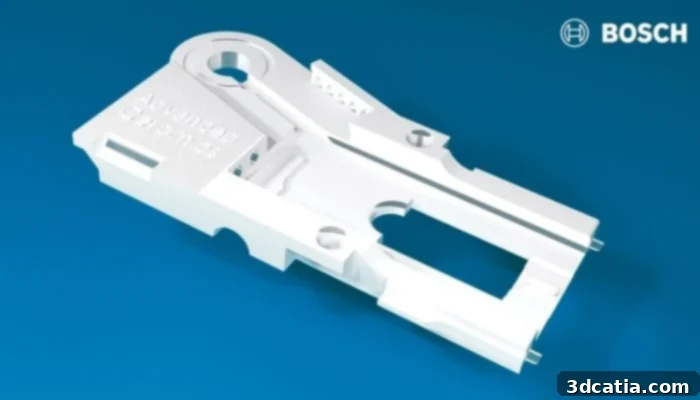
BAC helped a client to replace complex, multi-component assemblies – such as an electronic carrier plate with intricate channels – with a single 3D-printed ceramic part, achieving both enhanced performance and significant design simplification.
For clients who may not be fully acquainted with the extensive potential and full capabilities of ceramic AM, we proactively engage in a collaborative exploratory process. This involves working hand-in-hand to identify and rigorously evaluate novel potential applications, often guiding them to discover entirely new pathways and innovative uses for the technology that they had not previously considered. This proactive approach helps to unlock new opportunities and expand the adoption of ceramic AM.
We further support our clients by providing concrete demonstrations of ceramic AM’s capabilities through collaborative proof-of-concept projects. These projects allow them to witness the technology’s exceptional performance and reliability firsthand in a tangible way. When clients express concerns about upfront costs, we guide them to consider the Total Cost of Ownership (TCO) rather than just the initial part price. While the immediate cost of an AM-produced ceramic part might appear higher in some cases, the long-term benefits are often substantial and far-reaching. These benefits include significantly extended component lifespans, crucial weight reductions for improved efficiency, and simplified assembly processes due to part consolidation. These advantages frequently lead to considerable overall savings and deliver a superior level of performance that conventional manufacturing methods simply cannot achieve. Our unwavering commitment is to provide a comprehensive, value-driven solution that not only meticulously addresses our clients’ immediate technical requirements but also offers a sustainable and advantageous pathway forward for their advanced manufacturing needs.
3DN: Can you share a challenging use case where ceramic AM enabled a breakthrough solution for a client?
The textile industry is a sector that has historically relied heavily on components manufactured from technical ceramics due to their inherent durability and specific performance characteristics. A particularly compelling use case that truly exemplifies the transformative potential of ceramic additive manufacturing is the production of precision ceramic needles for advanced textile manufacturing applications. This specific project showcases how AM can overcome limitations faced by traditional manufacturing processes and deliver superior components.
The core challenge revolved around a critical need for highly wear-resistant, exceptionally precise, and geometrically complex components essential for Tailored Fiber Placement (TFP) processes. These processes involve the meticulous and precise handling of highly abrasive fibers, such as glass or carbon, which place immense stress on tooling. Conventional manufacturing methods consistently struggled to simultaneously achieve the required dimensional accuracy, pristine surface quality, and optimal material properties, especially when attempting to scale up to high-volume production. The intricate geometries and stringent performance demands pushed the boundaries of traditional ceramic fabrication techniques, leading to compromises in either design complexity or part longevity.
Our innovative solution leveraged the power of ceramic AM to produce these complex ceramic needles, specifically utilizing high-purity alumina (99.8% purity). One of the most significant breakthroughs achieved in this project was the capability to efficiently manufacture these intricate parts in series production. A single build platform within our VPP system allows for the simultaneous fabrication of an impressive 444 identical, highly complex needles. Each individual needle measures approximately 22.3 mm in length and features a precise eye that gradually widens from 1 mm to 1.5 mm. Crucially, these parts are produced with an exceptionally tight tolerance of ±0.025 mm, demonstrating the unparalleled precision attainable with ceramic AM.
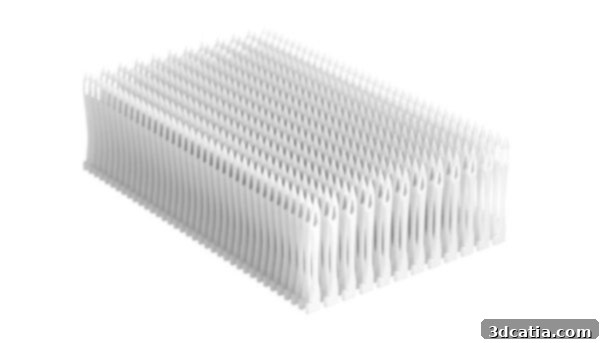
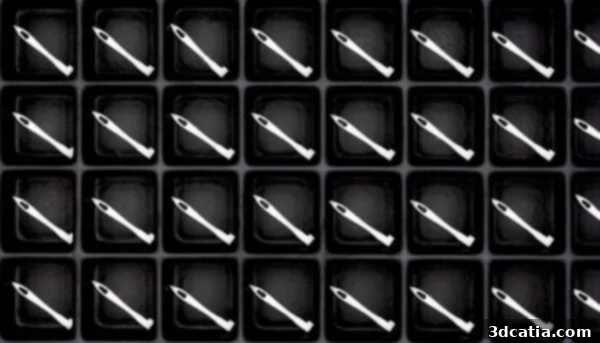
The application of high-purity alumina provided several crucial material advantages that were instrumental in this breakthrough. Alumina’s exceptionally high wear resistance ensures a significantly extended tool life when processing highly abrasive fibers, a critical factor that directly translates into reduced downtime, lower maintenance costs, and increased operational efficiency for textile manufacturers. Furthermore, the inherently low density of ceramics contributes to a reduced component weight. This characteristic enables faster and more dynamic movements within the textile machinery without compromising stability or introducing excessive inertia, thereby improving machine performance and speed. Coupled with their remarkable rigidity, these ceramic needles effectively prevent deflection during high-speed operation, ensuring unparalleled precision in fiber placement. This combination of properties makes ceramic AM parts far superior to traditional alternatives.
This exemplary use case not only underscores Bosch Advanced Ceramics’ advanced capabilities in the series production of highly complex ceramic components but also powerfully demonstrates how ceramic AM directly addresses and resolves critical performance bottlenecks in the most demanding industrial applications. It highlights how the synergy of advanced materials and additive manufacturing can lead to genuinely transformative solutions.
3DN: In your experience, which industries stand to benefit most significantly from ceramic AM, and what specific applications and materials particularly stand out?
During my tenure at Bosch Advanced Ceramics, I have engaged in hundreds of technical discussions with clients from an extraordinarily diverse range of industries. From my comprehensive perspective, it is clear that virtually any industry that requires the unique properties and performance characteristics of technical ceramics can potentially derive substantial benefits from adopting ceramic additive manufacturing. This potential stems from several compelling reasons. Firstly, AM possesses an unparalleled ability to enable complex designs that are simply unachievable through any other conventional production method. This design freedom can dramatically increase the efficiency, functionality, and performance of a given product. Secondly, when considering complex assemblies, ceramic AM offers the revolutionary capability to produce multiple, traditionally discrete parts as a single, consolidated component. This not only streamlines the manufacturing process but also significantly reduces assembly costs, minimizes potential points of failure, and often leads to a lighter, more robust final product. Industries characterized by a “high diversity, low spread” product portfolio—such as the medical sector, which often requires highly customized or specialized low-volume parts—can particularly benefit, as AM eliminates the prohibitive tooling costs associated with traditional manufacturing methods.
Key industries that are poised to gain the most transformative advantages from ceramic AM include semiconductors, medical devices, aerospace, advanced chemical processing, renewable energy, and high-performance industrial machinery. In the semiconductor industry, ceramic AM is indispensable for creating components that demand exceptional purity, outstanding chemical resistance to aggressive etchants, and precise electrical insulation. Specific applications include advanced wafer chucks, intricate gas showerheads for uniform deposition, or complex fluidic manifolds designed for ultra-pure chemical delivery.
In the medical device sector, AM profoundly supports the development and production of biocompatible, easily sterilizable, and ergonomically optimized parts. Furthermore, ceramic AM excels in fabricating highly miniaturized parts for sophisticated diagnostic equipment, precision surgical tools, or specialized implantable devices that require bespoke geometries and superior material properties.
Aerospace applications significantly benefit from ceramic AM’s ability to produce lightweight, yet incredibly heat-resistant components, critical for engine parts, thermal management systems, or structural elements operating under extreme conditions. Meanwhile, sectors like chemical processing and energy leverage AM for creating corrosion-resistant and wear-resistant parts designed to withstand the harshest operating environments, enhancing safety and longevity. Finally, industries involving industrial machinery and metrology gain unprecedented access to custom, ultra-high-precision, and exceptionally long-lasting components that can improve the accuracy and efficiency of their systems.
Across all these diverse sectors, the overarching primary benefits of embracing ceramic AM consistently include dramatically enhanced design freedom, leading to optimized performance even in the most demanding operating conditions, and greater overall cost-efficiency achieved through intelligent part consolidation and significantly extended service life of components. These advantages collectively position ceramic AM as a strategic technology for future innovation and competitiveness.
3DN: How do you envision the future trajectory of ceramic additive manufacturing?
Many experts within the manufacturing domain hold the belief that additive manufacturing will ultimately find its specific niche among the pantheon of established production technologies. However, at Bosch Advanced Ceramics, we firmly subscribe to a much more expansive and transformative vision. We are convinced that AM’s inherent and profound connection to a fully digital workflow, coupled with the industry’s accelerating demand for faster development cycles and rapid innovation, will inevitably lead to a far more significant and central position for additive manufacturing. This is particularly true for ceramic AM.
When one combines the outstanding, often extreme, material properties of advanced ceramics with the unmatched design freedom offered by AM and the inherent digital agility of the entire process, it positions ceramic AM not just as a complementary tool, but as a foundational cornerstone technology for future high-performance applications across countless industries. We are incredibly excited and deeply invested in actively exploring, developing, and realizing these vast possibilities, believing that ceramic AM will continue to redefine what is achievable in advanced manufacturing. The potential for innovation, efficiency, and performance improvement is immense, and we are at the forefront of this exhilarating evolution.
3DN: Do you have any final words you’d like to share with our readers?
I am always delighted to connect with anyone who shares a similar enthusiasm for this incredibly exciting technology and the boundless possibilities it continues to unlock. The maker scene, with its vibrant community and vast creative energy, has historically exerted a strong and positive influence on the continuous development and evolution of additive manufacturing technology. I extend my sincere thanks for your effort in reading this interview and for your valuable attention. To learn more about the pioneering work and advanced capabilities of Bosch Advanced Ceramics, please click HERE.
What are your thoughts on industrial ceramic AM? We invite you to share your insights in a comment below or join the discussion on our LinkedIn or Facebook pages! Additionally, don’t miss out on the latest 3D printing news by signing up for our free weekly Newsletter, delivered straight to your inbox. You can also explore all our engaging videos on our YouTube channel for more in-depth content.
*All Photo Credits: Bosch Advanced Ceramics