
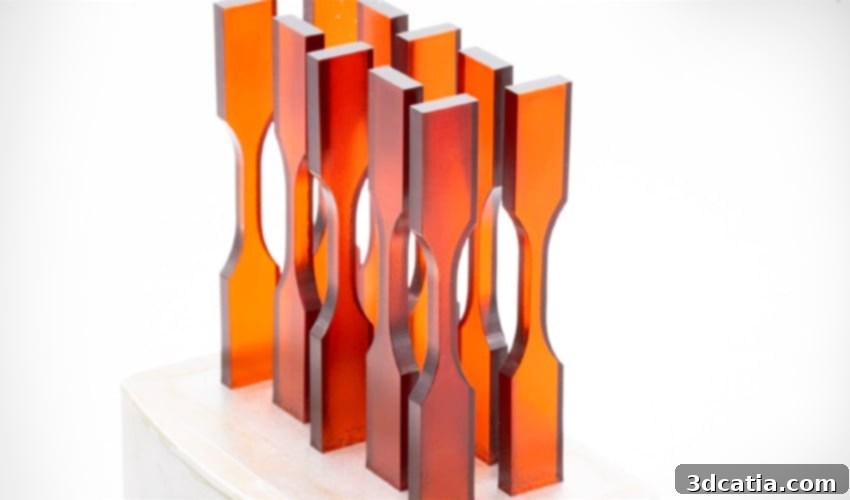
Achieving Isotropy in 3D Printing: A Comprehensive Guide to Enhancing Part Strength and Reliability
In the rapidly evolving landscape of 3D printing, also known as additive manufacturing, certain concepts are foundational to understanding the quality and performance of fabricated parts. Among these, the principle of isotropy stands out as particularly crucial. Isotropy refers to the property of being uniform in all orientations. When applied to 3D printed parts, it signifies that a component exhibits consistent physical and mechanical properties regardless of the direction in which those properties are measured. This uniformity can encompass various attributes, from color and surface finish to the overall shape and dimensional accuracy of a model. However, for engineers and manufacturers leveraging additive manufacturing for functional applications, the most critical property associated with isotropy is undoubtedly mechanical strength and structural integrity.
An isotropic part is characterized by having the same strength, stiffness, and other mechanical properties across all its axes. Conversely, an anisotropic part will display varying properties depending on the direction of measurement. Understanding the profound implications of isotropy is paramount, especially as 3D printing transitions from prototyping to producing high-performance, end-use components across diverse industries such as aerospace, automotive, and medical. Anisotropic behavior in a part can lead to unpredictable failure points, compromise structural reliability, and ultimately limit the range of applications for which additive manufacturing can be effectively utilized. Therefore, ensuring isotropic characteristics is not merely a technical detail; it is a fundamental requirement for unlocking the full potential of 3D printing in demanding industrial contexts.
As 3D printing technologies become increasingly accessible and sophisticated, more companies are adopting them for the direct creation of final, functional parts. This widespread adoption necessitates a deep understanding of the various technologies available, their inherent limitations, and the performance characteristics of the materials employed. Intrinsically, most thermoplastic polymers are considered isotropic in their raw, bulk form. This is primarily due to their molecular structure, where the cohesive forces and entanglement between individual polymer chains are uniform in all directions. However, the critical distinction lies in the manufacturing process itself. The method by which these materials are processed into a 3D component can profoundly alter this inherent quality, often introducing degrees of anisotropy that were not present in the base material.
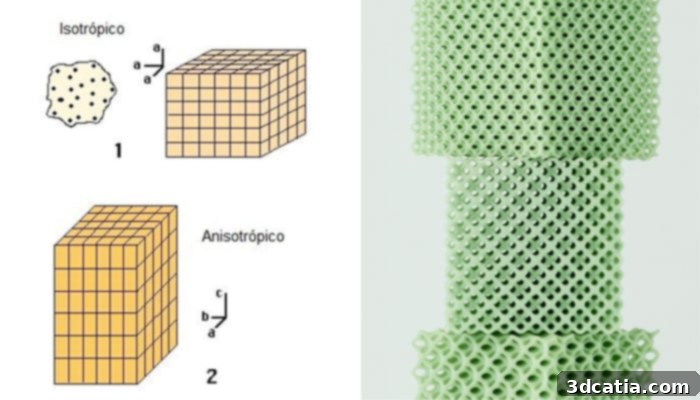
The fundamental difference between an isotropic model (uniform properties) and an anisotropic model (direction-dependent properties) (Photo credits: IMA / Carbon)
Indeed, it is often the additive manufacturing process itself that introduces anisotropy into parts, even when the raw material is inherently isotropic. When anisotropic parts are produced, it means their physical and mechanical properties, such as tensile strength, flexural modulus, or impact resistance, differ significantly depending on the axis along which they are measured. This directional dependence poses significant challenges for engineers, making it difficult to predict how a part will perform under various stress conditions. For instance, a part might be strong when loaded along its X-axis but significantly weaker when loaded along its Z-axis, leading to potential failure in critical applications. Recognizing this challenge, we will now explore key techniques and considerations for achieving and maintaining a high degree of isotropy in polymer-based 3D printed parts, focusing on design, process selection, and post-processing methods.
Strategies for Achieving Optimal Isotropy in 3D Printed Parts
The primary advantage of producing isotropic 3D printed parts is their superior and predictable mechanical performance, making them suitable for a broader range of demanding industrial applications. Achieving this requires a holistic approach, considering various factors throughout the additive manufacturing workflow. From initial design to the final post-processing steps, each stage plays a vital role in influencing the material’s internal structure and, consequently, the part’s overall isotropy. By meticulously managing these elements, manufacturers can ensure that the final components exhibit the desired uniform properties for their intended use. In the following sections, we will delve into three critical areas: design and slicing optimization, the strategic selection of additive manufacturing technology, and the application of effective post-processing techniques.
The Crucial Role of Design and Slicing in Isotropy
The initial design and modeling phase is the cornerstone of any additive manufacturing process and holds significant weight in determining the final part’s isotropic qualities. Simpler, more symmetrical geometries tend to facilitate more uniform stress distribution and easier attainment of isotropic strength throughout the part. This consideration extends beyond the external shape to the internal architecture. The internal design, including infill patterns, wall thicknesses, and even the strategic implementation of lattice-type structures, can greatly influence how loads are distributed and how the material bonds within the part. For instance, designing parts with smooth transitions and avoiding sharp corners can help mitigate stress concentrations that might otherwise lead to anisotropic failure.
Advanced design methodologies, such as topological optimization, can also be employed to create geometries that are inherently better suited for isotropic performance by optimizing material placement based on expected load conditions. Replacing solid volumes with intelligently designed lattice structures, tailored to specific requirements, can not only reduce material usage and weight but also promote more uniform mechanical behavior if the lattice elements are consistently oriented and bonded. While these design decisions are not strictly decisive in isolation, they lay the fundamental groundwork for successful isotropic manufacturing.
Beyond the CAD model, the slicing process executed by the slicer software is equally critical. The way a 3D model is translated into printer instructions – including parameters like layer height, print speed, infill density, and especially part orientation – directly impacts the interlayer bonding and overall structural integrity. The on-machine manufacturing position, or print orientation, is perhaps one of the most significant factors that can induce or mitigate anisotropy. Orienting a part such that critical stress points are aligned with the strongest printing direction can compensate for some inherent anisotropy, though true isotropy aims for strength in all directions. Adjusting these parameters meticulously within the slicer program is essential for controlling process-induced anisotropy and optimizing the final mechanical properties of the parts, ensuring a robust manufacturing process.
Selecting the Right Additive Manufacturing Technology for Isotropic Properties
A pivotal decision in the pursuit of isotropic parts is the selection of the appropriate additive manufacturing technology. Different 3D printing methods fundamentally interact with polymers in distinct ways, leading to varying degrees of isotropy in the final product. Let’s examine some prominent polymer-based technologies:
If we consider Fused Deposition Modeling (FDM), one of the most widely adopted and accessible 3D printing techniques, it often presents significant challenges related to achieving isotropy. During the FDM thermoplastic extrusion process, molten polymer strands are deposited layer by layer. The cohesion between these adjacent layers is generated primarily through thermal bonding and limited polymer chain intertwining. This inter-layer adhesion is notoriously the weakest link in FDM parts, as the bonds formed are often weaker than the intra-layer bonds within a single filament. This mechanism frequently leads to the generation of microporous structures and “cold welds” between layers, meaning the real cross-section of the part varies significantly with respect to its apparent cross-section, especially in the Z-direction. Consequently, FDM parts are typically much weaker when subjected to loads perpendicular to the build layers, resulting in pronounced anisotropic behavior where strength is highly dependent on the orientation of the print layers.
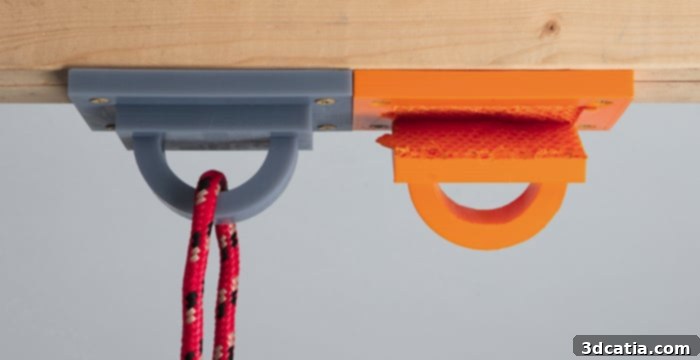
The orange part illustrates typical anisotropy in an FDM 3D printed component, often weaker along layer lines (Photo credits: Formlabs)
In contrast, resin 3D printing technologies, such as SLA (Stereolithography) or DLP (Digital Light Processing), offer a significantly higher degree of isotropy. These processes involve photopolymerization, where individual liquid monomers are covalently bonded and cross-linked by the application of a precisely controlled light source (laser or projector), forming a solid, cured polymer layer. A key aspect of these technologies is that the exposed layer is typically not 100% fully cured immediately; it retains some unbound monomer groups. When the subsequent layer is exposed, additional covalent bonds are established not only within the new layer but crucially, also between the current layer and the previously cured one. This continuous, strong chemical bonding across layer interfaces facilitates the formation of a much more robust, interconnected polymer network structure throughout the entire part. The resulting mechanical properties are far more uniform across all directions, offering a closer approximation to true isotropy compared to the mechanical bonding mechanisms of FDM technology.
Finally, Selective Laser Sintering (SLS) stands out as another additive technology working with polymers that consistently delivers parts with exceptional isotropic properties. Indeed, SLS is often cited as the technique that guarantees some of the best results for technical and industrial applications requiring high mechanical performance and isotropy. This powder bed fusion process involves selectively sintering polymeric microparticles, layer by layer, using a high-power laser. Unlike FDM, where layers are extruded and bonded, SLS fuses an entire cross-section of powder, creating a homogeneous block of material. Users can leverage a wide array of industrial-grade technical polymers, such as PA11 and PA12 (Nylons), or even advanced thermoplastic elastomers like TPE and TPU, all known for their excellent mechanical properties.
SLS 3D printing typically yields parts with ideal characteristics for demanding engineering applications due to their inherent high isotropy, superior dimensional accuracy, and the ability to produce models with highly complex geometries without significant structural weaknesses. While it’s true that SLS manufactured models may still exhibit a certain level of porosity within their structure, a crucial distinction lies in the nature of this porosity. Unlike the irregular, direction-dependent porosity often seen in FDM parts, SLS porosity is generally uniform and isotropic throughout the part’s volume. This means that the porosity is not influenced by the part’s orientation during the printing process or the direction of applied stress. Consequently, although the real cross-sections of SLS parts might not perfectly match their apparent cross-sections, this uniform distribution of voids ensures that the mechanical properties remain consistent and predictable in all directions, endowing the parts with remarkable isotropy for functional uses.
Enhancing Isotropy Through Effective Post-Processing Techniques
Post-processing represents the final, indispensable stage in virtually any additive manufacturing workflow, and its role in reinforcing part isotropy can be profoundly significant. Beyond merely improving aesthetics, post-processing techniques can actively enhance the bond between layers, reduce internal stresses, and promote a more uniform material structure.
For resin 3D printed parts (SLA/DLP), post-treatment methods involving the application of heat and/or light, such as thermal post-curing or UV post-curing, are particularly effective. These processes facilitate further cross-linking and polymerization of any remaining uncured monomer groups throughout the entire part volume. This secondary curing step significantly strengthens the chemical bonds within and between layers, leading to a higher degree of mechanical isotropy and improved overall mechanical properties, often approaching the performance levels of injection-molded parts. It effectively ‘locks in’ the material structure, making it more robust and consistent in all directions.
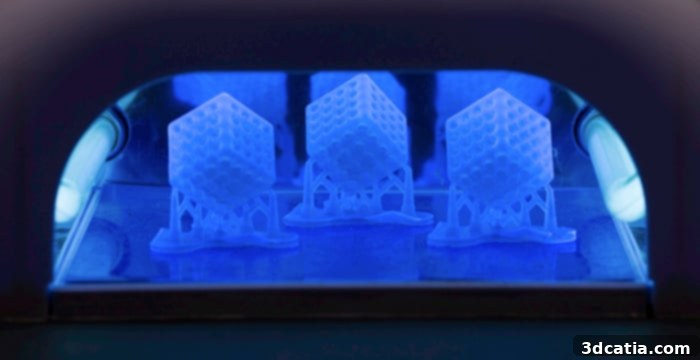
UV curing is a common and effective post-processing technique for resin-printed parts, enhancing their mechanical properties and isotropy (Photo credits: Formlabs)
Furthermore, in cases where support structures are necessary during printing (common in FDM and resin printing), their removal can sometimes leave surface defects or localized stress concentrators. Post-processing methods like polishing, sanding, or chemical smoothing are crucial for eliminating these imperfections. By creating a smoother, more uniform surface, these techniques not only improve the aesthetic appeal but also prevent potential points of weakness where cracks could initiate under stress. This meticulous surface finishing contributes to the overall structural integrity and helps maintain better isotropy by ensuring the part’s outer boundaries are as uniform and defect-free as its internal structure allows. For FDM parts, annealing or vapor smoothing can also be employed to improve layer adhesion and reduce anisotropic effects, although often with less dramatic results than for resin or SLS.
In conclusion, achieving true isotropy in 3D printed polymer parts is a complex but attainable goal that significantly enhances their performance and reliability for advanced applications. It requires a holistic approach that integrates intelligent design choices, strategic selection of the most suitable additive manufacturing technology, and diligent application of effective post-processing techniques. By paying close attention to these critical stages, manufacturers can overcome the inherent challenges of layer-by-layer fabrication and produce components that exhibit consistent, predictable mechanical properties in all directions, truly elevating the potential of 3D printing for industrial use.
What are your thoughts on the importance of isotropy in 3D printing and the strategies to achieve it? Share your insights in a comment below or join the conversation on our LinkedIn, Facebook, and Twitter pages! Don’t forget to sign up for our free weekly newsletter here, the latest 3D printing news straight to your inbox! You can also find all our videos on our YouTube channel.
*Cover Photo Credits: polySpectra