
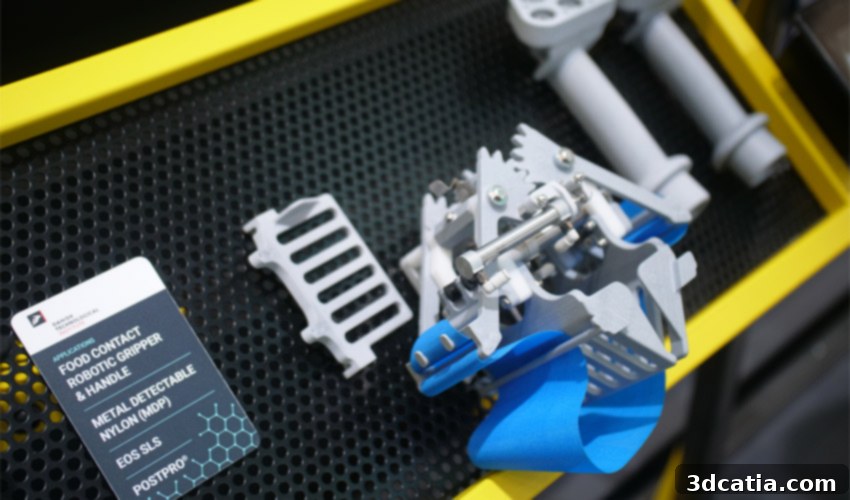
Vapor Smoothing for 3D Printed Parts: Elevating Quality and Achieving Industry Standards Across Demanding Sectors
In any highly regulated industry or sector, adherence to a myriad of necessary standards and certifications is paramount. These protocols are meticulously designed to ensure the proper, safe, and reliable functioning of parts, complex systems, or critical services. The remarkable ascent of additive manufacturing (AM) across numerous fields, from medical to automotive, has brought with it an urgent need to precisely control the properties of 3D printed components. This control extends beyond mere aesthetic appeal, encompassing vital aspects such as performance, durability, and, crucially, biocompatibility for applications involving human contact.
To meet these increasingly stringent requirements, the post-processing of raw parts produced using AM technologies is not just beneficial, but absolutely indispensable. These critical post-processing steps are designed to systematically eliminate inherent imperfections found in as-printed parts, such as surface roughness, porosity, and anisotropy. By addressing these issues, post-processing helps manufacturers achieve the desired, and often legally mandated, final finish and material properties. Consequently, a diverse array of post-processing solutions have emerged, each tailored to help 3D printed parts comply with the rigorous certifications required for various advanced applications. This advancement is pivotal, enabling additive manufacturing to compete directly and effectively with established traditional manufacturing processes, such as injection molding, in terms of both quality and regulatory compliance.
The healthcare sector, for instance, stands as one of the most demanding industries regarding part quality, safety, and performance. Whether for the creation of intricate prostheses, sterile nasal swabs, precision dental aligners, custom medical helmets, or surgical guides, every component must meet exacting standards. Within the additive manufacturing market, numerous post-processing methods initially appear to offer the necessary smooth finishes required for these critical applications. However, a significant challenge often lies in the inner channels and intricate internal geometries of a part. These areas, if left untreated, remain exposed and porous, creating potential micro-traps for bacteria and other contaminants, thereby compromising the sterility and overall safety of the production process and the end-use product.
To provide a robust and innovative solution to this critical problem, AMT (Additive Manufacturing Technologies) has developed and deployed an advanced automated post-processing system known as Vapor Smoothing. This revolutionary technology delivers a superior smooth and fully sealed surface finish for 3D printed parts, not just externally but also within intricate internal channels. Thanks to the comprehensive nature of this post-processing method, parts can successfully pass a wide range of rigorous tests, unequivocally demonstrating their compliance with the most stringent standards and regulations for industrial applications across a multitude of fields. This capability is fundamentally transforming the viability of 3D printing in industries where performance and safety are non-negotiable.
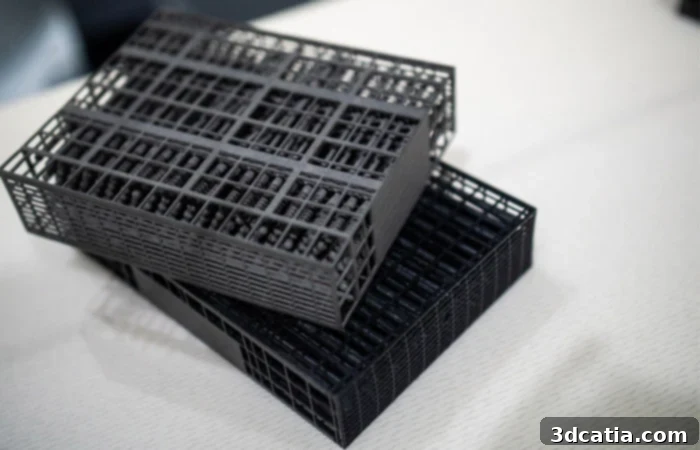
Photo Credits: AMT/ZiggZagg
How Does Vapor Smoothing Work to Elevate 3D Print Quality?
To truly appreciate how demanding industry standards can be consistently met with 3D printed parts in sectors such as medical, dental, and automotive, it is essential to delve into the operational mechanics of AMT’s Vapor Smoothing technology. The core principle of this advanced method involves precisely controlled chemical vapor deposition. The process begins by suspending batches of 3D printed parts within a meticulously sealed processing chamber. A proprietary solvent blend, specifically formulated for optimal performance and material compatibility, is then introduced into this closed-loop system as a finely controlled vapor.
As the solvent vapor makes intimate contact with the surfaces of the parts, a controlled chemical reaction occurs. This reaction gently and uniformly dissolves the microscopic peaks and valleys that characterize the inherent surface roughness of additive manufactured parts, effectively redistributing the material. This targeted dissolution and flow process completely seals the surface, eradicating surface irregularities and the microscopic crack initiation sites that are often present in as-printed components. The result is a uniformly smooth and sealed surface, not just on the exterior but also within complex internal channels and features that are inaccessible to mechanical post-processing methods. This fundamental change in surface morphology leads to a significant increase in elongation at break – a critical indicator of ductility and toughness – without any measurable loss in ultimate tensile strength, thus enhancing the overall mechanical integrity and longevity of the parts.
This versatile post-processing technology is compatible with a broad spectrum of additive manufacturing techniques, making it a universal solution for various production workflows. It can be effectively used to achieve the desired surface roughness and finish in parts created using methods such as Selective Laser Sintering (SLS), Multi Jet Fusion (MJF), Selective Absorption Fusion (SAF), and Fused Deposition Modeling (FDM). In terms of material compatibility, AMT’s vapor smoothing solutions are engineered to work with an extensive range of engineering polymers. This includes high-performance polyamides like PA12, PA11, and PA6, which are widely used for their strength and durability. Additionally, it is highly effective with flexible materials such as Thermoplastic Polyurethane (TPU), crucial for applications requiring elasticity, and more standard yet versatile materials like ABS, among many others. This wide compatibility ensures that a diverse array of industrial applications can benefit from enhanced surface quality and improved mechanical properties.
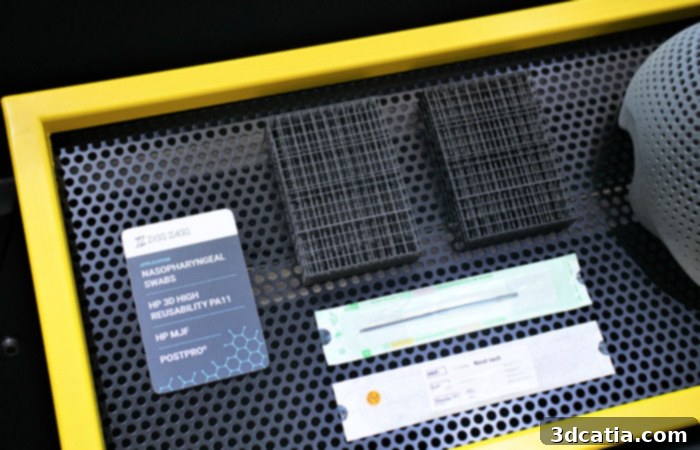
Photo Credits: AMT/ZiggZagg
Beyond its fundamental capability to produce exceptionally smooth surfaces, AMT’s vapor smoothing system offers a suite of advanced benefits. One of its key advantages is its high level of controllability and repeatability, ensuring consistent, high-quality results across large production batches. This precision also allows for complex geometries to be smoothed without compromising their intricate details or affecting the crucial mechanical properties of the underlying material. Furthermore, the technology brings a number of transformative advantages that empower users to unlock an even broader range of advanced applications for 3D printed parts across various industries.
For example, a significant benefit is its ability to create fully sealed surfaces, rendering parts impermeable to the entry of liquids and gases. This critical feature directly addresses concerns about hygiene and sterilization, particularly in medical and food-contact applications. By preventing the accumulation of bacteria, moisture, or other contaminants within surface pores, the vapor smoothing process dramatically increases the part’s sterilization efficacy and overall cleanliness. This surface sealing and smoothing is also immensely important for components that will come into direct or prolonged contact with human skin, such as custom prosthetics, sterile nasal swabs, various dental applications (e.g., aligners, surgical guides), and wearables. The smooth finish not only enhances comfort but also significantly reduces the risk of irritation and bacterial proliferation, which are crucial factors for patient safety and acceptance.
Beyond the immediate advantages of improved surface aesthetics and tactile feel, this innovative technology profoundly enhances the mechanical properties of the parts. By eliminating surface imperfections and crack initiation sites, vapor smoothed components exhibit superior durability, making them more resilient and functional in demanding environments. This improvement directly translates into increased resistance to breakage, wear, and fatigue, thereby extending their overall longevity and operational lifespan. Crucially, these enhancements are achieved while simultaneously improving the overall aesthetics of the parts, giving them a high-quality, injection-molded look and feel. What’s more, the process accomplishes this without affecting the final weight of the part or introducing undesirable dimensional changes, preserving the original design intent and functional tolerances.
Standards and Qualifications Testing for 3D Printed Parts: Paving the Way for Certification
The successful integration of 3D printed parts into highly regulated industries necessitates rigorous evaluations to guarantee that these components are not only compatible with their intended application but also unequivocally safe and performant. In this context, to demonstrably prove the efficacy and success of AMT’s vapor smoothing post-processing method, extensive compatibility and qualification tests were conducted on 3D printed parts that had undergone this finishing technology. The results have been groundbreaking, particularly within the medical and dental sectors. Components processed with AMT’s vapor smoothing successfully passed various critical certifications related to skin contact (e.g., ISO 10993 series), cytotoxicity assessments, and antibacterial efficacy tests (e.g., ISO 22196). These performance evaluations are known for being exceptionally demanding and complex, requiring meticulous controls and stringent certifications to ensure the utmost patient safety and regulatory compliance.
Furthermore, the benefits of vapor smoothing extend far beyond the healthcare industry. Other demanding sectors, such as automotive and food processing, have also conducted independent tests on parts post-processed with AMT’s vapor smoothing technology. In the automotive industry, for example, components manufactured using PA12 and subsequently vapor smoothed have successfully passed stringent flammability tests, meeting critical safety standards like those mandated for interior vehicle components. This capability significantly expands the range of applications for 3D printed parts in automotive design and production. It is also imperative to highlight that AMT’s advanced post-treatment systems are engineered to comply with all relevant safety and industrial hygiene standards for demanding applications, ranging from critical medical and dental devices to consumer goods and food-contact components. A key aspect of their safety profile is the fact that these systems do not utilize corrosive or explosive acid mixtures in the machine, thereby minimizing any potential hazards to operators and the environment, ensuring a safe and sustainable manufacturing process.
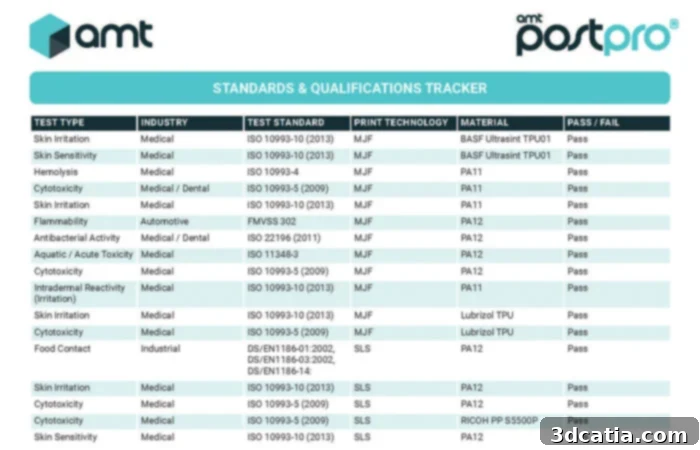
Photo Credits: AMT
For many years, highly regulated applications have remained a significant barrier, causing numerous industries to hesitate or even deny the full potential of 3D printing. The inability of as-printed parts to meet stringent performance, safety, and regulatory benchmarks often relegated additive manufacturing to prototyping or less critical applications. Now, AMT’s pioneering vapor smoothing technology is fundamentally changing this paradigm. By consistently enabling 3D printed components to achieve and surpass the most rigorous industry certifications, this innovative post-processing solution is unlocking the widespread implementation of additive manufacturing in even the most demanding and safety-critical sectors. This marks a pivotal moment in the evolution of 3D printing, transforming it from a niche technology into a mainstream manufacturing method capable of delivering end-use parts with unprecedented quality and compliance. If you would like to learn more about this transformative post-processing method and explore its applications, you are encouraged to visit AMT’s official website HERE for detailed information and case studies.
Do you currently utilize vapor smoothing in your 3D printing workflow? We invite you to share your experiences and insights in a comment below or engage with our community on our Linkedin, Facebook, and Twitter pages! Don’t forget to sign up for our free weekly Newsletter here to receive the latest 3D printing news, technological advancements, and industry updates directly to your inbox! You can also find all our engaging videos, tutorials, and interviews on our YouTube channel.