
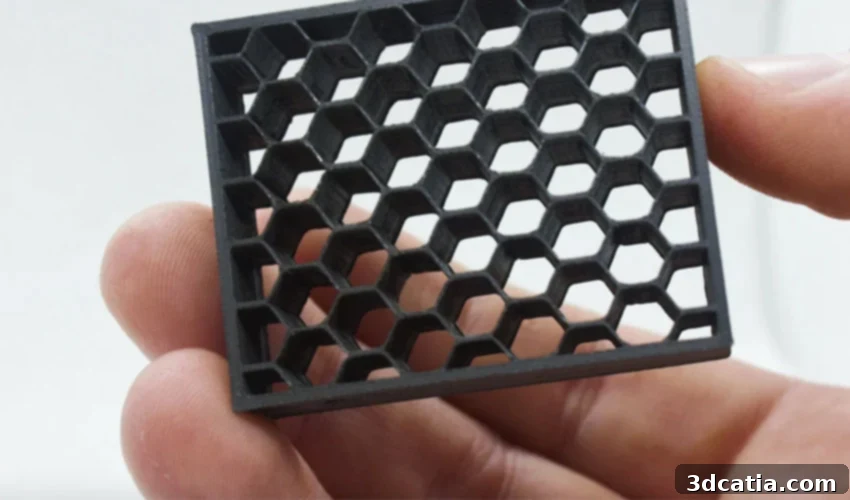
Revolutionary Addbor N25: Boron Carbide Filament for Advanced Radiation Shielding in 3D Printing
In a significant leap forward for additive manufacturing, two pioneering Swedish companies, Additive Composite and Add North, have collaborated to develop a groundbreaking composite filament. This innovative material, marketed under the name Addbor N25, is engineered from nylon, meticulously reinforced with boron carbide – one of the market’s hardest materials, rivaled only by diamond and cubic boron nitride. The core objective behind this development is to provide an advanced filament specifically designed for radiation resistance, opening new avenues for critical applications across various industries.
The landscape of 3D printing has been continually evolving, with composite materials playing an increasingly vital role. While many are familiar with composite 3D printing incorporating carbon fibre, glass, or aramid for enhanced strength and rigidity, the introduction of boron carbide represents a truly innovative stride in the additive manufacturing market. Boron carbide stands out as a mineral material renowned for its exceptionally high hardness, remarkably low density, and extreme temperature resistance. These unique properties make it an ideal candidate for specialized applications such as radiation shielding and nuclear uses, where conventional materials fall short. Additive Composite and Add North strategically chose boron carbide as the foundational component for their new high-performance 3D printing filament, leveraging its inherent capabilities to meet stringent industrial demands.
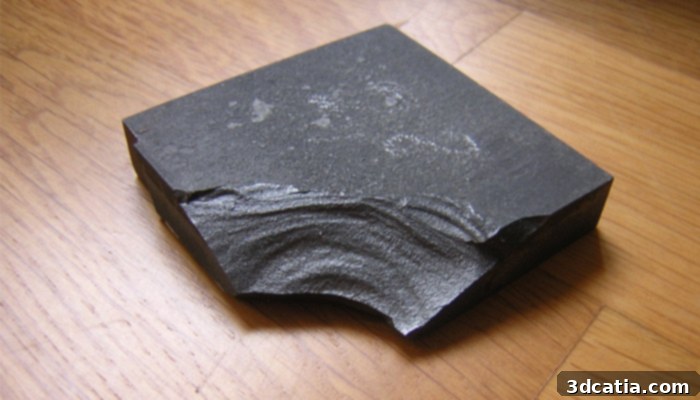
Boron Carbide is one of the hardest materials on the market, ideal for demanding applications.
Unveiling Addbor N25: A Deep Dive into its Composition and Unique Properties
Addbor N25 boasts a precise composition, featuring 25% boron carbide content, with the remaining 75% being high-quality nylon. Add North emphasizes that this technical polyamide, even in its unreinforced state, offers a compelling set of characteristics valuable to industry, including impressive strength, excellent wear resistance, and minimal shrinkage during printing. The strategic integration of boron carbide elevates these inherent qualities, primarily by imparting superior shielding capabilities against radiation. Boron carbide is particularly effective at absorbing neutrons, which are a common and dangerous form of radiation in many industrial and research environments. This makes Addbor N25 an exceptional material for creating robust, custom radiation protection components.
Adam Engberg, CEO of Additive Composite, highlights the transformative potential of this innovation: “Additive manufacturing is fundamentally changing how products are conceived, designed, and manufactured. We firmly believe that Addbor N25 is a significant contributor to this ongoing development, empowering both industry and large-scale research facilities to transition away from toxic materials that pose environmental contamination risks. Our new product marks the first in an exciting series of radiation shielding materials that we are actively developing.” This filament offers a safer, more sustainable alternative to traditional shielding materials. For example, it provides a viable replacement for certain metals like cadmium, which has faced bans from various markets due to its extreme toxicity and environmental hazards. The ability to 3D print complex geometries with Addbor N25 means customized shielding solutions can be produced on-demand, reducing waste and increasing efficiency in critical applications.
The Critical Need for Advanced Radiation Shielding
The demand for effective radiation shielding is paramount in sectors ranging from nuclear energy and medical diagnostics to aerospace and defense. Exposure to radiation, particularly neutron radiation, can have severe consequences, including material degradation and health risks for personnel. Traditional shielding solutions often involve heavy, difficult-to-process materials like lead, concrete, or cadmium. While effective, these materials present challenges in terms of weight, fabrication complexity, and environmental impact. The advent of Addbor N25 offers a compelling alternative, marrying the design freedom of additive manufacturing with the exceptional neutron absorption properties of boron carbide. This allows for the creation of lightweight, intricate, and highly effective shielding components that were previously impossible or prohibitively expensive to produce.
Optimized Printing Characteristics for High-Performance Results
Working with advanced composite filaments like Addbor N25 requires attention to specific 3D printing parameters to ensure optimal results and longevity of equipment. Given boron carbide’s abrasive nature, Add North strongly advises the use of hardened steel nozzles or even more durable options like ruby-tipped nozzles, with a recommended diameter of 0.4 mm. Using standard brass nozzles would lead to rapid wear and inconsistent extrusion. The extrusion temperature should be carefully maintained between 255 and 275°C, ensuring proper melting and flow of the nylon matrix while the boron carbide particles are dispersed effectively. A heated print bed temperature between 60-75°C is also crucial for excellent layer adhesion and to minimize warping, especially given the material’s industrial applications where part integrity is critical. These precise settings are essential for achieving the high-quality, dense, and structurally sound parts necessary for effective radiation shielding. Operators should also consider factors like print speed, retraction settings, and enclosure temperature to fine-tune the printing process for this high-performance filament.
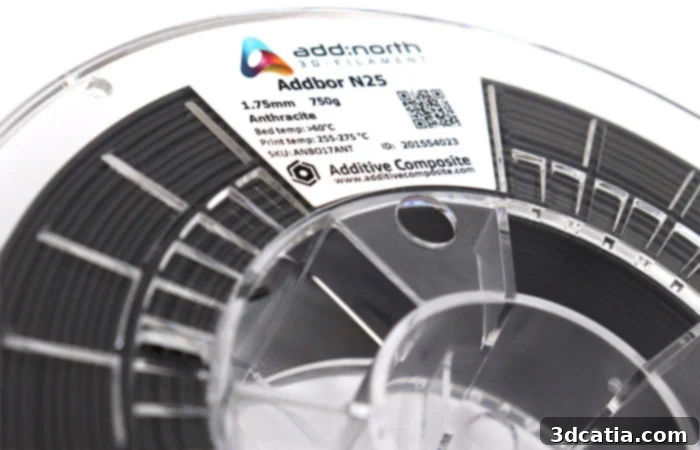
The composite filament is available in the form of a 750-gram spool, ready for specialized 3D printing projects.
Investment in Innovation: Price and Value Proposition
The advanced nature and specialized application of Addbor N25 reflect in its pricing. A 750-gram spool is priced at 11,875 Swedish crowns, which translates to approximately $1,220 USD. While this may seem a significant investment compared to standard filaments, it’s crucial to consider the unparalleled performance and unique benefits it offers. For critical applications such as radiation shielding in nuclear facilities, research laboratories, or medical environments, the cost of the material is often secondary to its efficacy, reliability, and safety benefits. The ability to produce custom, high-performance parts with superior neutron absorption capabilities, while replacing hazardous materials like cadmium, provides immense value. Furthermore, the precision and customization offered by 3D printing with Addbor N25 can lead to reduced manufacturing lead times and optimize material usage, offering long-term cost efficiencies. For industries where safety and performance cannot be compromised, Addbor N25 represents a strategic investment in cutting-edge material science.
The Addbor N25 filament is readily available for purchase directly from the Add North website. This direct availability ensures that researchers, engineers, and industrial users can quickly access this pioneering material to develop and implement next-generation radiation shielding solutions. The transparency in sourcing and the direct channel to the manufacturer further instill confidence in the product’s quality and support.
The Future of Advanced Materials in Additive Manufacturing
The development of Addbor N25 signifies more than just a new filament; it underscores a broader trend in additive manufacturing towards highly specialized, function-driven materials. As industries continue to demand greater performance, lighter weights, and enhanced safety features, the integration of exotic materials like boron carbide into printable filaments will become increasingly common. This innovation paves the way for a future where custom-designed components can meet the most extreme operational requirements, from deep-space exploration to high-energy physics research. The collaboration between Additive Composite and Add North exemplifies how inter-company partnerships can drive significant advancements, pushing the boundaries of what’s possible with 3D printing technology. This is just the beginning of a new era for functional additive manufacturing, with a focus on materials that solve complex, real-world engineering challenges.
What are your thoughts on this revolutionary composite material and its potential impact on industrial applications? We encourage you to share your insights in a comment below or join the discussion on our Facebook and Twitter pages! Don’t miss out on the latest advancements and news in the dynamic world of 3D printing; sign up for our free weekly Newsletter to have all the updates delivered straight to your inbox.