
Mycelium 3D Printing: Blast Studio Pioneers Sustainable Living Architecture with the ‘Tree Column’
In an era increasingly focused on sustainability and ecological innovation, the world of 3D printing is rapidly expanding beyond traditional plastics and metals. A significant shift is occurring towards integrating additive manufacturing with natural materials, paving the way for groundbreaking designs and eco-friendly solutions. At the forefront of this movement is London-based design studio Blast Studio, which has ingeniously developed a novel 3D printing method utilizing mycelium. Mycelium, often referred to as the “root structure” of fungi, is an intricate underground network of fungal threads or hyphae, known for its incredible strength, biodegradability, and natural adhesive properties. Through their innovative additive manufacturing process, Blast Studio has conceptualized and created a remarkable structure named the “Tree Column.” This project not only showcases the immense potential of biomaterials in contemporary design but also redefines the boundaries of sustainable construction and living architecture.
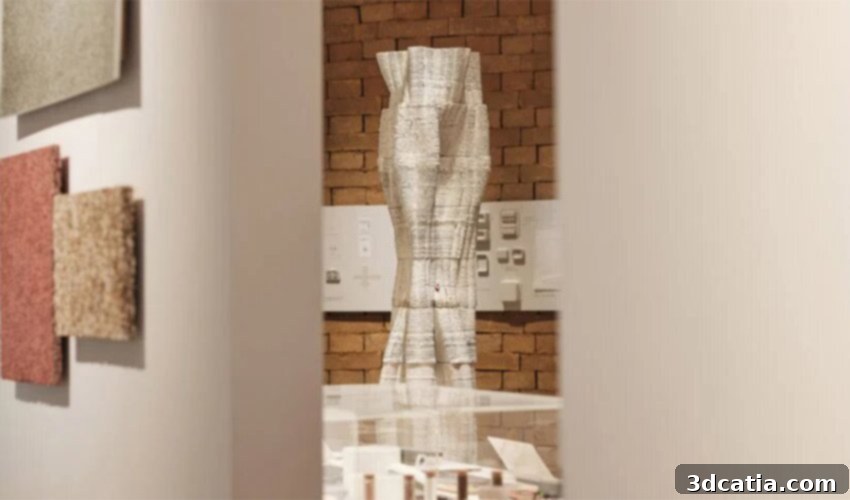
The “Tree Column,” standing majestically at over two meters high, is a testament to both ingenious engineering and biological marvel. Its design, characterized by a ridged and wavy structure, beautifully mimics the organic patterns found in natural tree trunks, giving it its evocative name. This column is meticulously crafted to provide the optimal strength and precise growing conditions necessary for mycelium to thrive. Beyond its aesthetic appeal, the studio’s ambitious vision for this project is dual-faceted: it aims to serve as a supportive structure capable of cultivating edible mushrooms, while simultaneously functioning as a robust and integral component within future architectural constructions. Paola Garnousset, co-founder of Blast Studio, articulates the profound motivation behind their work: “Our vision is to start a new type of living architecture that could self-repair and be harvested to feed people. The idea would be to 3D print a living structure in situ, which would be inoculated with different varieties of mushrooms, some with high structural resistance and some delicious ones.” This philosophy underscores a paradigm shift towards structures that are not merely static elements but dynamic, regenerative systems contributing to both sustenance and shelter, ultimately fostering a symbiotic relationship between humans and their environment.
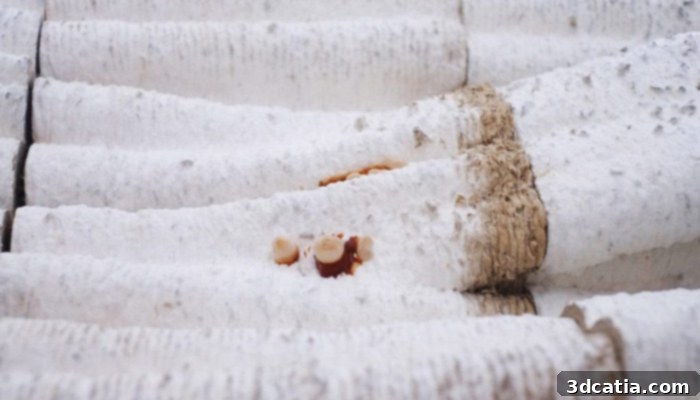
Mushrooms can grow directly on the innovative Tree Column, showcasing its dual functionality (photo credits: Blast Studio)
Crafting the Future: The Creation of the Tree Column
The journey to design and produce the “Tree Column” is as innovative as its concept, blending principles of circular economy with cutting-edge additive manufacturing. Blast Studio’s British designers did not solely rely on pure mycelium; instead, they adopted a resourceful approach by first harvesting used coffee cups from the bustling streets of London. This ingenious integration of urban waste highlights a commitment to repurposing materials that would otherwise end up in landfills, transforming them into valuable components for sustainable design. These reclaimed coffee cups were then carefully processed and mixed with mushroom spawn, creating a unique bio-composite material. To further facilitate the growth of the mushrooms and provide additional structural integrity, the artists thoughtfully incorporated recycled paper into their innovative bio-material blend. This multi-component substrate provides the necessary nutrients and medium for the mycelium to flourish, forming a strong, interconnected network.
Once this carefully formulated bio-material was prepared, the team leveraged a state-of-the-art 3D printer based on extrusion technology to construct the column. This method allows for precise control over the material deposition, building the structure layer by layer with remarkable accuracy. The “Tree Column” itself was not printed as a single, monolithic piece. Instead, the designers opted for a modular approach, printing 10 individual modules. This modularity offers several advantages, including easier transportation, assembly, and potential for future modifications or repairs. These distinct modules were then meticulously assembled to form the complete, towering “Tree Column.” This process exemplifies how combining advanced 3D printing techniques with organic, waste-derived materials can result in aesthetically pleasing, structurally sound, and profoundly sustainable architectural elements.
The Dual Promise: Edible Harvest and Structural Durability
One of the most captivating aspects of the “Tree Column” lies in its remarkable dual functionality. It is designed not only to provide a sustainable habitat for cultivating delicious, edible mushrooms but also to serve as an integral part of what Blast Studio terms “living architecture.” This innovative concept pushes the boundaries of conventional building materials, envisioning structures that interact dynamically with their environment and even contribute to food production. The process is cyclical and regenerative: once the mushrooms have matured and been harvested – offering a fresh, local food source – the column undergoes a transformative process. It is carefully dried at a high temperature, a crucial step that effectively halts the mycelial growth and solidifies the structure. This drying process dramatically increases the material’s density and structural integrity, transforming the soft, growing mycelium into a rigid, durable building element that is both lightweight and strong. This solidification makes the column suitable for various architectural applications, from interior design elements to components in larger, bio-fabricated structures. This seamless transition from a living organism to a robust construction material embodies the principles of a truly circular economy, where resources are not merely consumed but continuously repurposed and regenerated.
Mycelium in Sustainable Architecture: Broader Implications and Future Potential
The “Tree Column” by Blast Studio is more than just an art installation; it’s a powerful demonstration of mycelium’s vast potential in revolutionizing sustainable architecture and design. Beyond decorative columns, mycelium-based materials are poised to become game-changers across numerous applications. Their inherent properties make them ideal for creating highly effective insulation panels, offering superior thermal and acoustic performance compared to conventional synthetic materials. Imagine quiet, energy-efficient buildings constructed from materials that literally grew from the earth. Mycelium can also be molded into various shapes, opening doors for custom furniture, interior design elements, and even entire structural components like bricks or wall panels. Its natural fire-resistant qualities, once dried and processed, add another layer of safety and appeal to its use in construction. The beauty of mycelium is its biodegradability – at the end of its life cycle, it can safely decompose, returning its nutrients to the earth without leaving behind harmful pollutants, in stark contrast to petroleum-based plastics or energy-intensive concrete.
This biological approach to building offers a compelling pathway towards drastically reducing the carbon footprint associated with the construction industry, one of the largest global emitters of greenhouse gases. Mycelium cultivation requires minimal energy input, often grows on agricultural waste products, and sequesters carbon during its growth phase. Projects like the “Tree Column” exemplify the concept of “growable” or “living” buildings, where structures are not merely assembled but actively cultivated, blurring the lines between nature and human-made environments. As research progresses and manufacturing techniques become more refined, we can anticipate seeing mycelium integrated into large-scale building projects, transforming urban landscapes into more sustainable, resilient, and symbiotic ecosystems. The ability of mycelium to adapt to different substrates and environments also suggests its potential for localized production, reducing transportation costs and fostering regional bio-economies. It represents a truly regenerative material that offers both ecological benefits and innovative design possibilities.
Embracing the Circular Economy with Mycelium
The “Tree Column” project serves as a shining example of the circular economy in action. By incorporating used coffee cups – a common urban waste product – Blast Studio effectively diverts waste from landfills and imbues it with new value. This strategy perfectly aligns with the principles of resource regeneration and waste reduction, moving away from the linear “take-make-dispose” model prevalent in traditional manufacturing. Mycelium, as a renewable and biodegradable resource, naturally fits into this circular framework. It thrives on organic waste streams, converting low-value byproducts into high-performance materials. This creates a closed-loop system where waste becomes a nutrient for new creations, significantly minimizing environmental impact. The potential for these mycelium-based structures to be harvested for food, then repurposed as building elements, and finally biodegraded back into the earth, showcases an ultimate form of sustainable design. This holistic approach not only addresses immediate material needs but also fosters a deeper connection to nature’s cycles, inspiring a future where architecture is intrinsically linked to ecological well-being.
Showcasing Innovation: The ‘Tree Column’ on Display
For those intrigued by this pioneering blend of biotechnology and design, “The Tree Column” offers a unique opportunity for direct engagement. The column is currently on temporary display at the prestigious Design Museum in London, a renowned institution celebrated for its exhibitions on contemporary design and architecture. Its inclusion in the museum’s “Waste Age” exhibition is particularly significant, as the exhibition specifically explores how design can confront the climate crisis and our global waste problem. In this context, the “Tree Column” stands as a powerful symbol of innovation, demonstrating practical and aesthetically pleasing solutions to critical environmental challenges. It invites visitors to reconsider their perceptions of waste and to imagine a future where design actively contributes to a more sustainable and regenerative world. You can find out more about the project and the fascinating work behind it by visiting Blast Studio’s official page HERE.
A Glimpse into the Process: Watch the Mycelium Column in Action
The Future of Bio-Printed Structures and a Call to Engage
The work of Blast Studio with the “Tree Column” represents a bold step towards a future where our built environment is not only sustainable but also regenerative and even nourishing. While challenges remain in scaling mycelium-based production, including standardization, regulatory frameworks, and broader public acceptance, the ingenuity and environmental benefits demonstrated by this project offer an incredibly optimistic outlook. It inspires us to envision cities where buildings grow rather than just being built, where waste is a resource, and where our structures actively contribute to ecological health. What do you think of the innovative Tree Column from Blast Studio? We’d love to hear your thoughts! Let us know your comments below or engage with us on our Linkedin, Facebook, and Twitter pages! Don’t forget to sign up for our free weekly Newsletter here to get the latest 3D printing news straight to your inbox! You can also find all our compelling videos on our YouTube channel, exploring more cutting-edge innovations in additive manufacturing.