
Breakthrough in Regenerative Medicine: Ulvan-Enriched Bioink Enhances 3D Bioprinting for Superior Wound Healing
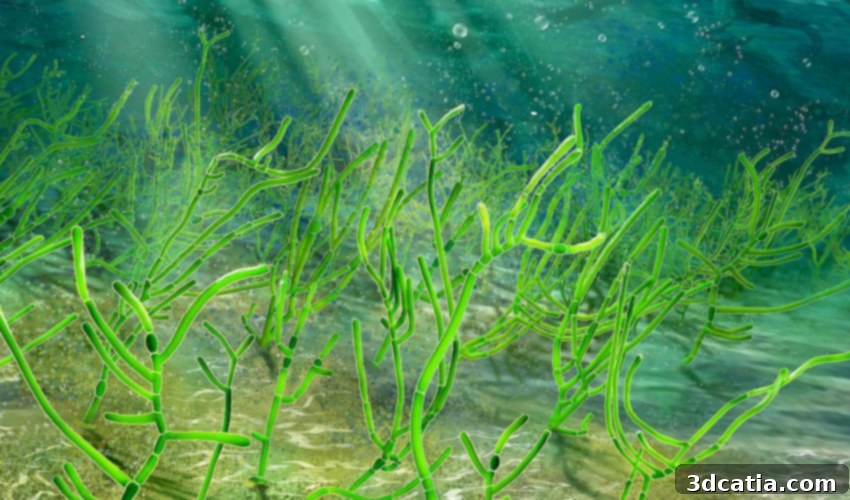
The landscape of regenerative medicine is continuously evolving, with 3D bioprinting emerging as a transformative technology in addressing complex biological challenges. A significant advancement in this field has been made by scientists who have developed an innovative bioink, specifically designed to accelerate and improve the process of wound healing. This groundbreaking new material, crucial for advanced 3D bioprinting applications, owes its remarkable capabilities to the strategic incorporation of a unique molecular species known as ulvan. Derived from a particular type of seaweed, ulvan possesses an intrinsic structural resemblance to components found within human skin, making it an ideal candidate for tissue engineering and repair. Its presence within the bioink plays a pivotal role in regulating cellular functions, specifically stimulating the production of essential biomolecules that are vital during the intricate stages of wound healing.
Wound healing is not merely a surface-level phenomenon; it is a highly complex, multi-stage biological process that unfolds within a dynamic three-dimensional environment. This intricate process involves the coordinated activity of numerous cell types, growth factors, and biomolecules working in concert to restore tissue integrity. Recognizing this inherent complexity, the application of 3D bioprinting has garnered considerable attention as a promising avenue for creating sophisticated scaffolds that can actively guide and support the natural healing cascade. Professor Gordon Wallace, Director of the ARC Centre of Excellence for Electromaterial Science (ACES), emphasizes the potential of this technology, stating, “Wound healing occurs in a 3D environment involving a number of cell types and biomolecules, so the use of 3D bioprinting to create scaffolds for wound healing has attracted much attention.” He further elaborated on the team’s achievement, adding, “Here we have formulated a bioink for 3D bioprinting, containing ulvan and discovered that the presence of it assists in the proliferation of cells involved in wound healing.” This statement highlights the core innovation: a bioink engineered to actively promote the cellular activities essential for effective regeneration, offering a novel approach to challenging wound care.
The Science Behind Ulvan: A Natural Ally for Skin Regeneration
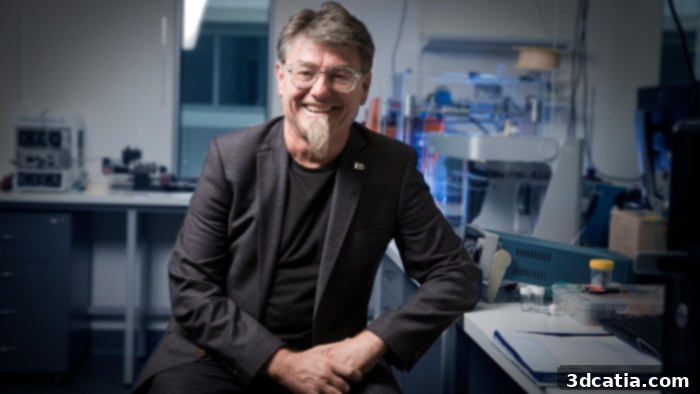
ACES Director Professor Gordon Wallace. (Photo credit: University of Wollongong)
The journey to this advanced bioink began with the meticulous isolation of a specific ulvan type polysaccharide. This particular polysaccharide was carefully sourced from a cultivated strain of Australian Ulvacean macroalgae, identified as Ul84. The choice of Ul84 was not arbitrary; researchers observed that its molecular structure bore a striking resemblance to glycosaminoglycans (GAGs) found in mammals. Glycosaminoglycans are crucial components of the extracellular matrix in human tissues, playing vital roles in cell adhesion, proliferation, differentiation, and the overall structural integrity and function of tissue matrices, particularly in skin. By integrating this Ul84-derived ulvan into a traditional gelatin methacryloyl (GelMA) based bioink, the scientists created a powerful hybrid material. GelMA itself is a widely used biopolymer in tissue engineering due to its excellent biocompatibility, biodegradability, and tunable mechanical properties, making it an excellent base for various bioprinting applications. The intelligent addition of ulvan to GelMA is a game-changer, acting as what researchers describe as “molecular reinforcement in 3D printed scaffolds.” This reinforcement is a critical feature, as it helps prevent scaffold contraction – a common issue in wound healing that can lead to excessive scarring and compromised tissue function, often resulting in poor cosmetic and functional outcomes. By minimizing this contraction, the ulvan-enhanced bioink offers the potential to significantly reduce scarring and improve the aesthetic and functional quality of regenerated tissue, leading to superior wound repair.
The innovative properties of this ulvan-enriched bioink extend beyond mere structural support. Ulvan has demonstrated a remarkable ability to actively influence cellular behavior in a beneficial way. Specifically, it promotes the proliferation of key cell types essential for robust skin regeneration, such as fibroblasts and keratinocytes. Fibroblasts are crucial for synthesizing the extracellular matrix, including collagen and elastin, which provide structural support and elasticity to the tissue. Keratinocytes, on the other hand, are responsible for forming the protective outer epidermal layer of the skin, crucial for barrier function. By encouraging the rapid growth and orchestrated activity of these cells, the ulvan bioink creates an optimal microenvironment that mimics natural biological cues, thereby facilitating accelerated and effective tissue repair. This targeted cellular stimulation, combined with the superior structural benefits, positions the ulvan bioink as a highly promising option for creating dermal-like structures that closely mimic the natural architecture and intricate function of healthy human skin.
Collaborative Research Driving Innovation in Bioprinting
This pioneering research, published under the title ‘3D bioprinting dermal-like structures using species-specific ulvan’, represents a collaborative triumph involving leading institutions and experts from diverse scientific backgrounds. The study was meticulously conducted by a dedicated team of researchers from the esteemed ARC Centre of Excellence for Electromaterial Science (ACES) and the University of Wollongong (UOW), in synergistic partnership with Venus Shell Systems. The multidisciplinary team brought together a wealth of knowledge and experience, including the visionary ACES Director Professor Gordon Wallace, alongside Associate Professor Stephen Beirne, Dr Zhilian Yue, and Xifang Chen, who contributed their expertise in materials science and bioprinting techniques. Essential contributions also came from Venus Shell System’s founder and director, Dr Pia Winberg, whose deep expertise in marine biology, sustainable aquaculture, and polysaccharide extraction was invaluable in sourcing and understanding the unique properties of ulvan. Furthermore, the collaboration extended internationally, significantly benefiting from the profound insights of stem cell biologist Professor Yan-Ru Lou from Fudan University, enriching the study with advanced cellular mechanisms and regenerative biology perspectives. This convergence of expertise from materials science, bioprinting, marine biotechnology, and stem cell biology underscores the complex, interdisciplinary nature of cutting-edge regenerative medicine research and is a testament to the power of scientific cooperation.
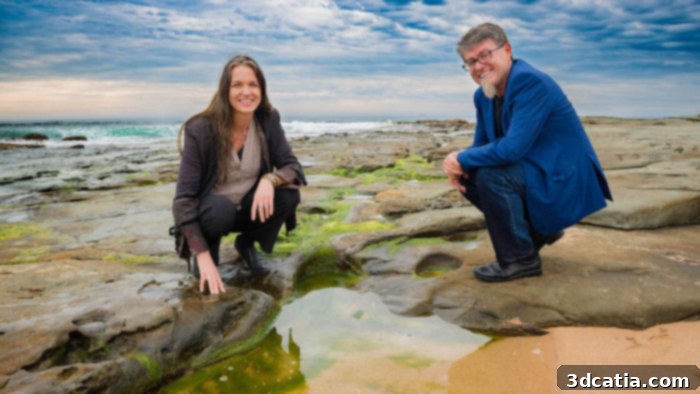
Venus Shell Systems Founder and Director Dr Pia Winberg with ACES Director Professor Gordon Wallace. (Photo credit: University of Wollongong)
Dr. Pia Winberg, a key figure in this groundbreaking research and the driving force behind Venus Shell Systems, expressed her profound enthusiasm for the scientific findings and their immense potential. She commented, “It has been so exciting to begin the journey of unlocking molecules from seaweed and delivering them to new heights in partnership with researchers in biomaterials.” Her excitement is particularly palpable regarding the striking biological mimicry discovered, as she adds, “Particularly when the molecules that we have found from a unique species of Australian green seaweed are uncannily similar in structure and function to the molecules that exists in human skin.” This uncanny resemblance is not just a fascinating scientific curiosity; it is a powerful indicator of ulvan’s potential as a biomimetic material, capable of seamlessly integrating with and supporting complex human biological processes without adverse reactions. Dr. Winberg’s forward-looking statement encapsulates the ultimate, patient-centric goal of such research: “It will be exciting when this translates into improving the health outcomes for patients with wounds.” The vision is clear: to move from laboratory discovery to tangible clinical benefits, offering new hope for individuals suffering from various types of wounds, including chronic non-healing ulcers (like diabetic foot ulcers), severe burns, and other debilitating skin injuries that are challenging to heal with conventional methods. The full scientific details of this innovative work are available for those interested in deeper exploration of the methodology and results. For more information, you can read the full paper HERE.
Future Implications and the Promise of Sustainable Bioprinting
The development of this ulvan-enriched bioink represents a significant stride forward not only for advanced wound healing strategies but also for the broader field of regenerative medicine and the development of sustainable biomaterials. By harnessing natural, renewable resources like seaweed, this research opens doors to more environmentally friendly, cost-effective, and potentially scalable solutions for a wide range of biomedical applications. Seaweed, being an abundant marine resource, offers a sustainable alternative to traditional animal-derived materials, which often come with ethical concerns, supply chain limitations, and potential immune responses in patients. The ability to precisely 3D bioprint dermal-like structures with enhanced cellular proliferation and significantly reduced scarring capabilities could revolutionize treatments for severe burns, chronic diabetic ulcers, pressure sores, and even facilitate reconstructive surgery. This would vastly improve patient quality of life, minimize disfigurement, and reduce long-term healthcare burdens associated with prolonged wound care. This breakthrough also paves the way for truly personalized medicine, where patient-specific tissues can be engineered with unprecedented precision and biological fidelity, matching individual needs for optimal outcomes.
Looking ahead, further research will likely focus on optimizing the bioink formulation through material science innovations, conducting extensive pre-clinical trials to confirm safety and efficacy, and eventually moving towards human clinical trials to validate the real-world benefits of ulvan-based bioprinted scaffolds. The successful translation of this cutting-edge technology from the laboratory bench to the patient’s bedside could mark a new era in reconstructive surgery, dermatology, and trauma care, providing innovative and biologically compatible tools for repairing damaged skin and other soft tissues. Moreover, the fundamental principles learned from successfully incorporating ulvan could inspire the development of other novel bioinks derived from sustainable natural sources, pushing the boundaries of what is technologically possible and biologically beneficial in biofabrication and personalized regenerative therapies globally.
What do you think about the novel bioink incorporating ulvan and its profound potential to transform wound healing and regenerative medicine? We invite you to share your valuable thoughts and perspectives in a comment below or join the exciting conversation on our Facebook, Twitter andLinkedIn pages! Don’t miss out on the latest advancements in 3D printing, biomaterials, and regenerative technologies – sign up for our free weeklyNewsletter here, and get the most recent 3D printing news straight to your inbox!
*Cover photo credit: Dinghua Yang