

Bambu Lab Unveils Trust Center: A New Era of Data Security and Transparency for 3D Printing Users
Bambu Lab, a prominent innovator in the consumer 3D printing market, has recently unveiled its new Trust Center, a dedicated online platform designed to significantly enhance transparency regarding data security and user privacy. This strategic move is a clear indication of the company’s commitment to fostering greater trust within its rapidly growing community. The launch of the Trust Center arrives at a particularly crucial juncture, following several months during which Bambu Lab navigated substantial community backlash. This controversy stemmed from firmware updates that critics argued severely curtailed local control functionalities and inadvertently pushed users towards a heightened reliance on cloud services for their 3D printing operations. For a significant segment of Bambu Lab’s user base, this new resource is not merely an informational hub; it represents a pivotal turning point, signaling a renewed dedication from the company to actively address user feedback and champion a more open and transparent approach within its increasingly interconnected 3D printing ecosystem. It suggests a proactive effort to bridge the communication gap and reassure users about the security and privacy of their data and devices in an evolving digital landscape.
At its core, the Bambu Lab Trust Center is conceived as a comprehensive, centralized repository for users seeking in-depth documentation on the company’s robust approach to cybersecurity, meticulous privacy compliance, and stringent device protection protocols. This commitment to detail is exemplified by the immediate availability of a substantial 38-page Security White Paper. This extensive document meticulously details the intricate technical foundations underpinning Bambu Lab’s entire technological stack, encompassing their innovative hardware designs, sophisticated software architectures, and resilient cloud-based systems. It offers an unprecedented look into the layers of security implemented from the ground up, designed to safeguard user data and ensure operational integrity. Furthermore, Bambu Lab proudly announced that it has successfully attained prestigious industry certifications, including ISO 27001, ISO 27701, and TRUSTe. These internationally recognized accolades are not just badges of honor; they represent independent, rigorous validation of Bambu Lab’s adherence to the highest global standards for information security management, privacy information management, and consumer privacy practices. Achieving these certifications underscores a profound commitment to best practices in data handling and privacy, aiming to instill greater confidence among its user community regarding the security posture of their 3D printing experience.
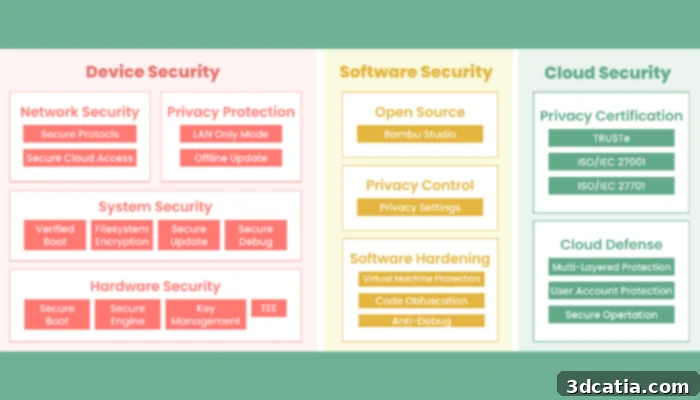
Bambu Lab’s new policy seeks to provide comprehensive technical documentation across six key areas, addressing user privacy and data security.
While the attainment of these prestigious certifications undeniably showcases Bambu Lab’s unwavering commitment to significantly enhancing its security practices, the timing of this announcement is particularly delicate. A palpable sense of caution and skepticism still lingers among many users, a direct consequence of the contentious firmware controversy that unfolded earlier this year. This earlier incident saw the implementation of updates that effectively restricted certain local access features on Bambu Lab printers, igniting a fervent debate within the vibrant 3D printing community. Users expressed deep concerns over losing direct control of their devices and becoming more dependent on external cloud infrastructure for basic operations. At the height of the controversy, Bambu Lab staunchly defended these changes, asserting their necessity as crucial preemptive measures to fortify their systems against potential cyberattacks and to robustly protect the integrity of all connected devices within its ecosystem. However, this explanation did not entirely quell the unease. A significant portion of the 3D printing community interpreted these modifications as a strategic shift towards a more restrictive, potentially closed ecosystem, moving away from the open and customizable spirit often celebrated in the maker space. This perceived pivot raised fundamental questions about user autonomy, data ownership, and the long-term vision for connected 3D printing.
In light of the aforementioned concerns and the collective desire for reassurance, the newly established Trust Center emerges as a direct and concerted effort to proactively address user anxieties. It aims to achieve this by offering unprecedented public insight into the minutiae of the company’s comprehensive cybersecurity practices. The platform goes beyond mere assurances, providing granular details about the multi-layered security architecture implemented across Bambu Lab’s diverse product lines. Specifically, it highlights the integration of robust hardware-level encryption within the X1, P1, A1, and H2 series printers – a foundational security measure designed to protect data at its source. Complementing this hardware security, the Trust Center also elaborates on extensive software hardening techniques, which involve meticulously securing the printer’s operating system and applications against potential exploits. Furthermore, it details the implementation of end-to-end encrypted cloud communication, ensuring that all data exchanges between printers, users, and Bambu Lab’s cloud services remain confidential and impervious to unauthorized interception. Crucially, the platform emphasizes enhanced privacy controls, including the reintroduction and reinforcement of features such as LAN-only and fully offline firmware modes. These options empower users with greater choice and control over their printer’s connectivity, directly addressing previous criticisms about excessive cloud reliance. To further bolster its security posture and demonstrate a proactive commitment to identifying and mitigating potential weaknesses, Bambu Lab has also launched a comprehensive bug bounty program. This initiative actively encourages and incentivizes independent external security researchers to rigorously test its systems, identify vulnerabilities, and responsibly report them, thereby leveraging the collective expertise of the global cybersecurity community to enhance the overall resilience of its products and services.
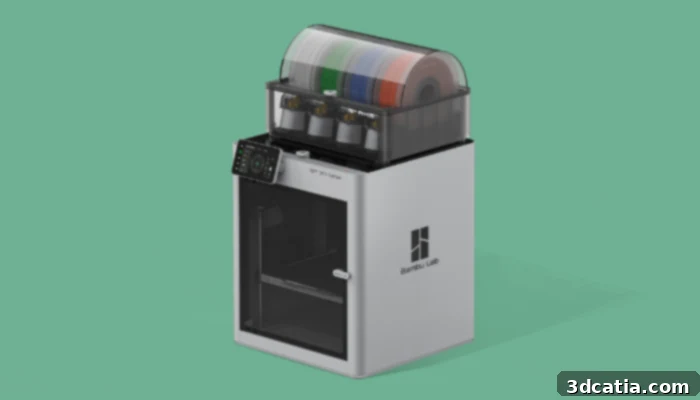
In 2025, Bambu Lab sold nearly 2.7 million 3D printers, indicating its substantial presence in the market.
Even with the significant array of technical measures and transparency initiatives detailed within the new Trust Center, a fundamental discourse continues to revolve around critical questions of user autonomy and comprehensive data control within the rapidly evolving landscape of connected 3D printing. This is not merely a challenge for Bambu Lab but a pervasive industry-wide conundrum. As modern 3D printers increasingly integrate into network environments and rely on digital ecosystems for advanced functionalities, the delicate balance between robust security protocols and seamless accessibility becomes an ever more intricate tightrope walk for manufacturers. The inherent tension lies in securing devices and user data from sophisticated cyber threats while simultaneously empowering users with unhindered control over their machines and the data they generate. Bambu Lab’s latest initiative unequivocally signals a dedicated, multi-faceted effort to systematically rebuild and fortify user trust through an unprecedented commitment to transparency. This strategy aims to demonstrate proactive listening and a willingness to adapt to user concerns. However, given the depth of previous skepticism and the inherent complexities of digital trust in a connected world, whether these extensive measures will prove sufficient to entirely reassure the most wary segments of its user base, and truly heal the divisions caused by past controversies, remains an open and evolving question that only time and consistent action will fully answer. The success of the Trust Center will likely be measured not just by its existence, but by its ongoing evolution, responsiveness, and how it translates into a tangible, positive user experience over the long term.
In the immediate term, the establishment of the Bambu Lab Trust Center stands as a truly notable and commendable step forward in the ongoing professionalization of data governance practices within the burgeoning consumer 3D printing sector. This initiative sets a significant precedent, raising the bar for how manufacturers in this space should approach and communicate about security and privacy. Beyond its direct implications for Bambu Lab, this development also profoundly underscores a broader, undeniable paradigm shift occurring across the entire additive manufacturing industry. In this new era, companies are no longer solely judged on their capacity to innovate rapidly and deliver groundbreaking hardware or software; they are increasingly challenged to meticulously navigate and robustly meet the escalating expectations of their global user base concerning fundamental digital rights. These expectations encompass stringent demands for enhanced privacy protections, unwavering corporate accountability for data handling, and ultimately, greater user control over their personal information and connected devices. The Trust Center serves as a powerful testament to the fact that success in modern technology markets is intrinsically linked not just to technological prowess, but also to ethical data stewardship and transparent user engagement. It heralds a future where trust, built on a foundation of openness and security, will be as critical a competitive differentiator as technical innovation itself, shaping how users choose their printing platforms and how the industry as a whole evolves to meet these critical demands.
We invite you, our valued readers and members of the global 3D printing community, to share your perspectives on these significant developments. What are your initial thoughts on Bambu Lab’s recent changes, particularly the introduction of their new Trust Center? Do you believe these initiatives effectively address the concerns surrounding data security, privacy, and user control? We encourage you to share your feedback and insights in the comments section below, or connect with us on our LinkedIn or Facebook pages. Additionally, for those eager to stay abreast of the very latest news and advancements in the additive manufacturing world, don’t forget to sign up for our complimentary weekly Newsletter, delivering essential 3D printing updates directly to your inbox. You can also explore a wealth of informative and engaging content by visiting our YouTube channel, where we showcase a variety of videos on cutting-edge 3D printing technologies and applications.
*All Photo Credits: Bambu Lab