
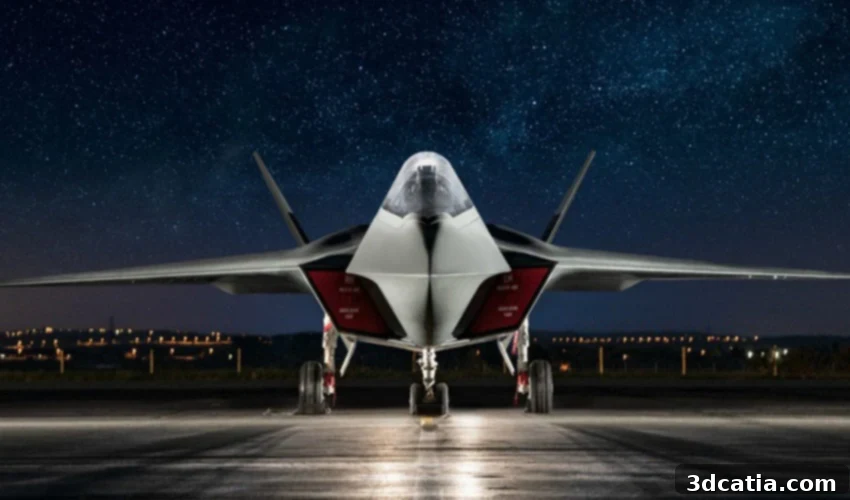
Revolutionizing Aerospace: BAE Systems and Renishaw Forge Strategic Partnership for Advanced 3D Printed Fighter Jet Components
BAE Systems, a global leader in the aerospace and defence sectors, has announced a significant stride forward in manufacturing innovation through the signing of a strategic memorandum of understanding (MOU) with Renishaw, a world-renowned engineering and scientific technology company. This landmark agreement focuses on the collaborative design and production of end-use parts for BAE Systems’ advanced fighter aircraft. The core objective of this partnership is to profoundly improve the entire production process, with a keen emphasis on dramatically reducing lead times, enhancing component quality, and unlocking new levels of design complexity and performance. This collaboration underscores a broader trend towards the industrialisation of 3D printing technologies, signalling that critical markets like aerospace are increasingly integrating additive manufacturing as a fundamental, primary production method rather than just for prototyping or niche applications. The implications of this partnership extend beyond specific parts, promising a transformative impact on the future of defence manufacturing.
The Evolving Landscape: Additive Manufacturing’s Critical Role in Aerospace and Defence
Aeronautics has long been at the forefront of adopting cutting-edge manufacturing techniques, and additive manufacturing (AM), particularly metal 3D printing, is no exception. From its early days, AM was embraced for rapid prototyping, enabling engineers to quickly iterate and validate designs. However, its capabilities rapidly expanded to encompass the production of highly complex spare parts and, crucially, high-performance end-use components. Today, we see 3D printed turbines, intricate engine parts, and even lightweight aircraft seating integrated into operational aircraft. The fundamental advantage of additive manufacturing lies in its ability to fundamentally rethink and optimize part design. It allows for the creation of geometries that are impossible or prohibitively expensive to produce with traditional methods, leading to parts that are not only more complex but, more importantly, significantly lighter and often stronger. This lightweighting directly translates into substantial fuel efficiencies and enhanced operational performance for aircraft.
The benefits extend to the supply chain as well. Additive manufacturing offers the potential for on-demand production, reducing the need for extensive inventories and mitigating risks associated with long lead times for traditional manufacturing. For BAE Systems, a company deeply invested in long-term strategic defence projects, these advantages are paramount. The market has recognized this potential, with industry analyses, such as those by Research and Markets, projecting robust growth for additive manufacturing in aerospace. Indeed, BAE Systems itself has been an early adopter and pioneer in this field for over two decades. Their commitment to this technology is evident in their historical activities; by 2016 alone, the British company had already 3D printed more than 2,500 parts across various platforms. Notably, they have successfully integrated 3D printed components into their advanced Typhoon fighter aircraft and have been leveraging diverse additive manufacturing solutions, including those from industry leaders like Stratasys, since as early as 2006. This extensive background positions BAE Systems as an experienced and knowledgeable partner in driving the industrialization of AM.
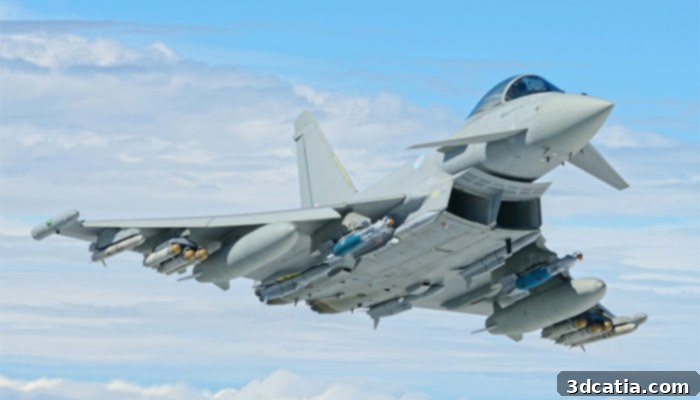
Additive manufacturing enabled BAE Systems to design the Typhoon fighter aircraft | Credits: BAE Systems
Forging Ahead: BAE Systems and Renishaw’s Collaborative Vision
BAE Systems and Renishaw, a long-standing partnership
The new memorandum of understanding solidifies and expands what has been a fruitful working relationship between BAE Systems and Renishaw. This protocol is meticulously designed to maximize the application and integration of additive manufacturing across both the aerospace and defence sectors. More than just a simple agreement, it actively opens up significant opportunities for joint research and development initiatives, fostering an environment of shared innovation and accelerated progress. Both companies bring distinct yet complementary expertise to the table: BAE Systems provides unparalleled insights into the stringent requirements of fighter aircraft design and defence applications, while Renishaw offers its profound knowledge in advanced manufacturing technologies, particularly in precision engineering and additive manufacturing systems.
Andy Schofield, Director of Manufacturing and Materials Strategy and Technology at BAE Systems, articulated the immense potential of this collaboration: “Additive manufacturing has brought and will continue to bring significant benefits to our industry. Renishaw is a global market leader, and we have been consistently impressed by the quality of the parts produced on its machines, which meet the demanding standards required for aerospace applications. This agreement allows us to create a more open and collaborative environment for sharing ideas, knowledge, and best practices. In an environment where technology is changing rapidly and budgets are challenging, collaboration and innovation are absolutely essential to maintain cutting-edge capability and ensure our fighter aircraft remain at the forefront of defence technology. I am very excited about the potential of this partnership to help us achieve these critical objectives, driving efficiency, performance, and strategic advantage.” This statement highlights the strategic necessity of such partnerships in today’s fast-paced technological landscape, emphasizing shared goals and mutual benefits.
Investment in Innovation: Renishaw’s Expertise Fuels BAE Systems’ Development
As a tangible commitment to this strategic collaboration, BAE Systems has made a significant investment, installing several advanced Renishaw 3D printers at its state-of-the-art product and process development centre located in Samlesbury, Lancashire. This facility is not merely a production site but a hub of innovation, covering an expansive 1,000 square metres and integrating a diverse array of advanced technologies. It serves as the crucible where future fighter aircraft components are imagined, designed, tested, and optimized for superior performance and reliability. The integration of Renishaw’s cutting-edge additive manufacturing systems into this critical facility will empower BAE Systems’ engineers to push the boundaries of design and material science, directly impacting the capabilities of next-generation fighter aircraft.
Renishaw’s Managing Director, Will Lee, further elaborated on the depth of their relationship and the future prospects during the signing of the MOU: “We already have an excellent relationship with BAE Systems, a relationship that has been meticulously developed and strengthened over many years through the successful application of our world-class metrology products. More recently, we have been working closely with them to comprehensively evaluate and understand the performance envelope and capabilities of our additive manufacturing systems. This extensive prior engagement has built a strong foundation of trust and mutual understanding. We eagerly anticipate the exciting opportunities that this strategic collaboration offers, allowing us to further develop and refine 3D technologies specifically for the incredibly demanding and mission-critical aerospace production applications that BAE Systems undertakes. This partnership represents a true convergence of expertise, aiming to set new benchmarks in aerospace manufacturing.” This statement underscores Renishaw’s confidence in its technology and its commitment to tailoring solutions for the unique challenges of the aerospace and defence sectors.
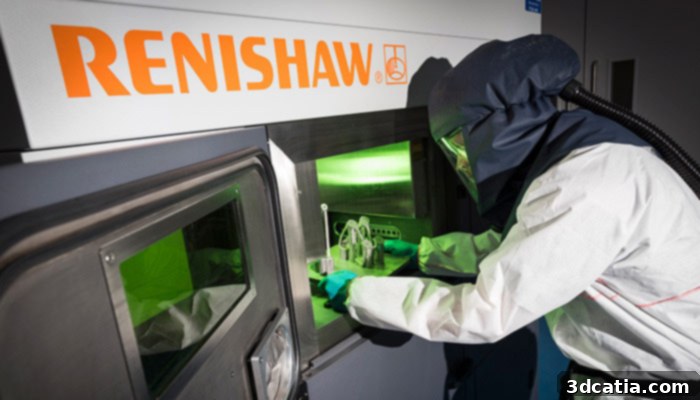
Renishaw is an expert in metal additive manufacturing
Driving the Future of Fighter Aircraft Production and Beyond
This strategic partnership between BAE Systems and Renishaw is poised to have a profound impact on the future of fighter aircraft production. By combining BAE Systems’ deep understanding of aerospace engineering and defence requirements with Renishaw’s advanced capabilities in metal additive manufacturing, the collaboration will significantly accelerate the integration of high-performance 3D printed components into critical applications. The immediate benefits will be felt in terms of dramatically reduced lead times for complex parts, a substantial increase in component quality and performance through optimized designs, and overall greater efficiency across the production lifecycle. These improvements are not just incremental; they represent a fundamental shift in how advanced aerospace components are conceived, manufactured, and deployed.
Moreover, the implications extend to the design philosophy itself. Additive manufacturing empowers engineers to create previously impossible geometries, allowing for part consolidation—where multiple components are merged into a single 3D printed part—thereby reducing assembly time, complexity, and potential failure points. This ultimately leads to lighter, stronger, and more resilient aircraft. The strategic imperative of maintaining cutting-edge capability in the global defence landscape cannot be overstated. With rapidly evolving threats and technological advancements, the ability to innovate quickly and produce superior components is paramount. This partnership exemplifies how collaboration and an open environment for knowledge sharing are absolutely essential to achieve and sustain this critical advantage, fostering a culture of continuous improvement and breakthrough innovation.
The Broader Impact: Industrializing 3D Printing for Critical Industries
While specifically targeting fighter aircraft, this collaboration between BAE Systems and Renishaw serves as a powerful model for the broader industrialization of additive manufacturing across various critical sectors. It highlights a definitive shift from AM being a tool primarily for prototyping to becoming a mature, reliable, and indispensable method for full-scale production of end-use parts. This transition has far-reaching implications for global supply chains, enabling greater resilience, localization, and on-demand manufacturing capabilities. Companies can reduce their reliance on geographically distant or single-source suppliers, enhancing security and agility.
Furthermore, the environmental benefits are considerable. Optimized, lightweight designs lead to less material usage and improved fuel efficiency in the operational phase of aircraft. The ability to produce complex parts with minimal waste, characteristic of additive manufacturing processes, also contributes to a more sustainable manufacturing footprint. As more industries recognize and adopt these advanced methodologies, we can anticipate a transformative era where customization, complexity, and performance are no longer trade-offs but inherent characteristics of the manufacturing process. The BAE Systems and Renishaw partnership is not just about making better fighter jets; it’s about pioneering the next generation of industrial manufacturing, setting a precedent for innovation and efficiency that will resonate across high-stakes engineering domains worldwide.
For additional details regarding BAE Systems’ initiatives in developing 3D printing capabilities for the defence and aerospace sector, you can find more information HERE.
What are your thoughts on this groundbreaking partnership and its potential impact on aerospace manufacturing? We invite you to share your insights in a comment below or join the discussion on our Facebook and Twitter pages! Your feedback helps us understand the community’s perspective on these significant advancements. Don’t forget to sign up for our free weekly Newsletter to receive all the latest news and updates in 3D printing delivered straight to your inbox, ensuring you stay at the forefront of industry developments!