

The Future of 3D Printing Wages: Navigating the Additive Manufacturing Talent Boom
The global employment landscape is in a perpetual state of transformation, with technological advancements continually reshaping job markets and creating entirely new industries. A seminal 2014 study by the Employment Orientation Board starkly highlighted this dynamic, predicting that over 50% of the jobs familiar to us today could vanish within our lifetimes. While such projections might initially seem daunting, they also underscore an exciting parallel trend: the consistent emergence of innovative sectors that generate novel roles and demand specialized skill sets. Among these burgeoning industries, 3D printing, also known as additive manufacturing, stands out as a prime example of disruptive innovation fostering significant economic growth and career opportunities. Understanding the remuneration landscape within this rapidly evolving field is crucial for both professionals and businesses. Recognizing this need, Alexander Daniels Global, a leading recruitment specialist, recently undertook a comprehensive study to shed light on the future of wages in the additive manufacturing industry.
Alexander Daniels Global’s extensive research delved deep into the compensation structures of the 3D printing sector. The study was meticulously conducted, gathering insights from a robust sample of 5,000 professionals and employees actively engaged across various facets of the 3D printing industry. This diverse group included individuals working for machinery manufacturers, materials developers, software engineers specializing in additive manufacturing applications, service bureaus, and end-users integrating 3D printing into their production lines. By encompassing such a broad spectrum of roles and company types, the study aimed to provide a holistic and accurate picture of salary trends and employment dynamics within this cutting-edge field, offering invaluable data for anyone interested in the economic trajectory of additive manufacturing.
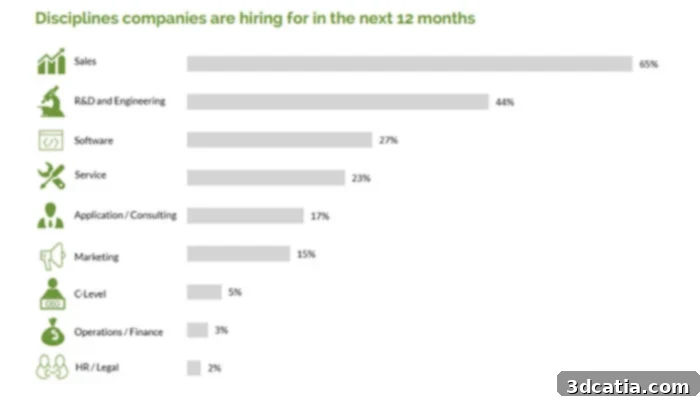
Additive Manufacturing: A Surge in Job Demand and the Intensifying Talent War
While additive manufacturing has a history spanning over three decades, its journey from a niche prototyping technology to a widely adopted industrial process is a relatively recent phenomenon. The past few years have witnessed an unprecedented acceleration in its application across sectors like aerospace, automotive, medical, and consumer goods. This rapid mainstream adoption, however, has created a significant disparity: the availability of adequately trained professionals has not kept pace with the explosive demand for talent. Consequently, the industry finds itself embroiled in a fierce “war for talent,” where companies are actively competing to recruit and retain individuals with the specialized skills needed to drive innovation and production.
The Alexander Daniels Global study strikingly underscored this talent deficit, revealing an unemployment rate for the additive manufacturing sector hovering remarkably close to 0%. This near-full employment figure is a clear indicator of the industry’s robustness and the urgent need for skilled labor. The scarcity of qualified individuals naturally empowers job seekers and compels companies to offer increasingly attractive compensation packages, often augmented with superior perks and benefits. Beyond competitive salaries, employers are leveraging comprehensive health plans, professional development opportunities, flexible work arrangements, and stock options to entice top-tier talent. The challenge is further compounded by the industry’s blistering growth rate, which consistently outstrips the speed at which new professionals can be trained and certified in the intricate disciplines of additive manufacturing. This scenario necessitates a dual strategy for businesses: not only must they develop compelling recruitment campaigns to attract new hires, but they must also invest significantly in strategies to retain their existing, invaluable staff through continuous upskilling and career progression pathways.
“The pace of growth in the industry is accelerating. Companies compete for the same talent, within a limited group of qualified profiles that don’t grow according to industry demands. Some skill sets such as materials science and R&D-centric functions have been in high demand which has dramatically increased wage levels as the talent war intensifies” – Nick Pearce, Director of Alexander Daniels Global.
Nick Pearce’s insightful commentary perfectly encapsulates the current state of affairs. The industry’s rapid expansion means that the pool of professionals with the right blend of experience and expertise remains limited. This creates a high-stakes environment where specialized knowledge, particularly in areas like advanced materials science, metallurgical engineering for additive processes, and research & development (R&D) functions, commands premium wages. These roles are critical for pushing the boundaries of what 3D printing can achieve, from developing new printable alloys and polymers to optimizing printing parameters for complex geometries. As the technology matures and finds even broader applications, the demand for these highly specific, often interdisciplinary skills will only continue to intensify, further driving up compensation for those possessing them.
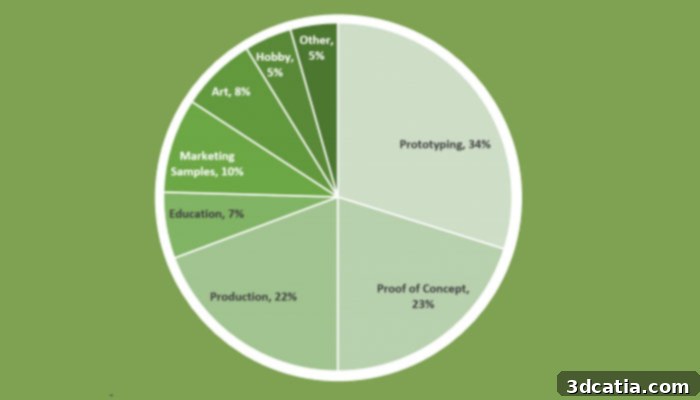
The applications of additive manufacturing.
Will Wages Continue to Rise in the Future of Additive Manufacturing?
The Alexander Daniels Global report provides a comprehensive analysis, drawing upon extensive market information, current recruitment trends, and detailed salary benchmarks to inform its conclusions and projections. Crucially, it doesn’t just present data but also offers actionable recommendations for companies seeking to attract, hire, and, most importantly, retain the best talent in this highly competitive industry. A key finding from their research highlights the experience distribution within the workforce: approximately 42% of professionals in 3D printing possess between 2-5 years of experience, indicating a significant mid-career segment. Conversely, a substantial 27% have less than two years of experience, underscoring the influx of new talent and the industry’s relatively young professional demographic. The study also mapped the geographical distribution of qualified staff, revealing North America as a leading hub with 40% of the talent pool, followed closely by Europe at 36%, and Asia contributing 16%.
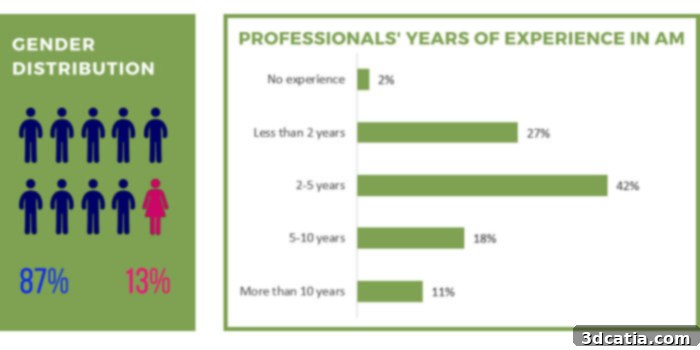
Years of experience for workers in the additive manufacturing industry.
According to the report’s forward-looking analysis, the “war for talent” is not expected to abate; in fact, it is projected to intensify significantly in the coming years. This competitive pressure will be particularly acute in critical functional areas such as advanced engineering, specialized sales (especially for complex industrial solutions), and information technology roles specifically tailored for additive manufacturing (e.g., software for design, simulation, process control, and data management). The study makes a bold prediction: wages in the 3D printing sector are anticipated to increase by a minimum of 9% this year alone. However, this projected increase is not uniform and will largely depend on the specific field or specialization within the industry and the individual’s level of experience and unique skill set. Interestingly, junior staff are identified as a demographic in particularly high demand. Their relative scarcity and the need for companies to build future talent pipelines mean that entry-level and early-career professionals are likely to experience some of the most substantial salary increases, making the industry particularly attractive for recent graduates or those looking to pivot their careers.
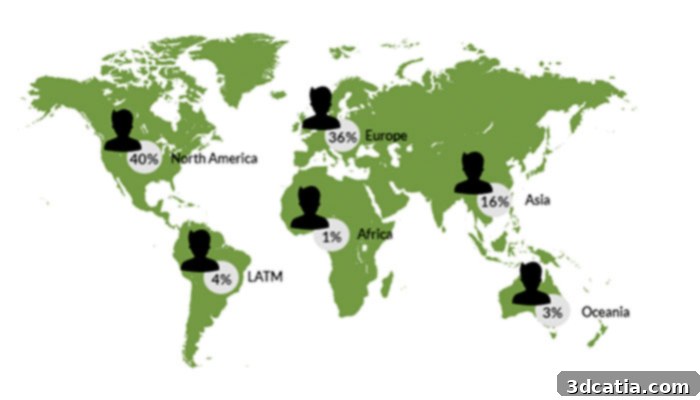
Geographical distribution of 3D printing workers.
Leading Employers and Compensation Strategies in 3D Printing
For employers navigating this dynamic talent landscape, the report offers valuable insights into what makes certain companies particularly attractive. HP, with its significant investment and innovation in multi-jet fusion technology, is cited as one of the most desirable employers in the market. Its strong brand, global reach, and commitment to pushing technological boundaries likely contribute to its appeal. Similarly, Materialise and EOS, both long-standing pioneers and leaders in their respective segments of the 3D printing ecosystem (software and materials for Materialise, industrial systems for EOS), are recognized for their attractiveness within their specialized domains. These companies often offer cutting-edge projects, stable work environments, and opportunities for significant professional development. However, when it comes to pure remuneration, GE Additive stands out. According to the Alexander Daniels Global report, GE Additive is noted for offering some of the best salaries in the entire 3D printing industry. This premium compensation reflects GE’s strategic focus on industrial-scale additive manufacturing for high-value applications, demanding top-tier engineering and technical expertise.
Beyond base salaries, attractive compensation in the additive manufacturing sector often includes a comprehensive suite of benefits. These can range from performance-based bonuses, stock options or equity participation, robust health and wellness programs, generous paid time off, and substantial professional development budgets for certifications, conferences, and advanced degrees. Companies are increasingly recognizing that career growth opportunities, a positive work culture, flexible working arrangements, and engagement in groundbreaking projects are just as vital as competitive pay in securing and retaining top talent. For job seekers, understanding these broader compensation packages is crucial for evaluating opportunities, while for employers, a holistic approach to employee value proposition is key to winning the talent war.
Embracing the Evolving Skill Landscape and Future Outlook
The future of 3D printing promises continued evolution, driven by advancements in materials, software, and hardware, as well as increasing integration with other Industry 4.0 technologies like AI, machine learning, and data analytics. This means the skill sets in demand will also continue to evolve. Professionals who can bridge the gap between traditional engineering disciplines and digital manufacturing will be highly prized. This includes expertise in computational design, topology optimization, advanced simulation techniques, and the ability to work with complex data sets to improve print quality and efficiency. Moreover, as additive manufacturing scales up, there will be an increased need for professionals in supply chain management specifically for 3D printed components, quality assurance, and automated post-processing. The industry is not just about printing; it’s about a complete digital thread from design to final part. Continuous learning and upskilling will be paramount for anyone looking to build a sustainable career in this dynamic field.
The additive manufacturing industry is undoubtedly a landscape of immense opportunity. The ongoing talent deficit, coupled with relentless innovation and expanding applications, ensures that wages and career prospects will remain highly attractive for the foreseeable future. For individuals considering a career in this field, investing in specialized education and acquiring hands-on experience in areas like materials science, design for additive manufacturing, or process engineering will yield significant returns. For businesses, developing strong internal training programs, fostering a culture of innovation, and offering compelling holistic compensation packages will be essential to thrive in this competitive environment. The journey of 3D printing from a niche technology to a cornerstone of modern manufacturing is ongoing, and its workforce will continue to be at the forefront of this exciting transformation.
For those eager to delve deeper into the specifics of salaries and the broader trends shaping the 3D printing industry, the comprehensive Alexander Daniels Global study can be accessed and read in its entirety here. This report offers granular data and expert analysis that is invaluable for professionals, students, and businesses alike.
What are your thoughts on the current wage trends and the exciting future of the 3D printing industry? Do you foresee these salary increases continuing, or do you anticipate new challenges? Share your insights and join the conversation by leaving a comment below or engaging with us on our Facebook and Twitter pages! Don’t miss out on the latest advancements and news shaping this revolutionary sector—make sure to sign up for our free weekly Newsletter, delivering all the essential updates in 3D printing straight to your inbox!