
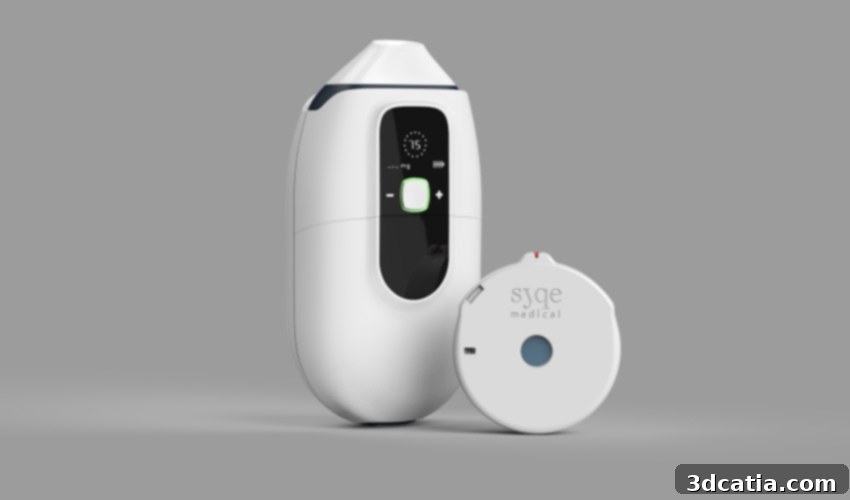
Syqe Medical: Pioneering Precision Medical Cannabis with 3D Printing Innovation
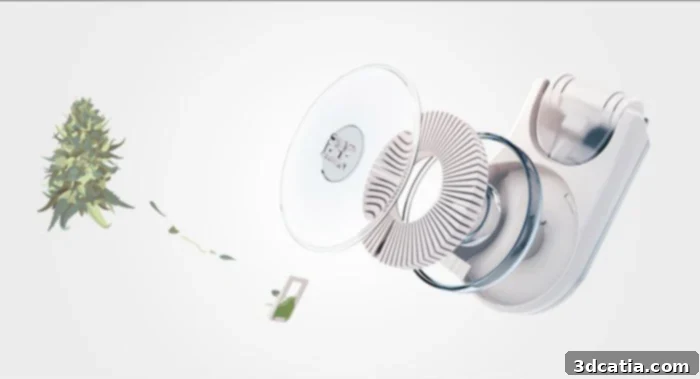
In the evolving landscape of pharmaceutical innovation, Syqe Medical, a dynamic Israeli startup, stands out for its groundbreaking work in developing a 3D-printed cannabis inhaler. This revolutionary device is designed to provide patients with a precise, tailor-made pharmaceutical treatment, addressing a critical need in medical cannabis delivery. By transforming raw plant material into a pharmaceutical-grade product, Syqe Medical ensures that patients receive the exact dosage required for their therapeutic needs. The inhaler’s sophisticated system, utilizing pre-loaded cartridges, offers unparalleled selective dosage accuracy, down to an impressive 100 micrograms. This level of precision is vital for effective and safe medical treatment, especially with potent compounds like cannabis. A key enabler of this innovation has been additive manufacturing; the various intricate parts of this medical solution were meticulously produced using 3D printing technology. This not only significantly accelerated Syqe Medical’s product design and development cycles but also dramatically shortened its time-to-market. To delve deeper into this transformative pharmaceutical device and understand the profound impact of additive manufacturing on the medical sector, we had the distinct pleasure of speaking with Itay Kurgan, Product Manager at Syqe Medical.
Itay Kurgan’s Journey: A Decade of 3D Printing in Industrial Design
“My name is Itay Kurgan, and I currently serve as a Product Manager at Syqe Medical,” Itay began, introducing himself. “My professional background is rooted in industrial design, a field where I’ve actively engaged with 3D printing technology since 2010. My journey with additive manufacturing began during my student years at HIT (Holon Institute of Technology), marking over a decade of hands-on experience and fascination with this transformative technology.”
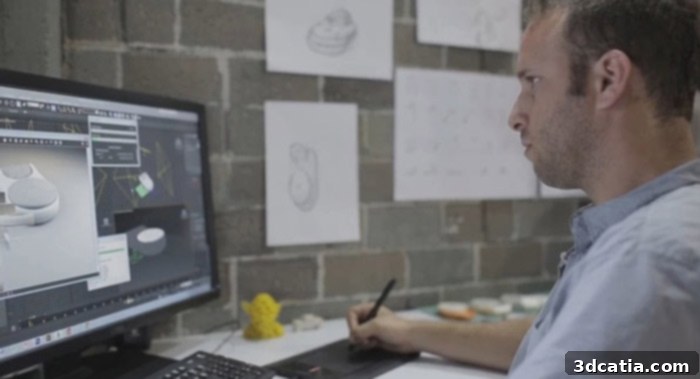
3D printing significantly accelerates the manufacturing process and product development lifecycle at Syqe Medical.
He continued, reflecting on the early days of 3D printing’s integration into academia: “When 3D printers were first introduced to us in a CAD course, the prevailing sentiment was that CAD software served primarily for executing designs, not for conceptualization, and that 3D printers were merely prototyping tools, not serious manufacturing instruments. Despite these initial perceptions, I was profoundly intrigued. Over the subsequent three years of my studies, I consistently sought out opportunities and found excuses to incorporate these printers into my various projects, exploring their potential far beyond the established norms of the time.”
“Towards the culmination of my academic career, a pivotal opportunity arose: a position at Syqe Medical as an industrial designer. Seizing this chance, I advocated for the adoption of Stratasys 3D printers – a significant investment for what was then a fledgling company of only five employees with very limited funding. Syqe Medical embraced these printers wholeheartedly, quickly integrating them into our development workflow. Remarkably, my final academic project ultimately became our very first cannabis inhaler, a device whose critical components were extensively 3D printed. Today, my primary responsibility involves accelerating Syqe’s comprehensive research and development processes, a mission that would be virtually impossible to achieve without the indispensable capabilities provided by 3D printers.”
The Genesis of Syqe Medical: Transforming Cannabis into a Pharmaceutical Standard
The innovative vision behind Syqe Medical originated from its founder, Perry Davidson, who embarked on a mission to tackle one of the most formidable challenges within the pharmaceutical industry: how to effectively transform a complex botanical like cannabis into a precisely inhaled pharmaceutical product. His goal was to achieve this transformation while upholding the stringent safety and precision standards expected of conventional pharmaceutical treatments, thereby making medical cannabis a more accessible and reliable therapeutic option for a broader patient population.
Perry Davidson elaborates on his motivation: “I founded Syqe because I was deeply frustrated by the glaring inability of the pharmaceutical industry to convert cannabis into a conventional, standardized treatment capable of assisting as many patients as possible. This realization spurred us to take on that challenge ourselves, dedicating our efforts to bridging this critical gap. The result is the Syqe Inhaler – the world’s first platform specifically designed for the administration of whole herbal drugs that not only meets but also sets new pharmaceutical benchmarks.” This commitment to precision and standardization is what truly distinguishes Syqe Medical in the burgeoning medical cannabis market.
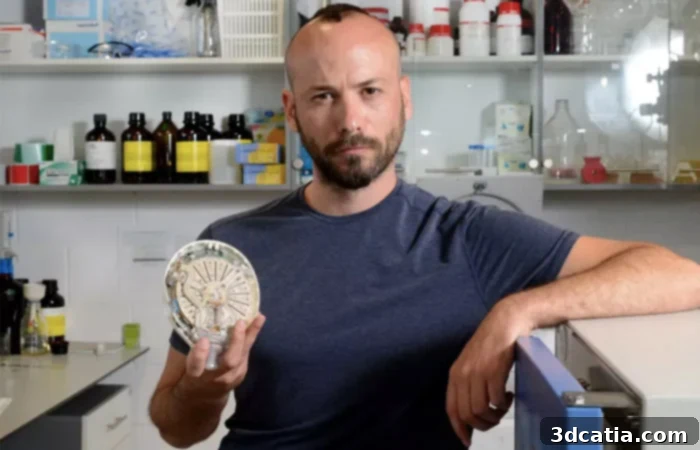
Perry Davidson, founder of Syqe Medical, envisioned transforming cannabis into a standardized pharmaceutical product.
Additive Manufacturing’s Transformative Role in Inhaler Production
At Syqe Medical, 3D printing is not merely a tool; it has become an integral extension of our comprehensive development toolbox, a powerful accelerator for our entire thinking process, and an absolutely essential element underpinning our success. We leverage 3D printing technologies across virtually all stages of our product manufacturing process, from the initial conceptual design phases right through to final production. Operating as a highly multidisciplinary team, each department within Syqe Medical uniquely harnesses the capabilities of 3D technologies. For instance, the Product and Design team utilizes it to rapidly prototype and iterate new ideas, explore innovative shapes, and integrate enhanced functionalities. Our Biology team relies on 3D printing for crafting specialized and unique tooling requirements tailored to their specific research needs. The R&D team critically depends on it for rapid prototyping, fabricating precise templates, and assembling complex production facilities. Even our clinical team employs functional prototypes of our inhaler and its accessories, all produced via 3D printing, for conducting rigorous clinical trials, demonstrating the technology’s pervasive impact.
Most of our 3D printers are strategically located within our R&D offices. This deliberate placement serves as a constant reminder to our staff that the continuous use of these advanced machines is an intrinsic and expected part of our ongoing development process. Our employees are granted relatively unrestricted access to these 3D printers, a policy that profoundly influences and liberates their creative thinking. This accessibility has organically fostered a sense of ownership and a perceived need to utilize the printers, even among team members who had no prior experience with CAD software, effectively motivating them to acquire fundamental modeling skills. To ensure proficiency and safety, anyone eager to use a 3D printer receives comprehensive training from an experienced colleague; we intentionally do not rely on a single, dedicated person for this crucial internal knowledge transfer, promoting a collaborative and self-sufficient environment.
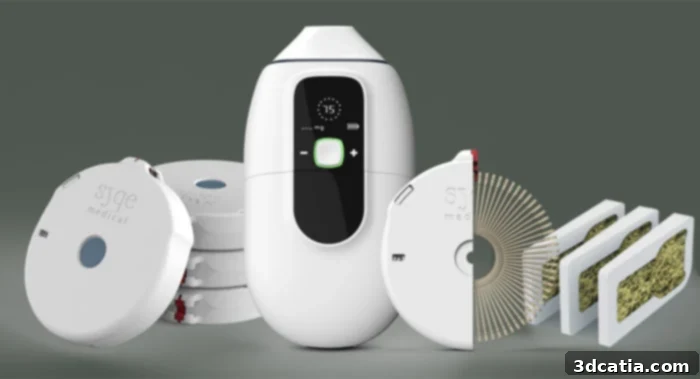
Our array of 3D printers is diverse, encompassing everything from accessible FDM desktop machines, perfect for initial conceptualization and quick checks, to highly sophisticated and complex systems. This includes advanced models such as the Stratasys Connex, renowned for its multi-material capabilities and precision, and the cutting-edge new XJET Carmel, which excels in metal and ceramic additive manufacturing. This broad spectrum of technology allows us to work with an extensive range of materials, including various plastics, rubber imitations for flexible components, high-performance ceramics, durable metals for structural parts, and even specialized capabilities for printing intricate circuits. This versatility is crucial for developing a highly complex medical device like our inhaler.
Unlocking Potential: The Core Advantages of Additive Manufacturing
For us at Syqe Medical, the numerous advantages offered by additive manufacturing are profoundly interconnected, creating a powerful synergy. This transformative process fundamentally begins with a significant shift in the mindset of our designers and engineers. Traditionally, their creativity was often constrained by the limitations of conventional manufacturing technologies, dictated by specific geometries and available materials. Now, empowered by 3D printing, they can design and manufacture with an unprecedented array of new possibilities and freedoms, pushing the boundaries of what was previously conceivable.
This liberation of design leads directly to superior product development, executed at a much faster pace. Designs are no longer compromised to fit the capabilities of a manufacturing machine; instead, they are meticulously crafted to perfectly serve their intended function. The strategic decision to have 3D printers readily available on-site, in close proximity to the users, inherently encourages a higher volume of design iterations. This rapid prototyping and feedback loop, in turn, accelerates the entire development process, yielding substantial benefits in terms of cost reduction over the product lifecycle. While the initial investment in advanced printers and their associated materials can be significant, the real financial burden and risk in new product development typically lie in the time it takes to bring a product to market. By drastically accelerating both development and manufacturing processes through additive manufacturing, we achieve a much faster launch date, which directly translates into a quicker and more robust return on investment.
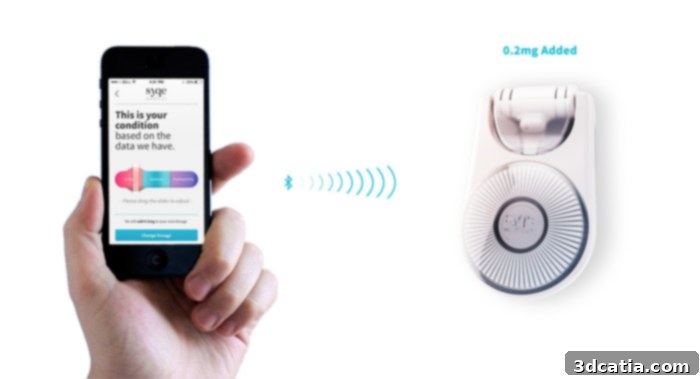
A further testament to the inhaler’s advanced design is its connectivity to a mobile application, providing users with sophisticated control over the precise dosage of medical cannabis. This digital integration enhances patient safety, adherence, and personalization of treatment, making the Syqe Inhaler a truly modern medical device.
The Future Horizon: Additive Manufacturing in the Pharmaceutical Sector
We are currently witnessing an era of extraordinary developments within the pharmaceutical industry, profoundly influenced by the daily operational use of 3D printers. The concept of tailor-made drugs, once a futuristic vision, is becoming increasingly sophisticated and widespread, largely thanks to the bespoke manufacturing capabilities offered by 3D printers. This technology allows for the precise customization of medication, adjusting dosage, release profiles, and even pill shapes to fit individual patient needs, which is a significant leap forward from the traditional “one-size-fits-all” approach. Another monumental development, in my estimation, is the potential for organ transplantation through bioprinting. The immense complexity and ingenious solutions required for creating viable, functional organs are arguably impossible to achieve without the intricate capabilities and precision offered by advanced 3D printing technologies, signaling a new frontier in regenerative medicine.
Itay Kurgan’s Final Insight: Embracing 3D Printing for Future Innovation
As a concluding thought for our readers, I want to emphasize a crucial point: 3D printing, while incredibly powerful, is not a universal substitute for all other production methods, nor should it be treated as such – at least not yet. A discerning understanding of existing 3D printing capabilities and a clear assessment of your specific manufacturing requirements are paramount for successful integration. Nevertheless, 3D printers represent an invaluable asset, and I wholeheartedly advocate for their internal adoption as an integral part of any product development process. My strong recommendation includes a particular emphasis on fostering free and uninhibited use within the company, meaning minimal limitations on usage duration, volume, or the personnel who can access these machines. Design exploration, rapid prototyping, and even critical clinical trials can all benefit considerably from such readily available devices. By embracing this approach, the products of the future will not only reach the market faster but will also be intrinsically superior to those manufactured through purely traditional means, embodying a new standard of innovation and efficacy. You can find more comprehensive information about our work and innovations on our official website HERE.
The Syqe Medical inhaler represents a significant leap forward in precision medical cannabis delivery, powered by the transformative potential of 3D printing. What are your thoughts on this innovative approach to pharmaceutical treatment? We encourage you to share your perspectives in a comment below or join the conversation on our Facebook and Twitter pages! Don’t forget to sign up for our free weekly Newsletter to stay updated with all the latest news, breakthroughs, and insights in the dynamic world of 3D printing, delivered directly to your inbox!