
Metal Additive Manufacturing Set for Explosive Growth: SmarTech Analysis Projects $228 Billion in Production Opportunities
The landscape of global manufacturing is undergoing a profound transformation, driven significantly by advancements in additive manufacturing. At the forefront of this evolution, one of the industry’s leading authorities in analysis and consulting for the additive manufacturing (AM) market – SmarTech Analysis – has recently unveiled a landmark report. This comprehensive study delves deep into the current state and future trajectory of metal additive manufacturing, with a particular focus on its burgeoning production opportunities. The findings are nothing short of astonishing: SmarTech Analysis anticipates that metal AM will be responsible for generating an impressive $228 billion worth of components over the course of the coming decade. This substantial figure not only underscores the immense potential of this dynamic industry but also signals a pivotal shift in how parts are designed, produced, and integrated into various supply chains worldwide.
For over seven years, SmarTech Analysis has meticulously accumulated extensive data and invaluable experience, culminating in this report that offers critical insights into the key industries and innovative applications currently propelling the metal AM sector forward. The optimistic outlook presented by SmarTech aligns remarkably with broader industry trends. If we consider Gartner’s Hype Cycle for 3D printing, published earlier this year, metal 3D printing was prominently featured on the rise, indicating its accelerating progression towards widespread adoption and maturity. The cycle specifically predicted that by 2020, 3D printed metals and alloys would emerge as a critical element in supply chains, particularly for replacement parts across diverse sectors including commercial, military, and even certain consumer markets. This forward-looking analysis from Gartner finds strong validation and further elaboration within SmarTech Analysis’s detailed research, reinforcing the industry’s trajectory towards mainstream integration.
Transforming Manufacturing: Key Market Opportunities for Metal AM
The consulting firm emphasizes that to accurately gauge the future potential of metal additive manufacturing, it was imperative to move beyond merely identifying primary market elements such as different printing technologies or the resulting hardware systems. SmarTech Analysis explains their strategic shift in perspective: “As metal additive technologies enter a more significant phase of production-oriented use where parts created are intended to enter service in marketable products or systems, a new opportunity analysis based on quantifying the production of parts by their intended use scenarios has become necessary in further assessing opportunities for growth and advancement.” This approach signifies a mature understanding of the market, acknowledging that the real value now lies in the practical, real-world application and deployment of AM-produced components rather than just the underlying technology. This holistic view allows for a more precise forecast of where and how metal AM will create tangible economic impact.
Driving Factors Behind Metal AM’s Production Boom
Several key factors are converging to propel metal AM into this era of production dominance. Firstly, technological advancements have led to more robust, reliable, and faster metal 3D printing systems. Powder Bed Fusion (PBF) technologies, including Selective Laser Melting (SLM) and Electron Beam Melting (EBM), have seen significant improvements in build speeds, part quality, and machine repeatability. Newer technologies like Binder Jetting are also gaining traction, offering higher throughput capabilities and lower per-part costs, making them ideal for mass production scenarios. Secondly, the expansion of material portfolios now includes a wider range of high-performance alloys suitable for demanding industrial applications, from aerospace to medical implants. Finally, the growing understanding of Design for Additive Manufacturing (DfAM) principles is unlocking unprecedented design freedom, allowing engineers to create optimized parts that were previously impossible to manufacture with traditional methods. These combined forces are creating fertile ground for metal AM to transition from a prototyping tool to a critical production technology.
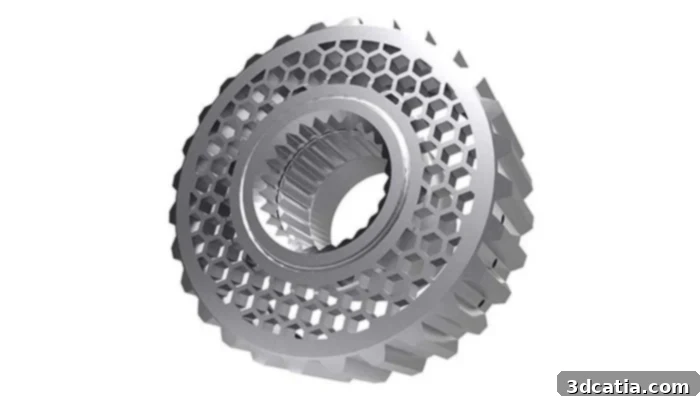
Designers are consolidating assemblies into fewer parts which can only be produced by additive manufacturing, highlighting the transformative power of DfAM.
The Pivotal Shift From Prototyping to Production Dominance
One of the most significant predictions from SmarTech Analysis’s report is the impending shift in metal AM’s primary application. The report forecasts that, with the notable exception of dental applications – an area where metal AM is already a well-established production method for custom crowns, bridges, and partials – the broader metal AM industry will transition from a prototyping-dominant technology to one primarily driven by production components. This monumental shift is expected to materialize by the end of 2022. This projection is not to suggest that prototyping applications will disappear; indeed, metal AM will continue to be an invaluable tool for rapid iteration and design validation. However, the report indicates a clear reorientation of the market’s value proposition.
Ultimately, production applications are anticipated to command a substantial 60 percent of the total market value generated from all produced components annually by the close of the forecast period. This represents a paradigm shift, as manufacturers increasingly recognize the economic and performance benefits of additive manufacturing for end-use parts. The implications of this transition are far-reaching, affecting supply chain strategies, investment decisions in new hardware and materials, and the development of specialized post-processing solutions. Industries like aerospace, medical, and automotive are leading this charge, leveraging metal AM for lightweight structural components, customized implants, and highly complex, performance-critical parts that deliver superior functionality and efficiency. This move towards production signifies the technology’s maturity and its growing ability to deliver consistent quality and scalability required for industrial adoption.
Evolving Production Structure: Innovation and Cost Optimization
The coming decade is expected to witness several profound trends impacting the production structure of metal additive technologies. These trends are not merely incremental improvements but rather fundamental changes that will redefine the economics and capabilities of metal AM. Most significantly, considerable efforts are being poured into Design for Additive Manufacturing (DfAM) methodologies. Engineers and designers are increasingly modeling parts with geometries that are only feasible through AM, leveraging its unique ability to create intricate internal structures, topology-optimized forms, and consolidated assemblies. This design freedom allows for previously unattainable performance, weight reduction, and functional integration, making AM an indispensable tool for innovation.
The Impact of Design for Additive Manufacturing (DfAM)
DfAM goes beyond simply adapting existing designs for 3D printing; it involves rethinking part functionality from the ground up to fully exploit the capabilities of additive processes. This includes implementing features like lattice structures for lightweighting and enhanced strength, complex internal channels for optimized fluid flow or heat exchange, and consolidating multiple components into a single, integrated part. Part consolidation, in particular, offers significant benefits by reducing assembly time, inventory complexity, and potential points of failure, thereby improving overall system reliability and cost-effectiveness. Industries such as aerospace are already using DfAM to create lighter, more efficient components for aircraft and rockets, while the medical sector benefits from highly customized implants and surgical tools tailored to individual patient needs. The ability to produce such “impossible geometries” is a core differentiator for metal AM, driving its adoption for high-value production applications.
Enhancing Efficiency and Reducing Production Costs
Parallel to advancements in design, significant strides are being made in improving the efficiency and reducing the production costs associated with individual metal AM technologies. These improvements are crucial for scaling up production and making additive manufacturing competitive with traditional methods for a wider range of applications. Key areas of focus include better material handling and advanced post-processing techniques. Automated material handling systems are minimizing waste, improving powder recycling, and enhancing operator safety, all of which contribute to lower operational costs. Furthermore, innovations in post-processing – encompassing automated depowdering, support structure removal, heat treatments, and surface finishing – are streamlining the workflow and reducing the manual labor traditionally associated with AM parts.
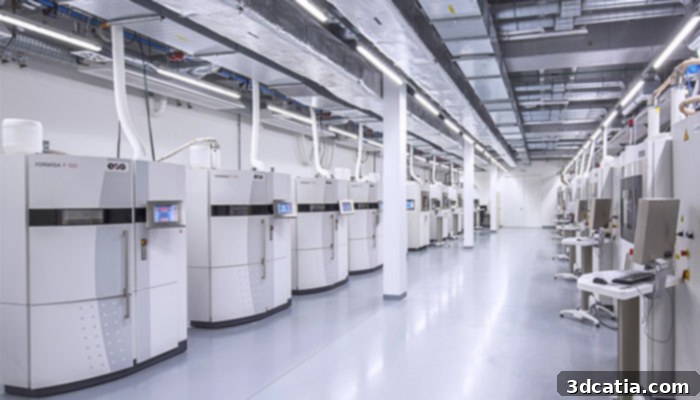
SmarTech anticipates that production costs associated with use of metal AM will fall by 40 percent on average, per-part, during the forecast period | Credits: EOS
The cumulative effect of these technological and process improvements is projected to be substantial. SmarTech Analysis predicts that production costs associated with utilizing metal AM will fall by an impressive 40 percent on average, on a per-part basis, by the end of the forecast period. This dramatic cost reduction is a critical enabler for wider adoption, allowing metal AM to penetrate markets where it was previously cost-prohibitive. As costs decrease and efficiency increases, more manufacturers will find it economically viable to integrate metal additive manufacturing into their production lines, fueling further growth and innovation. This optimization creates a virtuous cycle, attracting greater investment and accelerating the development of even more advanced solutions for the future of manufacturing.
The Future is Additive: Challenges and Unprecedented Opportunities
Despite the monumental opportunities, the metal AM market does face certain challenges. These include the initial capital expenditure for advanced machinery, the continuous need for material innovation, standardization of processes and materials, and the development of a highly skilled workforce capable of operating and maintaining these sophisticated systems. However, SmarTech Analysis remains confidently optimistic, projecting that the industry is well-equipped to overcome these hurdles as it matures. The report concludes that metal AM will continue to gradually amass more and more production-oriented business cases, transforming niche applications into mainstream manufacturing processes. This sustained growth trajectory is expected to result in hundreds of billions of dollars in economic impact to the global manufacturing market over the next decade, solidifying additive manufacturing’s position as a cornerstone of modern industrial production. For those seeking to delve deeper into these transformative insights, more information is available directly from SmarTech Analysis HERE.
What are your thoughts on these groundbreaking predictions for the AM metal market? Do you envision an even faster acceleration or foresee different challenges? We encourage you to share your perspective in a comment below or join the conversation on our Facebook and Twitter pages! To stay at the forefront of this rapidly evolving industry and receive all the latest news about 3D printing directly to your inbox, sign up for our free weekly Newsletter.