
Exploring the Future of Additive Manufacturing: Top 5 3D Printing Videos This Week
Welcome to your essential weekly dose of 3D printing innovation! This week, we dive deep into the fascinating world of additive manufacturing, exploring groundbreaking advancements that are shaping industries and daily life. Our curated selection of the top five videos brings you everything from revolutionary medical solutions and quieter 3D printing experiences for your home setup, to the future of construction, insightful manufacturing comparisons, and a comprehensive look at 3D printing’s incredible journey. Get ready for an audio-visual journey that will inform, inspire, and keep you updated on the dynamic landscape of 3D printing technology. Discover how this transformative technology is evolving at an unprecedented pace, driving customization, efficiency, and sustainability across various sectors. From intricate patient-specific devices to the structural integrity of next-generation homes, these videos offer a unique perspective on the power and potential of 3D printing. Let’s explore the cutting edge of this exciting field together!
Top 1: Let’s Talk Practical Silicone 3D Printing with Odapt
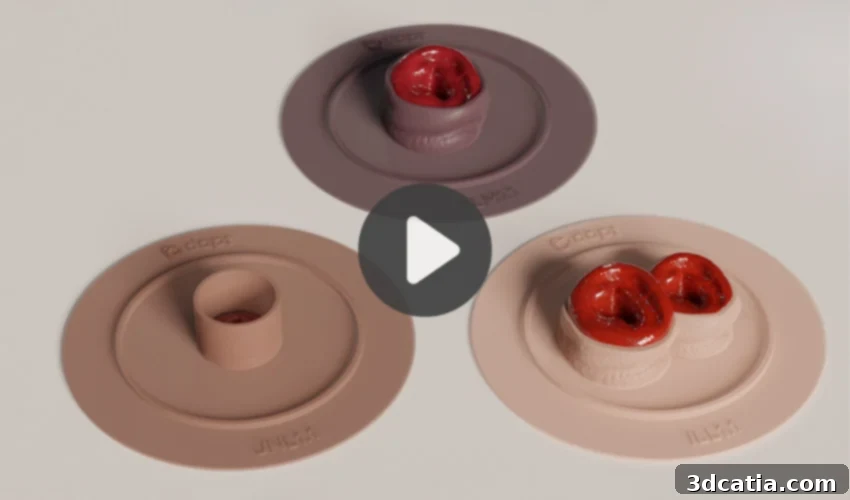
In this insightful 3Dnatives interview, we sit down with the visionary co-founders of Odapt, a company at the forefront of medical additive manufacturing. Their pioneering work involves developing a 3D printed wafer meticulously designed to eliminate leaks for individuals using ostomy bags. The genesis of this innovative idea came from a direct encounter with a patient suffering from an ostomy bag leak, which highlighted a significant unmet need in healthcare. Odapt’s solution leverages biocompatible silicone and advanced Liquid Deposition Modeling (LDM) technology, allowing for unparalleled customization that perfectly conforms to an individual patient’s unique anatomy. This patient-centric approach not only improves quality of life but also champions sustainability, customization, and inclusivity within medical device development.
The co-founders express strong optimism about the current landscape for additive manufacturing in healthcare, foreseeing substantial advancements, particularly with the expanding capabilities of silicone 3D printing. They believe this technology is perfectly positioned to address a wide array of existing gaps in healthcare provision, offering highly personalized solutions that traditional manufacturing methods simply cannot match. The potential applications for their solution extend far beyond ostomy wafers, encompassing a vast range of custom medical devices, prosthetics, and even surgical models, all tailored to meet the specific requirements of patients. This represents a significant leap towards a future where medical care is truly individualized, enhancing both efficacy and patient comfort through cutting-edge 3D printing.
Top 2: Quieter Printing Update for the Bambu Lab X1
For many 3D printer enthusiasts and professionals, printer noise can be a significant drawback, especially in home or office environments. This short yet incredibly valuable update video brings fantastic news for owners of the Bambu Lab X1 printer. The latest firmware update introduces a game-changing feature: advanced motor noise cancellation. This technological advancement directly addresses one of the most common complaints among 3D printer users, promising a much more serene printing experience.
The video provides quick, easy-to-follow tips on how to enable this crucial update, a process that typically takes around 10 minutes. Once the firmware is successfully installed, users are encouraged to perform a test print to experience the dramatic reduction in noise during high-speed printing operations. This isn’t just about comfort; a quieter printer can also lead to a more pleasant working environment, allowing for greater focus and less disruption. The Bambu Lab X1’s commitment to continuous improvement through firmware updates demonstrates the evolving nature of personal 3D printing technology, where user experience is paramount. This update not only enhances the quiet operation of your updated X1 but also provides valuable insights into how easily users can perform essential maintenance and upgrades themselves, extending the life and improving the functionality of their beloved 3D printers. Enjoy a significantly more peaceful additive manufacturing journey!
Top 3: The First 3D Printed House in Michigan
This captivating news report showcases a significant milestone in construction 3D printing: Michigan’s first 3D printed house, spearheaded by Citizens Robotics, is rapidly approaching completion in Detroit. Located in the city’s historic East Side Island View neighborhood, this project is not just a house; it’s a living demonstration of innovative construction solutions and the immense potential of robotic fabrication. The exterior of the home, meticulously 3D printed using a robust cementitious mortar, immediately stands out with its unique textures and intricate patterns, serving as a testament to the precision and versatility of robotic construction technologies.
Designed with a strong emphasis on accessibility, the 1,000-square-foot home features a visitable layout, ensuring it is welcoming and functional for individuals with varying mobility needs. While cost considerations meant that only specific structural walls were 3D printed, this strategic application of additive manufacturing significantly contributed to the structure’s overall efficiency. The use of foam-filled segments further enhances its airtightness and insulation properties, making the home net-zero-ready – a crucial step towards sustainable and energy-efficient living. The construction process itself highlights the speed advantages of 3D printing, with the primary printing and roofing completed in approximately 10 days, followed by the integration of conventional construction techniques for the interior finishes.
Citizens Robotics has ambitious plans for this project, aiming for both affordability and scalability. By tapping into Detroit’s rich legacy of automation and manufacturing innovation, this initiative seeks to revolutionize housing in the city, offering a promising model for future urban development and addressing critical needs for accessible and sustainable homes. With the house soon to be available on the market, it heralds a bright and promising future for 3D printed homes, not just in Michigan, but potentially across the nation, demonstrating how additive manufacturing can contribute to solving housing challenges.
Top 4: Merit3D Breaks Down 3D Printing vs Injection Molding
In this compelling and detailed comparison, Merit3D meticulously breaks down the long-standing debate between traditional injection molding and modern 3D printing technologies. Historically, injection molding has been the undisputed king of mass production due to its high speed and low per-part cost once tooling is complete. However, Merit3D highlights a significant paradigm shift: 3D printing, particularly with the latest technological advancements, is now rapidly gaining speed advantages over its conventional counterpart in many critical applications.
Injection molding typically operates with cycle times ranging from 45 to 90 seconds per part, making it efficient for high-volume runs. In stark contrast, cutting-edge 3D printing machines, such as the innovative Carbon X1, are achieving astounding speeds of up to 500 millimeters per second. The discussion further delves into various 3D printing methods, including Fused Deposition Modeling (FDM) and Liquid Crystal Display (LCD) based resin printing, showcasing the rapid advancements in resin technology. These innovations now enable incredibly fast printing speeds, with some systems completing layers in as little as 16 seconds, and others pushing the boundaries even further to half a second per layer. Such speeds were once unimaginable for additive manufacturing, fundamentally challenging the economic models of traditional manufacturing.
Merit3D provides compelling real-world examples of successfully printing large quantities of parts in a mere fraction of the time and at a significantly lower cost compared to what would be required with injection molding, especially for complex geometries or smaller batch sizes. This analysis underscores the transformative potential of 3D printing to disrupt and redefine traditional manufacturing processes. For industries requiring rapid prototyping, custom parts, or agile production without the upfront investment in expensive molds, 3D printing is increasingly becoming the superior choice. The video serves as an invaluable resource for engineers, manufacturers, and business leaders looking to understand the evolving competitive landscape and determine when to leverage the unparalleled speed and flexibility of additive manufacturing over conventional methods. Learn more about how 3D printing is not just complementing but challenging traditional manufacturing paradigms in the video below!
Top 5: 3D Printing’s Incredible Journey So Far
This final, profoundly insightful video takes us on an extraordinary journey through the evolution and far-reaching impact of 3D printing, tracing its origins back to a pivotal moment in 1984. It begins with the pioneering invention of stereolithography (SLA) by Chuck Hull, a development that laid the foundation for an entirely new manufacturing paradigm. The video effectively details the monumental shift from subtractive manufacturing – where material is removed to create an object – to additive manufacturing, where objects are built layer by layer, leading to unparalleled design freedom and material efficiency.
It highlights the continuous technological advancements that followed, including the emergence of Fused Deposition Modeling (FDM) and Selective Laser Sintering (SLS) methods. These innovations dramatically expanded the range of printable materials and significantly enhanced the accessibility of 3D printing, especially with the introduction of desktop printers that brought this advanced technology into homes and small businesses. The narrative vividly emphasizes 3D printing’s pervasive influence across an ever-growing spectrum of industries. In automotive and aerospace, it enables rapid prototyping, the creation of lightweight, complex parts, and optimized designs. In healthcare, it has revolutionized personalized prosthetics, surgical guides, and even the nascent field of bio-printing for tissues and organs. Architectural design benefits from intricate models and custom building components, while consumer goods embrace mass customization. The video also touches on unique applications like food printing, showcasing the technology’s versatile and imaginative potential.
Furthermore, this compelling documentary delves into the broader implications of 3D printing, discussing its role in democratizing manufacturing, fostering localized production, and reshaping global supply chains. It explores the economic benefits, such as reduced lead times and tooling costs, as well as the environmental advantages, including minimized material waste and potentially more energy-efficient production processes. The video casts a forward-looking vision, portraying 3D printing as a primary driver of the next industrial revolution. It envisions a future characterized by true mass customization, efficient on-demand production, and continuous innovation in material science, underscoring 3D printing’s transformative potential to fundamentally alter how we design, produce, and interact with the physical world. For a truly comprehensive and inspiring journey through the story of 3D printing’s evolution packed into a neat 10-minute package, this is an absolute must-watch.
We hope you enjoyed this week’s comprehensive look into the cutting edge of additive manufacturing. From the personalized touch of medical devices developed by Odapt, to the user-friendly quietness of the Bambu Lab X1, the groundbreaking structural innovation of Michigan’s first 3D printed house, Merit3D’s insightful comparison of 3D printing against injection molding, and a deep dive into the historical journey and future prospects of 3D printing itself – these videos offer a vibrant snapshot of an industry in constant motion. Which video captivated your interest the most this week? What groundbreaking application of 3D printing do you find most exciting?
Share your thoughts and insights in a comment below, or join the conversation on our LinkedIn, Facebook, and Twitter pages! Don’t miss out on the latest advancements; make sure to sign up for our free weekly Newsletter here to get all the freshest 3D printing news delivered straight to your inbox. You can also explore our extensive library of videos and discover more captivating content on our official YouTube channel. Stay connected with the world of 3D printing and continue to explore its boundless possibilities!
*Cover Photo Credits: Lynxter SAS