
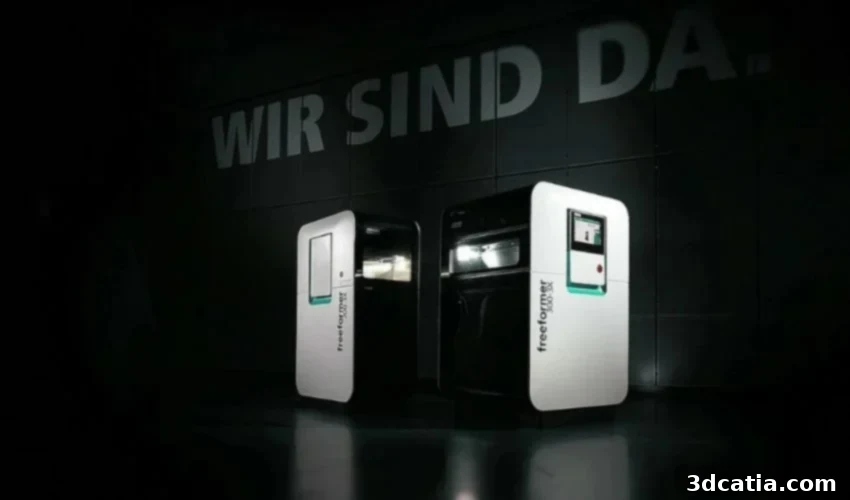
Arburg Withdraws from Additive Manufacturing Market: A Strategic Shift Towards Injection Molding
In a move that has sent ripples across the industry, the renowned German manufacturer Arburg has officially announced its withdrawal from the additive manufacturing market, effective by the end of 2025. This significant decision marks a strategic pivot for the company, as it reaffirms its commitment to its highly successful and established injection molding business. The company explicitly cites a challenging economic environment and market instability as the primary drivers behind this strategic realignment, a frank acknowledgment that resonates with broader industry sentiments.
For many within the 3D printing community, this announcement comes as a surprise, casting a shadow of uncertainty over a market already grappling with economic headwinds. Arburg, a name synonymous with quality and innovation in traditional manufacturing, had made a notable foray into additive manufacturing with its unique Freeformer pellet machines. Their presence, particularly at major industry events like Formnext, was consistently robust and impactful, leaving many to wonder about the future trajectory of the AM sector.
Arburg’s Journey in Additive Manufacturing: From Freeformer to Formnext
Arburg’s commitment to additive manufacturing was unmistakable for years. Anyone who has attended Formnext, the world’s leading exhibition for additive manufacturing and industrial 3D printing, would likely have encountered Arburg’s expansive and often bustling booth. The group frequently invested in dozens of square meters, showcasing a diverse array of machines, complemented by inviting hospitality areas and a constant stream of visitors eager to explore the wide range of applications demonstrated by their Freeformer technology.
The Freeformer machines were particularly lauded for their impressive material compatibility, offering users the flexibility to process standard plastic granules, a significant advantage over proprietary filament systems. This approach positioned Arburg as an innovator in leveraging readily available, cost-effective industrial pellets for additive processes. Furthermore, the strategic acquisition of innovatiQ expanded Arburg’s additive portfolio, enabling them to delve into specialized areas like silicone printing. At that time, the future for Arburg in the additive manufacturing space seemed exceptionally promising, and the company was perceived as a dynamic and influential player within the evolving market landscape.
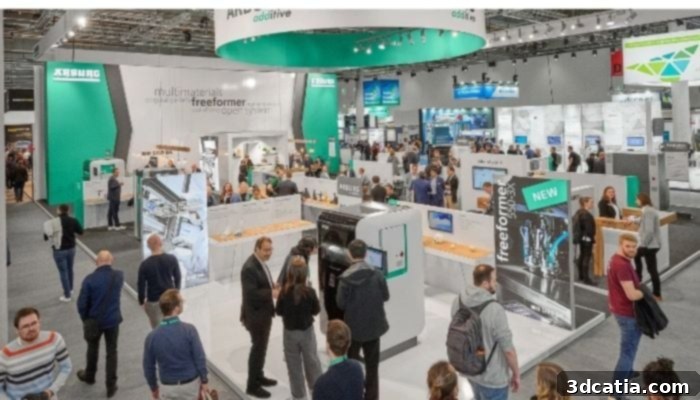
Arburg’s Booth at Formnext 2024
Ensuring Continuity for Clients and Integrating Employees
Despite the withdrawal, Arburg has assured its customers that support for its Freeformer technology will continue. The official press release explicitly states that customers and users of the Freeformer will still receive direct support from Arburg’s dedicated teams. This comprehensive service includes access to spare parts whenever needed, ensuring that existing Freeformer owners can continue to operate their machines without immediate disruption. However, a significant clarification is that Arburg will no longer participate in any future additive manufacturing events. This aspect, while perhaps understandable given their withdrawal, inevitably raises questions among Freeformer owners about the long-term innovation pipeline and community engagement. Only time will truly reveal how these support assurances translate into the practical realities of a changing market.
On the employee front, Arburg has committed to a smooth internal transition. The company confirms that the approximately 40 staff members who were dedicated to the additive manufacturing business will be integrated into Arburg’s other divisions. This strategic internal reallocation allows these skilled individuals to continue contributing their expertise more broadly to the company’s core manufacturing industry operations, safeguarding their employment and leveraging their knowledge within Arburg’s strong infrastructure.
Economic Realities and Market Expectations: A Candid Assessment
The rationale behind Arburg’s departure is articulated clearly through comments from Dr. Armin Schmiedeberg, Chairman of Arburg’s Advisory Board. He stated, “This business decision was taken after careful evaluation and consideration of the current market situation and the current economic parameters. It has not been possible to realise the economic targets for this business area in the long term, nor has the global 3D printing market as a whole developed in line with expectations.” This candid assessment underscores the profound challenges facing the additive manufacturing market today, moving beyond the initial hype to confront the realities of profitability and sustainable growth.
Such a decision, coming from a company with Arburg’s stature and commitment, was undoubtedly not taken lightly. It highlights a critical juncture for the 3D printing industry, where the ambitious projections of earlier years are now being tempered by economic realities, slower-than-anticipated widespread industrial adoption, and intense competition. The inability to achieve long-term economic targets within the additive manufacturing segment, as stated by Dr. Schmiedeberg, serves as a powerful indicator of the pressures many companies are facing, particularly in niche areas.
Implications for the Broader Additive Manufacturing Landscape
Arburg’s withdrawal inevitably raises significant questions about the outlook for other manufacturers, especially those operating within specific, less competitive segments like pellet-based 3D printing. While the pellet machine segment offers compelling advantages in material cost and versatility, it has historically struggled to achieve the same widespread adoption and market penetration as other additive manufacturing technologies, such as FDM or SLA. Arburg’s exit might signal a period of consolidation or a recalibration of strategies for other players in this niche. The industry is currently witnessing a trend where companies are either specializing intensely or broadening their portfolios through mergers and acquisitions, making Arburg’s focused withdrawal a notable outlier in some respects.
The phrase “who will be next?” now echoes through the corridors of the 3D printing world. This sentiment reflects an industry that, despite its revolutionary potential, continues to grapple with the path to sustained profitability for all its participants. Factors such as high R&D costs, slow customer adoption rates for specific applications, and the intense competition from established traditional manufacturing methods all contribute to a complex economic landscape. Arburg’s decision, therefore, is not just about one company; it’s a stark reminder of the ongoing maturation process within additive manufacturing and the need for robust business models that can withstand dynamic economic pressures.
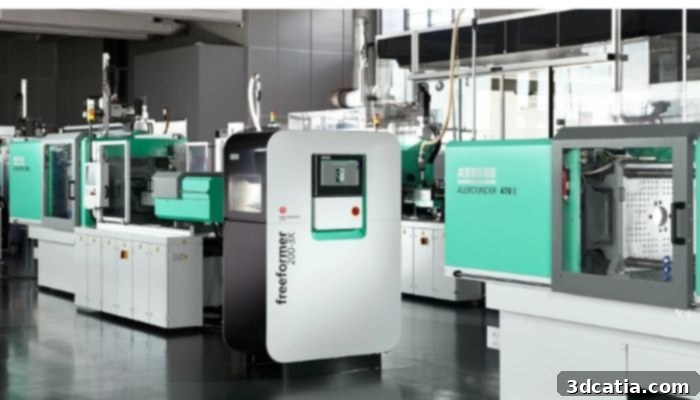
The group will focus on its injection molding business.
A Clear Path Forward: Strengthening the Core Business
Arburg’s withdrawal from additive manufacturing will officially take effect on December 31, 2025. Over the coming months, the company’s immediate focus will be on ensuring the smoothest possible transition for its customers and employees, providing reassurance and maintaining operational continuity. By channeling its resources and expertise entirely back into its core injection molding business, Arburg aims to strengthen its position as a global leader in this traditional yet highly innovative manufacturing sector. This strategic refocus allows the company to dedicate its substantial capabilities to areas where it already boasts immense strength, market dominance, and proven profitability.
In the meantime, for those seeking more information directly from the source regarding Arburg’s 3D printing division and the specifics of this recent strategic change, official details can be found HERE.
What are your thoughts on Arburg’s significant decision to exit the additive manufacturing market? Do you believe this indicates a broader trend for the industry, or is it a unique strategic move by Arburg? We invite you to share your perspectives in a comment below or engage with us on our LinkedIn or Facebook pages! Furthermore, don’t miss out on the latest developments in 3D printing by signing up for our free weekly Newsletter, delivered directly to your inbox. You can also explore all our insightful videos and interviews on our YouTube channel.
All Photo Credits: Arburg