
Cutting-Edge Additive Manufacturing: Weekly Innovations Across Industries
Welcome to our weekly #3DExpress roundup, where we delve into the most exciting developments shaping the world of 3D printing and additive manufacturing. This week, we explore significant strides in consumer electronics, industrial production, and personalized goods, showcasing how this transformative technology continues to redefine what’s possible. From Apple’s anticipated integration of 3D printed components in its latest smartwatches to groundbreaking advancements in large-format resin printing, custom bicycle saddles, robust industrial FFF systems, and new high-performance metal materials, the additive manufacturing landscape is buzzing with innovation. Join us as we unpack these stories, highlighting the companies and technologies driving the future of design and production.
Apple Continues Its Journey with 3D Printing for the Series 10 Apple Watch
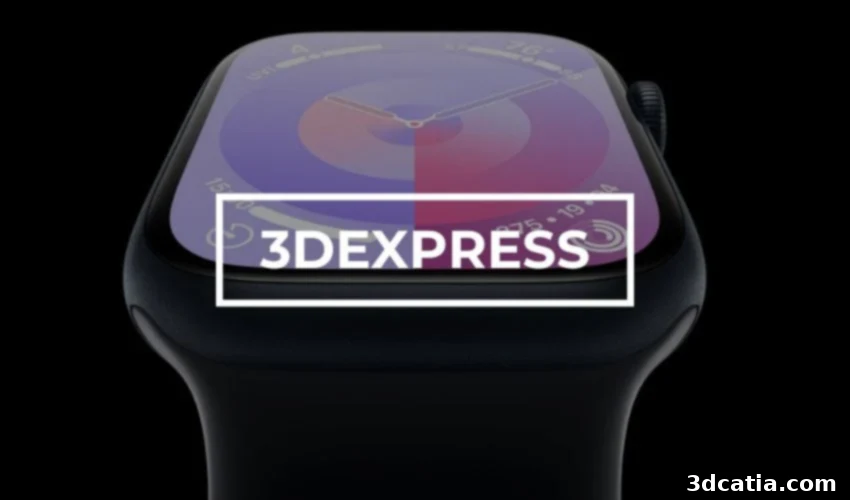
The integration of 3D printing into mainstream consumer electronics is a testament to the technology’s growing maturity and efficiency. Esteemed Apple analyst Ming-Chi Kuo, known for his accurate predictions regarding Apple’s supply chain and product roadmap, has once again captivated the industry with insights into the upcoming Apple Watch Series 10. Following his earlier forecast in July of last year concerning the Apple Watch Ultra, which was subsequently confirmed later in 2023 for the Series 9, Kuo now projects that the Series 10 Apple Watch, expected in the second half of 2024, will also incorporate 3D printed parts. This continued adoption underscores Apple’s commitment to leveraging additive manufacturing for enhanced product design and optimized production processes.
A significant development highlighted in Kuo’s latest prediction is a shift in the supply chain dynamics. Unlike previous iterations where intermediate suppliers might have been involved, BLT, the recognized supplier, is now expected to manufacture these 3D printed components directly for Apple. This move suggests a streamlining of the production pipeline, potentially leading to greater control over quality, faster iteration cycles, and increased efficiency. Furthermore, Kuo’s report indicates that extensive internal testing has led to substantial improvements in the production efficiency of 3D printing at Apple. This critical progress paves the way for the mass production of 3D printed parts, signifying a move beyond prototyping or limited-run applications towards full-scale manufacturing integration. The Series 10 Apple Watch is also rumored to feature a larger screen and a thinner design, characteristics that 3D printing can significantly facilitate by enabling complex geometries and lighter structures that would be challenging or impossible with traditional manufacturing methods. The ability of additive manufacturing to produce intricate internal structures can help optimize space, reduce weight, and potentially improve functionality, making it an ideal technology for compact, high-performance devices like smartwatches. This ongoing trend reinforces the impact of additive manufacturing in consumer goods, marking a major success story for the technology.

Photo Credits: Ming-Chi Kuo/Apple
Azul 3D Unveils OCEAN™: A Game-Changer in Large-Format Resin Printing
Azul 3D, an innovative startup renowned for its proprietary High-Area Rapid Printing (HARP™) technology, is pushing the boundaries of resin 3D printing with the launch of its latest and largest solution to date: the OCEAN™ 3D printer. Building on the success of its predecessor, the LAKE™ platform, the OCEAN™ is engineered to maintain the exceptional 72µm high resolution and impressive speeds exceeding 300 mm per hour, while dramatically expanding the build area. This new machine boasts an expansive build volume of 812 mm x 812 mm, making it exceptionally large for a resin-based 3D printing solution. Azul 3D proudly asserts that the OCEAN™ represents the world’s largest and most productive area-wide 3D printing platform, poised to unlock unprecedented opportunities in digital manufacturing.
HARP™ technology itself is a revolutionary approach that leverages an innovative non-stick liquid interface to enable continuous, high-speed printing over a large area, overcoming the traditional limitations of resin 3D printing regarding build size and speed. This capability allows the OCEAN™ printer to produce fine features with remarkable precision, even at its large scale, offering a unique blend of detail and volume production. John Hartner, CEO of Azul 3D, articulated the company’s vision, stating, “Our strategy is to empower the future of digital manufacturing. The OCEAN platform is a new-to-industry capability, with the opportunity to enable new high-volume products and supply chains.” This statement underscores the potential of the OCEAN™ to disrupt existing manufacturing paradigms by facilitating the production of large, complex parts rapidly and efficiently. Industries such as automotive, aerospace, consumer goods, and industrial tooling could significantly benefit from the OCEAN™’s capacity for high-throughput, high-resolution production. The ability to quickly manufacture large, detailed components or batches of smaller parts will streamline prototyping, accelerate product development, and enable more agile supply chains, thereby driving significant cost and time savings across various sectors. The introduction of OCEAN™ marks a pivotal moment for Azul 3D, solidifying its position at the forefront of advanced additive manufacturing solutions.
Fizik Revolutionizes Cycling Comfort with Optimized 3D Printed Bicycle Saddles
For professional and passionate cyclists, comfort and performance are paramount. Fizik, a distinguished sports equipment company founded in 1996 with the mission to deliver unparalleled solutions to the world’s most demanding riders, is taking a significant leap forward in personalized cycling gear. In an exciting collaboration with GebioMized, a leading German firm specializing in bicycle fit and sophisticated pressure mapping data analysis, Fizik is optimizing its bicycle saddles through the power of additive manufacturing. This partnership marks a pivotal shift from generic designs to highly customized solutions, enhancing the riding experience for individual cyclists.
Together, Fizik and GebioMized have engineered an innovative system that collects comprehensive pressure mapping data directly from individual cyclists. This data is gathered while the rider is in their actual seated position on the bike, ensuring the capture of vital metrics such as peak pressure identifiers, specific pressure points, and crucial pelvic tilt information. This meticulous measurement methodology forms the foundation for designing and 3D printing a bespoke saddle tailored precisely to each cyclist’s unique anatomy and riding style. The ability of 3D printing to create intricate lattice structures and varying densities within the saddle allows for precise pressure distribution, significantly improving comfort, reducing numbness, and enhancing power transfer. Giovanni Fogal, Brand Manager at Fizik, eloquently explains the philosophy behind this approach: “We know that a good, accurate fit depends on many factors: bike geometry, intended use, saddle shape, and position. But most importantly every cyclist is unique: experience, sensitivity, history of injuries, body shape, riding goals. All of this can affect the way we sit on the saddle. It’s clear that a traditional one-to-many saddle design can only provide an approximate solution to very specific problems. With One-to-One today we achieve what every saddle manufacturer has always dreamed of: bringing to life customized support available to every cyclist.” This “One-to-One” customization model, enabled by additive manufacturing, allows Fizik to address the specific needs of each rider, moving beyond the limitations of mass-produced, standardized saddles. This ensures optimal support, improved biomechanics, and ultimately, a more enjoyable and efficient cycling experience, preventing common issues associated with ill-fitting saddles. The fusion of advanced data analytics and 3D printing technology is truly transforming the landscape of personalized sports equipment.
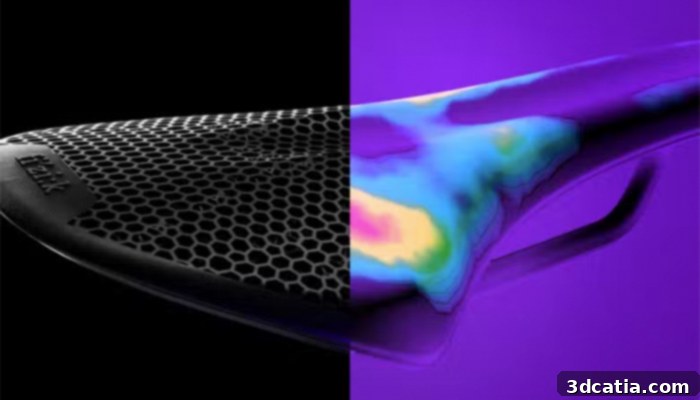
Photo Credits: Fizik
BigRep Unveils the Bim VIIO 250 Industrial FFF 3D Printer for Automated Production
German 3D printer manufacturer BigRep GmbH, a leader in large-format additive manufacturing, recently made waves with the launch of its new industrial FFF (Fused Filament Fabrication) 3D printer: the Bim VIIO 250. This highly automated system is specifically engineered to handle technical and fiber-reinforced materials, enabling the production of high-resolution parts for demanding industrial applications. The Bim VIIO 250 is designed to minimize manual intervention and maximize efficiency, making it an ideal solution for streamlined production environments.
A cornerstone of the Bim VIIO 250’s design is its emphasis on automation and reliability. The printer incorporates several advanced features to ensure a seamless printing process. For instance, it is equipped with an “Infinity Box” for automatic filament handling, which intelligently manages material supply and reduces downtime. Additionally, the printer features a “Relay Mode,” an innovative backup extruder functionality that guarantees uninterrupted production even in the event of a nozzle clog or material depletion, automatically switching to a secondary extruder. These robust automation tools significantly enhance throughput and operational consistency. Further highlights of the Bim VIIO 250 include a generous build chamber measuring 1000 x 500 x 500 mm, providing ample space for large-scale parts or multiple smaller components. Its open material system offers unparalleled flexibility, allowing users to work with a wide array of high-performance technical polymers and composites, crucial for diverse industrial requirements. With the VIIO 250, BigRep is strategically targeting efficient production for sectors such as the automotive industry, where rapid prototyping, tooling, and end-use part manufacturing demand precision and industrial-grade reliability. Jens Krämer, Head of Prototyping at Magirus GmbH, a prominent manufacturer of fire engines, has already had the opportunity to rigorously test the printer. He enthusiastically notes, “It’s great to see that concepts from the desktop printer sector are now also finding their way into the industrial environment. Being able to rely on the automatic calibration of the print bed, the filament throughput and the X and Y axes makes my day-to-day work much easier and ensures reliable results.” Krämer’s feedback underscores the tangible benefits of the VIIO 250’s automation for real-world industrial workflows. The BigRep VIIO 250 is set to be officially unveiled next week at the RAPID + TCT conference, complemented by a virtual launch event, providing a global platform for this significant advancement in industrial FFF technology.
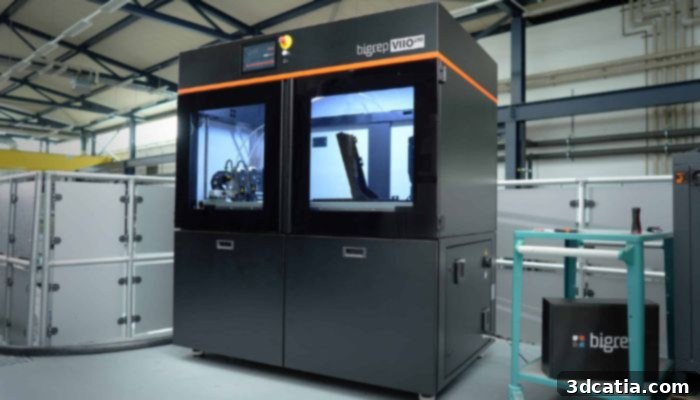
Photo Credits: BigRep
XJet Expands Metal 3D Printing Portfolio with New 17-4PH Stainless Steel Material
XJet, the innovative Israeli manufacturer of industrial 3D printers, is further enhancing the capabilities of its NanoParticle Jetting (NPJ) technology with the introduction of a new material: 17-4PH stainless steel. This addition significantly broadens the range of industrial applications now achievable with XJet’s unique metal additive manufacturing solutions. NPJ technology is distinguished by its ability to jet ultra-fine liquid suspensions of solid metal nanoparticles, enabling the creation of parts with exceptional accuracy, fine details, and smooth surface finishes, qualities often difficult to achieve with other metal 3D printing processes.
The 17-4PH stainless steel is a precipitation-hardening martensitic stainless steel, well-known for its high tensile strength, excellent hardness, and good corrosion resistance. These properties make it a highly desirable material for critical components across numerous demanding industries. With this new material, XJet users can now produce robust, high-performance parts for applications requiring superior mechanical properties and environmental resilience. Andy Middleton, CBO of XJet, highlights a key advantage of integrating 17-4PH with NPJ technology: “With the new solution for 17-4PH, support materials can be removed in down to six hours – a stark contrast to other AM processes. 17-4PH enables us to effectively collaborate with industry leaders to produce cutting-edge end-use parts at unique designs, quality and speeds that their respective industries will not have seen before.” The rapid and straightforward removal of support structures is a significant benefit, drastically reducing post-processing time and costs, which are often major bottlenecks in metal additive manufacturing. This efficiency, combined with NPJ’s ability to create complex geometries and intricate designs, positions XJet as a compelling solution for industries like aerospace, medical, defense, and tooling, where precision, material integrity, and rapid production are paramount. For those attending the upcoming RAPID + TCT show next week, XJet will be showcasing parts 3D printed with this advanced metal material at their booth, offering a tangible demonstration of its capabilities and the transformative potential of NPJ technology.
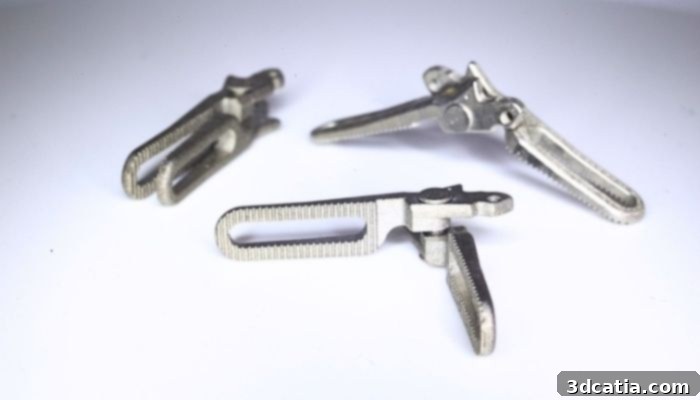
Photo Credits: XJet
This week’s #3DExpress has truly showcased the dynamic and expanding landscape of 3D printing. From the consumer electronics powerhouse Apple embracing additive manufacturing for its future smartwatches, signaling a move towards mass production of 3D printed components, to Azul 3D’s groundbreaking OCEAN™ printer pushing the boundaries of large-format resin capabilities, the industry continues to innovate at an incredible pace. Fizik and GebioMized are revolutionizing cycling performance and comfort through personalized 3D printed saddles, demonstrating the power of customization. Meanwhile, BigRep’s Bim VIIO 250 and XJet’s new 17-4PH stainless steel material are providing industrial sectors with more automated, efficient, and versatile solutions for high-performance part production. These advancements underscore 3D printing’s vital role in shaping product development, manufacturing processes, and supply chains across a diverse range of industries.
What are your thoughts on the increasing adoption of 3D printed parts in mainstream consumer devices like the Apple Watch Series 10? How do you see these industrial innovations impacting future manufacturing? We’d love to hear your insights! Let us know in a comment below or connect with us on our LinkedIn, Facebook, and Twitter pages! Don’t forget to sign up for our free weekly newsletter here for the latest 3D printing news delivered straight to your inbox. You can also find all our compelling videos and industry spotlights on our YouTube channel, offering deeper dives into the world of additive manufacturing.