
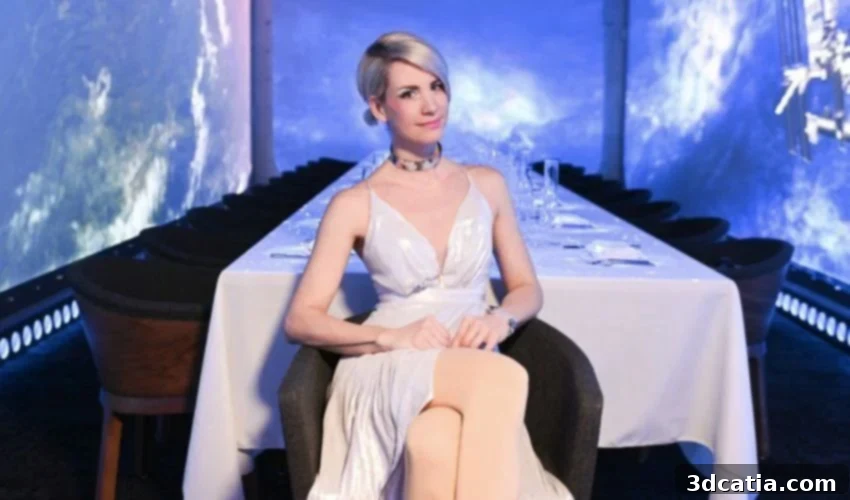
Anouk Wipprecht: Pioneering the Future of Fashion with 3D Printing and Wearable Technology
In recent years, the intersection of technology and haute couture has become an increasingly dynamic space, with a growing number of designers embracing additive manufacturing as a transformative production method for their most ambitious creations. From the avant-garde runways of the Chanel Fashion Show to the innovative displays at Paris Fashion Week and Dolce & Gabbana’s daring collections, the push for innovation in the fashion sector is undeniable and continues to accelerate. At the forefront of this revolution stands Anouk Wipprecht, a celebrated FashionTech designer hailing from the Netherlands. Renowned for her fearless approach to creativity and technology, Wipprecht has previously captivated audiences and collaborated with global icons such as the Black Eyed Peas, Britney Spears, and Fergie, consistently challenging conventional notions of garment design. Her unique methodology integrates artificial intelligence, sophisticated robotics, advanced mechanics, and machine learning, alongside the pivotal use of 3D printing to sculpt her visionary fashion pieces. Most recently, Wipprecht commanded significant attention in New York with her spectacular 3D-printed dress creations, showcasing the breathtaking potential of her craft.
The grand unveiling of these exquisite garments took place at the inauguration of “Journey,” a groundbreaking theatrical gastronomy event in New York City. “Journey” is designed to manipulate and engage all five sensory experiences, offering guests an unparalleled fine dining adventure. This innovative public experience officially launched on January 5th. While the event itself was a feast for the senses, Anouk Wipprecht’s meticulously crafted 3D-printed costumes elevated the aesthetic dimension to an entirely new level. Her designs didn’t merely adorn the performers; they became integral components of the immersive narrative, blurring the lines between fashion, art, and technology, and enhancing the overall theatricality of the event.
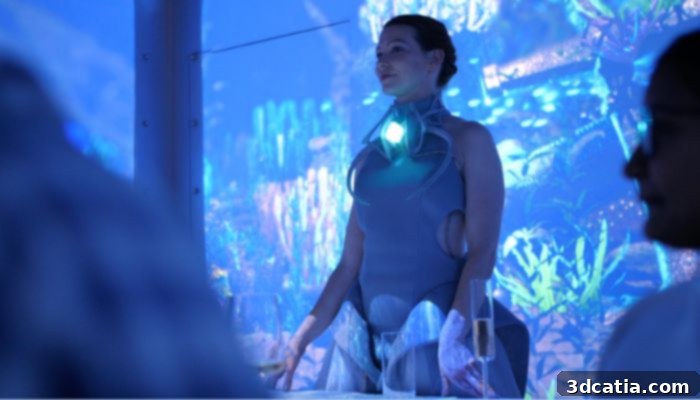
One of the stunning 3D printed garments designed by Anouk Wipprecht, demonstrating intricate detail and innovative form.
Anouk Wipprecht’s Vision: Blending High Fashion with Advanced Technology
Anouk Wipprecht is not just a designer; she is a pioneer defining the very essence of FashionTech. Her work extends far beyond mere aesthetics, delving into the realm where clothing becomes an interactive extension of the wearer and their environment. Her creations are often described as “wearable technology,” integrating sophisticated electronics, sensors, and microcontrollers to create garments that react, adapt, and communicate. This philosophy drives her to experiment relentlessly with new materials and manufacturing processes, with 3D printing standing out as a cornerstone of her creative toolkit. Wipprecht’s reputation for taking calculated creative risks has solidified her status as an industry leader, consistently delivering pieces that are both visually stunning and technologically profound. Her focus on how technology can enhance the human experience, rather than just decorate it, sets her apart in the fashion world, pushing boundaries and inspiring a new generation of designers and engineers.
Collaborative Innovation: Wipprecht and Shapeways Driving 3D-Printed Fashion Forward
The realization of Wipprecht’s complex designs often necessitates highly specialized manufacturing capabilities, which she has consistently found through her long-standing collaboration with Shapeways, a leading 3D printing service provider. This partnership has been instrumental in bringing her visionary, often robot-inspired, outfits to life. Shapeways’ expertise in diverse 3D printing technologies and materials allows Wipprecht to experiment with an extensive palette of functional properties, transforming her digital concepts into tangible, wearable art. The seamless integration of design and manufacturing has been a critical factor in her ability to produce pieces that are not only aesthetically groundbreaking but also structurally sound and capable of housing intricate electronics.
For these technologically advanced garments, Wipprecht carefully selects materials based on their specific performance characteristics. The 3D-printed components are primarily fabricated using Thermoplastic Polyurethane (TPU) and Polyamide 11 (PA 11). TPU is favored for its exceptional flexibility, rubber-like elasticity, and impressive impact resistance, making it ideal for parts that need to conform to the body or withstand movement without compromising integrity. PA 11, on the other hand, is a high-performance polyamide known for its strength, durability, and excellent chemical resistance, perfect for creating more rigid, structural elements within her designs. These material choices are crucial for ensuring both the aesthetic fluidity and the functional robustness required for interactive, wearable technology.
The manufacturing process itself employs state-of-the-art additive manufacturing technologies: Selective Laser Sintering (SLS) and HP Multi Jet Fusion (MJF). Both are powder-bed fusion techniques, but they offer distinct advantages tailored to Wipprecht’s design requirements. SLS technology was utilized in her work with Shapeways primarily for producing more stable and robust parts, leveraging its ability to create strong, isotropic components with excellent surface finish. Conversely, MJF found its application in the creation of more flexible parts. Wipprecht specifically highlighted the unparalleled benefits of using TPU with MJF 3D printers, stating: “With this process, we were able to make the parts both flexible and convenient for our plaster cast, while integrating it with the technology and electronics. TPU has rubbery flexibility, good impact resistance and is tough, so it’s perfect for this type of design.” This demonstrates a nuanced understanding of how to harness each technology’s strengths, achieving a perfect balance between rigidity, flexibility, and the seamless incorporation of complex electronic systems within her avant-garde fashion pieces.
The “Journey” Experience: A Multi-Sensory Symphony of Innovation
For the inaugural “Journey360” event, Anouk Wipprecht embarked on an extraordinary collaboration with Broadway producer Marc Routh and a diverse collective of visionary artists, including designers, writers, chefs, and performers. The aim was to forge an unprecedented experience—a seamless fusion that Wipprecht herself eloquently described on her Instagram account as a combination of “restaurant x immersive experience x fashion x robotics x projections x art and more.” This ambitious undertaking sought to transcend traditional boundaries, creating a holistic environment where every element, from the gastronomic delights to the ambient projections and the interactive fashion, contributed to a singular, profound narrative. Wipprecht’s 3D-printed designs were not merely costumes; they were dynamic characters within this living tableau, their intricate forms and embedded technologies responding to and enhancing the theatrical narrative. To delve deeper into the specifics of this revolutionary project and Anouk Wipprecht’s artistic journey, you can click HERE.
The “Journey” event showcased how wearable technology, when integrated thoughtfully, can elevate an experience beyond what is conventionally possible. It demonstrated the power of interdisciplinary collaboration, proving that when diverse creative minds converge with cutting-edge technology, truly magical and unforgettable moments can be crafted. The success of such an event paves the way for future explorations into experiential design, where fashion, food, and art are not separate entities but interwoven threads in a rich tapestry of human interaction and innovation. Anouk Wipprecht’s contribution was pivotal in establishing this synergy, underscoring the vital role of FashionTech in shaping the future of immersive entertainment and artistic expression.
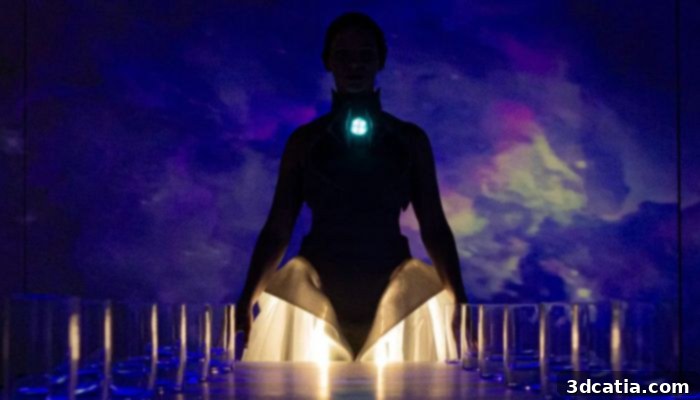
The event was enriched by sophisticated light engineering, contributing to its immersive and dynamic atmosphere.
The Transformative Impact of 3D Printing on the Fashion Industry
Anouk Wipprecht’s work serves as a powerful testament to the transformative potential of 3D printing within the fashion industry. Additive manufacturing offers designers unprecedented freedom, allowing for the creation of intricate geometries and complex structures that are virtually impossible to achieve with traditional textile manufacturing methods. This capability opens up new avenues for customization, enabling designers to produce highly personalized garments tailored precisely to individual body shapes and preferences. Beyond aesthetics, 3D printing also champions sustainability. It significantly reduces material waste compared to conventional cutting and sewing techniques, as objects are built layer by layer only using the necessary material. This process also facilitates rapid prototyping, allowing designers to iterate on designs quickly and efficiently, moving from concept to physical prototype in a fraction of the time, thereby accelerating the entire design cycle.
Looking ahead, the fusion of FashionTech, pioneered by visionaries like Anouk Wipprecht, promises a future where clothing is more than just fabric; it’s an intelligent interface. Imagine garments that can monitor your health, adapt to environmental changes, or even communicate with your surroundings. The integration of AI and robotics into fashion design suggests a world of interactive apparel that responds to gestures, emotions, or even thoughts. This paradigm shift will redefine our relationship with clothing, making it a dynamic, functional, and deeply personal extension of ourselves. Anouk Wipprecht continues to lead this charge, pushing the boundaries of what is possible and inspiring the next generation of innovators to dream bigger and integrate technology more deeply into the very fabric of our lives.
Would you be willing to incorporate 3D-printed fashion into your wardrobe, embracing the seamless blend of style and technology? Share your thoughts and insights in a comment below, or join the ongoing conversation on our LinkedIn, Facebook, and Twitter pages! Don’t miss out on the latest advancements and breaking news in the additive manufacturing world; make sure to sign up for our free weekly Newsletter here to receive direct updates to your inbox. You can also explore a wealth of engaging content and discover more about the world of 3D printing on our YouTube channel.
*All photo credits: Anouk Wipprecht