
RAPID + TCT 2023: XJet’s NanoParticle Jetting Redefines Precision Ceramic and Metal 3D Printing
The curtains have closed on RAPID + TCT 2023, a cornerstone event in the additive manufacturing calendar. Held in the vibrant city of Chicago, Illinois, from May 2-4, this 33rd edition of the three-day spectacular once again brought together the brightest minds and the most innovative technologies in the 3D printing world. With an impressive roster of over 400 exhibiting companies, navigating the expansive show floor to identify key innovators could be a daunting task. Fortunately, 3Dnatives was on the ground, engaging with some of the industry’s most compelling exhibitors to bring you the latest breakthroughs and insights.
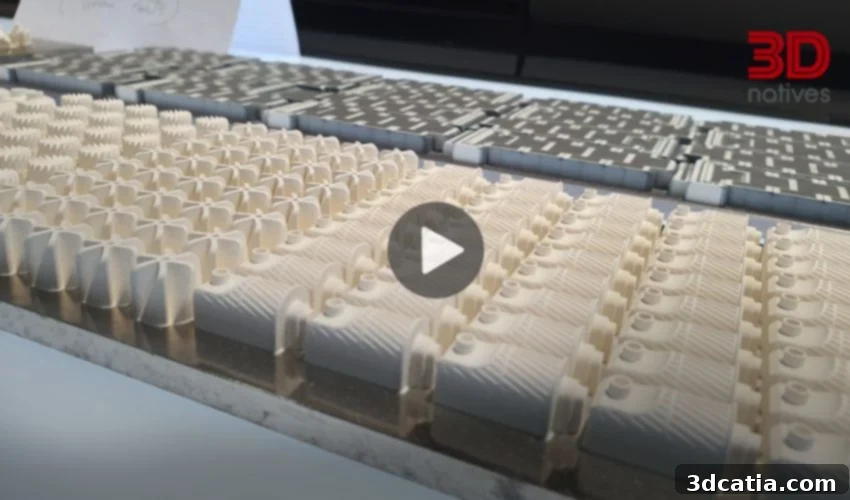
Among the standout companies at RAPID + TCT 2023, XJet captured significant attention. We had the invaluable opportunity to sit down with XJet’s representatives to delve into the remarkable evolution of their proprietary NanoParticle Jetting (NPJ) technology. Our discussions focused on how this cutting-edge approach is increasingly addressing the rigorous industrial demands across a multitude of sectors, paving the way for advanced ceramic and metal parts. To gain a deeper understanding of their transformative Carmel Systems and their forward-thinking SMART Solution, we were honored to speak with Dror Danai, CBO at XJet. His insights provided a clear vision of XJet’s strategic direction and its impact on the additive manufacturing landscape. For those eager to hear directly from the source, the exclusive interview is embedded below.
XJet: Pioneering High-Definition Additive Manufacturing
For those unfamiliar with their work, XJet stands as a prominent international manufacturer of additive manufacturing (AM) solutions, specializing in delivering unparalleled high-definition 3D printing capabilities for both ceramic and metal components. At the core of their offerings is their revolutionary NanoParticle Jetting (NPJ) technology. This innovative process is not only celebrated for its exceptional precision and material density but also for its environmentally conscious footprint, setting it apart in an industry constantly striving for sustainability.
XJet’s solutions, prominently featuring the Carmel 1400C for ceramics and the Carmel 1400M for metals, are engineered to meet the stringent requirements of diverse industrial applications. These systems are proving to be indispensable in fields such as medical, where biocompatibility and intricate geometries are paramount; jewelry, demanding exquisite detail and flawless surface finish; and general industrial sectors, requiring high-performance, durable components. The company’s dedication to pushing the boundaries of what’s possible in 3D printing makes XJet an undeniably exciting entity within the global manufacturing ecosystem.
Understanding NanoParticle Jetting (NPJ) Technology: Precision at the Nanoscale
At the heart of XJet’s success lies its unique NanoParticle Jetting (NPJ) technology. Unlike traditional powder-based additive manufacturing methods, NPJ utilizes a liquid suspension that contains solid ceramic or metal nanoparticles. This proprietary approach offers distinct advantages, primarily in achieving superior part density, exceptional surface finish, and intricate geometric accuracy. The process begins with thousands of tiny nozzles jetting ultra-fine droplets of material onto the build tray. Each droplet contains precisely measured ceramic or metal nanoparticles suspended in a liquid. Alongside this, a separate set of nozzles deposits a soluble support material, allowing for the creation of complex internal structures and overhangs without compromising part integrity.
Once jetted, the liquid binder evaporates, leaving behind a densely packed layer of nanoparticles. This process is repeated layer by layer until the entire part is formed. The “green” part then undergoes a sintering process, where it is heated in a furnace, causing the nanoparticles to fuse together and achieve their final density and mechanical properties. This sintering process is carefully controlled to prevent warping or cracking, ensuring the final component maintains the high precision achieved during the printing phase. The result is a fully dense, isotropic part with properties comparable to, or even exceeding, those of traditionally manufactured components.
Material Versatility and Environmental Benefits
XJet’s NPJ technology is particularly adept at handling a range of advanced materials. For ceramics, it primarily works with zirconia and alumina, known for their exceptional hardness, wear resistance, and high-temperature stability, making them ideal for demanding applications. In metals, XJet is continually expanding its portfolio, focusing on materials that offer high strength-to-weight ratios and corrosion resistance. The ability to process these materials with such high fidelity opens doors for industries seeking innovative solutions for critical components.
Beyond its technical capabilities, NPJ stands out for its environmental considerations. By using a liquid suspension, the technology significantly reduces the risks associated with handling fine powders, such as inhalation hazards and cleanup challenges often found in powder bed fusion systems. This makes the workspace cleaner, safer, and inherently more environmentally friendly. The precise material deposition also minimizes waste, contributing to a more sustainable manufacturing cycle. This combination of high performance and eco-consciousness positions XJet as a forward-thinking leader in the additive manufacturing space.
XJet’s Carmel Systems: Empowering Industrial Innovation
XJet’s dedication to industrial applicability is perfectly embodied in its Carmel line of 3D printing systems. The Carmel 1400C and Carmel 1400M are robust, production-grade additive manufacturing platforms designed to bring the benefits of NPJ technology to demanding manufacturing environments. These systems are not merely prototyping machines; they are built for serious production, offering reliability, repeatability, and scalability essential for industrial adoption.
The Carmel 1400C, optimized for ceramic materials, allows manufacturers to produce complex, high-performance ceramic parts with unprecedented detail and surface quality. From intricate medical implants to wear-resistant industrial components, the 1400C delivers consistent results, eliminating the limitations often associated with traditional ceramic manufacturing. Similarly, the Carmel 1400M extends these capabilities to metals, enabling the creation of intricate metal parts that boast high density and excellent mechanical properties, suitable for aerospace, automotive, and tooling applications.
Introducing the SMART Solution: Intelligent Additive Manufacturing
Further enhancing the utility and efficiency of its Carmel systems, XJet has developed the SMART Solution. While specific details of the SMART Solution were a key part of our discussion at RAPID + TCT, it generally encompasses advanced software, intelligent process control, and automation features designed to streamline the additive manufacturing workflow. This solution aims to maximize uptime, optimize material usage, and ensure consistent part quality, thereby reducing human intervention and increasing overall productivity. For industrial users, the SMART Solution translates to lower operational costs, faster turnaround times, and greater confidence in the repeatability of their printed parts. It represents XJet’s commitment not just to advanced hardware, but to a holistic, intelligent manufacturing ecosystem.
Driving Innovation Across Critical Industries with NPJ
The versatility and precision offered by XJet’s NanoParticle Jetting technology make it an ideal choice for a wide array of high-value applications across several key industries:
Medical & Dental: Precision for Life-Changing Applications
In the medical and dental fields, the demand for highly precise, biocompatible, and anatomically correct components is ever-increasing. XJet’s ceramic printing capabilities, particularly with zirconia, are transforming the production of dental crowns, bridges, and implants, offering superior aesthetics and mechanical properties. Furthermore, the technology is enabling the creation of custom surgical guides, bone scaffolds, and intricate medical instruments with geometries impossible to achieve through traditional methods. The high resolution and smooth surface finish of NPJ-printed parts minimize post-processing, which is critical for sterile medical applications.
Jewelry: Crafting Exquisite Designs with Unprecedented Detail
The jewelry sector thrives on intricate designs and flawless finishes. XJet’s ability to print incredibly fine details with high surface quality makes it a game-changer for jewelers and designers. From custom engagement rings with complex filigree to bespoke watch components, NPJ technology allows for the creation of master patterns or even final pieces that exhibit unparalleled aesthetic appeal and precision. The capability to produce delicate, highly detailed parts rapidly opens new avenues for customization and artistic expression, significantly reducing the labor-intensive stages of traditional jewelry manufacturing.
Industrial & Aerospace: Pushing the Boundaries of Performance
For demanding industrial and aerospace applications, XJet’s metal and advanced ceramic solutions are proving invaluable. Components requiring extreme temperature resistance, high strength-to-weight ratios, or excellent wear resistance can be manufactured with complex internal structures that optimize performance while reducing weight. This includes intricate turbine components, specialized nozzles, heat exchangers, and tooling inserts with conformal cooling channels. The consistent material properties and high density achieved with NPJ technology ensure that these critical parts meet stringent performance and safety standards, driving innovation in areas where reliability is paramount.
RAPID + TCT 2023: A Glimpse into the Future of 3D Printing
RAPID + TCT 2023 was more than just an exhibition; it was a vibrant forum showcasing the accelerating pace of innovation in additive manufacturing. Beyond XJet’s impressive booth, the event highlighted several overarching trends, including increased adoption of AM for production, advancements in material science, and the growing integration of AI and machine learning into 3D printing workflows. XJet’s presence and their discussions around industrial needs perfectly encapsulated these trends, reinforcing the idea that additive manufacturing is no longer just for prototyping, but a viable, scalable solution for complex, high-value production.
The enthusiasm for XJet’s NanoParticle Jetting technology and its potential to unlock new frontiers in ceramic and metal 3D printing was palpable. Their solutions, including the Carmel Systems and the SMART Solution, are poised to empower industries with the tools needed to create advanced components with unprecedented precision, efficiency, and sustainability. As additive manufacturing continues to mature, companies like XJet are at the forefront, driving the evolution and demonstrating the immense potential of this transformative technology.
What were your impressions of XJet at RAPID + TCT 2023? Were you able to experience their innovative technology firsthand? We’d love to hear your thoughts and insights! Share your comments below or engage with us on our LinkedIn, Facebook, and Twitter pages! Don’t miss out on the latest advancements in 3D printing – sign up for our free weekly newsletter here to get the freshest news delivered straight to your inbox! You can also explore all our insightful videos and interviews on our YouTube channel.