
Top 5 3D Printing Innovations: Revolutionizing Industries with Additive Manufacturing Breakthroughs
This week, we dive into the fascinating world of 3D printing, showcasing the top five videos that highlight how additive manufacturing is fundamentally transforming traditional production methods. This groundbreaking technology has rapidly infiltrated and reshaped numerous sectors, from the precision demands of medical applications to the high-performance requirements of the automotive industry. Our curated selection aims to keep you abreast of the latest innovations, breakthroughs, and commercial advancements driving the 3D printing revolution. Whether you’re a seasoned professional, an enthusiast, or simply curious about the future of manufacturing, these videos offer valuable insights. If you find these features engaging, we encourage you to explore even more captivating 3D printing content on our YouTube channel. We hope you enjoy this week’s roundup and have a fantastic day!
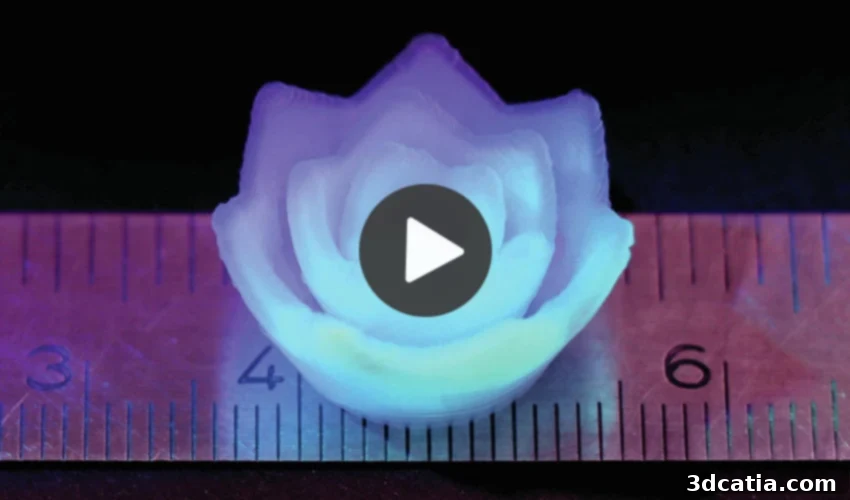
Top 1: Aerogel Microstructures by 3D Printing – A New Frontier in Material Science
The first highlight of our selection features groundbreaking work from a team of Empa researchers, who have successfully developed a novel technique for 3D printing stable microstructures using silica aerogel. Aerogels are extraordinary synthetic porous materials derived from a gel, in which the liquid component has been replaced with gas. This results in an incredibly lightweight solid with exceptionally low density and, critically, remarkable thermal insulation properties, often referred to as “frozen smoke.” Historically, aerogels have been challenging to work with, particularly in precise, small-scale applications, often requiring them to be used on a larger, more macroscopic scale.
The Empa researchers’ achievement lies in their ability to reinforce the aerogel with advanced composite materials, enhancing its structural integrity and enabling far greater printability and the creation of high-quality, intricate parts. This innovation allows for the 3D printing of aerogel pieces as thin as a tenth of a millimeter – a significant leap forward. The implications of this development are vast and truly transformative. Such precise aerogel microstructures can be applied in critical areas like microelectronics, where they could provide unparalleled thermal management in compact devices, preventing overheating and improving component longevity. In biotechnology, they could be utilized for creating highly porous scaffolds for tissue engineering, drug delivery systems, or advanced filtration membranes. Furthermore, in robotics, these lightweight and insulative components could lead to the development of more agile, energy-efficient robots, especially in scenarios requiring thermal isolation or reduced weight. This breakthrough not only expands the capabilities of 3D printing but also unlocks new possibilities for advanced materials in miniature applications.
Top 2: Metal Additive Manufacturing for Robust Industrial Applications
Additive Manufacturing (AM), particularly with metals, is rapidly emerging as the next significant stage of industrial evolution, poised to redefine manufacturing processes across the globe. Its transformative power is already evident and well-established in high-stakes segments such as Aerospace, where it facilitates the production of lightweight, complex, and consolidated parts; Healthcare, offering custom-made implants and surgical tools; and Motorsports, enabling rapid prototyping and performance-optimized components. However, for a vast majority of companies not directly facing the unique challenges of these cutting-edge segments, the true value proposition of metal AM technology might still seem elusive. They often ponder: what tangible benefits can metal AM bring to their existing manufacturing workflows, and when is the opportune moment to invest in such a significant technological shift?
To address these crucial questions and demystify the adoption process, we recently hosted an insightful webinar in collaboration with GF Machining Solutions. This session meticulously outlined and discussed the key considerations a company should evaluate when assessing the benefits of the Laser Powder Bed Fusion (LPBF) process, which remains the most popular and versatile metal AM technique. LPBF involves using a laser to selectively melt and fuse metallic powder particles layer by layer, building a part from the ground up with exceptional precision and density. Key benefits include unparalleled design freedom, allowing for complex geometries previously impossible with traditional methods; significant part consolidation, reducing assembly steps; and the ability to produce lightweight yet strong components. The webinar provided a comprehensive guide on factors such as return on investment (ROI), integrating design for additive manufacturing (DfAM) principles, selecting appropriate materials like titanium, aluminum, or stainless steel, and understanding the necessary post-processing steps to achieve desired mechanical properties and surface finishes. For any organization contemplating the leap into industrial metal AM, this webinar offers invaluable insights into making an informed decision and leveraging this powerful technology for competitive advantage. We encourage you to watch the entire webinar to gain a deeper understanding!
Top 3: Desktop Metal Goes Public – A Milestone for Production-Scale Additive Manufacturing
A significant development in the additive manufacturing landscape was announced this week: the American manufacturer Desktop Metal has successfully gone public. This event marks a pivotal moment for the company, establishing it as the only listed pure-play AM 2.0 company dedicated to production-level additive manufacturing. The decision to enter the public market is a strategic move designed to further accelerate and consolidate Desktop Metal’s impressive growth trajectory, ultimately aiming to achieve annual sales in excess of one billion dollars. This ambitious target is not surprising, especially when considering the substantial total amount of capital raised by the start-up in the mere four years leading up to its public offering, demonstrating strong investor confidence in its vision and technology.
The public listing provides Desktop Metal with enhanced access to capital, which will be crucial for scaling operations, investing heavily in research and development, expanding its global market reach, and potentially pursuing strategic acquisitions. As a pure-play AM 2.0 company, Desktop Metal focuses on addressing the challenges of volume production with additive manufacturing, developing solutions that offer industrial speed, cost-effectiveness, and a wider range of materials beyond traditional prototyping. Their innovations, particularly in binder jetting technology, are designed to enable manufacturers to move from rapid prototyping to full-scale mass production of end-use parts, disrupting traditional manufacturing supply chains. This move also signifies the increasing maturity and mainstream acceptance of additive manufacturing as a viable and indispensable production technology. To gain a deeper understanding of the motivations behind Desktop Metal’s momentous decision and its future implications, we invite you to watch an insightful interview with Ric Fulop, Co-Founder and CEO of the company, where he shares his vision and insights into this transformative step.
Top 4: Stratasys F370 – Precision and Reliability in FDM Rapid Prototyping
In February 2017, Stratasys, a global leader in industrial 3D printing, made a significant announcement with the launch of its F123 series. This line of FDM (Fused Deposition Modeling) machines was specifically engineered to meet the demanding requirements of rapid prototyping, offering a balance of performance, accessibility, and reliability for a broad range of industrial applications. In the video showcased below, Stratasys takes a closer look at one particular model from this series, the F370, highlighting its innovative features and how it consistently delivers high-quality work for engineers and designers.
The F370 stands out due to a series of patented innovations designed to overcome common challenges in FDM printing and enhance part quality. One of the key advancements is the integration of advanced servo motors. These motors are crucial in minimizing any vibrations that could occur during the printing process. By ensuring ultra-smooth and precise movements of the print head, they directly contribute to superior surface finish, improved dimensional accuracy, and overall higher quality of the final printed part, preventing common issues like layering defects. Furthermore, the F370 incorporates an improved heat treatment system. Thermal management is critical in FDM, as inconsistent temperatures can lead to warping, particularly with larger parts or challenging materials. This enhanced system ensures a stable and optimized thermal environment throughout the build chamber, significantly limiting the effects of warping and resulting in more reliable, repeatable, and dimensionally accurate prototypes. These combined innovations make the Stratasys F370 an exceptionally robust and dependable solution for engineers and designers seeking to accelerate their product development cycles with reliable and high-fidelity prototypes.
Top 5: ELEGOO Releases Mars 2 Pro – Accessible High-Detail Resin Printing for Hobbyists
Rounding out our list of top 3D printing videos is the exciting new release from ELEGOO Inc., a thriving technology company established in 2015, dedicated to the research, development, and production of open-source hardware. ELEGOO has rapidly gained a reputation for delivering high-quality, affordable 3D printers, making advanced additive manufacturing more accessible to a broader audience. Their latest offering, the Mars 2 Pro, is specifically designed to cater to hobbyists, artists, and small businesses seeking to produce highly detailed models and parts with exceptional precision.
The Mars 2 Pro builds upon the success of its predecessors and leverages cutting-edge LCD 3D printing technology, also known as MSLA (Masked Stereolithography), which is renowned for its ability to create intricate designs with smooth surface finishes, making it ideal for miniatures, jewelry, dental models, and highly detailed prototypes. A standout feature of this new printer is its powerful COD UV Solution. This innovative system ensures perfectly uniform UV light distribution across the entire build plate, effectively eliminating any “light spots” that can lead to inconsistent curing, print failures, and compromised part quality. This uniform light exposure is crucial for achieving high resolution and accuracy consistently. Additionally, ELEGOO has prioritized user health and comfort by integrating an Activated Carbon Purifier within the Mars 2 Pro. Resin 3D printing can often produce fumes, and this purifier actively filters and mitigates odors, providing a “fresher” and significantly healthier user experience, especially for those operating the printer in home environments or smaller workshops. These thoughtful enhancements solidify the Mars 2 Pro as a top contender in the desktop resin 3D printer market, offering an excellent balance of performance, safety, and user-friendliness. Delve deeper into the impressive properties and capabilities of the Mars 2 Pro by watching the video below!
We hope you enjoyed this week’s selection of innovative 3D printing videos, showcasing the diverse applications and continuous advancements in additive manufacturing. From micro-scale aerogel structures to industrial metal printing, public market milestones, and accessible desktop solutions, the industry continues to push boundaries. We’d love to hear your thoughts on these groundbreaking developments! Feel free to drop a comment below or join the conversation on our Facebook and Twitter pages. And to ensure you never miss out on the latest news, trends, and innovations in the 3D industry, don’t forget to sign up for our free weekly Newsletter, delivered straight to your inbox!