
Aectual’s Groundbreaking 3D Printed Recyclable Wall: Pioneering Sustainable Construction with Circular Design
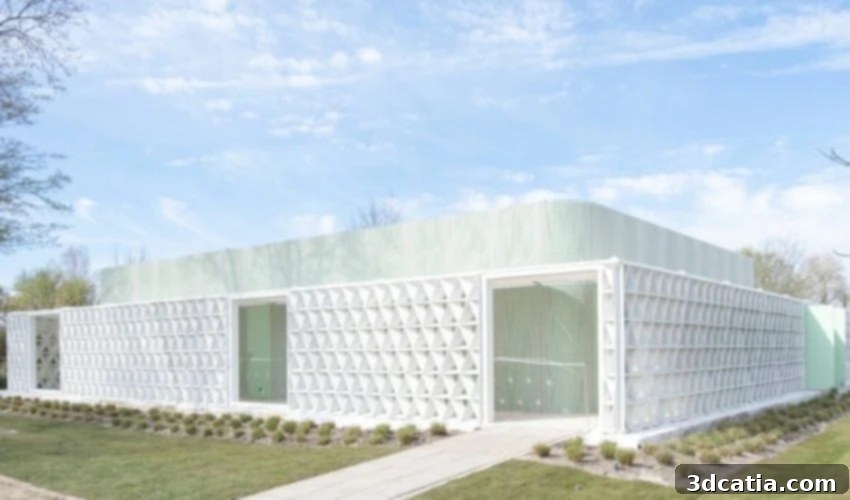
In the rapidly evolving landscape of sustainable innovation, the company Aectual has consistently stood out as a beacon of progress, especially for those passionate about 3D printing and its profound environmental advantages. Headquartered in Amsterdam, Aectual has carved a formidable reputation for creating cutting-edge applications primarily from recycled plastic. Their commitment to ecological responsibility recently culminated in a remarkable project that garnered significant international attention. At the Floriade Expo 2022, a premier horticultural exhibition held in Almere, the Netherlands, Aectual collaborated with the esteemed architecture studio Pragma to develop and 3D print an exterior wall that is not only visually stunning but also entirely recyclable. This innovative structure elegantly encircles the dedicated United Arab Emirates pavilion within the exhibition grounds, serving as a powerful testament to the future of sustainable architectural design.
This pioneering endeavor at Floriade is a significant milestone, yet it is not Aectual’s first foray into large-scale, sustainable 3D printed applications. Earlier, at CES 2022, the company successfully utilized large-format 3D printing technology to craft intricate partitions for the Dutch pavilion, demonstrating their expertise in delivering custom architectural elements. However, the Floriade project represents an impressive leap in scale and ambition. The intricately designed wall for the United Arab Emirates pavilion spans a vast 2,000 square meters, showcasing the immense potential of additive manufacturing for grand-scale construction. Hans Vermeulen, CEO of Aectual, eloquently articulated the transformative benefits of this technology, stating: “Large scale industrial 3D printing is coming of age. This project demonstrates beautifully how our digital design algorithms give designers flexibility in tailored design and on-demand production.” His words underscore a pivotal shift in the construction industry, where customization, efficiency, and environmental consciousness are becoming paramount, driving innovation towards smarter and greener building solutions.
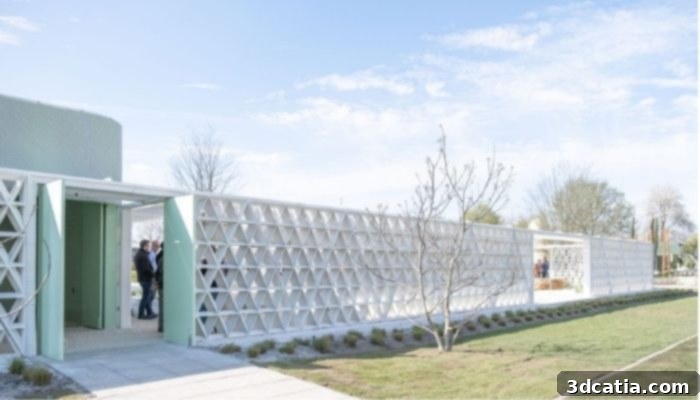
Photo Credits: Aectual
Revolutionizing Construction: The Power of Recyclable and Reprintable Walls
The distinctive wall at the UAE pavilion is not merely an aesthetic marvel; it embodies a groundbreaking approach to material lifecycle and environmental stewardship. Adorned with captivating patterns that echo the rich architectural heritage of the United Arab Emirates, this entire structure is engineered to be fully recyclable and, crucially, reprintable. While Aectual maintains a certain level of discretion regarding the proprietary specifics of their 3D printing process, the company proudly highlights the profound environmental impact of their chosen technology. They report an astounding 80% reduction in CO2 emissions when compared to conventional construction methods – a figure that speaks volumes about the imperative of adopting additive manufacturing for a greener future. This drastic cut in carbon footprint is achieved through optimized material use, reduced transportation, and the inherent efficiency of 3D printing, which minimizes waste generation and energy consumption.
What truly sets this construction apart, however, is its unwavering commitment to circularity. The design philosophy ensures that all structural elements can be seamlessly reused, allowing for the creation of new parts and entirely new designs. This innovative strategy guarantees that the walls are not merely temporary installations but integral components of a closed-loop system, preventing material waste from entering landfills and promoting continuous resource utilization. By embracing this circular model, Aectual exemplifies a paradigm shift from linear “take-make-dispose” practices to a sustainable “reduce-reuse-recycle” ethos, fundamentally altering how we perceive and manage construction materials. This approach extends to the very core of the material used: a revolutionary flaxseed-based plastic. Developed in close partnership with the global chemical company Henkel, this innovative material boasts an exceptional quality – it can be recycled up to an impressive seven times. This multi-recycling capability significantly prolongs the material’s lifespan, further diminishing its environmental impact and cementing its role as a key player in sustainable architectural solutions. The choice of a bio-based polymer like flaxseed plastic also reduces reliance on finite fossil resources, aligning perfectly with Aectual’s vision for a truly sustainable future and fostering greater biodiversity in material sourcing.
A Vision for the Future: Architects Embracing 3D Printing and Circularity
The collaborative spirit between Aectual and Pragma played a crucial role in bringing this ambitious project to fruition. Ahmed Khadier, co-founder and director of Pragma, elaborated on the profound impact of their design choices, stating, “The claustra wall that defines the perimeter of the garden was integral in delivering an immersive experience of a very specific type of landscape in the UAE pavilion. We wanted to capitalize on the inherent qualities of 3D printing as a construction method that promotes a transition to a more circular way of making buildings and cities of the future.” His insights highlight how the aesthetic and functional aspects of the “claustra wall” – a type of perforated screen often used in Middle Eastern architecture for privacy, shade, and ventilation – were meticulously crafted to enhance the visitor’s experience, transporting them to the heart of the UAE’s distinct landscape. More significantly, Khadier’s statement underscores the philosophical alignment between the partners: leveraging 3D printing not just as a manufacturing tool, but as a catalyst for a fundamental shift towards circularity in urban development and construction, addressing the pressing need for resilient and resource-efficient infrastructure.
This project serves as a powerful demonstration of how architectural vision, when coupled with advanced manufacturing techniques, can lead to truly sustainable and aesthetically pleasing outcomes. By using 3D printing, Pragma and Aectual were able to achieve complex geometries and intricate patterns that would be challenging, if not impossible, with traditional construction methods, all while adhering to stringent sustainability goals. The ability to tailor designs digitally and produce them on-demand minimizes material waste and logistical complexities, further reducing the environmental footprint of the entire construction process. This collaborative model showcases a promising pathway for the architecture, engineering, and construction (AEC) industry to integrate sustainable practices from conceptualization to execution, setting new benchmarks for eco-conscious development and fostering innovation across the supply chain. Such partnerships are essential for overcoming the limitations of conventional building and for accelerating the transition towards a greener, more sustainable built environment.
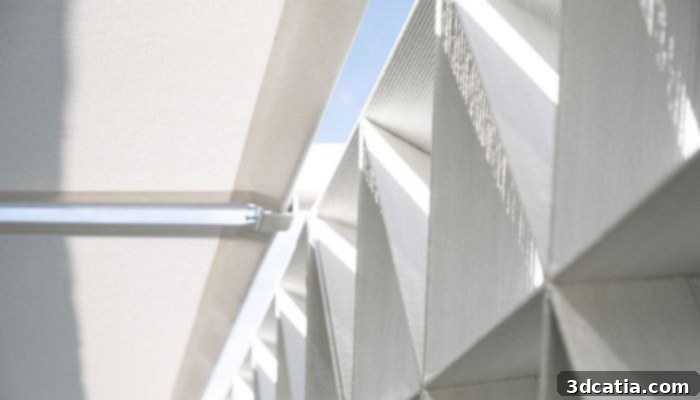
Photo Credits: Aectual
The Broader Impact of Additive Manufacturing in Sustainable Architecture
The success of Aectual’s recyclable wall at the Floriade Expo extends beyond a single impressive installation; it provides a compelling blueprint for the broader application of additive manufacturing in sustainable architecture. 3D printing offers inherent advantages that align perfectly with environmental goals, including the precise deposition of material, which drastically reduces construction waste. Unlike conventional methods that often involve cutting and shaping materials, leading to significant offcuts, 3D printing builds objects layer by layer, utilizing only the necessary amount of material. This precision not only conserves resources but also allows for the use of innovative, often recycled or bio-based, materials that might be difficult to process with traditional techniques. The reduced waste translates directly into lower landfill burdens and diminished demand for virgin resources, contributing to a more circular economy.
Furthermore, the digitalization inherent in 3D printing workflows empowers architects and designers with unparalleled freedom. Complex, organic, and custom geometries, once deemed too expensive or time-consuming, can now be realized efficiently. This design flexibility is crucial for creating aesthetically engaging structures that also serve functional purposes, such as optimizing natural light, airflow, or integrating specific cultural motifs, as seen in the UAE pavilion wall. The ability to rapidly prototype and iterate designs also contributes to faster project completion times and reduced labor costs, making sustainable construction more economically viable. As the technology matures, we can anticipate seeing more structures, from residential homes to large public installations, being constructed using these eco-friendly and efficient methods, driving a global shift towards a more sustainable built environment and inspiring a new generation of architects and builders.
Looking Ahead: Shaping the Future of Circular Cities with 3D Printing
The collaboration between Aectual and Pragma at Floriade Expo 2022 serves as a powerful harbinger of what the future holds for urban development and sustainable living. This project is not merely about a wall; it’s about demonstrating a viable, scalable model for circular construction that can be replicated globally. As cities continue to grow and face increasing environmental pressures, the demand for building practices that minimize ecological impact while maximizing resource efficiency will only intensify. Companies like Aectual are at the forefront of this movement, showcasing how technological innovation, particularly in large-scale 3D printing, can directly address these pressing challenges by offering solutions that are both environmentally conscious and economically advantageous.
The development of advanced, multi-recyclable materials, such as the flaxseed-based plastic used here, is critical to achieving true circularity. These materials, combined with the precision and design freedom offered by additive manufacturing, pave the way for a new generation of buildings that are not only beautiful and functional but also fundamentally designed for disassembly, reuse, and regeneration. Exhibitions like Floriade play an indispensable role in bringing these groundbreaking innovations to public and industry attention, fostering dialogue and accelerating adoption. The partnerships forged between technology providers like Aectual, architectural firms like Pragma, and material scientists like Henkel are essential catalysts in this transformation, driving research and development towards a truly sustainable built environment, where waste is minimized and resources are endlessly cycled. To discover more about Aectual’s pioneering work and their diverse portfolio of sustainable projects, you are encouraged to visit the company’s official website HERE.
What are your thoughts on Aectual’s innovative recyclable 3D printed wall and its implications for future construction? We invite you to share your perspectives in a comment below or join the conversation on our Linkedin, Facebook, and Twitter pages! Don’t miss out on the latest advancements in additive manufacturing – be sure to sign up for our free weekly Newsletter here to get the freshest 3D printing news delivered straight to your inbox. You can also explore all our insightful videos and project showcases on our YouTube channel.
Cover Photo Credits: Aectual