
Decathlon’s Visionary Retail: Unveiling the DX Store and Pioneering 3D Printing with ADDLAB
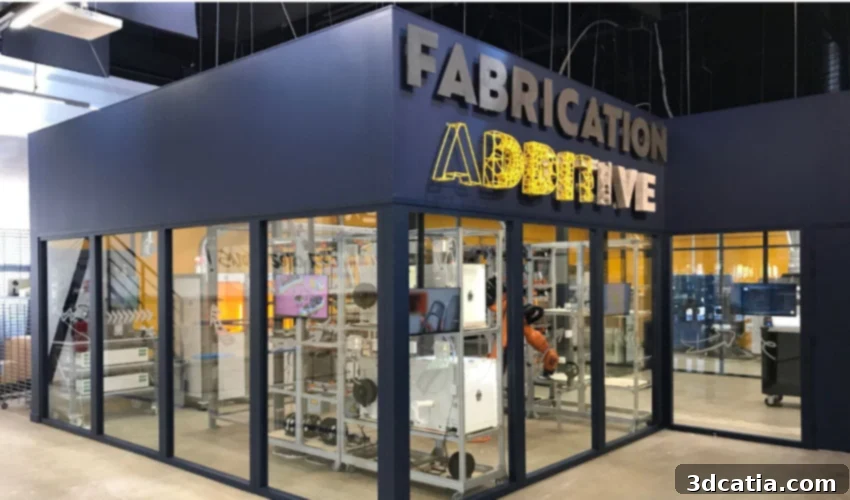
In a significant leap towards the future of sports retail, Decathlon, the internationally renowned French sporting goods giant, recently unveiled its groundbreaking “store concept of the future.” Located in Villeneuve d’Ascq, a vibrant hub in northern France, this innovative retail space, aptly named Decathlon DX, isn’t just a store; it’s an immersive experience designed to revolutionize how customers interact with sports products and technology. Spanning an impressive 800 square meters, Decathlon DX showcases an array of cutting-edge technologies, from seamless contactless payment systems to advanced 3D measurement and printing capabilities. Central to this new concept is the integration of an ADDLAB laboratory, inviting customers directly into the exciting process of designing and customizing tomorrow’s sports equipment. To delve deeper into the strategic applications and transformative potential of 3D technology within such a prominent global sports group, the 3Dnatives team had the privilege of speaking with Julien Guillen, Decathlon’s esteemed Leader of Additive Manufacturing Projects.
The Genesis of Innovation: Decathlon’s Journey into Additive Manufacturing
Decathlon’s foray into additive manufacturing, commonly known as 3D printing, is not a recent endeavor but a strategic initiative that commenced several years ago. This commitment to leveraging advanced production techniques led to the establishment of their pioneering ADDLAB laboratory – an insightful acronym cleverly blending “Additive Manufacturing” with “Laboratory.” Initially situated within Decathlon’s sprawling BTWIN Village campus in Lille, France, the ADDLAB was conceived as a nucleus for innovation and efficiency. Julien Guillen, a key figure in this transformative journey, articulates the initial vision: “We began using this technology to advance innovation, to help our product engineers save time, and above all to optimize the production process of our sports goods.” This statement underscores Decathlon’s multifaceted objectives: to foster groundbreaking ideas, accelerate product development cycles for its engineers, and fundamentally enhance the manufacturing efficiency of its vast range of sporting equipment.
Expanding Horizons: The Evolution and Impact of ADDLAB
Over the ensuing months and years, the initial concept and capabilities of the ADDLAB have blossomed exponentially within the Decathlon ecosystem. What began as a centralized facility in Lille has strategically expanded its footprint, now boasting multiple locations not only across France but also internationally. This expansion signifies Decathlon’s growing reliance on and belief in the power of additive manufacturing to drive its global operations. A pivotal moment in this evolution was Decathlon’s significant investment in HP’s Multi Jet Fusion technology. This state-of-the-art 3D printing platform has proven to be a game-changer, empowering the sports manufacturer to execute an incredibly wide array of applications across its product lifecycle. From rapid prototyping during the initial design phases, allowing engineers to quickly test and iterate on new concepts, to producing pre-series batches for market testing, and even generating crucial after-sales spare parts, Multi Jet Fusion has become indispensable. Its versatility extends across various sports fields, from precision components for cycling equipment to specialized parts for water activities, hiking gear, and more, ensuring that Decathlon can respond with agility and innovation to diverse consumer needs.
ADDLAB at Decathlon DX: Bringing Innovation to the Customer Front
The latest manifestation of this commitment is the integration of the newest ADDLAB directly into the heart of the Decathlon DX store. This strategic placement serves a dual purpose. Firstly, it provides a tangible, real-time demonstration of the brand’s pioneering spirit and innovative capabilities to its customers. Visitors can witness 3D printing in action, demystifying advanced manufacturing processes and showcasing how technology contributes to the products they love. Secondly, it fosters direct customer engagement. Imagine being able to personalize a bike part, a grip for a tennis racket, or a component for your hiking pole right in the store, participating actively in the design process. This interactive approach not only enhances the shopping experience but also cultivates a deeper connection between the customer and the brand, moving beyond traditional retail to a model of co-creation and bespoke solutions. The ADDLAB within Decathlon DX isn’t just a lab; it’s a dynamic showcase of how Decathlon is democratizing innovation and placing it directly into the hands of its community.
Benefits of Additive Manufacturing for a Global Sports Retailer
Decathlon’s embrace of additive manufacturing offers a multitude of benefits that extend far beyond simple prototyping:
1. Unprecedented Innovation and Customization
3D printing allows Decathlon to push the boundaries of product design. Engineers can create intricate geometries and complex structures that would be impossible or prohibitively expensive with traditional manufacturing methods. This enables the development of lighter, stronger, and more ergonomic sports equipment. Furthermore, the technology facilitates mass customization, allowing for products to be tailored to individual customer needs, preferences, or even specific body measurements. This could range from custom-fit bicycle saddles to personalized grips for sporting tools, offering an unparalleled level of user experience.
2. Accelerated Product Development and Time-to-Market
One of the most significant advantages for Decathlon is the drastically reduced lead time from concept to prototype. Traditional prototyping can take weeks or months, involving expensive molds and tooling. With 3D printing, design iterations can be printed and tested within hours or days, allowing engineers to rapidly validate concepts, identify flaws, and refine designs. This agility is crucial in the fast-paced sports industry, enabling Decathlon to bring innovative products to market much faster than competitors, gaining a significant competitive edge.
3. Cost Efficiency and Waste Reduction
Additive manufacturing builds objects layer by layer, only using the material necessary for the part. This “addictive” rather than “subtractive” process significantly reduces material waste compared to traditional machining. For Decathlon, this translates to lower production costs, especially for complex parts or low-volume runs. It also eliminates the need for expensive tooling in many cases, further enhancing cost efficiency. The ability to produce parts on-demand also minimizes inventory holding costs and the risk of obsolescence.
4. Enhanced Sustainability and Circular Economy
Decathlon’s commitment to sustainability is bolstered by 3D printing. By reducing material waste, enabling localized production (less transport), and facilitating the creation of spare parts on demand, the technology contributes to a more circular economy. Instead of discarding an entire product due to a broken component, a new part can be quickly and economically printed. This extends the lifespan of products, reduces landfill waste, and aligns with global efforts towards environmental responsibility. Furthermore, advancements in recyclable and bio-based 3D printing materials offer even greater sustainable potential.
5. Empowering Customer Engagement and Co-Creation
The Decathlon DX store exemplifies how 3D printing can transform the customer journey. By involving customers in the design process, offering personalization options, and providing a transparent view of manufacturing, Decathlon is building stronger brand loyalty and a unique retail experience. This co-creation model allows customers to feel a sense of ownership over their products and ensures that the equipment perfectly meets their individual requirements, leading to higher satisfaction and repeat business.
The Future of Sports Retail: A Vision Powered by Technology
Decathlon’s pioneering efforts with the DX store and the integrated ADDLAB are more than just an internal project; they represent a significant benchmark for the entire sports retail industry. This innovative approach signals a paradigm shift from traditional mass production and off-the-shelf sales to a future characterized by personalization, experiential retail, and on-demand manufacturing. Decathlon is not just selling products; it’s selling solutions, experiences, and a vision of how technology can enhance athletic performance and enjoyment. The strategic placement of 3D printing capabilities directly in a retail environment blurs the lines between manufacturing, design, and sales, creating a seamless and interactive ecosystem.
As Decathlon continues to expand its application of additive manufacturing, we can anticipate even more sophisticated levels of customization, localized micro-factories within or near retail spaces, and a deeper integration of digital design tools accessible to the average consumer. This forward-thinking strategy positions Decathlon not just as a retailer but as a leader in technological innovation, shaping the very definition of sports equipment and the way we acquire and interact with it.
What are your thoughts on Decathlon’s pioneering ADDLAB and the future-forward Decathlon DX store concept? We invite you to share your perspectives in a comment down below or join the conversation on our Facebook and Twitter pages! Don’t miss out on the latest advancements in additive manufacturing – remember to sign up for our free weekly Newsletter, delivering all the essential news in 3D printing directly to your inbox!