
3D Printing Nuclear Shock Absorbers: Revolutionizing Spent Fuel Transport with Additive Manufacturing
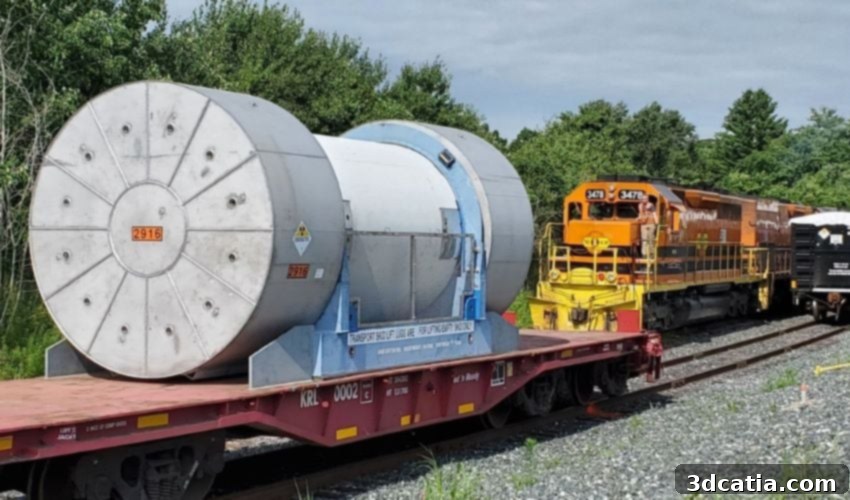
The safe and efficient transport of spent nuclear fuel is a critical challenge globally, demanding the highest standards of engineering and material science. At the heart of this safety protocol are robust shock absorbers, designed to protect sensitive contents from extreme impacts during transit. Back in 2019, an ambitious collaboration between Orano Federal Services and the University of North Carolina at Charlotte embarked on a pioneering study: exploring the potential of 3D printing for these vital components. Initial investigations, however, were met with significant technological and logistical obstacles. Fast forward seven years, and this groundbreaking research has been reinvigorated. Remarkable advancements in additive manufacturing (AM) technology now suggest that many of those previous barriers have been surmounted. This revival prompts a crucial question: Is 3D printing truly ready to transform the production of shock absorbers for the nuclear sector, offering tangible benefits in both safety and cost?
To fully appreciate the drive behind this innovative redesign, it’s essential to understand the limitations of traditional manufacturing methods. Historically, shock absorbers for spent nuclear fuel containers have been crafted from conventional materials such as balsa wood, redwood, or aluminum. While effective, these materials come with inherent challenges. Natural woods, for instance, can exhibit significant material variability, making consistent performance across all components difficult to guarantee. They are also susceptible to moisture absorption and pose flammability concerns under extreme conditions. Aluminum, while robust, requires extensive and precise machining to achieve the complex geometries necessary for optimal energy absorption, leading to substantial material waste and lengthy production times. The sheer size and precision required for these components mean that manufacturing costs can soar, typically ranging from a staggering $250,000 to $1 million per unit. This high price tag stems from the significant amounts of raw material, specialized machinery, and skilled labor involved in their fabrication.
Given these substantial traditional costs and material constraints, additive manufacturing, often referred to as 3D printing, naturally emerged as a highly promising alternative. The core promise of AM lies in its ability to build objects layer by layer, directly from a digital design. This method inherently optimizes material usage, drastically reducing waste compared to subtractive manufacturing processes like machining. Beyond mere material efficiency, AM offers unprecedented design freedom, enabling the creation of complex internal geometries and lattice structures that are impossible or prohibitively expensive to produce with conventional techniques. Such advanced designs can lead to superior performance characteristics, including enhanced energy absorption and significant weight reduction. While the theoretical benefits of AM were clear from the outset, the practical application, especially in a sector as demanding as nuclear, proved to be more intricate than initially anticipated.
Selecting the Optimal Additive Manufacturing Process for Nuclear Applications
A nuclear shock absorber is far more than a simple bumper; it is a meticulously engineered safety barrier designed to perform flawlessly under extreme conditions. These structures must reliably withstand a wide array of severe tests and stresses, including direct drops, prolonged fires, and high-velocity impacts. Each component must meet stringent dimensional accuracy, weight limits, and temperature resistance criteria. Manufacturing such a critical and large-scale component is an engineering feat that demands careful consideration of every aspect, from material selection to production methodology.
One of the primary hurdles encountered when the study commenced in 2019 was the technological limitation of available 3D printers. The build volumes of commercial machines at that time were often insufficient for producing parts of the necessary scale, forcing researchers to contend with significant size constraints and segmented designs. However, the rapid evolution of the additive manufacturing industry over the past seven years has largely mitigated this challenge. Today, industrial-scale 3D printers boast much larger build envelopes, making it feasible to print substantial components or larger sections, thus simplifying assembly and reducing potential points of failure.
For the production of these nuclear-grade shock absorbers using additive manufacturing, the research teams rigorously evaluated two primary technologies: Fused Deposition Modeling (FDM) and Laser Powder Bed Fusion (LPBF). FDM, also known as Fused Filament Fabrication (FFF), is a polymer-based process often chosen for its versatility, cost-effectiveness, and ability to process engineering-grade thermoplastics. LPBF, on the other hand, is a metal additive manufacturing technique that uses a laser to melt and fuse metallic powders, creating high-strength, dense metal parts. The study specifically utilized a Nikon SLM Solutions system for the LPBF approach, known for its precision and capabilities with demanding materials.
The LPBF process, while offering superior material properties for metal, presented a significant manufacturing complexity due to its build volume constraints at the time. Using this metal platform, the teams reported designing a single shock absorber that required the assembly of an astonishing 442 individual metal blocks, each measuring 25.4 × 25.4 × 50.8 cm. The meticulous process of printing, post-processing, and then precisely assembling hundreds of such blocks into a cohesive, high-performance structure was, by all accounts, an immense engineering challenge and a testament to the dedication of the researchers. This high part count inherently introduced potential points of weakness and increased manufacturing time and labor significantly.
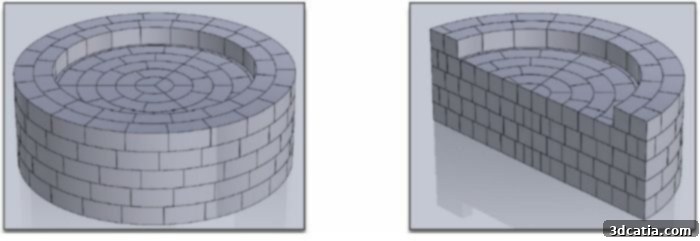
442 3D-printed metal blocks are assembled to form the entire structure.
In stark contrast, when utilizing the Fused Filament Fabrication (FFF) process, the number of individual blocks required for the entire shock absorber structure was dramatically reduced to just 36. These larger polymer blocks, each measuring 50.8 × 50.8 × 101.6 cm, significantly simplified the assembly process. This reduction in part count directly translates to less labor, fewer potential failure interfaces, and a more streamlined manufacturing workflow, highlighting a key advantage of FFF for large-scale components when appropriate materials are available.
Optimizing Density, Infill, and Achieving Weight Reduction through Advanced Design
Beyond the selection of a specific additive manufacturing process, one of the most profound advantages offered by 3D printing lies in its unparalleled ability to manipulate a part’s internal geometry and infill pattern. This innovative design freedom allows engineers to precisely control the density of a component, creating structures that are optimized for specific performance characteristics. By strategically designing the internal lattice or infill, it becomes possible to achieve exceptional energy absorption capabilities while simultaneously minimizing the amount of material required. This balance of strength, performance, and material efficiency is a paradigm shift from traditional manufacturing, which often relies on solid, heavy designs to ensure robustness.
In their practical investigations, the research teams rigorously tested various advanced infill geometries, including classic honeycomb structures and more complex Gyroid designs. Honeycomb patterns, characterized by their hexagonal cells, are well-known for their high strength-to-weight ratio and excellent energy absorption under uniaxial compression. However, Gyroid structures, which are triply periodic minimal surfaces, offer superior isotropic mechanical properties, meaning they perform equally well when stressed from any direction. This makes them particularly suitable for applications like shock absorbers, where impacts can come from multiple angles. The study’s findings were remarkable: by employing Gyroid designs, the teams achieved an astounding reduction in weight of up to 80%, all while maintaining or even improving strength across all directions and achieving a significantly lower overall material density. These results unequivocally highlight the clear and compelling performance benefits that additive manufacturing brings to complex engineering challenges.
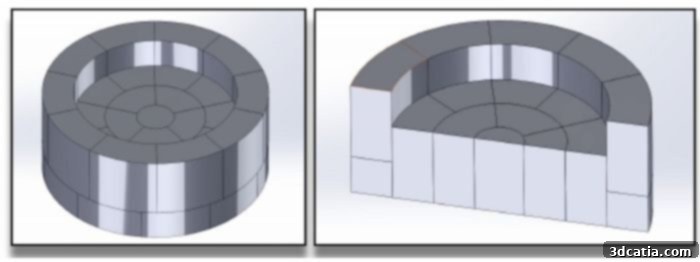
Using FDM, only 36 blocks were 3D-printed.
Unlocking Substantial Cost Savings
While performance and safety are paramount in the nuclear industry, the economic viability of any new technology is equally critical. So, what about costs? This question remains the central focus for adoption. The findings from Orano and UNC Charlotte reveal compelling financial advantages. After meticulously accounting for machine operating expenses, material consumption, and labor costs, the teams estimated staggering savings of over $1 million for a shock absorber design produced using FFF with just 5% infill. This dramatic reduction in cost, especially when compared to the multi-million dollar price tags of traditionally manufactured units, makes the appeal of additive manufacturing undeniably clear. These savings are primarily driven by: significantly reduced material usage due to optimized infill patterns, less complex post-processing, and a substantial decrease in labor required for assembly (36 FFF blocks versus 442 LPBF blocks). The shift to fewer, larger components streamlines the entire manufacturing and assembly pipeline, presenting a compelling economic argument for AM.
Navigating Regulatory Challenges and Charting the Future
Despite the impressive performance and cost benefits, the path to widespread adoption of additive manufacturing in the nuclear industry is not without its hurdles. The nuclear sector is defined by its exceptionally stringent safety and reliability requirements, operating under a rigorous framework of established standards and regulations. The current study, while highly promising, underscores a critical gap: the lack of widely recognized and established nuclear-grade standards specifically tailored for additive manufacturing processes and materials. Key questions persist regarding the long-term performance, durability, and reliability of 3D-printed equipment under the extreme and unforgiving conditions of nuclear operations. This necessitates comprehensive testing, validation, and ultimately, certification processes to build confidence among regulatory bodies and industry stakeholders.
Addressing these regulatory challenges will require a concerted effort from researchers, industry, and governmental bodies to develop new qualification protocols, material databases, and inspection techniques specific to AM. Establishing these standards will not only pave the way for 3D-printed shock absorbers but also unlock the potential for additive manufacturing to revolutionize other critical components within the nuclear energy infrastructure, from reactor parts to waste management systems. One thing is certain: continued and accelerated research in the nuclear field, particularly in the realm of advanced manufacturing, promises to yield immense benefits. It will not only enhance the safety and economic efficiency of nuclear power and waste transport but will also serve as a powerful catalyst for the further advancement and industrial maturation of 3D printing technologies across all high-stakes industries.
What are your thoughts on the transformative potential of additive manufacturing in the nuclear industry? We invite you to share your insights in a comment below or join the conversation on our LinkedIn or Facebook pages! Furthermore, don’t miss out on the latest advancements and news in 3D printing by signing up for our free weekly Newsletter, delivered directly to your inbox. You can also explore all our in-depth videos and interviews on our YouTube channel.
*Cover Photo Credits : Orano Federal Services