
Revolutionizing Sports: How 3D Printing Enhances Performance, Safety, and Customization
In recent years, 3D technologies, particularly additive manufacturing, have profoundly transformed various industries, and the consumer goods sector is no exception. Among these, the sports industry stands out as a frontier for innovation, where 3D printing is rapidly gaining traction. Far from being limited to a niche application, 3D printing in sports is demonstrating its versatility across a wide spectrum of athletic gear and equipment. From the most advanced running shoes designed for elite athletes to custom-fitted ski boots, protective helmets, and even high-performance sports car components, additive manufacturing offers unparalleled opportunities for customization, enhanced performance, and superior safety. This article delves into the remarkable innovations already realized through the integration of 3D printing within the sports sector, showcasing how it’s empowering both professionals and enthusiasts with gear tailored precisely to their needs.
The Vicis Zero2-R Matrix ID Trench Helmet: A New Standard in Head Protection
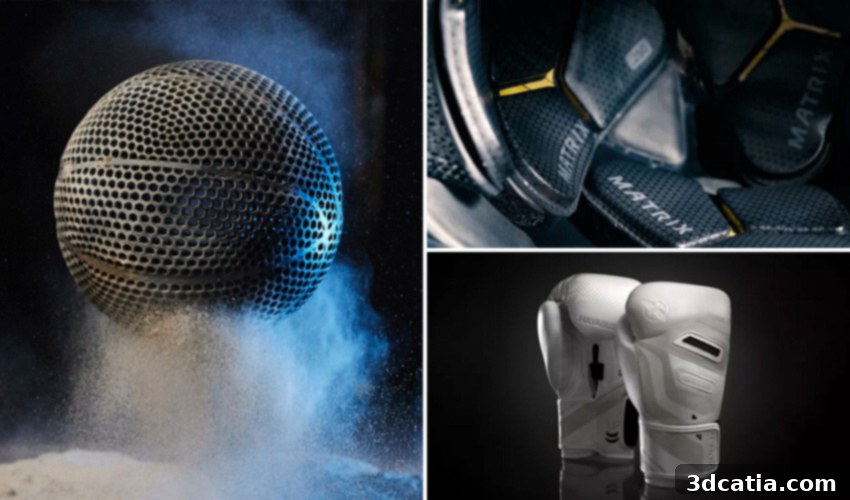
The critical importance of head protection in contact sports, especially American football, cannot be overstated. Traditional helmets often fall short in providing optimal protection during high-impact collisions, primarily due to the limitations of conventional foam padding, which offers a generic fit and uniform energy absorption. Recognizing this challenge, equipment manufacturer Vicis has engineered a groundbreaking solution: the Zero2-R Matrix ID Trench helmet. This innovative helmet offers significantly greater protection against head injuries through its revolutionary internal padding system. What sets it apart is the personalized approach to its design: each helmet’s padding is individually customized to the precise contours of a player’s head, achieved through a detailed 3D scan. This tailored fit ensures maximum contact and protection.
The padding itself is comprised of complex lattice structures, meticulously 3D printed from advanced materials. These intricate geometries are remarkably lightweight yet possess superior impact absorption capabilities compared to traditional foams. The sophisticated design allows for targeted energy dispersion, mitigating forces from various impact angles more effectively. The integration of 3D printing thus facilitates a dual benefit: a perfectly snug fit that prevents shifting during play and a substantial reduction in helmet weight, enhancing player comfort and reducing neck strain. The effectiveness of this technology has been independently validated, with the NFL’s own test laboratory rating the Vicis Zero2-R Matrix ID Trench helmet as the premier head protection system available to players this year. Consequently, a growing number of prominent NFL players, including quarterbacks Patrick Mahomes of the Kansas City Chiefs, Tua Tagovailoa of the Miami Dolphins, and Derek Carr of the New Orleans Saints, are now utilizing these advanced helmets. Vicis is committed to making this cutting-edge technology more accessible and affordable, aiming to extend its availability to college and high school athletes, thereby elevating safety standards across all levels of the sport.

Credits: Forbes/Vicis
DREVE’s FotoDent® 405 nm Splint: Custom Dental Protection for Athletes
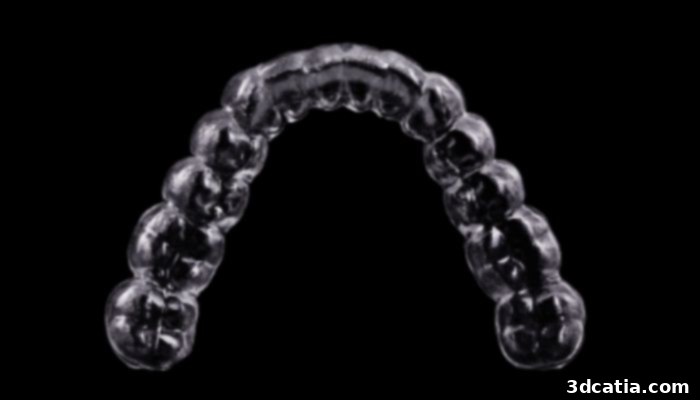
The advent of 3D printing in the dental sector has unlocked a myriad of innovations, leading to new possibilities in patient care and product development. DREVE, a well-established leader in this field with over 80 patents, exemplifies this advancement. While their product portfolio is extensive, spanning various solutions and materials, one notable application relevant to sports is their FotoDent® 405 nm splint. Designed with athletes in mind, this dental splint offers superior protection and comfort, crucial for individuals engaged in physically demanding activities where dental injuries or bruxism can be a concern.
The manufacturing process of the FotoDent® 405 nm splint leverages a high-quality, light-curing FotoDent® 405 nm material. This specific resin, optimized for 3D printing, yields a final product that is not only highly resistant to wear and tear but also boasts an exceptionally smooth surface finish. This combination of durability and precision is paramount for a device that sits within the mouth, ensuring longevity and preventing irritation. Furthermore, the splint is biocompatible, meaning it is safe for prolonged contact with oral tissues, and remarkably easy to clean – a vital feature for athletes who require stringent hygiene for their equipment. Its custom-fit nature, enabled by 3D printing, ensures maximum comfort and effectiveness, making it an ideal choice for athletes across various disciplines seeking reliable dental protection and support.
Credits: DREVE
The Kask Elemento Bicycle Helmet: Aerodynamics and Safety Through Additive Manufacturing
In the competitive world of cycling, performance and safety are paramount, and helmet design plays a crucial role in both. Kask, a renowned helmet manufacturer, has pushed the boundaries with its Kask Elemento, a luxury helmet meticulously engineered for a variety of cycling disciplines, including gravel, road, cross-country, and cyclocross. Launched in spring 2023 with an impressive price tag of €375, the Elemento’s cost is justified by the integration of multiple cutting-edge technologies, with 3D printing at its core, aimed at optimizing rider experience.
The Kask Elemento features several technological advancements. The OCTOFIT+ system ensures a superior and individualized fit, allowing for precise adjustment to any head shape, which is critical for comfort during long rides and for maintaining helmet stability during impacts. Furthermore, Fluid Carbon 12 technology is incorporated to enhance both aerodynamics and ventilation, reducing drag and keeping the rider cool. The most innovative element, however, is the Multipod system. This inner lining is a structure made from an advanced elastomer material, precisely 3D-printed and then seamlessly integrated into the helmet. The Multipod system significantly contributes to improved ventilation, allowing for better airflow around the head. More importantly, its isotropic features provide increased safety in the event of falls and impacts. The complex lattice design of the 3D-printed Multipod allows for multi-directional energy absorption, distributing impact forces more effectively than traditional, uniform padding. This innovative approach to safety and comfort highlights the transformative potential of additive manufacturing in protective gear. Kask is not alone in embracing this technology; other top-level cycling brands such as Fizik and Specialized have also showcased their commitment to innovation by introducing 3D-printed components in their product lines, signaling a clear trend towards personalized and high-performance gear in professional cycling.

Credits: Kask
Advanced 3D Printed Bicycle Components: Pushing the Limits of Cycling Performance
Beyond helmets, the realm of bicycle 3D printing offers a vast and diverse array of possibilities, fundamentally altering how bikes are designed and manufactured for performance, customization, and sustainability. Several ambitious projects are already demonstrating the profound impact of additive manufacturing on various bicycle components.
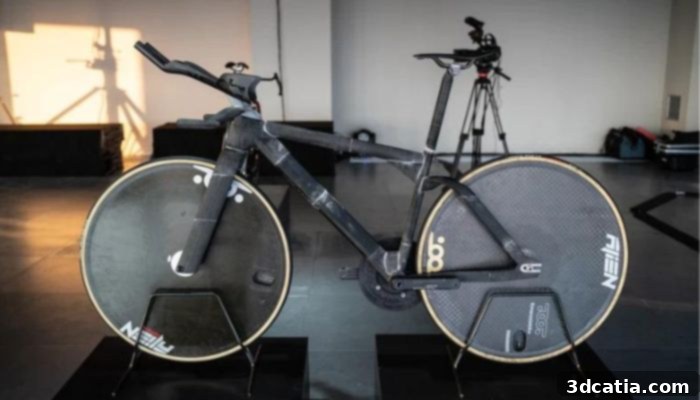
A prime example is T°Red’s Olympic Cycling Falcon Project, which is harnessing the technological innovation of additive manufacturing to produce high-performance bicycles for athletes competing in the 2024 Paris Olympics. This new production process enables manufacturers to experiment with novel materials, create exclusive and aerodynamic designs previously impossible with traditional methods, and significantly enhance the sustainability of their products by reducing material waste. The company utilizes the Anycubic Kobra Max 3D printer to fabricate these advanced components, which are then meticulously assembled into complete bicycles. Concurrently with the 2024 Olympics, global engineering technology company Renishaw has renewed its partnership with the British cycling team. Renishaw employs advanced metal 3D printing techniques to produce incredibly lightweight and complex parts for the athletes. These components are specifically designed to minimize drag and maximize power transfer, directly contributing to increased bike speed and competitive advantage.
The application of 3D printing extends across a wide range of bicycle parts, from critical structural elements to ergonomic interfaces. Beyond frames and specialized components, additive manufacturing is being used for bicycle saddles, grips, and even high-performance brake levers. High-tech company TRUMPF, in collaboration with bicycle brake manufacturer Trickstuff, produces bespoke brake levers using 3D printing. The primary advantage here is the ability to individually adapt these levers to the unique hand morphology and preferences of each rider, providing unparalleled comfort and control. Furthermore, this method offers environmental benefits through optimized material usage and reduced waste, alongside creating more robust and durable components. The cumulative effect of these innovations is a new generation of bicycles that are lighter, stronger, more aerodynamic, and perfectly tailored to the individual athlete, ultimately enhancing both performance and the overall cycling experience.
Credits: Anycubic
The KING Supersport-35: A 3D Printed Golf Club Revolutionizing Putting
In the precision-driven sport of golf, equipment innovation constantly seeks to provide players with an edge. Cobra Golf, in a groundbreaking partnership with HP and SIK golf, has introduced a significant leap forward with the KING Supersport-35, their first-ever 3D printed golf club. This putter is crafted from 316 stainless steel, a material known for its strength and durability, processed using HP Metal Jet Technology, which allows for the creation of intricate and precise metal parts.
The true marvel of the KING Supersport-35 lies in its unique 3D printed body and lattice design. This complex internal structure is not merely aesthetic; it is meticulously engineered to ensure optimal weighting throughout the putter head. By precisely distributing mass, the design achieves the highest Moment of Inertia (MOI) for a blade-shaped putter. A higher MOI translates to increased stability and forgiveness on off-center hits, meaning that even if the ball isn’t struck perfectly from the sweet spot, the putter head resists twisting, resulting in a more consistent roll and better distance control. Complementing this innovative weighting, the putter integrates SIK Face Technology. This patented face design features four descending lofts, which are crucial for producing the most consistent and accurate roll for every putting stroke, regardless of the player’s attack angle. The synergy of 3D printing for optimal weighting and SIK Face Technology for consistent roll makes the KING Supersport-35 a truly revolutionary feat in golf club design, offering golfers an unprecedented level of control and precision on the green.
The Raptor Protective Mask for Athletes: Tailored Facial Protection
Facial injuries are an unfortunate reality in many sports, from contact disciplines like basketball and soccer to individual sports where accidental impacts can occur. Standard protective masks often offer a generic fit, which can compromise both comfort and effective protection, especially for athletes recovering from an injury. Recognizing this critical need, Invent Medical has developed the Raptor mask, a revolutionary face protector designed to offer superior, customized protection for athletes.
The Raptor mask’s core advantage lies in its fully customized design, which begins with a precise 3D scan of the athlete’s face. This digital blueprint captures every unique contour and dimension, allowing for a perfectly tailored fit. The detailed scan data is then fed into advanced 3D software, where the mask’s design is refined to ensure optimal coverage, ventilation, and comfort, without obstructing vision. Finally, the customized design is brought to life through 3D printing, utilizing HP’s Multi Jet Fusion technology. This additive manufacturing process allows for the creation of lightweight yet incredibly strong masks with complex geometries that conform perfectly to the wearer’s face. According to Invent Medical, the Raptor mask provides significantly greater protection than other devices currently available on the market. Its bespoke nature means there are no pressure points or gaps, ensuring maximum impact absorption and stability during intense activity. Furthermore, for athletes recovering from more serious facial injuries, the precise fit and protective qualities of the Raptor mask are invaluable in aiding post-operative recovery, allowing them to return to play with confidence and reduced risk of re-injury. This application exemplifies how 3D printing is making sports safer and more inclusive for all athletes.

Photo credits: Raptor
Adidas MC87 4D Golf Shoes: Combining Heritage with 3D Printed Innovation
Adidas has long been at the forefront of integrating 3D printing into sportswear, particularly for the soles of its athletic footwear. The company has already demonstrated the transformative potential of additive manufacturing with models like the 4DFWD and the FUTURECRAFT STRUNG, which utilize 3D printed lattice structures in their midsoles to provide enhanced cushioning and energy return for various types of athletes. Building on this success, Adidas has now taken a significant step further by designing specific footwear tailored for the unique demands of golf.
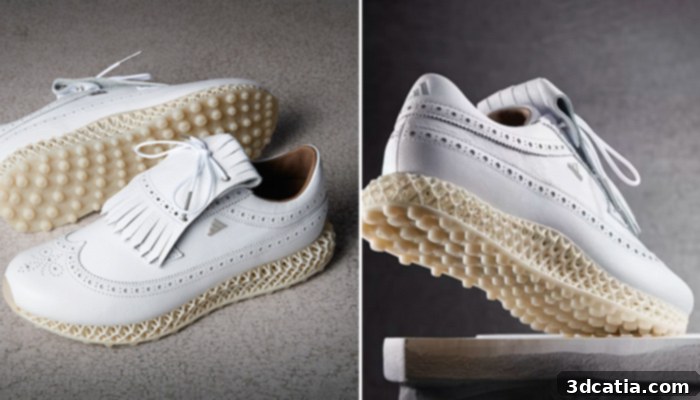
The new Adidas MC87 4D golf shoe is a unisex and timeless model that elegantly fuses the capabilities of cutting-edge technologies with a classic vintage aesthetic. This innovative footwear is manufactured using Carbon’s Digital Light Synthesis (DLS) resin 3D printing technology, a process known for its ability to produce highly intricate and durable lattice structures. While the new design draws inspiration from previous Adidas models, it has been thoroughly modernized and enhanced with contemporary features. Key improvements include a waterproof leather upper, crucial for maintaining comfort and performance on the golf course in various weather conditions, and significantly improved overall comfort. The 3D printed sole provides targeted cushioning and stability, adapting to the dynamic movements of a golfer’s swing and walk. This allows for optimal ground contact and support throughout a round, reducing fatigue and enhancing performance. By blending a classic silhouette with state-of-the-art additive manufacturing, Adidas is demonstrating how heritage and innovation can coexist to create superior sports gear.
Credits: Adidas
Tailored Fits: The Future of Ski Boots Through 3D Printing
For avid skiers, the perennial dilemma has always been choosing between comfort and high performance when it comes to ski boots. Boots that are too loose might feel more comfortable initially but inevitably compromise control and responsiveness, hindering a skier’s ability to carve precisely and react quickly on the slopes. Conversely, overly rigid boots can lead to discomfort, pressure points, and even restricted blood circulation, resulting in cold, numb toes and reduced enjoyment. Addressing this long-standing trade-off, Tailored Fits has emerged with a revolutionary solution, leveraging state-of-the-art 3D printing technologies to create ski boots that perfectly harmonize comfort and unparalleled performance.
The innovation begins with advanced 3D scan measuring technology. Each skier’s foot and lower leg are precisely scanned, capturing every unique anatomical detail. This highly accurate digital data then informs the 3D printing of a custom inner boot, engineered specifically for that individual. This bespoke fit is the cornerstone of Tailored Fits’ success, ensuring an incredibly direct power transmission from the skier’s leg to the ski. With no wasted movement or energy due to gaps or ill-fitting materials, skiers experience enhanced control, improved responsiveness, and a more intuitive connection with the terrain. Furthermore, Tailored Fits has ingeniously incorporated a buckle-less design into their boots. This innovative approach not only eliminates common pressure points caused by traditional buckles but also guarantees unobstructed blood circulation. The result is a dual benefit for the user: not only are they able to get a more refined and nuanced feel of the slopes, but they also banish the discomfort of cold toes, even during prolonged periods in freezing conditions. By marrying custom 3D printing with thoughtful ergonomic design, Tailored Fits has truly redefined the ski boot, offering an optimal blend of comfort, precision, and performance that was once considered impossible.
Riddell SpeedFlex Precision Diamond Helmet: Unprecedented Safety for American Football
In a high-contact sport like American Football, player safety, particularly head protection, is of paramount concern. Continuous innovation in helmet technology is crucial to mitigate the risks associated with impacts. Recognizing this imperative, Riddell, a leader in football equipment, forged a powerful partnership with Carbon, a pioneering 3D printing technology company, to create the Riddell SpeedFlex Precision Diamond Helmet. This collaboration resulted in a groundbreaking feature: the first-ever 3D printed football helmet liner.
Currently ranked as one of the NFL’s highest-performing helmets, the SpeedFlex Precision Diamond Helmet incorporates a sophisticated 3D printed lattice liner. This intricate structure is digitally manufactured using Carbon’s proprietary Digital Light Synthesis™ (DLS™) technology, which enables the creation of complex, precisely engineered polymer structures with exceptional material properties. The efficacy of this liner is largely attributed to its customization. Riddell utilizes its advanced Precision-Fit head scanning and helmet fitting process to generate a digital map of each athlete’s head. This data is then used to create a customized, 3D printed helmet liner that precisely contours to the individual’s head shape. This bespoke fit ensures maximum surface contact for optimal energy management during impacts, reducing localized pressure and dispersing forces more effectively across a larger area. The project rapidly moved from the prototype stage to full serial 3D production of these liners, a feat made possible with the invaluable assistance of OECHSLER. As one of the largest manufacturers in the additive industry, OECHSLER has successfully produced and delivered thousands of these advanced liners to Riddell, leveraging their extensive network of over 150 Carbon L1 printers strategically located across three continents. This collaboration highlights the scalability and industrial viability of 3D printing for critical, high-volume athletic safety equipment.
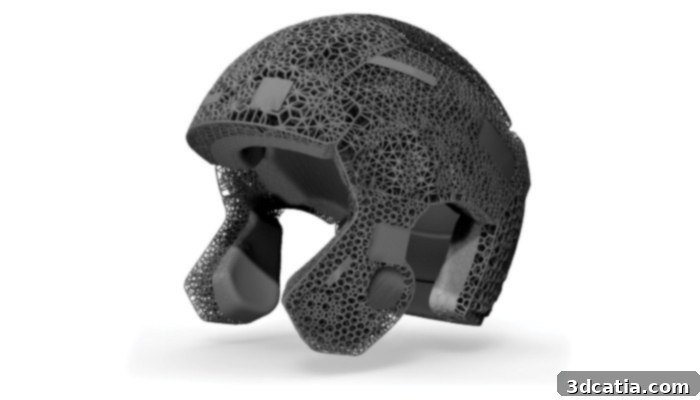
Wilson’s Airless, 3D Printed Basketball: Reimagining Sports Equipment
The traditional basketball, reliant on air pressure for its bounce and feel, has remained largely unchanged for decades. However, sports manufacturer Wilson, in a visionary partnership with EOS (a leader in industrial 3D printing) and DyeMansion (specializing in post-processing solutions), has unveiled a revolutionary concept: the first usable prototype of a 3D printed, airless basketball. This innovation challenges conventional manufacturing paradigms and opens up new avenues for sports equipment design.
The defining characteristic of this airless ball is its striking hexagonal lattice structure, which is so open that one can see directly through it. This intricate design is brought to life using SLS (Selective Laser Sintering) 3D printing, a technology capable of producing robust, functional parts with complex internal geometries. Following the printing process, DyeMansion’s advanced post-processing techniques are applied to achieve a smooth and consistent surface finish, ensuring the ball handles and feels as close to a regulation basketball as possible. Despite the absence of internal air pressure, the ball has been meticulously engineered to replicate the bounce, trajectory, and tactile sensation of a traditional basketball. Wilson’s ambition with this project extends beyond merely creating a novelty item; the company aims to leverage 3D printing technology to push the boundaries of possibility and fundamentally “change perceptions” on manufacturing and product design. This airless ball has the potential to introduce greater accessibility and opportunity within basketball and other sports, eliminating concerns about punctures or deflation. Its functionality and performance have even been rigorously tested in a real-world, high-stakes environment, famously being featured on the court and used by NBA stars during the 2023 AT&T Slam Dunk Contest, showcasing its readiness for competitive play.
Radford’s Lotus Type 62-2 Sports Car: Additive Manufacturing in Automotive Performance
While typically associated with personal gear, the definition of “sports” also extends to competitive racing, making high-performance sports cars a fitting inclusion in the discussion of 3D printing’s impact on athletic endeavors. One compelling example comes from the iconic luxury automotive brand Radford, which has meticulously crafted the Lotus Type 62-2 coach-built sports car. This vehicle represents a harmonious blend of classic automotive heritage and cutting-edge modern manufacturing techniques, prominently featuring additive manufacturing.
The Radford Lotus Type 62-2 boasts an astonishing 500 3D printed parts, a testament to the deep integration of this technology into its construction. The creation of these components was made possible through a strategic partnership with Stratasys, a global leader in additive solutions. The car was conceptualized by television personality Ant Anstead and former Formula One champion and renowned car designer Mark Stubbs, with the explicit goal of bringing the timeless elegance and raw performance of the classic Lotus Type 62-2 supercar into a more modern era. Stratasys utilized a range of its advanced printers for the production of these parts. Large-format components, especially those requiring high strength and precision, were fabricated using the Stratasys F770™ and F900™ FDM (Fused Deposition Modeling) printers. For internal parts, intricate components, or specific rear light elements where fine detail and smooth surfaces were crucial, PolyJet and SLA (Stereolithography) technologies were also employed. The extensive use of 3D printing allowed Radford to achieve unparalleled design freedom, optimize parts for weight and strength, and accelerate development cycles, ultimately contributing to a vehicle that embodies both exquisite craftsmanship and state-of-the-art performance, a true athlete of the road.
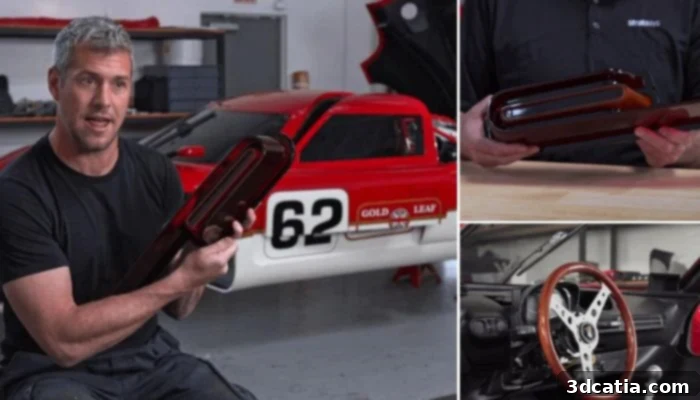
Photo credits: Radford
3D Scanning for Customized Soccer Shinguards: Precision Protection
For professional and amateur footballers alike, shinguards are an indispensable piece of equipment, acting as a crucial barrier against impact injuries on the pitch. Despite their vital role, shinguards are often chosen without much consideration for individual morphology, leading to ill-fitting, uncomfortable, and potentially less effective protection. Recognizing this widespread issue, Batoco has innovated a smart solution that leverages 3D technologies to create highly customized shin guards, ensuring optimal fit and protection for every player.
Batoco’s process centers around precision 3D scanning. A soccer player initiates the customization by performing a 3D scan of their shin, typically using a specialized application developed by Batoco on a smartphone or a dedicated scanner. This digital data, which captures the unique contours and dimensions of the player’s lower leg, is then transmitted to Batoco. The company then uses this precise data to manufacture a bespoke shin guard that perfectly matches the player’s anatomy. The shin guards themselves are crafted from carbon fiber, a material renowned for its exceptional strength-to-weight ratio. This choice of material ensures that the shin guard provides robust protection against forceful impacts while remaining remarkably lightweight, preventing any hindrance to the player’s agility and comfort during play. It’s important to note that while the final carbon fiber shin guard is not directly 3D printed, the entire customization process is fundamentally enabled by 3D scanning technologies. This approach exemplifies how 3D tech, even when not directly used for fabrication, plays an integral role in designing tailor-made products that are perfectly adapted to their wearer, offering a significant improvement over mass-produced, generic alternatives in terms of comfort, fit, and protective efficacy.
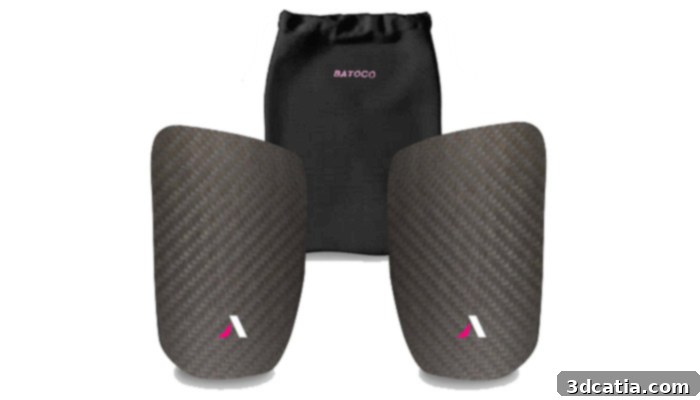
Credits: Batoco
The AMbelievable Shock Absorber: Mitigating Vibration in Tennis
Tennis is a remarkably demanding sport, requiring not only exceptional skill and strategic thinking but also immense physical strength and endurance. Professional matches can stretch for hours, demanding peak performance from athletes over prolonged periods. This relentless exertion inevitably leads to fatigue and significant wear and tear on the body, particularly the arm and shoulder. Any innovation that can help mitigate these effects and maintain a high level of play for longer is therefore highly welcomed in the professional circuit.
Italian company Additive Appliances has introduced a clever solution in the form of the AMbelievable shock absorber, a small yet highly effective device designed for tennis players’ rackets. This innovative accessory is made possible through 3D printing, which allows for the creation of a unique internal geometry tailored specifically for vibration dampening. The primary function of the AMbelievable is to absorb the harmful vibrations generated by striking the ball. These vibrations, if unchecked, can travel up the arm, contributing to muscle fatigue and increasing the risk of common tennis-related injuries such as tennis elbow (lateral epicondylitis). Thanks to its ingeniously designed 3D printed geometry, the AMbelievable is capable of absorbing the three primary vibration frequencies produced by rackets, offering comprehensive dampening. By significantly reducing the transmission of these detrimental vibrations, the device allows tennis players’ arms to suffer less strain and wear throughout extended matches. This translates to enhanced comfort, reduced risk of injury, and the ability to maintain peak performance levels for longer, ultimately giving athletes a tangible advantage on the court and prolonging their careers.
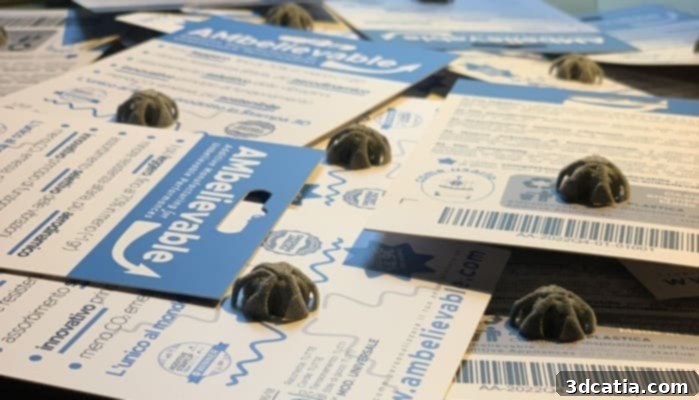
Credits: Additive Appliances
Hayabusa 3D Printed Boxing Gloves: A New Era of Impact Protection
In combat sports like boxing, the protection offered by gloves is paramount, safeguarding both the wearer’s hands and their opponent. Traditional boxing gloves rely heavily on layered foam padding to absorb and dissipate impact forces. However, Japanese sporting goods manufacturer Hayabusa has reimagined this fundamental aspect, unveiling their new T3D boxing gloves, which represent a significant leap forward in protective gear thanks to additive manufacturing.
These T3D gloves are the first of their kind to feature a completely 3D printed internal structure. Eschewing conventional foam, Hayabusa has integrated thousands of intricately designed, layered lattice structures to manage shock absorption. This innovative approach allows for precise engineering of the material’s response to impact, distributing forces more effectively and consistently across the hand. The result is a glove that offers superior protection, potentially reducing the risk of hand injuries for the boxer. Beyond enhanced safety, the sleek and futuristic structure enabled by 3D printing also contributes to the gloves’ overall performance. Hayabusa asserts that these 3D printed gloves are more durable and long-lasting than their foam-padded counterparts, with the lattice resisting compression and degradation over time. Designed with both comfort and peak performance in mind, these revolutionary gloves promise to set a new standard in boxing equipment, delivering a knockout combination of advanced protection, longevity, and ergonomic fit for fighters.
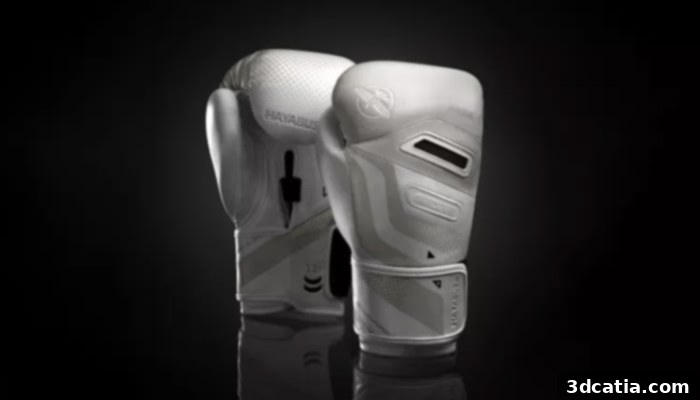
Image credits: Hayabusa
The examples above vividly illustrate how 3D printing is not just a passing trend but a powerful, transformative force within the sports industry. From enhancing athlete safety through custom-fitted helmets and protective gear to optimizing performance with bespoke bicycle components and innovative golf clubs, additive manufacturing offers unparalleled opportunities for customization, material innovation, and rapid prototyping. The ability to create complex geometries, tailor products to individual biometrics, and utilize advanced materials is fundamentally changing how sports equipment is designed, manufactured, and utilized by athletes at all levels. As the technology continues to evolve and become more accessible, we can anticipate even more groundbreaking applications that will further redefine the future of sports. Which of these revolutionary applications captures your imagination the most, or perhaps you’ve encountered other incredible uses of 3D printing in sports? Let us know your thoughts in a comment below or join the conversation on our LinkedIn, Facebook, and Twitter pages! Don’t forget to sign up for our free weekly Newsletter here to get the latest 3D printing news delivered straight to your inbox. You can also find all our videos on our YouTube channel.