
Revolutionary Self-Healing Flexible 3D Printable Materials: Princeton’s Game-Changing Innovation in Thermoplastic Elastomers
In an era defined by rapid technological advancement and a growing demand for bespoke solutions, the development of sophisticated, multifunctional materials stands at the forefront of global innovation. University research projects across the world are increasingly leveraging the transformative power of additive manufacturing, more commonly known as 3D printing, to engineer materials with unprecedented capabilities. This powerful convergence of cutting-edge material science and advanced manufacturing techniques is particularly impactful in critical sectors such as the medical field. Here, the imperative to create fabrics and structures capable of promoting organ regeneration, facilitating the repair of bone structures, or designing advanced, bio-integrated biomedical devices is not merely an aspiration but a crucial requirement for future healthcare. Simultaneously, other diverse sectors are witnessing a material revolution as novel 3D printable substances emerge, promising a vast and exciting array of potential applications that can redefine product performance, expand design freedom, and significantly enhance manufacturing efficiency across industries.
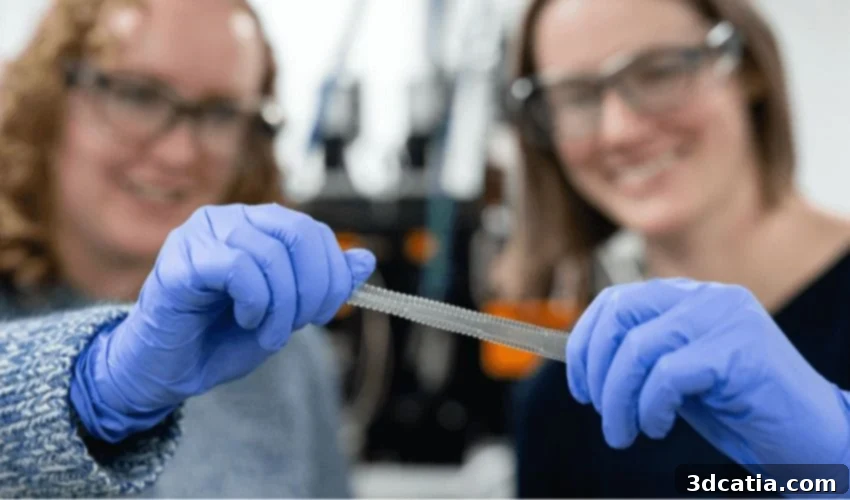
Leading this exciting charge into the future of materials, a dedicated team of engineers from Princeton University, under the insightful leadership of Emily Davidson and with significant contributions from Alice Fergerson, has unveiled a truly groundbreaking plastic material. This innovative substance possesses the remarkable and highly sought-after ability to adopt varying levels of flexibility, offering unparalleled and precise control over its mechanical properties. At its fundamental core, the material is meticulously composed of a specific class of polymers known as Thermoplastic Elastomers (TPEs). TPEs are a versatile group of materials renowned for their unique combination of rubber-like elasticity—allowing for stretch and recovery—and thermoplastic processability, meaning they can be repeatedly melted and reformed. What truly sets this development apart is the engineers’ profound mastery in designing and manufacturing flexible 3D-printed structures whose rigidity can be precisely and intelligently adjusted according. Through the strategic and advanced application of 3D printing technology, the Princeton research team has successfully manipulated the physical characteristics of this advanced material, enabling it to exhibit highly desirable anisotropic properties. This means the material can be engineered to stretch and bend repeatedly and extensively in one specific direction while simultaneously retaining remarkable stiffness and rigidity in another perpendicular direction. This unprecedented directional control over mechanical properties opens up a myriad of sophisticated design possibilities previously unattainable with conventional materials and manufacturing methods.
The profound implications of such an intelligently designed and manufactured material are vast and far-reaching, promising to impact fields ranging from cutting-edge soft robotics to advanced medical prosthetics. The ability to dictate and control flexibility at a localized level within a single, integrated 3D-printed object represents a significant paradigm shift in material engineering and product design. Imagine, for instance, a next-generation prosthetic limb that is meticulously engineered to be rigid enough to bear substantial weight and provide structural support in certain critical areas, yet simultaneously flexible enough to comfortably conform to subtle body contours or efficiently absorb impact in others. Or consider a sophisticated soft robot whose delicate grippers can be precisely programmed to be incredibly gentle for handling fragile objects, yet robust and firm enough to securely lift heavier loads when required. This pioneering innovation not only dramatically expands the functional envelope and performance capabilities of 3D printable materials but also promises to streamline inherently complex manufacturing processes by seamlessly integrating diverse and nuanced mechanical properties into a single, efficient fabrication step. This holistic approach reduces assembly needs, material waste, and overall production time, paving the way for more efficient and customizable product development.
Understanding the Unique Nanoscale Characteristics of This Advanced Plastic Material
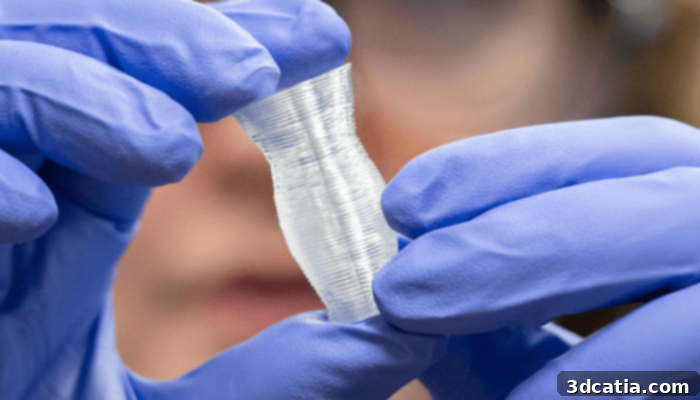
The specific thermoplastic elastomer carefully selected and meticulously developed by the innovative Princeton University engineering team is a sophisticated block copolymer. Block copolymers are fascinating macromolecules fundamentally composed of two or more distinct polymer blocks that are covalently linked together. Unlike simple polymer blends, where different polymers might macroscopically separate into distinct phases, block copolymers exhibit a highly controlled phenomenon known as microphase separation. When this particular TPE is subjected to heat, it transitions into a molten state, becoming easily moldable and highly suitable for processing through advanced 3D printing techniques. As it subsequently cools, however, its unique and intricately designed internal structure dictates a precise solidification into a robust yet elastic matrix. This remarkable phenomenon is elegantly explained by the inherent behavior of the copolymer’s internal components – specifically, its constituent homopolymer blocks. Rather than mixing homogeneously like typical liquids, these distinct blocks possess an intrinsic immiscibility, causing them to inherently separate, much like oil and water. This fundamental property drives the spontaneous formation of highly ordered nanostructures within the bulk material, which are critical for its performance.
Ingeniously leveraging this inherent characteristic of microphase separation, the Princeton researchers have created a material architecture that is truly visionary. It consists of rigid cylindrical nanodomains, meticulously formed and precisely dispersed within a continuous, highly elastic polymer matrix. This exquisitely tuned morphology is the fundamental secret behind the material’s dual nature: it allows the material to remain exceptionally flexible and compliant overall, providing excellent stretchability and resilience, while simultaneously embedding internal rigid structures that contribute directly to its adjustable stiffness and overall robustness. The continuous elastic matrix provides the essential stretchability, elasticity, and resilience, enabling the material to deform and recover. Conversely, the rigid cylindrical nanodomains act as sophisticated reinforcing elements, dictating the material’s precise stiffness and crucial directional properties. This unparalleled nanoscale engineering enables the material to withstand repeated cycles of stress and strain, including bending, stretching, and compression, without compromising its structural integrity or desired mechanical response. This makes it an exceptionally durable and long-lasting material for demanding, dynamic applications where reliability and consistent performance are paramount.
The precision of this nanoscale architecture is truly extraordinary and pushes the boundaries of conventional material design. The rigid cylindrical structures embedded within this advanced plastic material boast an astonishingly small thickness, ranging from just 5 to 7 nanometers. To provide a tangible scale for this microscopic dimension, consider that the diameter of a typical human hair is approximately 90,000 nanometers, while the intricate double helix of a DNA molecule is roughly 1 nanometer wide. This places the material’s structural control squarely in the realm of sophisticated molecular engineering, a domain far beyond what traditional, bulk manufacturing methods can ever hope to achieve. The Princeton researchers didn’t merely stop at understanding the material’s inherent properties; they embarked on a deeper investigation into how specific 3D printing parameters could be actively leveraged to precisely modulate its physical characteristics. Their meticulous studies thoroughly explored the significant influence of factors like printing speed and controlled material extrusion, demonstrating how these parameters could be precisely tuned and manipulated to impact the final printed material’s properties, including its stiffness, elasticity, and directional response. This unprecedented level of control over structural and mechanical properties at such an ultrafine scale is a foundational cornerstone of their innovation and a testament to the power of advanced additive manufacturing.
Crucially, thanks to the inherent and advanced capabilities of state-of-the-art 3D printing technology, these microscopic cylinders can be precisely oriented at a nanometer level during the fabrication process. This directional alignment of nanostructures is absolutely critical to achieving the material’s unique anisotropic properties. By meticulously controlling the extrusion path, the deposition speed, and other printing parameters, engineers can effectively “steer” and align these reinforcing nanostructures within the polymer matrix. This sophisticated and highly granular control allows for the creation of a composite material that offers localized rigidity exactly where it is functionally required, while simultaneously maintaining other designated zones as soft, elastic, and highly flexible. This remarkable ability to tailor mechanical properties with such fine spatial resolution at the nanoscale paves the way for the bespoke development of components with unprecedented functional gradients. For example, a single, complex object could be intelligently designed with sections that are deliberately stiff and robust for load-bearing applications, seamlessly transitioning into adjacent areas that are intentionally pliant and highly deformable. All these varied mechanical properties can be achieved within the exact same print job, eliminating the need for complex assembly. This intelligent design and manufacturing approach significantly enhances the utility, versatility, and overall performance of the material for a wide range of complex, real-world applications that demand nuanced and finely tuned mechanical responses.
The Remarkable Self-Repairing Properties: Enhancing Durability and Sustainability
Perhaps one of the most compelling, forward-thinking, and environmentally significant aspects of this innovative material and its associated process lies in its inherent capacity for thermal annealing and its truly astonishing self-healing properties. Alice Fergerson, a key researcher in the team, highlighted that thermal annealing – a carefully controlled heat treatment process – plays a pivotal role in significantly enhancing and optimizing the material’s properties even after it has been precisely 3D printed. This post-processing step effectively “perfects” the internal nanostructure, ensuring optimal alignment and interaction of the polymer chains and nanodomains, which further refines the material’s mechanical performance. The most transformative and impactful consequence of this remarkable capability is that objects printed in the laboratory can be reused multiple times, drastically extending their operational lifespan and reducing the need for premature replacement. More impressively, these advanced materials possess the innate and active ability to autonomously repair themselves if they incur damage, such as a cut or tear. This inherent self-healing mechanism is not merely a theoretical concept but a rigorously demonstrated and proven reality, offering an incredibly promising and sustainable solution to material degradation, product obsolescence, and the pervasive problem of industrial and consumer waste.
To convincingly demonstrate these groundbreaking self-repair capabilities and validate their observations, the Princeton researchers conducted a straightforward yet profoundly impactful experiment. They intentionally inflicted damage by creating a clean cut across a flexible sample of the 3D-printed material, thus creating a clear and measurable physical breach. Following this intentional damage, the compromised sample was carefully subjected to the precise annealing process. According to their meticulous observations and subsequent rigorous mechanical testing, the repaired material exhibited absolutely no noticeable difference in its mechanical performance or structural integrity from its original, undamaged state. This remarkable and complete recovery strongly indicates that the polymer chains and nanostructures within the material can dynamically re-form their disrupted connections, effectively “knitting” the material back together at a molecular level. Such an extraordinary ability promises a future where products manufactured from these innovative materials could last significantly longer, require far fewer replacements, and contribute profoundly to reducing both industrial and consumer waste. This aligns perfectly with the increasingly urgent global demands for more circular economies and sustainable engineering solutions, offering a tangible pathway towards truly resilient and resource-efficient product life cycles.
Economic Viability and Accessibility: A Leap Towards Widespread Adoption
Beyond its exceptional mechanical performance, nanoscale tunability, and groundbreaking self-healing properties, the material meticulously developed by the Princeton team presents an incredibly compelling case for widespread industrial adoption due to its superior economic viability and remarkable accessibility. Emily Davidson underscores a critical distinction between their innovation and existing solutions: similar advanced materials currently available in other contexts are notoriously expensive and often necessitate highly complex, multi-step processing techniques that add significant layers of cost and time. For instance, many comparable high-performance polymers demand controlled extrusion, often followed by energy-intensive post-processing treatments such as ultraviolet (UV) light curing or specialized chemical baths. These elaborate and energy-intensive processes contribute significantly to their inherently high cost, frequently reaching around $2.50 per gram for the raw material alone, and this figure doesn’t even account for the substantial investment in specialized equipment, energy expenditure, or skilled labor. Such prohibitive costs and intricate manufacturing workflows severely limit their application to only highly specialized, niche, and high-value sectors, restricting broader industrial impact.
In stark and impactful contrast, the thermoplastic elastomer utilized in this groundbreaking Princeton project boasts an astonishingly low material cost, approximating a mere one cent per gram. This monumental cost reduction represents a true game-changer in the field of advanced materials. Furthermore, and equally important for widespread adoption, the material is fully compatible with standard, commercially available 3D printers, completely eliminating the need for bespoke, exorbitantly expensive, or highly specialized fabrication machinery. This powerful combination of an incredibly economical raw material and highly accessible printing technology makes the Princeton innovation not only extraordinarily cost-effective but also democratically accessible for an extensive range of industries, research institutions, and individual innovators. It significantly lowers the crucial barrier to entry for developing and implementing advanced material applications, empowering smaller enterprises, academic institutions, and even individual innovators to experiment with, prototype, and deploy cutting-edge material solutions without requiring substantial upfront capital investment. This enhanced accessibility fosters an accelerated rate of innovation and significantly expedites the transition of advanced materials from intriguing laboratory curiosities to impactful industrial realities, facilitating rapid prototyping, iterative design cycles, and, where appropriate, cost-efficient mass production.
Diverse Applications and Future Horizons for Smart Materials
The primary and overarching objective of this visionary project was to successfully develop soft materials endowed with locally adjustable mechanical properties, all while ensuring that the underlying approach remained demonstrably cost-effective and inherently easily scalable for broad industrial implementation. Emily Davidson envisions a transformative future where this innovative method of designing and fabricating advanced soft materials will have profound and far-reaching applications across a remarkably diverse spectrum of fields. The potential impact is particularly significant and disruptive in the following key areas:
- Soft Robotics: The unparalleled ability to precisely control localized stiffness and flexibility is absolutely paramount for creating next-generation robots that can interact safely and gently with humans, adeptly navigate complex and unstructured environments, or delicately handle fragile objects without causing damage. This revolutionary material could enable the creation of highly adaptable soft robotic grippers that can dynamically adjust their compliance to suit different loads or advanced robotic skins that can realistically mimic the tactile properties and flexibility of biological tissue.
- Medical Devices: Beyond its direct applications in organ and bone regeneration, this versatile material could fundamentally revolutionize the design and function of internal medical devices such as customizable catheters, advanced stents, or sophisticated drug delivery systems. It offers the unique advantage of providing precisely customizable flexibility for optimal patient comfort, enhanced therapeutic efficacy, and improved device performance within the human body. Its inherent self-healing nature also adds an invaluable layer of safety, longevity, and reliability to critical medical implants.
- Prosthetics and Orthoses: Prosthetic limbs and orthotic devices could be custom-engineered with unprecedented precision to provide specific and finely tuned levels of support, flexibility, and cushioning, dramatically improving patient comfort, ensuring an optimal anatomical fit, and enhancing functional integration with the human body. This leads to more natural movement patterns, significantly reduced patient discomfort, and overall improved quality of life for users.
- High-Performance Customized Shoe Soles: For elite athletes, individuals with specific biomechanical needs, or those requiring specialized footwear for comfort or medical reasons, this material allows for shoe soles to be directly 3D printed with strategically placed zones of enhanced cushioning, targeted arch support, or localized rigidity. These properties can be precisely tailored to an individual’s unique gait, specific foot structure, and intended activity, thereby significantly enhancing athletic performance, maximizing comfort, and actively preventing injuries.
- Wearable Technology and Electronics: The burgeoning demand for comfortable, highly durable, and inherently flexible wearable electronics is skyrocketing. This material could form the foundational basis for next-generation smart textiles, highly sensitive flexible sensors, or seamlessly integrated electronic components that conform perfectly and comfortably to the body without compromising their critical function, aesthetic appeal, or user comfort.
The immediate next strategic step for the innovative research team is to delve deeply into the creation of novel 3D printable architectures. This crucial phase involves extensively exploring how different structural designs and intricate geometries, when combined with the material’s inherent and tunable properties, can unlock even more advanced functionalities and complex behaviors. These future architectures are specifically envisioned to be fully compatible with burgeoning and high-impact applications such as highly advanced wearable electronics and increasingly sophisticated biomedical devices, further blurring the lines between engineering and biology. The ongoing research aims to relentlessly push the boundaries of what is truly possible with additive manufacturing, paving the way for a new generation of smart, highly adaptive, incredibly resilient, and environmentally sustainable materials that have the profound potential to reshape numerous industries and significantly improve daily life for people across the globe. For a deeper dive into the technical specifics and exciting nuances of this groundbreaking research, interested readers are highly encouraged to consult Princeton Engineering’s official press release, which provides comprehensive details and can be accessed here.
This pioneering work emanating from Princeton University not only powerfully showcases the incredible and transformative potential of thermoplastic elastomers when synergistically combined with advanced additive manufacturing techniques but also highlights a critical and accessible pathway towards developing materials that are not only exceptionally high-performing and functionally versatile but also economically viable and environmentally sustainable. The extraordinary combination of tunable flexibility, unparalleled nanoscale precision, and inherent self-healing capabilities, coupled with its remarkably low cost and widespread accessibility, unequivocally positions this innovation as a true game-changer and a significant leap forward in the dynamic world of advanced materials science and engineering.
What do you think of this revolutionary plastic material and its potential? We’d absolutely love to hear your valuable insights and opinions! Share your thoughts in a comment below or join the vibrant conversation on our LinkedIn, Facebook, and Twitter pages! Don’t miss out on the very latest advancements and breaking news in the exciting world of 3D printing – sign up for our free weekly Newsletter here, delivering the freshest industry updates straight to your inbox! You can also find all our compelling videos, fascinating demonstrations, and in-depth interviews on our dedicated YouTube channel.
*All Photo Credits: Princeton Engineering