
3D Printing Industry Economic Update: Key Investments, Market Growth, and Innovation Highlights
The landscape of additive manufacturing, commonly known as 3D printing, is evolving at an unprecedented pace, rapidly expanding its influence across diverse industries. This transformative technology is not merely a manufacturing method; it’s a catalyst for fundamental shifts in production processes, product development, and prototyping across the globe. As 3D printing continues to mature and gain widespread adoption, understanding the economic undercurrents and significant market developments becomes crucial for stakeholders. This comprehensive article summarizes the most impactful economic news and strategic movements within the 3D printing market, highlighting key investments, partnerships, and technological advancements that are shaping its future.
Strategic Growth and Disruptive Construction: HP’s European Expansion & Apis Cor’s Vision
During the recent TCT Birmingham event, a prominent gathering for the additive manufacturing sector, HP unveiled significant advancements in its Multi Jet Fusion technology. More notably, the company reported a substantial increase in sales and adoption, particularly within the European market. HP highlighted a growing roster of major European clients who are integrating Multi Jet Fusion into their operations. These influential new customers include Jaguar Land Rover, a leading automotive manufacturer in the United Kingdom known for its engineering prowess; KTM, the renowned Austrian motorcycle and sports car manufacturer; ETH Zurich, a world-class research university at the forefront of technological innovation; the Danfoss Group, a global leader in solutions for refrigeration, air conditioning, heating, and power; and the National Centre for Additive Manufacturing, a pivotal institution driving research and application in the UK. This expansion underscores HP’s strategic focus on strengthening its industrial 3D printing presence and commitment to empowering European manufacturers with cutting-edge technology.
In the realm of construction, Apis Cor, an innovative startup renowned for its groundbreaking technology capable of 3D printing small houses in a single day, has secured a significant investment. The company received up to $6 million from Rusnano System Sicar, a private equity fund jointly established by Sistema and RUSNANO. This strategic investment follows Apis Cor’s impressive growth trajectory and its proven ability to substantially reduce construction costs compared to traditional concrete foam house building methods. The injection of capital is expected to catalyze the expansion of Apis Cor’s revolutionary technology into new markets. These include the burgeoning construction sectors in Russia, the Middle East, the United States, and various European nations. The low-rise residential cottage market currently boasts an estimated value of $68 billion globally. Sergey Durgach, CEO of Sistema, expressed strong confidence in this investment, projecting that 3D printing technology could capture a substantial 30% share of this lucrative market in the coming years, signaling a transformative shift in how homes are built and increasing accessibility to affordable housing solutions.
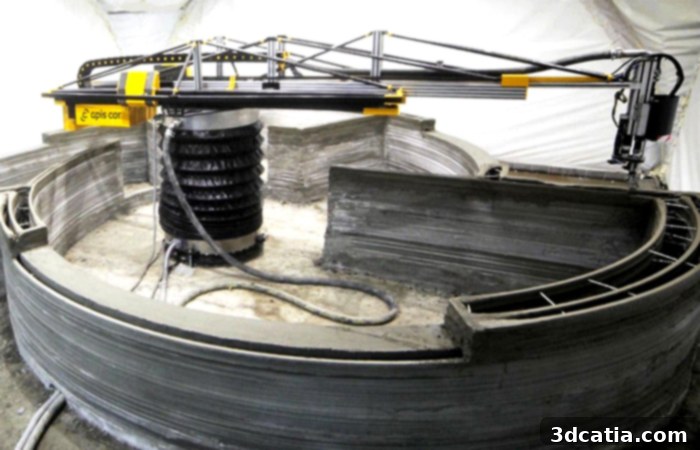
One of Apis Cor’s innovative 3D print house machines showcasing rapid construction capabilities.
Crowdfunding Success Stories: Empowering Innovation in 3D Printing
The power of community-backed funding continues to propel innovation in the 3D printing space, as evidenced by several outstanding crowdfunding campaigns. San Diego-based company AstroPrint recently introduced the AstroBox Touch, an intuitive wireless touchscreen interface designed to enhance 3D printer functionality by enabling multiple applications and providing a more streamlined user experience. To fund its further development and expansion, AstroPrint initiated a crowdsourcing campaign, offering equity stakes to investors. This unique fundraising model grants investors the right to receive capital in the future, aligning their success with the company’s growth. The company set an ambitious goal to raise a minimum of $50,000, with an upper target of $500,000, demonstrating strong confidence in their product and market potential for accessible 3D printing management.
Another remarkable crowdfunding triumph comes from US company Cubibot, which launched an eagerly anticipated low-cost 3D printer priced at an accessible $199. This attractive price point, coupled with its features, immediately garnered significant attention from hobbyists and professionals alike. Cubibot’s crowdfunding campaign quickly surpassed all expectations, exceeding its initial goal of $50,000 by an astonishing seventeen times. This overwhelming response underscores the strong market demand for affordable and high-quality 3D printing solutions, positioning Cubibot’s new machine as a potential bestseller and one of the most successful 3D printer launches facilitated through crowdfunding to date. The campaign’s momentum highlights the democratic nature of crowdfunding, allowing innovative products to reach a broad audience and secure essential funding without solely relying on traditional venture capital routes.
Following the immense success of the ONO mobile 3D printer in 2016, a new competitor has emerged with a similar, compelling model: the T3D. This DLP (Digital Light Processing) printer stands out for its ability to print directly from a mobile device, offering full-color capabilities and an open-source platform, fostering community-driven development and customization. Building on research and development from the University of Taiwan, this Asian company launched its fundraising campaign just a week ago. The campaign achieved rapid success, surpassing its initial financial goal in an impressive two hours. Within a short period, the T3D campaign had already accumulated $140,000, with expectations for this figure to climb even higher in the subsequent days. This rapid success illustrates the continued enthusiasm for accessible, user-friendly 3D printing technologies, especially those that integrate seamlessly with everyday devices like smartphones, broadening the appeal and adoption of personal 3D printing.
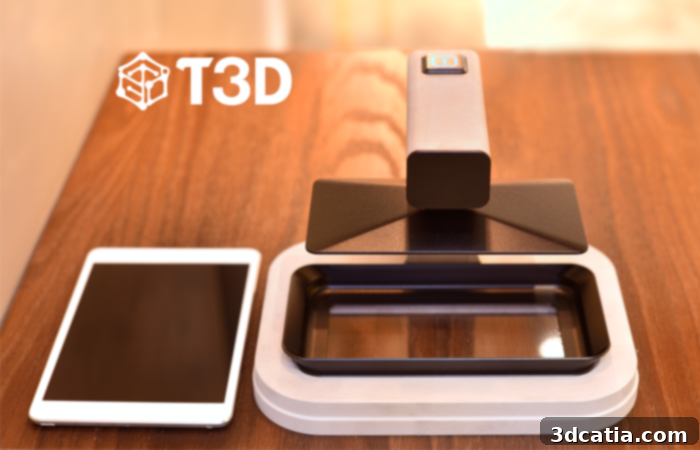
The innovative T3D mobile 3D printer, demonstrating accessible additive manufacturing.
Major Acquisitions and Strategic Partnerships Driving Industrial Adoption
The 3D printing industry is also characterized by significant corporate maneuvers, including strategic acquisitions and robust partnerships, which are consolidating market leadership and accelerating technological integration. Following its acquisition of Dutch filament producer Innofil3D in August, chemical giant BASF has expanded its footprint further by purchasing the global plastics division of its Belgian competitor Solvay for a substantial €1.6 billion. This strategic move grants BASF ownership of twelve production plants and four research and development sites, significantly bolstering its capabilities in advanced materials, particularly high-performance polymers crucial for various additive manufacturing applications. The acquisition is poised to broaden BASF’s customer base, particularly strengthening its market presence in key regions such as South America and Asia. However, this major takeover remains subject to approval from relevant competition authorities, a standard regulatory step in such large-scale transactions, ensuring fair market practices.
Further emphasizing investment in promising 3D printing innovators, Bayerische Beteiligungsgesellschaft (BayBG), one of Germany’s largest and most influential investment funds catering to small and medium-sized enterprises (SMEs), announced a seven-figure sum investment in German RepRap GmbH. German RepRap is recognized for its pioneering 3D printing processes, including Liquid Additive Manufacturing (LAM), which find critical applications in diverse fields such as medical technology, the automotive industry, and mechanical engineering due to its precision and material versatility. Lukas Biberacher, an investment manager at BayBG, articulated the rationale behind this significant investment, stating, “BayBG has invested in German RepRap because we want to enable the company to achieve faster growth through rapid market closure.” This underscores the confidence in German RepRap’s technology and its potential for accelerated market penetration and leadership in specialized industrial additive manufacturing.
In a testament to the power of collaboration, printer manufacturer HP and the Munich-based technology conglomerate Siemens have revealed the impressive outcomes of their successful joint venture, which commenced last year. The core objective of this strategic alliance has been to co-develop innovative solutions aimed at transforming additive manufacturing into a fully integrated and robust process suitable for industrial-scale production. This includes seamless digital workflows from design to finished part. As part of this collaboration, HP has formally certified Siemens’ specialized software, known as Siemens NX AM for Multi-Jet Fusion. This certification ensures seamless compatibility and optimized performance, allowing HP’s state-of-the-art printers to be better tailored and more responsive to the complex needs of modern industrial organizations, thereby streamlining workflows, enhancing efficiency, and ultimately driving broader industrial adoption of 3D printing. A more detailed examination of this impactful cooperation between the two industry leaders is available for deeper insight.
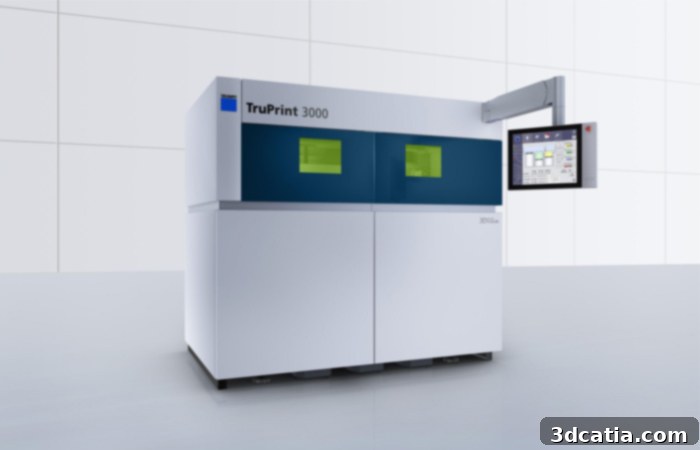
Meanwhile, TRUMPF, a distinguished family-owned company based in Swabia, Germany, celebrated for its excellence in machine tools and laser systems, has forged a significant partnership with Sintavia, a company specializing in additive manufacturing services, particularly within the metals sector. The collaborative endeavor aims to integrate TRUMPF’s advanced TruPrint 3000 metal printer into Sintavia’s Florida facility. The primary goal of this partnership is to firmly establish the TruPrint 3000 within the highly demanding aerospace industry, known for its stringent requirements for precision, material integrity, and repeatable performance for critical components. The TruPrint 3000 is specifically engineered for the high-quality production of complex metal components using 3D printing, making it an ideal choice for aerospace applications where lightweight yet strong parts are crucial. The collaboration between TRUMPF and Sintavia is set to push the boundaries of metal additive manufacturing for critical industrial uses, fostering innovation in one of the most challenging sectors.
Pioneering Medical Frontiers: Investments and Partnerships in Bio-Printing Research
The medical sector is witnessing groundbreaking advancements driven by bio-printing technologies, attracting substantial investments and fostering crucial partnerships aimed at revolutionizing healthcare. These innovations promise to transform regenerative medicine, drug discovery, and even organ transplantation, offering hope for previously intractable medical challenges.
BioLife4D: Advancing Cardiac Tissue Bio-Printing
The US-based bio-printing company BioLife4D has made significant strides, announcing its intention to launch a $50 million Initial Public Offering (IPO) with the US Securities and Exchange Commission. This substantial fundraising initiative is strategically designed to secure new investment capital. The primary objective is to fuel the intensive research, development, and eventual commercialization of BioLife4D’s cutting-edge bio-printing technology, specifically targeting cardiac tissue. BioLife4D is at the forefront of efforts to create human heart tissue that can be successfully grafted, utilizing advanced bio-printing techniques. The company harbors ambitious hopes of effectively developing and deploying these technologies to address critical needs in cardiovascular health, potentially offering new solutions for patients awaiting heart transplants or suffering from various cardiac conditions, marking a significant leap in regenerative medicine.
Aspect Biosystems and German Collaborators: Developing Contractile Tissues
Aspect Biosystems, a Canadian startup with specialized expertise in human tissue bio-printing, has successfully concluded its inaugural round of investments. While the precise financial amount of this round was not disclosed, it proved instrumental in attracting new investors and solidifying key strategic partnerships. A notable example is its collaboration with the German company INSCREENex and the prestigious Fraunhofer Institute for Toxicology and Experimental Medicine (ITEM). This powerful consortium will combine their expertise to jointly develop bio-printed contractile tissues, pushing the boundaries of what is possible in regenerative medicine and drug testing, and potentially paving the way for revolutionary therapies for muscle and tissue repair, and more accurate models for pharmaceutical research.
Prellis Biologics: Accelerating Organ Bio-Printing Capabilities
San Francisco-based Prellis Biologics has secured a vital investment of $1.8 million, designated to accelerate its pioneering bio-printing research. The company is currently focused on developing a sophisticated technology capable of 3D printing complex micro-vascular systems. These intricate systems are critical because they are responsible for delivering essential nutrients and oxygen to cells within engineered tissues, a fundamental challenge in creating viable, large-scale organ structures that can survive and function within the body. This timely investment is anticipated to significantly reduce the timeframe required to achieve this ambitious goal, bringing the promise of functional, bio-printed human organs closer to reality and potentially transforming organ transplant medicine by alleviating donor shortages.
This comprehensive overview underscores the dynamic and rapidly advancing nature of the 3D printing industry, marked by robust investment, innovative partnerships, and continuous technological breakthroughs across multiple sectors. From industrial manufacturing and construction to life-saving medical applications, additive manufacturing is proving to be a cornerstone of future economic growth and technological progress. Its potential to reshape global industries and improve quality of life remains immense, driven by ongoing research and strategic market developments. What are your thoughts on these latest developments in the 3D printing world? Share your insights in a comment below or connect with us on our Facebook and Twitter pages! Don’t miss out on future updates – remember to sign up for our free weekly Newsletter, delivering all the latest news in 3D printing directly to your inbox!