
IKEA Hacks Reimagined: Elevate Your Home with Open-Source 3D Printed Accessories
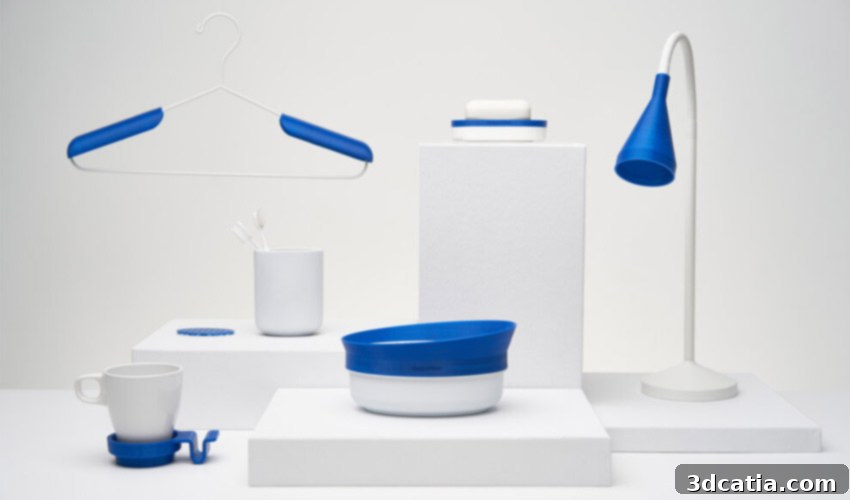
Few global brands have woven themselves into the fabric of modern home life quite like IKEA. Renowned for its distinctive blend of affordability, Scandinavian design, and the engaging (or sometimes infuriating) challenge of self-assembly, IKEA has carved out a unique niche. Its concept of ready-to-install kit furniture and a vast array of decorative objects and accessories perfectly encapsulates a vision of ease and speed for home furnishing. Yet, as many consumers will attest, the journey from flat-pack to functional furniture isn’t always seamless. The process of assembling a new piece can often become a puzzle, testing patience and sometimes leaving a lingering sense of accomplishment mixed with slight frustration. Furthermore, while IKEA products are largely effective, there are often subtle design elements or functional nuances that, if tweaked, could significantly enhance the user experience. It’s precisely this common ground of minor inconveniences and the universal desire for perfect functionality that inspired Hungarian designer Adam Miklosi to embark on an innovative project. Miklosi has brilliantly harnessed the power of 3D printing to create a unique collection of open-source accessories, collectively named Uppgradera, specifically designed to augment and improve existing IKEA products. From enhancing everyday items like soap dishes to optimizing clothes hangers, Uppgradera aims to bridge the gap between mass-produced utility and personalized perfection.
The concept of “hacking” IKEA furniture and accessories, especially with the aid of modern technology like 3D printing, is far from a novel idea. For years, a vibrant community of designers, makers, and DIY enthusiasts has flourished, dedicated to reinterpreting, customizing, and extending the life and utility of IKEA items. This global movement sees individuals creating elaborate 3D models to give furniture a completely new aesthetic, ingeniously altering the original purpose of an object, or simply tailoring an accessory to better suit specific needs or address perceived design shortcomings. What drives this creative surge? It’s a blend of personal expression, a desire for sustainable consumption by extending product longevity, and the sheer satisfaction of problem-solving. In challenging times, such as periods of confinement, these kinds of projects gain even greater relevance, offering a productive and rewarding outlet for creativity. We believe Adam Miklosi’s Uppgradera collection stands out as a prime example of this inventive spirit, offering practical, elegant, and accessible solutions that can genuinely make daily life a little bit easier and more enjoyable. It’s an invitation to take advantage of moments at home to engage in a bit of creative crafting and significantly upgrade your living space.
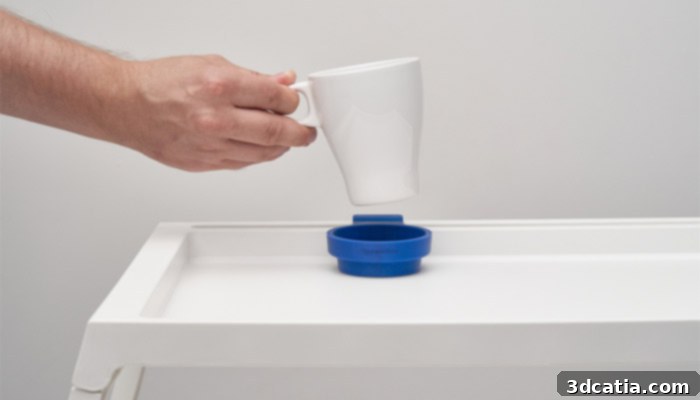
These 3D printed accessories make it easy to use some IKEA items | Photo Credits: Adam Miklosi
The name “Uppgradera” itself is deeply significant and perfectly encapsulates the ethos of this collection. In Swedish, ‘uppgradera’ is a verb that means to level up, improve, or perfect. This thoughtful choice of name reflects the designer’s core mission: not to replace or radically alter IKEA products, but to subtly enhance them, ironing out minor imperfections and elevating the overall user experience. The collection currently features a thoughtfully curated selection of six accessories, all designed to be easily 3D printed and, crucially, entirely open-source. Let’s delve into a couple of prominent examples to understand the practical ingenuity behind Miklosi’s designs. Consider the popular IKEA KLIPSK bed tray. While it’s undeniably practical for enjoying a leisurely breakfast in bed or for working comfortably from your couch, its smooth, uniform surface presents a distinct drawback: it’s notoriously slippery. A misplaced cup of coffee or a precariously balanced glass of water can quickly lead to an unfortunate accident, staining linens or damaging electronics. Miklosi’s ingenious solution comes in the form of the KL01 accessory. This elegantly designed glass holder is engineered to securely attach to the KLIPSK tray along its existing groove, providing a stable, non-slip resting place for your beverages. This simple yet effective addition dramatically reduces the risk of spills, transforming a common source of minor annoyance into a safer, more enjoyable experience.
Moving into another everyday scenario, let’s consider the bathroom. Many households feature the minimalist ENUDDEN soap holder from IKEA. While aesthetically pleasing, users quickly discover a common functional flaw: at the bottom of its moulded plastic design, there is no opening for drainage. This oversight means that after each use, your bar of soap remains constantly immersed in water. The consequence is not just a messy, unhygienic soap dish, but also a rapidly deteriorating bar of soap that becomes soft, slimy, and significantly shortens its lifespan. Adam Miklosi addresses this with the EN01, a perfectly fitted grid designed to be placed directly into the ENUDDEN soap holder. This simple 3D printed grid elevates the soap, allowing air to circulate around it and excess water to drain away effectively. The impact is immediate and beneficial: your soap stays dry, firm, and lasts considerably longer, improving both its hygiene and its economic value. Beyond these specific examples, the Uppgradera range extends to a variety of other household items, addressing similar small but impactful design gaps. The collection includes enhanced hangers, designed perhaps for better grip or to accommodate specific clothing types; clever lamp modifications, potentially for improved light direction or diffusion; practical cheese graters, possibly for easier handling or storage; and innovative toothbrush holders, which might offer better ventilation or organization. Each accessory embodies the philosophy of thoughtful improvement, turning minor irritations into seamless, user-friendly interactions.
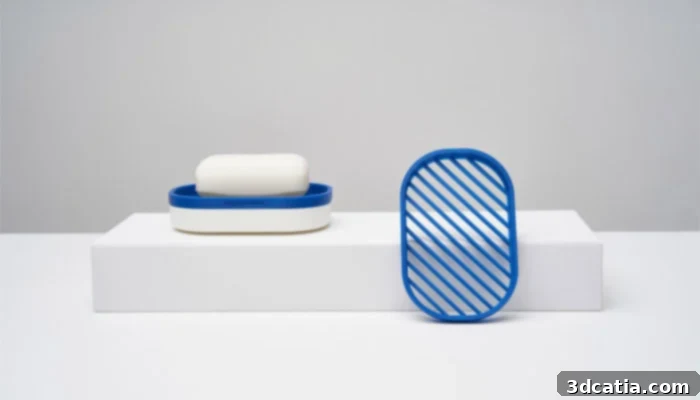
The EN01 is a grid that can be placed on your soap dish | Photo Credits: Adam Miklosi
This initiative by Adam Miklosi transcends mere product enhancement; it embodies a powerful philosophical commitment to local manufacturing, sustainable practices, and the democratic sharing of ideas. The open-source nature of Uppgradera is central to its mission, empowering individuals across the globe to participate in a collaborative design and production ecosystem. Miklosi articulates his vision with clarity: “My ideas aim to complement the original designs and correct the mistakes I have encountered on different IKEA products, using 3D printing. My goal was to design products that solve real problems and, with a little ‘uppgradera’, make the user experience more enjoyable and efficient. Anyone in the world can download the 3D models and build a simple and intelligent solution locally.” This statement underscores several key principles. Firstly, it champions respectful improvement, acknowledging the base product’s value while striving for perfection. Secondly, it emphasizes a user-centric design approach, focusing on tangible, everyday problems. Thirdly, and perhaps most profoundly, it promotes accessibility and self-sufficiency. By making the 3D models freely available, Miklosi enables anyone with access to a 3D printer to become a local manufacturer. This not only significantly reduces environmental impact by eliminating the need for long-distance shipping but also fosters a vibrant ‘maker’ culture. It transforms passive consumers into active problem-solvers and creators, allowing them to tailor solutions precisely to their needs and preferences, using readily available technology to craft intelligent, localized fixes. This movement towards decentralized production holds immense potential for the future of consumer goods, offering a personalized and sustainable alternative to mass production.
The broader implications of projects like Uppgradera are significant. They highlight the transformative potential of additive manufacturing in fostering a more adaptable and sustainable consumer landscape. By empowering individuals to print enhancements and repairs at home, 3D printing contributes to a circular economy model, encouraging the extension of product lifespans rather than immediate replacement. This reduces waste and promotes more thoughtful consumption habits. The open-source model further strengthens this by building a community around shared solutions and collective improvement, moving away from proprietary limitations. Adam Miklosi’s collection is currently undergoing rigorous testing, a crucial phase to ensure the durability, functionality, and user-friendliness of each accessory before wider release. The designer anticipates that these innovative solutions will soon be available for purchase through an online shop, offering convenience for those without immediate access to a 3D printer. However, staying true to the project’s core open-source philosophy, it is widely expected that the digital 3D printable files will also be made freely accessible. This is paramount for the project’s mission of global accessibility and local production, allowing anyone to download the designs and print them at home or through local print services. This dual approach ensures both broad availability and adherence to the principles of shared knowledge and localized empowerment. For those eager to explore the collection and begin their own IKEA enhancement projects, all the printable objects and detailed information can be found directly on the dedicated Uppgradera website.
What are your thoughts on this innovative approach to product enhancement and the power of 3D printing to improve everyday items? Have you ever “hacked” an IKEA product or used 3D printing for home improvements? We’d love to hear your experiences and opinions! Share your insights by leaving a comment down below or engaging with us on our Facebook and Twitter pages. And to stay abreast of all the latest developments, breakthroughs, and inspiring stories in the world of additive manufacturing, don’t forget to sign up for our free weekly Newsletter. Get all the essential 3D printing news delivered straight to your inbox, ensuring you never miss an opportunity to discover new ways technology is shaping our world.