
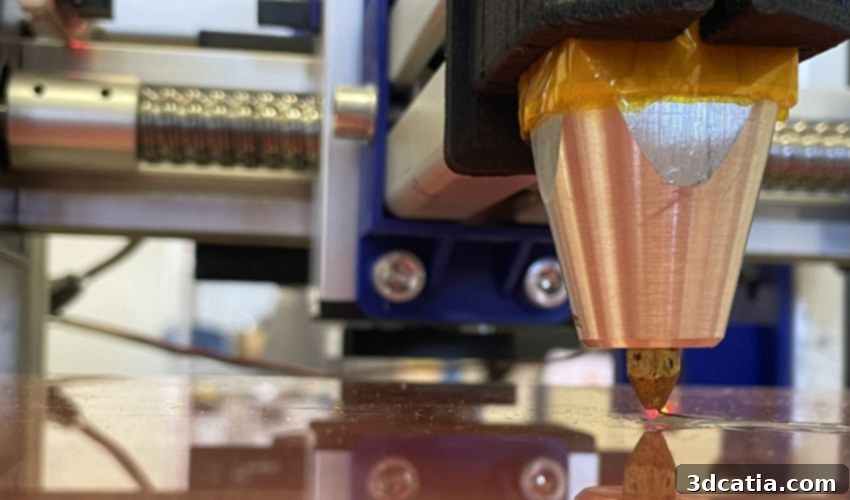
SphereCube: Revolutionizing High-Performance Composite 3D Printing with Sustainable, Mold-Free Technology
In the dynamic world of additive manufacturing, innovation often comes from addressing long-standing industry challenges. Italian startup SphereCube exemplified this last year when it garnered significant recognition, emerging as one of the distinguished winners of the prestigious Formnext Startup Challenge. This annual competition celebrates groundbreaking advancements in 3D printing, and SphereCube’s triumph underscored the transformative potential of its technology. Originating as a spin-off from the esteemed Marche Polytechnic University, the startup has meticulously focused on developing a revolutionary approach: producing high-performance composite components without the need for traditional molds and with a significantly reduced environmental footprint.
SphereCube’s innovative methodology directly addresses two critical demands prevalent in the additive manufacturing sector, and more broadly, within the composite materials market. These include the urgent need for more efficient production processes and, simultaneously, a commitment to greater sustainability. Traditional composite manufacturing often involves labor-intensive, costly, and resource-heavy methods that generate considerable waste. By offering a solution that is both more streamlined and environmentally conscious, SphereCube is paving the way for a new era of composite fabrication. Its pioneering work made it an obvious choice for our “3D startup of the month” feature in February, prompting us to delve deeper into an exclusive interview to explore the intricacies and potential of their cutting-edge technology.
Introducing SphereCube: Innovating Composite Production
SphereCube stands as a beacon of innovation, an agile startup born from the academic rigor of the Marche Polytechnic University. The genesis of the team itself is rooted in their shared experiences and collaborative spirit forged during their time at the university, where common interests and a vision for advanced manufacturing brought them together. At the core of SphereCube’s offering is a proprietary production process known as thermal laser curing. This advanced method facilitates the creation of exceptionally high-performance composite products in a fully automatic manner, critically, without imposing any geometrical limitations on the designs. This represents a significant leap forward from conventional techniques.
Historically, the production of high-performance composites has been predominantly a manual endeavor. This hands-on approach, while capable of yielding impressive results, is inherently fraught with challenges. It often leads to inconsistencies in terms of repeatability, making it difficult to produce identical parts across batches, and severely limits manufacturing flexibility, hindering rapid design iterations or customization. Furthermore, traditional composite fabrication is characterized by a high number of complex process steps and an extensive reliance on expensive, time-consuming molds – even for producing single, unique units. This combination renders the entire production process slow, extraordinarily costly, and imposes severe design constraints that stifle innovation. SphereCube’s overarching mission is to dismantle these barriers, fundamentally solving the deeply entrenched problems associated with current composite material production and, in doing so, dramatically increasing the productivity and accessibility of these remarkable, lightweight materials.
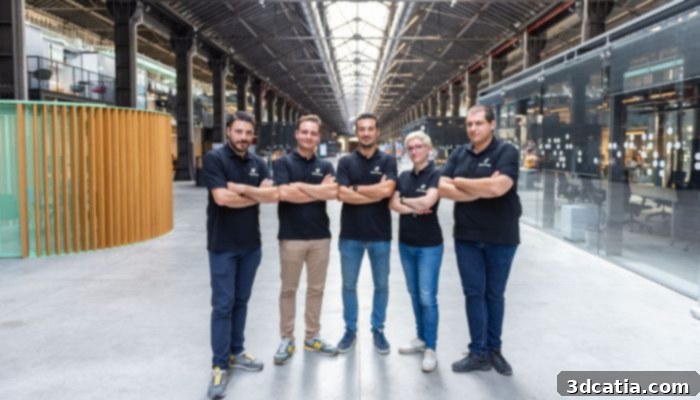
A part of the SphereCube team (photo credits: SphereCube)
The Genesis of a Game-Changing Idea
The foundational concept behind SphereCube was ignited through a pivotal encounter between Valerio Di Pompeo, who now serves as the company’s visionary CEO and was then a student at the Marche Polytechnic University, and Alessio Vita, a distinguished professor leading a specialization course. Their discussions quickly revealed a shared understanding of a significant void in the industrial landscape: a conspicuous lack of industrially validated technologies capable of effectively utilizing the most common raw materials in composite production, specifically thermosetting epoxy resins and long fiber reinforcements. These materials, while offering unparalleled strength-to-weight ratios, were constrained by outdated and inefficient manufacturing methods that limited their widespread adoption and potential.
As Valerio and Alessio delved deeper into discussions, exploring possible innovative solutions to this critical industry gap, the initial conceptual sketches for what would eventually become the core of the SphereCube 3D printer began to take shape. This early conceptualization focused intently on the extrusion head – the vital component responsible for precisely dispensing and consolidating the composite materials. Their shared passion and combined expertise rapidly transformed these initial ideas into a tangible project. Following this breakthrough, Valerio and Alessio strategically brought together other talented individuals, forming a multidisciplinary team whose collective skills were essential to nurturing the vision. The team continues to expand, attracting top talent committed to pushing the boundaries of composite additive manufacturing, transforming what began as a university collaboration into a thriving, innovative enterprise.
Unveiling SphereCube’s Innovative Composite Extrusion Technology
The technology meticulously developed by SphereCube is ingeniously centered on the co-extrusion of two distinct raw materials, each in a different physical state, to form high-performance composites. These include a thermosetting polymer matrix, processed in a viscous fluid state, and a reinforcing material presented in the form of a continuous fiber. This combination allows for exceptional structural integrity and mechanical properties. In their current applications, SphereCube primarily utilizes a robust two-component epoxy resin, consisting of both a resin and a hardener, paired with high-strength carbon fiber as the primary reinforcing material. This particular pairing is chosen for its superior performance characteristics, crucial for demanding applications.
The heart of SphereCube’s system is its patented extrusion head. This sophisticated component is engineered to effectively and uniformly mix the polymer matrix and the continuous reinforcement fiber, ensuring perfect adhesion of the former to the latter. This precise integration is critical for achieving optimal material properties in the final component. Following extrusion, a precisely controlled heat source is applied, which partially or fully cures (solidifies) the composite material as required by the specific application. This thermal curing process ensures that the material achieves its intended mechanical strength and stability. Complementing the core extrusion and curing system are integrated modules for precise cutting of the continuous fiber and for compacting the deposited material layers, guaranteeing structural integrity and accuracy. A key advantage of this versatile technology is its ability to process a wide range of thermoset matrices and accommodate various types of continuous reinforcing fibers. This includes not only advanced synthetic fibers but also emerging bio-based fibers such such as flax and hemp, aligning with the growing demand for more sustainable material solutions.
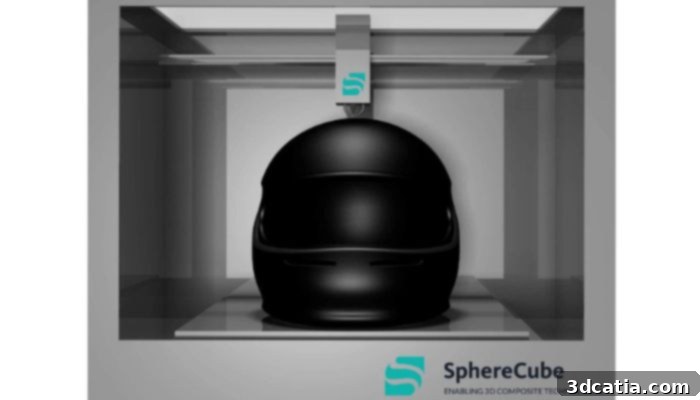
Photo Credits: SphereCube
Beyond the innovation in the extrusion system itself, SphereCube has also made significant strides in material preparation, filing a separate patent related to the preparation of the reinforcing fiber. Through the integration of a specialized binder machine, their technology is capable of markedly improving the processability of the reinforcement material. This is achieved by utilizing a binder with significantly fewer solvents, which not only enhances the material’s performance during printing but also contributes to a more sustainable manufacturing process compared to many conventional pre-impregnation methods currently employed in the industry. This dual focus on advanced printing and eco-friendly material preparation underscores SphereCube’s holistic approach to transforming composite additive manufacturing.
Distinct Advantages: How SphereCube Differs from Existing Processes
SphereCube’s innovative process carves out a unique niche in the additive manufacturing landscape by offering several key differentiators compared to similar existing technologies. The most significant distinction lies in the curing mechanism for thermosetting resins. While many competing systems rely on ultraviolet (UV) light for polymerization, SphereCube employs a heat source for curing. This thermal laser curing approach offers a superior advantage, particularly in ensuring deeper and more uniform curing throughout thicker composite parts, leading to enhanced material properties and reliability that UV light often struggles to achieve, especially with opaque materials.
Moreover, in contrast to competitors who often utilize 3D printing systems based on large and cumbersome robotic arms, SphereCube has developed a highly precise and compact 3D printer founded on a sophisticated 5-axis system. This advanced kinematic setup provides unparalleled control over the deposition process, allowing for the creation of complex geometries and intricate features that are challenging for simpler robotic systems. With an average print volume of 400 x 400 x 400 mm, SphereCube’s printer strikes an optimal balance between precision and practical build size. This combination of thermal curing and a high-precision 5-axis platform not only streamlines the manufacturing process but also unlocks new possibilities for design freedom, material integration, and overall product performance, positioning SphereCube at the forefront of advanced composite additive manufacturing.
Targeting High-Value Markets with Superior Composites
SphereCube’s cutting-edge 3D printing technology is uniquely positioned to address the stringent requirements of various high-value industries by producing high-performance composite components. The inherent advantages of additive manufacturing, combined with SphereCube’s specific innovations, ensure unparalleled uniqueness, deep customization capabilities, vastly improved component performance, and significant weight reduction – critical factors in numerous advanced applications. These attributes make SphereCube an attractive partner for sectors where every gram matters and where bespoke solutions provide a competitive edge.
Currently, the primary applications that SphereCube is actively pursuing span several critical sectors. These include the demanding aerospace industry, which the company rightly identifies as its initial and most significant market due to its constant need for lightweight, high-strength materials for aircraft and spacecraft. The biomedical sector also presents a vital opportunity, with potential for custom prosthetics, implants, and medical devices that benefit from superior material properties and patient-specific designs. Beyond this, SphereCube is making inroads into the sports industry, where enhanced equipment performance and reduced weight can translate directly into competitive advantages for athletes, as well as the maritime sector, offering durable and corrosion-resistant components for marine applications. Through these strategic market focuses, SphereCube is not just manufacturing parts, but enabling advancements across industries by providing innovative material solutions.

SphereCube was one of the winners of the Formnext Startup Challenge 2022 (photo credits: DIISM_UNIVPM)
The Future Horizon for SphereCube: From Earth to Orbit
The trajectory for SphereCube is set on an ambitious path of continuous growth and innovation. The company is actively participating in the prestigious Takeoff acceleration program, a collaborative initiative involving key players such as CDP, Plug and Play, Leonardo, Avio, the CRT Foundation, and Unicredit. This invaluable program has provided SphereCube with crucial resources and mentorship, enabling them to initiate critical product validation activities with potential customers. This direct engagement is accelerating the development and commercialization of their additive manufacturing technology for high-performance composite materials, ensuring their solutions meet real-world industry demands.
In a further commitment to sustainable innovation, SphereCube has also embarked on an exciting three-year research project in collaboration with the Marche Polytechnic University and Cariverona. This joint venture is dedicated to the pioneering development of bio-based materials, aiming to integrate ecological principles with advanced material science. This initiative underscores SphereCube’s commitment not only to performance but also to environmental stewardship, exploring renewable resources for future composite applications. Looking even further ahead, SphereCube harbors a truly visionary ambition: to take their advanced 3D printer beyond Earth’s atmosphere. The ultimate goal is to conduct experiments in orbit, validating their technology in microgravity environments. This audacious plan highlights the company’s belief in the versatility and robustness of their system, envisioning a future where advanced composite manufacturing can support space exploration and in-space construction, fundamentally changing how humanity builds beyond our planet.
A Final Word for Our Readers
In an era defined by monumental global challenges, ranging from the ambitious conquest of other planets to the urgent necessity of achieving zero harmful gas emissions, 3D printing technology stands out as a critical enabler – a force that can truly make a difference. Its inherent capabilities to shorten supply chains, reduce waste, and imbue businesses with unprecedented flexibility make it indispensable for navigating the complexities of the 21st century. SphereCube embodies this spirit of innovation, demonstrating that with a healthy dose of creativity, a solid technical foundation, and just a touch of daring “madness,” no conquest, however daunting, is truly impossible. We invite you to explore more about SphereCube’s pioneering work and future endeavors by visiting their official website HERE.
What are your thoughts on SphereCube’s groundbreaking advancements in composite 3D printing? Let us know your opinions and insights in a comment below or engage with us on our LinkedIn, Facebook, and Twitter pages! To stay abreast of the very latest in 3D printing news, delivered straight to your inbox every week, don’t forget to sign up for our free weekly Newsletter here. You can also discover a wealth of insightful content and videos on our YouTube channel.
*Cover Photo Credits: SphereCube