

Revolutionizing Athlete Safety: How 3D Printing is Transforming American Football Helmets with Vicis
In the fiercely competitive world of professional sports, where milliseconds and strategic plays dictate outcomes, the pursuit of victory is paramount. Yet, equally critical, is the unwavering commitment to athlete protection. From the hard-hitting fields of the NFL to the fast-paced ice of the NHL, the concern for athlete safety has become a central and urgent priority. With increasing awareness of the long-term consequences of head injuries, technological advancements are now pivotal in developing innovative solutions to safeguard players on the field. Among these groundbreaking technologies, 3D printing, also known as additive manufacturing, is emerging as a profoundly promising option, particularly for revolutionizing the design and efficacy of American football helmets. This is precisely where the innovative company Vicis has strategically positioned itself, making significant strides. Their overarching goal is clear and impactful: to substantially reduce the risks of head injury associated with the sport, thereby ensuring players can remain safely in the game they love for longer, while maintaining peak performance.
Vicis brand helmets have consistently demonstrated exceptional performance in stringent NFL helmet safety tests over many years, setting a benchmark for protective gear. This consistent excellence has been further elevated thanks to the integration of cutting-edge additive manufacturing technology. The tangible impact of this innovation is evident in the increasing number of elite players across the NFL who are choosing to wear Vicis helmets. Notable athletes such as San Francisco 49ers defensive lineman Nick Bosa, renowned for his aggressive play, and a lineup of high-profile quarterbacks including Tua Tagovailoa, Derek Carr, and two-time Super Bowl MVP Patrick Mahomes, all trust Vicis for their protection. While the outward appearance of these helmets might seem conventional, the true genius lies within: the interior conceals meticulously engineered 3D-printed pads. These pads are not merely a replacement for traditional foam; they are specifically designed and customized to adapt precisely to the unique contours and biomechanics of each player’s head, offering an unprecedented level of personalized protection.
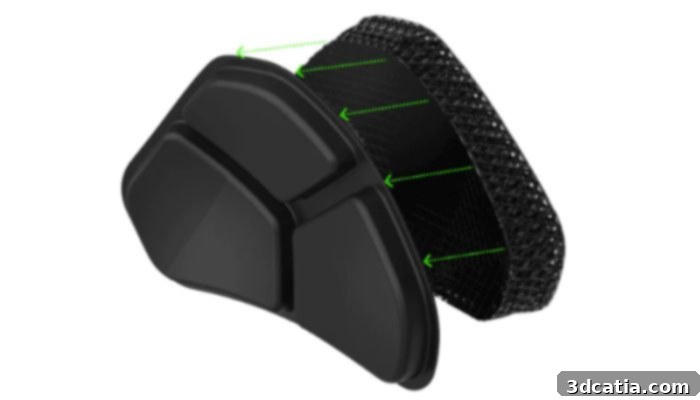
The Vicis Zero2-R Matrix ID Trench helmet features 3D-printed padding, customized to fit the shape of the player’s head perfectly.
The Vicis Zero2-R Matrix ID Trench helmet stands out as a pioneering example of how advanced manufacturing can redefine athlete safety. Its core innovation lies in the incorporation of customized padding, precisely manufactured using state-of-the-art 3D printing techniques. This advanced padding directly replaces the ubiquitous and often less effective traditional foam padding that lines the vast majority of football helmets currently on the market. The benefits are not theoretical; according to rigorous laboratory test results, the strategic application of this new 3D printing technology can reduce the force of impact by an impressive margin of up to 7% in scenarios where a player’s head makes contact with the ground. This reduction is critical in mitigating the severity of potential head injuries. The helmet’s revolutionary padding is composed of intricate lattice structures, a marvel of biomechanical engineering. These structures are not only carefully designed to optimize lightness, contributing to overall player comfort and reduced neck strain, but also engineered to absorb impact energy far more effectively than conventional materials. Their unique geometric configuration allows them to deform strategically upon impact, dissipating force across a wider area and reducing peak forces transmitted to the brain.
Furthermore, the adaptability of these lattice structures is a game-changer in personalized protection. They can be meticulously adapted not only to the exact shape and size of an individual player’s head, ensuring a snug and secure fit, but also customized to account for their specific position on the pitch. This includes considering the unique types and angles of impact to which they are most likely to be exposed during gameplay. For instance, a lineman frequently engaging in head-on collisions might require different lattice properties than a quarterback prone to side impacts. Vicis significantly enhances its production capabilities and efficiency by leveraging the advanced Carbon L1 3D printer. This industrial-grade machine, utilizing Digital Light Synthesis (DLS) technology, is capable of producing the complex lattice padding for two helmets in a single print batch. This remarkable efficiency drastically reduces printing time, slashing it from an average of eight hours down to just two hours per individual padding part. This acceleration in production not only streamlines the manufacturing process but also results in significantly lower manufacturing costs per unit, making cutting-edge safety more accessible. To guarantee an unparalleled customized fit for each and every player, Vicis also integrates sophisticated 3D scanning technology, specifically relying on the high-precision Structure Sensor Pro. This device captures a detailed digital model of the player’s head, providing the essential data points needed to design and print padding that is truly bespoke.
While the implementation of 3D-printed mesh padding represents a significant leap forward, it’s important to acknowledge that the concept isn’t entirely unprecedented in the sports safety arena. The Riddell brand, a long-standing titan in football equipment, notably launched its SpeedFlex Precision Diamond helmet as early as 2020, also incorporating 3D-printed components. However, Vicis distinguishes itself by elevating this advanced technology to an entirely new echelon, pushing beyond what has been achieved to date and optimizing the integration for superior performance and practicality. First and foremost, Vicis has strategically chosen to build upon a foundation of a standard, high-performance helmet shell, recognized for its inherent protective qualities. What truly sets Vicis apart is its innovative modular design. Inside this robust outer shell reside six individual, interchangeable DLTA (Deformable Layer Technology Array) cushions. These cushions are meticulously engineered to deform precisely and predictably upon impact, effectively managing and dissipating kinetic energy. The brilliance of this system lies in its flexibility: these standard DLTA cushions can be effortlessly replaced with the highly advanced Matrix ID cushions, which are the fully customized 3D-printed components. This creates a truly bespoke helmet system, offering unparalleled, maximum impact protection tailored specifically to the player.
This intelligent, hybrid approach, where 3D-printed components account for approximately only 25% of the total helmet structure, offers a multitude of strategic advantages. By focusing additive manufacturing on the most critical impact-absorbing elements, Vicis achieves a powerful balance of innovation and practicality. This targeted use of 3D printing results in substantially lower overall manufacturing costs compared to helmets that might be entirely 3D-printed or rely on more extensive custom fabrication. Furthermore, this modular design significantly reduces lead times for production and customization, ensuring that athletes can access cutting-edge protection more quickly and efficiently. The ability to swap out specific cushions for customized, 3D-printed Matrix ID components means that the most advanced benefits are brought to players on the field faster, without requiring a complete overhaul of the entire helmet. This not only enhances player safety but also optimizes resource allocation and accelerates the adoption of superior protective gear. The strategic integration of customizable 3D-printed elements within a proven, high-performance framework is a testament to Vicis’ commitment to both innovation and practical athlete well-being. To delve deeper into their revolutionary helmets and the intricate details of their 3D-printed engineering, interested individuals are encouraged to visit the official Vicis website HERE.
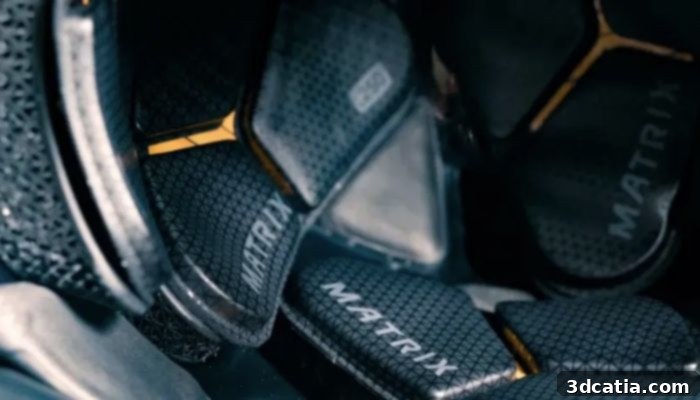
The Vicis Zero2-R Matrix ID Trench helmet 3D printed padding.
The innovative strides made by Vicis in integrating 3D printing into their high-performance American football helmets mark a significant milestone in athlete safety and sports equipment design. By combining advanced biomechanical engineering with the precision and customization capabilities of additive manufacturing, Vicis is not only enhancing impact protection but also setting new standards for how protective gear can be tailored to individual needs. This commitment to leveraging technology for player well-being underscores a growing movement towards safer sports, allowing athletes to perform at their peak with greater confidence and reduced risk. We believe this evolution represents the future of protective sports equipment, impacting not just football but potentially a wide array of contact sports.
We’re eager to hear your thoughts on Vicis and their groundbreaking 3D-printed football helmet. What do you think about the potential of additive manufacturing to redefine athlete safety? Please share your insights and comments below, or engage with us on our social media platforms: find us on LinkedIn, Facebook, and Twitter! Don’t miss out on the latest advancements in 3D printing and additive manufacturing; be sure to sign up for our free weekly Newsletter here to get all the news delivered straight to your inbox. You can also explore our extensive library of videos and interviews on our dedicated YouTube channel for more in-depth content.
*All Photo Credits: Vicis