

The EU’s Regulatory Conundrum: Is Ambiguity Stifling 3D-Printed Medical Device Innovation?
The medical sector stands as one of the most transformative beneficiaries of additive manufacturing, commonly known as 3D printing. From customized implants and prosthetics to intricate surgical guides and even bioprinted tissues, the technology promises unparalleled personalization and precision in patient care. However, despite these remarkable strides, the regulatory landscape governing 3D-printed medical devices within the European Union appears to be lagging significantly behind other global counterparts. This concerning observation comes from researchers at the German FH Münster University of Applied Sciences, who highlight a critical issue: the ambiguous language embedded within the EU’s regulatory frameworks creates confusion, potentially hindering market growth and increasing operational costs for businesses operating in this innovative space.
The stakes are incredibly high. Clear and comprehensive regulation is not merely bureaucratic overhead; it is the cornerstone of patient safety, market confidence, and the acceleration of life-saving medical innovations. When regulations are vague, companies face uncertainty regarding compliance, leading to delays in product development, higher investment risks, and a slower adoption of advanced 3D-printed solutions that could otherwise revolutionize healthcare. The EU’s Medical Device Regulation (MDR) is the overarching framework intended to govern the vast array of medical devices—nearly 500,000 types—available on the European market. While comprehensive, its application to the unique characteristics of 3D-printed medical devices has proven problematic, particularly concerning the definition and classification of these highly individualized products.

The European Union’s regulation of 3D-printed medical devices is considered too ambiguous by researchers at the German FH Münster University of Applied Sciences. (Photo Credit: Carl Campbell on Unsplash)
The MDR and its Unforeseen Challenges for Additive Manufacturing
A significant point of contention revolves around an exception within the MDR. This exception states that “mass-produced devices which need to be adapted to meet the specific requirements of any professional user” will not be considered “custom-made” devices. This seemingly innocuous clause has profound implications for additive manufacturing. Many 3D-printed medical devices, though highly customized for individual patients, might technically fall under this exception if they originate from a standard design file that is merely scaled or adapted to patient data. Consequently, they are not afforded the specific regulatory pathway often associated with truly custom-made products, leading to a gray area in their classification and compliance requirements.
The distinction is crucial. A truly “custom-made” device, by its nature, is designed and manufactured based on a specific patient’s prescription and anatomical data, addressing their unique needs. This is where 3D printing excels, allowing for the creation of patient-specific implants, prosthetics, and even personalized drug delivery systems that would be impossible with traditional manufacturing methods. By not classifying these devices as custom-made simply because an initial template might exist, the EU’s MDR risks applying regulatory burdens meant for mass-produced items to products that are inherently individualized. This can lead to disproportionate compliance costs, extended approval times, and a discouragement of the very personalized medicine that 3D printing promises to deliver.
The Illusive Clarity: Q&A Documents and Conflicting Definitions
The FH Münster researchers’ strongest claim is that a “medical device Q&A” document, endorsed by the European Commission, which was intended to clarify 3D printing’s role, instead introduced further confusion. Their study, which meticulously examined the regulatory language, revealed conflicting statements between existing Medical Devices Group (MDG) regulations and this new Q&A “clarification.” Specifically, the document now distinguishes between ‘patient-matched medical devices’ and ‘adaptable medical devices,’ adding a new layer of complexity to an already opaque framework.
This distinction, rather than “removing ambiguity as hoped,” has been perceived by scientists as increasing uncertainty. Let’s delve into what these new categories might imply:
- Patient-matched medical devices: These are typically designed and produced for a specific patient using their unique anatomical data (e.g., from CT or MRI scans). They are inherently personalized but may stem from a validated design process that allows for individual adaptation. For instance, a dental crown or a custom orthopedic plate fabricated via 3D printing would fall here.
- Adaptable medical devices: These are standard, pre-manufactured devices that can be adjusted or modified by a healthcare professional at the point of care to fit a patient’s needs. An example might be a standard surgical instrument that has an adjustable handle or a stent that can be slightly expanded.
The regulatory implications of these subtle differences are significant. Does ‘patient-matched’ imply a simpler or more complex conformity assessment pathway than ‘custom-made’? How do manufacturers ensure compliance for devices that are highly personalized but not entirely unique in their underlying design principles? This lack of clear delineation creates a regulatory labyrinth for companies, stifling their ability to innovate and bring advanced 3D-printed medical devices to market efficiently.
Global Discrepancies and the Stifling of Innovation
The researchers at FH Münster emphasize that this regulatory ambiguity puts the EU medical industry at a distinct disadvantage, positioning it well behind the regulatory clarity seen in countries like Australia and the United States. These nations have proactively developed more specific guidance for additive manufacturing in healthcare, providing clearer pathways for the approval and commercialization of 3D-printed medical devices. This enables companies in those regions to navigate the regulatory landscape with greater confidence, fostering innovation and accelerating market entry.
Within the EU, many companies, particularly small and medium-sized enterprises (SMEs) which often drive innovation in additive manufacturing, are struggling to implement the new regulatory requirements. The challenges are multifaceted:
- Technical Documentation: Compiling comprehensive technical documentation for highly individualized 3D-printed devices is complex. Each iteration, even if slight, might require extensive data on design, materials, manufacturing processes, and quality control.
- Clinical Evaluation: Conducting robust clinical evaluations for patient-specific devices, especially those with small production runs, is inherently difficult and costly. Traditional clinical trials are not always suitable for devices made for unique anatomical needs.
- Post-Market Monitoring: Establishing effective post-market surveillance systems for a diverse portfolio of patient-matched devices poses logistical and data management challenges.
As a direct consequence of the MDR’s ambiguous application to 3D printing, businesses face increased operational costs, often leading to a downsizing of their product portfolios and fewer new product launches. This creates a significant bottleneck to innovation, deterring investment and ultimately limiting patient access to cutting-edge medical technologies. The lack of a streamlined, unambiguous regulatory path for additive manufacturing devices forces companies into a defensive stance, prioritizing compliance over rapid development and market expansion.
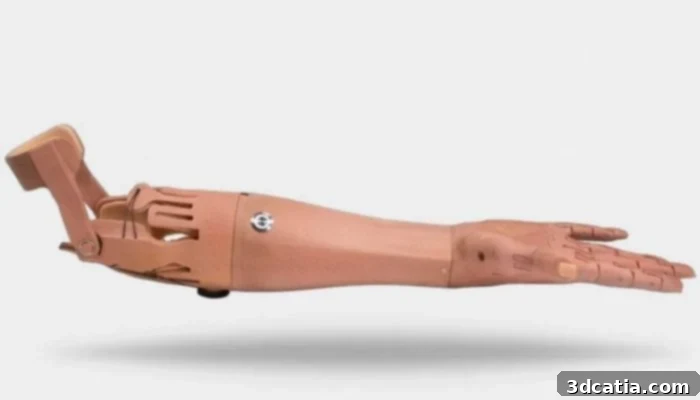
EU regulation now distinguishes between ‘patient-matched medical devices’ and ‘adaptable medical devices,’ adding layers of complexity to compliance. (Photo Credit: ShapeShift 3D)
The Path Forward: Prioritizing Clarity for Medical 3D Printing
The findings from FH Münster University underscore an urgent need for the European Union to reassess and clarify its regulatory framework concerning 3D-printed medical devices. To remain competitive and ensure its citizens benefit from the latest advancements in personalized medicine, the EU must develop clear, specific, and actionable guidelines for additive manufacturing in healthcare. This would involve precise definitions for ‘custom-made,’ ‘patient-matched,’ and ‘adaptable’ devices, along with streamlined pathways for their conformity assessment, clinical evaluation, and post-market surveillance.
By embracing regulatory clarity, the EU can foster an environment where innovation thrives, small businesses can grow, and patients can access bespoke medical solutions tailored precisely to their needs. Without this clarity, the potential of 3D printing to revolutionize healthcare in Europe risks being hampered by bureaucratic hurdles and economic disincentives. The opportunity to lead in this transformative field is immense, but it hinges on proactive and unambiguous regulatory action. You can learn more about the FH Münster team’s detailed regulatory research and its implications HERE.
What are your thoughts on the EU’s current regulatory landscape for 3D-printed medical devices? Do you believe the ambiguity is genuinely hindering innovation, or are there other factors at play? Share your perspective in a comment below or join the conversation on our Facebook and Twitter pages. Don’t forget to sign up for our free weekly newsletter, bringing all the latest news in 3D printing directly to your inbox!
Cover Photo Credit: National Cancer Institute