
3D Printing and Cultural Heritage: Revolutionizing the Preservation and Accessibility of Māori Musical Instruments
In an era defined by rapid technological advancements, 3D technologies, particularly additive manufacturing, have emerged as truly revolutionary mediums. These innovations have transformed our ability to create parts and objects that were once constrained by limitations in availability, material, and construction time. From intricate industrial components to custom medical devices, the scope of 3D printing is ever-expanding. Among its diverse applications, the creation of 3D printed musical instruments stands out, offering inventive and often more affordable alternatives to their traditionally crafted counterparts. These modern replicas not only broaden the avenues for creative expression but also open new possibilities for education and cultural engagement. Furthermore, advanced techniques such as 3D scanning are frequently employed to meticulously capture the precise shapes, intricate geometries, and architectural nuances of existing instruments. This digital capture enables additive manufacturing engineers to recreate remarkably similar acoustic properties in their 3D printed versions, ensuring that the essence of the original sound is preserved and replicated with exceptional fidelity.
At the cutting edge of this fascinating intersection between advanced 3D printing technology and the vital mission of cultural heritage preservation is Professor Olaf Diegel. As the esteemed head of the Creative Design and Additive Manufacturing Lab at the University of Auckland in New Zealand, Professor Diegel leads pioneering research that bridges ancient traditions with modern innovation. He and his dedicated team have embarked on a collaborative journey with the Māori community, a partnership focused on creating high-fidelity 3D printed replicas of traditional Māori instruments. These instruments, known as taonga pūoro, hold profound cultural significance and are deeply embedded in the spiritual and historical fabric of the Māori people. This groundbreaking project is not an isolated incident but rather a testament to a growing trend where 3D technologies are increasingly utilized for cultural heritage preservation. Across the globe, from the detailed digitization of the ancient Rapa Nui moai on Easter Island to the meticulous recreation of famed works of art designed specifically for the visually impaired, 3D printing is consistently proving itself to be an invaluable tool. It serves as a powerful means to significantly enhance accessibility and foster greater cultural awareness, making heritage tangible and approachable for diverse audiences worldwide. This innovative application ensures that the stories and artistry of past generations continue to resonate in the present and future.
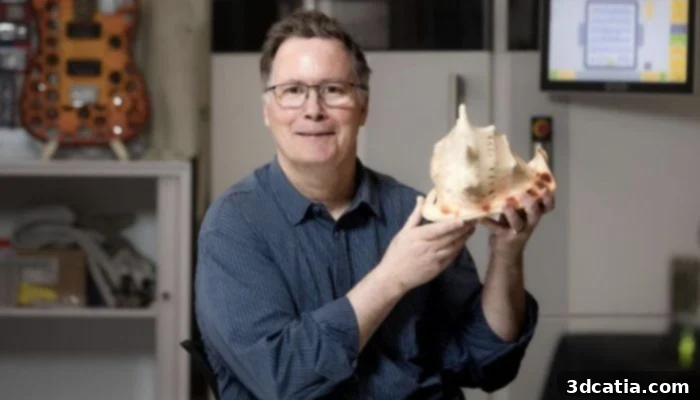
Professor Olaf Diegel holding a replica of the pūtātara conch shell horn (Photo credits: Chris Loufte)
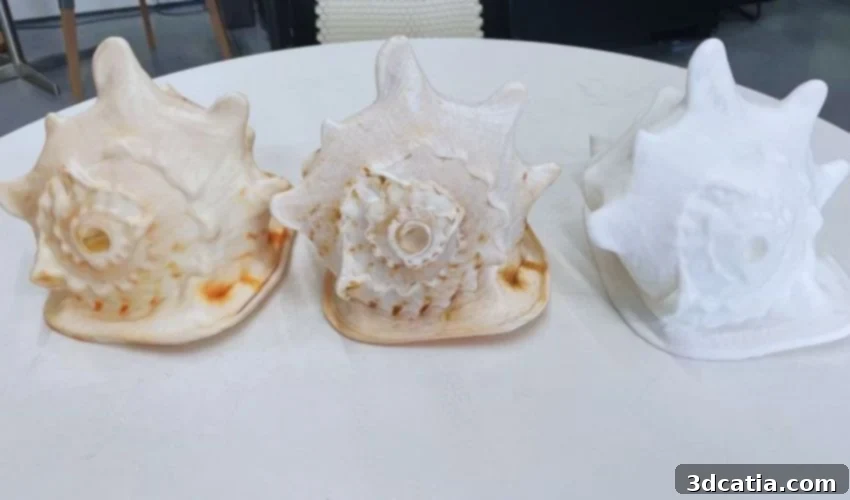
These unique traditional instruments, collectively known as taonga pūoro, embody immense cultural importance for the Māori people. They are not merely musical tools but rather living embodiments of history, spiritual connection, and ancestral voices. For this particular preservation project, Professor Diegel’s team carefully selected two significant instruments for recreation: the pūtātara, a distinctive conch shell trumpet, and the pūkāea, a majestic long trumpet traditionally carved with great skill and reverence from wood. To ensure absolute fidelity in their digital models, the original instruments underwent rigorous examination using advanced CT scanning technology. This process generated exceptionally high-definition 3D images, capturing every intricate detail of their internal and external structures. These precise digital blueprints were then meticulously processed to form the complex geometries necessary for 3D printing. The ultimate goal was to accurately reproduce not just the visual form, but crucially, the specific acoustic properties of the instruments, ensuring that when played, the 3D printed replicas would faithfully recreate the authentic and resonant tones characteristic of their ancient counterparts. This dedication to precision guarantees that the spirit and sound of the taonga pūoro live on, accessible for future generations.
The profound capability to 3D print these culturally significant instruments offers transformative potential, drastically increasing accessibility and interaction for a wider audience. Unlike the extremely fragile and often irreplaceable originals, which are typically housed in museums or safeguarded as cherished heirlooms and thus at constant risk of irreversible damage, these 3D printed replicas can be viewed, handled, and even played without fear. Many of these original cultural artifacts are not only ancient but also invaluable heirlooms, meticulously passed down through generations, each bearing the weight of immense history and ancestral connection. As Professor Diegel insightfully explains, “The problem is that you couldn’t have children playing with it because if they drop it, it’s gone forever.” This highlights the immense fragility and preciousness of the authentic items. However, with the advent of robust and durable polymers, the 3D printed versions offer a remarkably resilient alternative. Diegel further elaborates on their strength: “We’ve printed a bunch of them, including full-color prints and nylon ‘strong’ prints that you can pretty much throw against the wall without having to worry about them breaking.” This extraordinary durability makes them ideal for educational programs, interactive museum exhibits, and even performance, allowing people to engage directly with Māori culture in a way that was previously unimaginable. While 3D printing technology, especially for high-fidelity replicas, can be seen as an expensive technology initially, Professor Diegel underscores its long-term value: “But compared with any other way of preserving a cultural artifact, it’s way cheaper and much more flexible.” This cost-effectiveness, coupled with unparalleled flexibility in replication and distribution, makes 3D printing an indispensable tool for future cultural preservation efforts, ensuring that these irreplaceable pieces of heritage can be experienced by all without compromising the integrity of the originals.
However, despite the immense opportunities that 3D printing provides for bringing heritage closer to our daily lives and enhancing its accessibility, its application also raises crucial and complex ethical concerns. For the University of Auckland team, a central question revolved around the degree of accuracy and fidelity they should aim for in their 3D printed replicas. This was not a purely technical challenge but a deeply philosophical one. As Professor Olaf Diegel himself articulated the dilemma, “You don’t want to remove the value from the original artifact.” This statement encapsulates the core ethical tightrope walk: how to create educational and accessible reproductions without inadvertently diminishing the unique, irreplaceable intrinsic value, spiritual significance, and historical authenticity of the original object. This is particularly pertinent when an artifact holds profound cultural, historic, or religious significance for a community. The purpose of a 3D-produced recreation, in such contexts, is fundamentally to educate, to expand awareness, and to foster a deeper understanding of the object and its cultural context, rather than to serve as a direct replacement. It’s about enhancing appreciation, not substituting authenticity. Ultimately, after careful deliberation and consultation, the team made a conscious and respectful decision regarding the pūkāea. Instead of meticulously replicating the texture and appearance of the traditionally carved wooden object, which demands extraordinary amounts of time, patience, and ancestral skill to produce, they opted to make the 3D printed long trumpet out of smooth plastic. This choice was a deliberate gesture of respect, acknowledging the profound cultural and artistic significance embedded in the original craftsmanship. By creating a replica that was clearly distinct from the original’s material and finish, they ensured that the awe and reverence for the handcrafted artifact remained undiminished, while still providing an accessible and educational tool. This thoughtful approach highlights the balance required when merging cutting-edge technology with deeply rooted cultural values, fostering preservation without appropriation. To delve deeper into the intricate details and noble objectives of the University of Auckland’s pioneering project, interested readers are encouraged to click HERE for more information on their inspiring work and the nuanced decisions behind it.
The broader implications of this project extend far beyond the replication of specific instruments; they underscore the transformative potential of additive manufacturing in safeguarding and celebrating global cultural heritage. Imagine a future where indigenous artifacts from around the world, currently hidden away due to fragility or rarity, become accessible through durable, interactive 3D printed replicas. This technology offers a pathway to democratize cultural knowledge, allowing researchers, students, and the general public to engage with history in a truly immersive and tactile manner. It can help revitalize traditional crafts by providing new tools for learning and experimentation, and empower communities to share their heritage with greater confidence and control. However, as demonstrated by Professor Diegel’s team, such endeavors must always be approached with profound respect, ethical sensitivity, and genuine collaboration with the communities whose heritage is being preserved. The dialogue between technological innovation and cultural custodianship is paramount to ensuring that these advancements truly serve the purpose of enrichment and preservation, rather than inadvertently causing harm or misrepresenting traditions.
What are your thoughts on these remarkable, 3D printed Māori instruments and their role in cultural preservation? We invite you to share your perspectives and engage in this vital discussion by leaving a comment below. You can also connect with us and join the conversation on our LinkedIn, Facebook, and Twitter pages! Don’t miss out on the latest advancements and insights in the world of additive manufacturing; make sure to sign up for our free weekly Newsletter here, delivering the freshest 3D printing news straight to your inbox! Additionally, for a comprehensive visual experience and deeper dives into innovative projects, you can find all our engaging videos on our YouTube channel, offering a rich resource for anyone passionate about 3D printing and its diverse applications.
*Cover photo credits: University of Auckland