
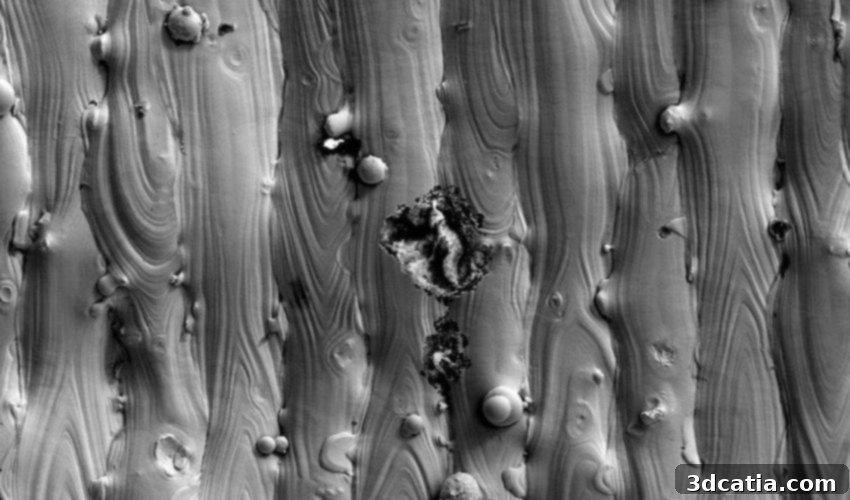
Understanding and Mitigating Pitting Corrosion in 3D Printed 316L Stainless Steel for Marine Environments
The unique challenges posed by marine environments have long driven innovation in material science, especially concerning corrosion resistance. One particular area of focus is 3D printed 316L stainless steel, a material gaining traction in various industrial sectors, including naval and maritime applications. However, despite its conventional reputation for robustness, researchers from Lawrence Livermore National Laboratory (LLNL) have been diligently investigating a critical question: Why is 3D printed 316L stainless steel prone to pitting corrosion when exposed to seawater? Their comprehensive study aimed to uncover the underlying causes of this unexpected degradation, with their findings pointing to slag accumulation on the material’s surface during the laser melting process, leading to the formation of localized cavities or pits. This research is pivotal for ensuring the long-term integrity and reliability of additively manufactured components in harsh marine conditions.
The Ubiquitous Threat of Corrosion in Industrial Applications
Metals, vital components in countless industrial applications, are inherently susceptible to corrosion – a complex degradation process initiated by chemical reactions with their surrounding environment. While corrosion can often be controlled, a profound understanding of its root causes is paramount for effective mitigation strategies. Among the various forms of corrosion, pitting corrosion stands out as a particularly insidious threat due to its localized and often unpredictable nature. This specific type of degradation begins with the breakdown of a metal’s passive protective oxide layer, causing it to lose electrons in an electrochemical reaction. In an aquatic environment, such as seawater, this reaction accelerates, leading to the formation of small, deep holes or cavities, from which the term “pitting corrosion” derives. The severity of the damage inflicted upon a part varies significantly with the depth and distribution of these cavities, making control of pitting corrosion in challenging environments like seawater a formidable engineering challenge. Historically, naval and other marine applications have extensively relied on 316L stainless steel precisely because of its exceptional mechanical properties combined with its inherent resistance to such pitting corrosion, thanks to its specific alloy composition including molybdenum.
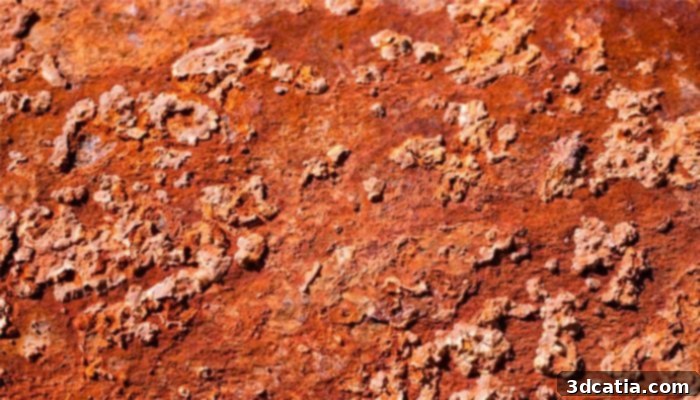
Visual representation of metal degradation (or corrosion).
The Additive Manufacturing Revolution and Marine Applications
The marine industry is increasingly embracing additive manufacturing (AM), also known as 3D printing, for both polymer and metal components, driven by its potential for design complexity, lightweighting, and on-demand production. However, this adoption brings forth a critical question, particularly for high-performance applications: Can 3D printed 316L stainless steel effectively maintain its renowned resistance to pitting corrosion? This inquiry is not merely academic; it holds immense significance for metal certification processes and the broader integration of AM parts into critical marine infrastructure. Recognizing this pressing need, researchers at Lawrence Livermore National Laboratory initiated their in-depth study. Shohini Sen-Britain, the lead author of the study, highlighted the inherent difficulties in understanding this phenomenon, stating, “Pitting corrosion is extremely difficult to understand due to its stochastic nature, but we determined the material characteristics that cause or initiate this type of corrosion. While our slags looked different than what had been observed in conventionally manufactured materials, we hypothesized that they could be a cause of pitting corrosion in 316L.” This initial hypothesis set the stage for a groundbreaking investigation into the specific mechanisms at play when 316L is produced via additive manufacturing.
Unveiling the Culprit: Slag in Additively Manufactured Metals
Through their meticulous research, the LLNL team made a significant discovery: 3D printed 316L stainless steel was indeed susceptible to the very pitting corrosion phenomenon it traditionally resists. The culprit identified was slag, a byproduct created during the additive manufacturing process by deoxidizers such as silicon and manganese. These elements are typically included in metal alloys to improve weldability and prevent oxidation during melting. However, in the context of laser powder bed fusion (LPBF), they inadvertently lead to the formation of small, non-metallic inclusions on the material’s surface and within its microstructure. In traditional manufacturing processes, such as casting or forging, these slags can often be removed or minimized through post-processing techniques like grinding, machining, or pickling, ensuring a uniform and corrosion-resistant surface. In contrast, for complex geometries produced by additive manufacturing, this type of extensive post-treatment for slag removal becomes impractical, economically unfeasible, or even impossible without compromising the unique advantages of AM. The presence of these slags, therefore, represents a fundamental difference in how additively manufactured metals behave compared to their conventionally produced counterparts, opening new avenues for understanding and tackling their specific vulnerabilities.
The researchers delved deeper into the precise mechanism by which this slag initiated corrosion. Employing advanced characterization methods, including transmission electron microscopy and ion beam milling, they meticulously examined the slag inclusions present within the 3D printed metal. Their observations led to a crucial conclusion: these slag formations created microscopic discontinuities and localized defects within the otherwise robust steel matrix. These discontinuities act as preferential sites for seawater infiltration, compromising the protective passive layer that typically shields 316L stainless steel. Once seawater penetrates these weak points, it establishes micro-electrochemical cells, accelerating the local degradation of the part and leading to the characteristic deep pits. This detailed understanding of the underlying mechanisms driving slag-induced pitting corrosion is immensely valuable. It not only explains the observed vulnerability but also opens significant avenues for modifying the material’s mechanical properties and substantially enhancing its corrosion resistance, thereby broadening the potential applications of 3D printed 316L stainless steel in demanding environments. Designing components with enhanced water resistance, superior durability, and improved structural integrity hinges on controlling these microscopic imperfections.
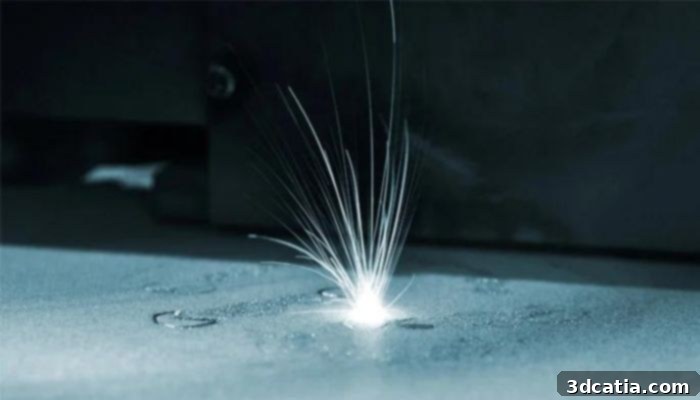
Laser melting on a powder bed could provide a better understanding of pitting corrosion, crucial for optimizing material properties.
The Promise of Laser Powder Bed Fusion and Future Directions
The implications of this research extend beyond merely identifying a problem; they also highlight the significant potential of additive manufacturing. As one of the researchers, Voisin, noted, “When we 3D print the material, it’s better for mechanical properties, and from our research, we also understand that it’s better for corrosion as well.” This seemingly contradictory statement emphasizes the dual nature of AM. While specific process byproducts like slag can introduce vulnerabilities, the fundamental process of laser powder bed fusion (LPBF) itself offers distinct advantages. The unique thermal cycles during LPBF lead to the formation of a distinct surface oxide that develops at high temperatures, imparting different and potentially beneficial properties compared to conventionally manufactured materials. Understanding the science behind these phenomena—why the material corrodes in specific ways, and simultaneously, why it offers superior properties compared to other techniques—is profoundly exciting for material scientists. This ongoing research repeatedly confirms that laser powder bed fusion additive manufacturing can be leveraged to improve material properties significantly, often far beyond what is achievable with traditional manufacturing methods. The key lies in meticulously controlling the printing process and material composition to harness these benefits while mitigating potential drawbacks.
Towards Enhanced Corrosion Resistance: A Proactive Approach
The insights gained from this study strongly suggest a proactive approach to enhancing the corrosion resistance of 3D printed 316L stainless steel. This entails a fundamental alteration of the metal powder formulation right from the initial stages of production. Specifically, the research points to the need for careful control, and potentially the removal, of elements like silicon and manganese, which have been identified as primary culprits in slag formation and subsequent pitting corrosion. By meticulously adjusting the composition of the feedstock powder, manufacturers can minimize the creation of these detrimental inclusions during the laser melting process. This targeted modification promises to lead to 3D printed parts with a more homogeneous microstructure and an inherently superior resistance to pitting corrosion in aggressive environments like seawater. This marks a truly promising progression, not only for the burgeoning maritime domain, where reliability in corrosive conditions is paramount, but also for various other rigorous industries such as chemical processing, oil and gas, and biomedical applications, all of which demand materials with exceptional durability and structural integrity. This foundational research paves the way for a new generation of high-performance, additively manufactured metallic components capable of withstanding the harshest operational conditions. To delve deeper into the specifics of this groundbreaking project, you can access the full publication by clicking here.
What are your thoughts on this detailed explanation of pitting corrosion in 3D printed stainless steel? We invite you to share your insights in a comment below or engage with us on our LinkedIn, Facebook, and Twitter pages! Don’t forget to sign up for our free weekly newsletter here to receive the latest 3D printing news straight to your inbox! You can also find all our videos and more content on our YouTube channel for an immersive experience.
*All Photo Credits: Thomas Voisin/LLNL