
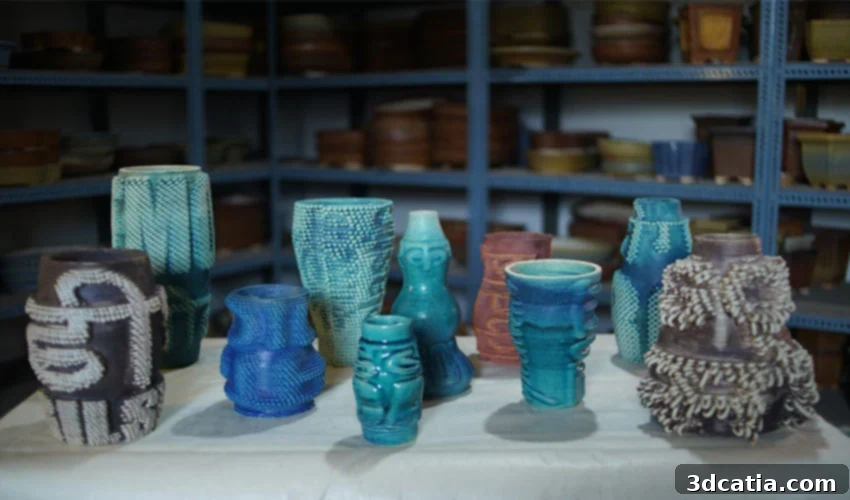
Google Arts & Culture Unveils “Future Relics”: 3D Printed Vases Bridging Ancient Craft and Modern Innovation
Google Arts & Culture is far more than just a playful application that transforms your selfie into a classical masterpiece. It stands as a profound digital gateway to the world’s most celebrated art and cultural heritage, consistently striving to integrate historical treasures into the fabric of our modern society. With a keen focus on innovation and accessibility, Google Arts & Culture recently embarked on a groundbreaking collaboration with a prominent Indian museum. This partnership has culminated in the creation of a unique series of ceramic 3D printed vases, conceptualized not merely as contemporary art objects, but as evocative “relics of the future,” designed to bridge the gap between ancient craftsmanship and future archaeological discovery.
The platform officially unveiled this captivating set of ten ceramic vases, meticulously crafted using advanced 3D printing technology, at the Chhatrapati Shivaji Maharaj Vastu Sangrahalaya (CSMVS) in Mumbai, India. These distinctive 3D printed objects are a central component of the ambitious “Future Relics” project, an initiative launched last November with a clear vision: to harmoniously blend time-honored traditional crafting methods with cutting-edge modern technologies. The ultimate goal is to generate new artifacts that will serve as meaningful historical markers for generations yet to come, challenging our perceptions of what constitutes a valuable relic in an increasingly digitized world. By combining heritage and innovation, the project stimulates a vital dialogue about cultural preservation and the ongoing evolution of artistic expression.
3D Printing: A Powerful Tool for Cultural Preservation and Historical Understanding
This visionary initiative resonates deeply with numerous recent projects that have harnessed the transformative power of 3D printing to enhance our understanding and preservation of history. The applications of this technology in cultural heritage are vast and varied. It has been instrumental in allowing scholars and the public to gain unprecedented insights into ancient artifacts, ranging from intricate paintings and delicate sculptures to vast archaeological sites. A particularly poignant example of 3D printing’s reconstructive capability is the Arch of Palmyra. After its tragic destruction by ISIS, this iconic structure was meticulously recreated using 3D printing technology, and its replica currently stands in London as a testament to resilience and the enduring spirit of cultural memory. Such projects underscore 3D printing’s unique ability to not only document and replicate, but also to breathe new life into historical narratives, making them accessible and tangible for contemporary audiences and ensuring their survival for future study.
‘Future Relics’ – Engaging Museum Visitors with 3D Printed Vases and Modern Legacies
A truly innovative and engaging aspect of the “Future Relics” project is its direct interaction with the museum-going public. Google Arts & Culture actively sought the opinions and imaginations of CSMVS museum visitors, posing a thought-provoking question: “Which contemporary objects would you envision archaeologists discovering a thousand years from now?” This inquiry transformed passive observation into active participation, inviting individuals to contribute to the collective narrative of future history. The responses were incredibly diverse, offering a fascinating snapshot of objects that define our current era. Visitors suggested items such as laptops, cars, personal computers, books, bobbins, plastic containers, precious gold, eyeglasses, and various tools, among many others. These contemporary keywords, representing the most salient ‘relics of the future’ as perceived by the public, were then thoughtfully engraved onto the surfaces of the 3D printed vases. This powerful symbolic act ensures that each vase becomes a tangible repository of modern thought and aspirations, literally encapsulating what we believe will be remembered from our time by distant descendants. It provides a unique lens through which to understand collective values and anxieties about our present legacy.
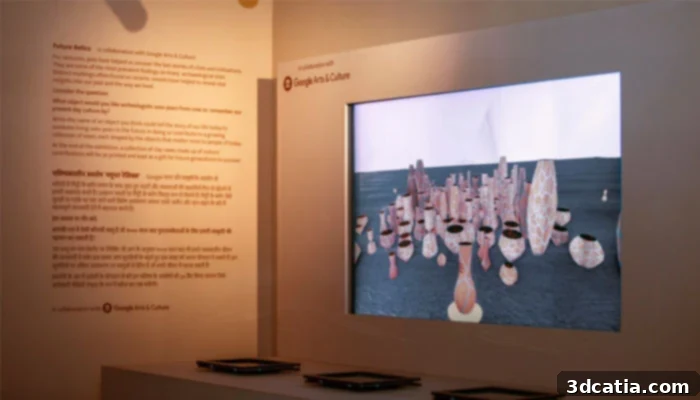
Every visitor to the museum can participate in this collaborative experience, contributing their vision of future relics to the 3D printed vases.
The Advanced 3D Printing Process and Artistic Finishes of the Ceramic Vases
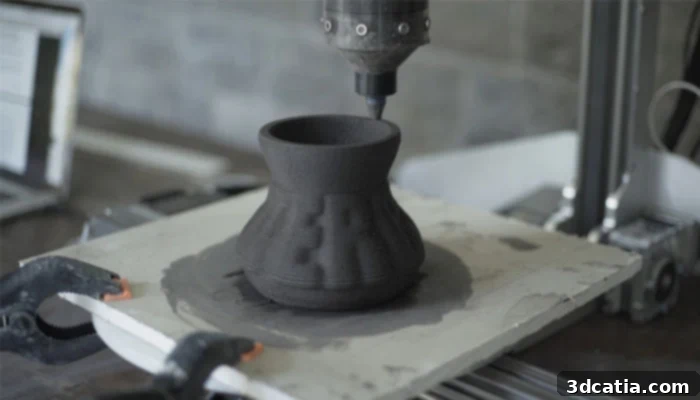
The sophisticated creation of these “Future Relics” involved a meticulous multi-step process, commencing with advanced digital design and culminating in expert artistic finishing. Each vase was initially conceptualized and precisely designed using Computer-Aided Design (CAD) software. This crucial initial phase allowed for the intricate detailing and complex geometries that would be exceedingly difficult or impossible to achieve through traditional hand-forming techniques. Once the digital blueprints were perfected, the vases transitioned from virtual models to physical objects through a specialized ceramic additive manufacturing process. This innovative method typically involves extruding a fine ceramic paste layer by layer, or by solidifying ceramic powder with a binding agent. Following the precise 3D printing, the resulting green body is then carefully dried and subjected to high-temperature firing, transforming it into a durable, aesthetically pleasing ceramic form. This method not only facilitates unprecedented design freedom but also allows for the rapid creation of highly customized artistic pieces, pushing the boundaries of traditional pottery.
Beyond the technological marvel of ceramic 3D printing, a vital post-treatment phase ensured the artistic integrity and longevity of the “Future Relics.” This involved expert varnishing, a delicate process that beautifully fused modern production techniques with time-honored artisanal skills. This critical task was masterfully executed by Padma Shri Brahmdeo Ram Pandit, an acclaimed ceramic specialist whose profound knowledge and artistic flair were indispensable to the project. Pandit eloquently expressed his excitement, stating, “We are very excited to be part of a project where advanced technology blends perfectly with the contemporary varnishing style and the traditional baking process. This completely upsets the creative abilities of an artist!” His words highlight a profound truth: rather than diminishing traditional craft, advanced technologies like 3D printing can open up entirely new avenues for artistic expression and collaboration, inspiring artists to transcend conventional limitations and explore innovative forms and finishes. The careful finishing ensures these modern creations possess the timeless quality expected of artifacts designed to become historical relics.
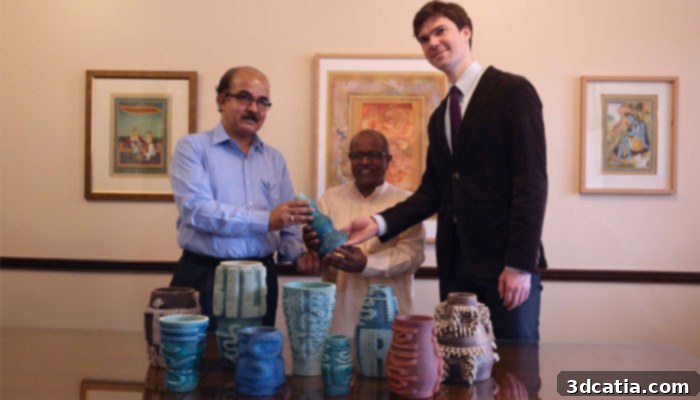
Key figures in the “Future Relics” project: Mr. Mukherjee (CSMVS Director), BR Pandit (artist), and Simon Rein (Program Director, Google Arts & Culture), highlighting the collaborative spirit.
Google Arts & Culture’s Vision: Connecting Generations Through Interactive Narratives
Simon Rein, the program director at Google Arts & Culture, articulates the profound philosophy underpinning the “Future Relics” project. He underscores that the core of this initiative is its interactive engagement with the public, designed to ascertain how individuals collectively desire their culture to be remembered and interpreted by future generations. Rein emphasizes that 3D printing serves as an incredibly potent medium for realizing this vision, primarily due to its unparalleled capacity for customizing the vases. This flexibility transforms each ceramic vessel into a unique, personalized conduit of collective memory, reflecting the diverse contributions and perspectives of society regarding its future heritage. Rein eloquently states, “We wanted users to participate in an interactive and shared journey that links the past to the present while looking to the future. For centuries, vases have helped us discover the lost stories of cities and civilizations. The Future Relics project allows us to highlight this legacy.” This statement beautifully encapsulates the project’s ambition: leveraging modern technology to continue an ancient tradition of storytelling through objects, thereby forging a living, interactive bridge between distinct historical eras.
The deliberate choice of vases as the central artistic medium for this project is particularly symbolic and meaningful. Throughout human history, vases have often served as invaluable, silent chroniclers of civilization. Adorned with intricate imagery, inscriptions, and symbolic motifs, they have depicted everything from daily life and mythological tales to religious rituals and significant historical events. These robust artifacts are frequently among the most enduring items discovered by archaeologists, offering crucial insights into long-vanished cultures and societies. By creating contemporary vases that are specifically engineered and designed to endure for a millennium, the “Future Relics” project cleverly positions these 3D printed objects as future archaeological discoveries. They are intentionally imbued with the narratives and collective consciousness of our current society, offering a fascinating reversal of historical perspective. This encourages profound contemplation on our own transient existence, the cultural footprints we are leaving behind, and how future generations will interpret our present through these innovative, digitally fabricated artifacts. It’s a compelling call to consider what elements of our modern world are truly worth preserving for posterity and the legacy we wish to bequeath.
The Broader Impact of 3D Printing in Museums and Global Cultural Preservation
The “Future Relics” project is much more than an exhibition of art; it represents a significant leap forward in the evolving relationship between cultural institutions, cutting-edge technology, and profound public engagement. Museums around the globe are increasingly recognizing and embracing the potential of digital fabrication techniques like 3D printing to significantly enhance their core missions of preservation, education, and accessibility. 3D printing allows for the creation of incredibly accurate replicas of fragile or invaluable artifacts, thereby enabling tactile experiences for visitors who would otherwise be unable to physically interact with historical objects. Furthermore, it facilitates the meticulous restoration of damaged items and provides researchers with precise, non-invasive models for study, safeguarding original pieces from potential harm. Moreover, groundbreaking projects like “Future Relics” brilliantly illustrate how additive manufacturing can transform the traditionally passive act of viewing into an active, participatory experience, making history and culture far more relevant and engaging for a wider and more diverse audience, particularly among younger generations. This innovative approach fosters a deeper, more personal connection to heritage by inviting individuals to actively contribute to the ongoing, dynamic narrative of human civilization.
As technology continues its relentless march forward, the potential applications of 3D printing within the cultural sector appear virtually limitless. From creating immersive and interactive museum exhibits to developing entirely new methodologies for art creation and conservation, digital fabrication is poised to revolutionize how we interact with our shared past and actively shape our collective future. The collaborative endeavor between Google Arts & Culture and CSMVS in Mumbai serves as an exemplary model of this paradigm shift, vividly demonstrating how technology can not only preserve our invaluable cultural legacy but also actively involve us in its continuous creation and interpretation. It powerfully reinforces the idea that innovation and tradition are not opposing forces but rather complementary elements that can powerfully converge to illuminate our understanding of where we come from, define our present, and thoughtfully guide us towards where we are headed. This forward-thinking project solidifies the role of 3D printing not just as an industrial production tool, but as a vital instrument in the ongoing human endeavor of cultural memory, artistic expression, and intergenerational storytelling.
What are your thoughts on Google Arts & Culture’s innovative utilization of 3D printing for such a profound and interactive cultural project? We warmly invite you to share your insights and perspectives in a comment below, or join the engaging conversation on our Facebook and Twitter pages! To ensure you don’t miss out on the latest advancements, inspiring stories, and critical discussions in additive manufacturing, be sure to sign up for our free weekly Newsletter, delivering all the essential 3D printing news directly to your inbox!